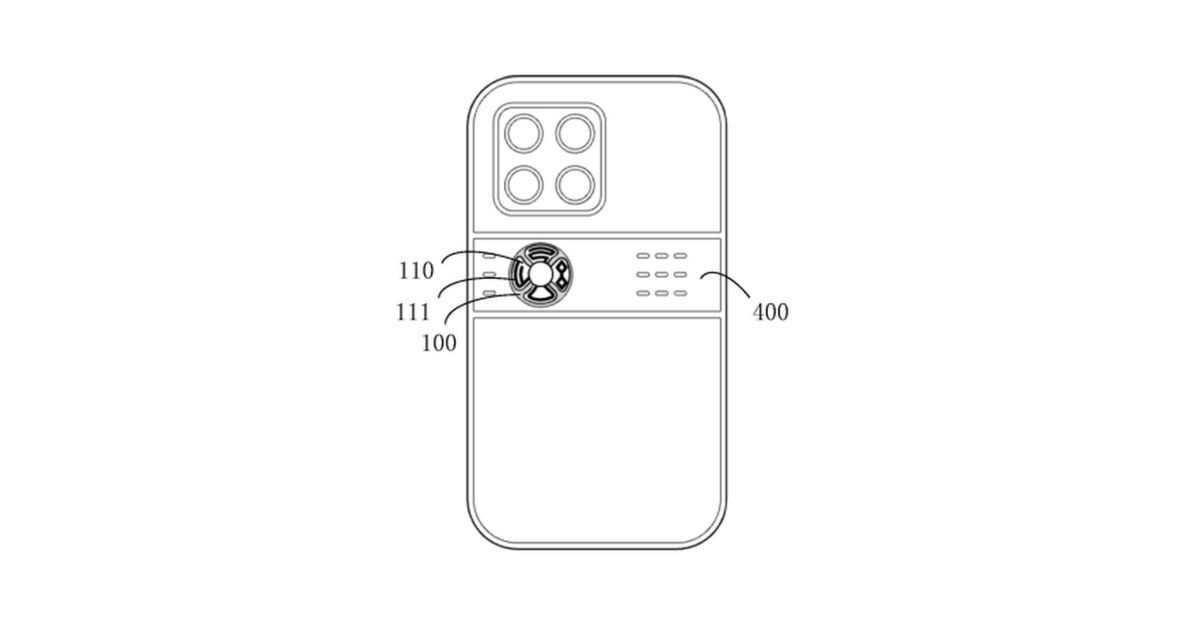
Vivo is exploring an unconventional approach to smartphone design that combines wireless communication and thermal management into a single system. A recently published patent filing (CN121077517A) with China’s National Intellectual Property Administration (CNIPA) outlines a concept where antennas are embedded directly onto internal cooling fan blades, allowing the fan to actively participate in signal optimisation while continuing to dissipate heat. The diagrams shared alongside the patent help visualise how this system could function in real-world usage scenarios.
Antennas mounted on rotating fan blades
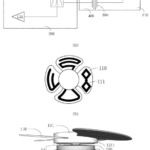

As illustrated in the technical drawings showing the RF circuit layout and fan structure, the smartphone includes a central cooling fan with multiple blades, each capable of hosting an antenna element. One of the images clearly depicts antennas placed on different fan blades, highlighting that multiple antenna types can coexist within the same fan assembly. This allows the device to support cellular, Wi-Fi, GPS, or even satellite communication without relying solely on fixed frame-mounted antennas.
Another diagram demonstrates how the RF circuit connects to the fan-mounted antennas through an equivalent capacitive coupling structure. Instead of physical wiring, signals are transferred wirelessly across a small air gap between metal surfaces. This enables continuous signal transmission even while the fan is rotating, eliminating wear-prone electrical contacts and simplifying internal layout.
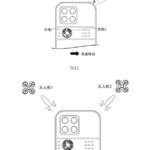
The smartphone usage illustrations further explain the practical benefits of this design. One image shows the phone moving rapidly between two base stations, with the fan-mounted antenna dynamically adjusting its orientation to maintain stronger reception. This is particularly relevant in high-speed scenarios such as travel, gaming, or dense urban environments where signal handover is frequent.
Another diagram expands on multi-device communication, showing drones positioned around the phone. In this scenario, different fan-blade antennas can be oriented toward different devices, enabling simultaneous multi-directional communication. This suggests potential applications beyond smartphones, including device control, distributed networking, and future 6G-related use cases.
Cooling and connectivity working together
The above infographic summarises the system well by highlighting how antennas mounted on rotating fan blades serve dual purposes. While the fan continues to cool the processor and RF components, its rotation also helps optimise antenna direction and signal quality. Central placement of the fan reduces the impact of hand blockage, a common issue with conventional smartphone antennas placed along the frame.
Overall, the images reinforce Vivo’s idea of treating internal mechanical components as functional communication elements rather than passive hardware. While this remains a patent concept with no confirmed commercial timeline, the visual diagrams strongly suggest Vivo is experimenting with smarter, space-efficient ways to improve both wireless performance and thermal control in future smartphones.
With several smartphones expected to adopt active cooling fans by 2026, it is entirely possible that Vivo could be among the brands to launch a device that implements this innovative antenna-fan architecture.