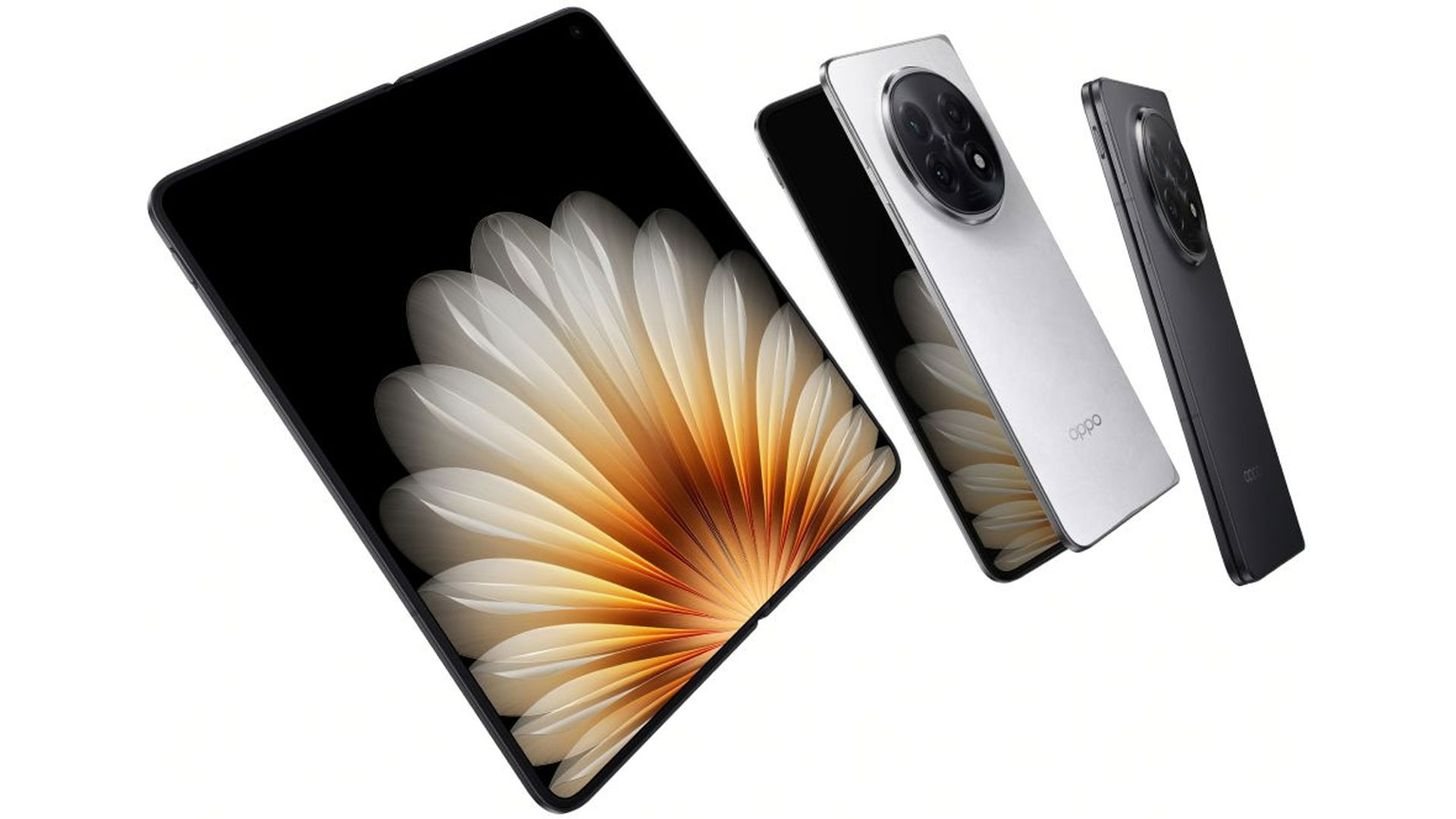
Recent reports have claimed that Oppo will announce the Oppo Find N6 as the world’s first Snapdragon 8 Elite Gen 5-powered foldable phone this month in China. A new report by SmartPrix reveals that the brand is also prepping up a new foldable phone, which is expected to arrive just in time to rival Apple’s first foldable phone.
Oppo Find N7’s first details out
According to reports, the month of September is expected to see the arrival of the iPhone 18 Pro, 18 Pro Max, and the company’s first foldable phone. The new report reveals that Oppo is planning to launch the Find N7 to rival the iPhone Fold.
What’s interesting about this device is that its design will be different from the Find N6, which will be a regular foldable phone with a book-style design. The report says that the Find N7 will have a wider form factor with dimensions similar to a passport.
The report further states that the Find N7 will inherit some of the key specs, such as the camera system and battery, from the Find N6. As per reports, the Find N6 will have a 200-megapixel main camera accompanied by a 50-megapixel ultra-wide snapper and a 50-megapixel periscope telephoto camera. It is said to house a 6,000mAh battery with 80W wired and 50W wireless charging support.
As per other reports, the Find N6 will have an 8.12-inch internal foldable screen and a 6.62-inch cover display. Both displays will have a 20-megapixel camera for selfies and video calls. It is expected to weigh around 225 grams and will be sold in Titanium, Deep Black, and Golden Orange shades in China. There’s no word on whether it will be released in India.
XpertPick take
For years, Android brands have relied on book-style horizontal foldables that open like a notebook. Apple’s first foldable, tipped to feature a wider, passport-like design, could disrupt this approach. Samsung is also exploring a similar form factor, and brands like Vivo and Honor may follow. A wider, tablet-like view when unfolded could redefine horizontal foldables and eventually lead to the decline of traditional book-style designs.