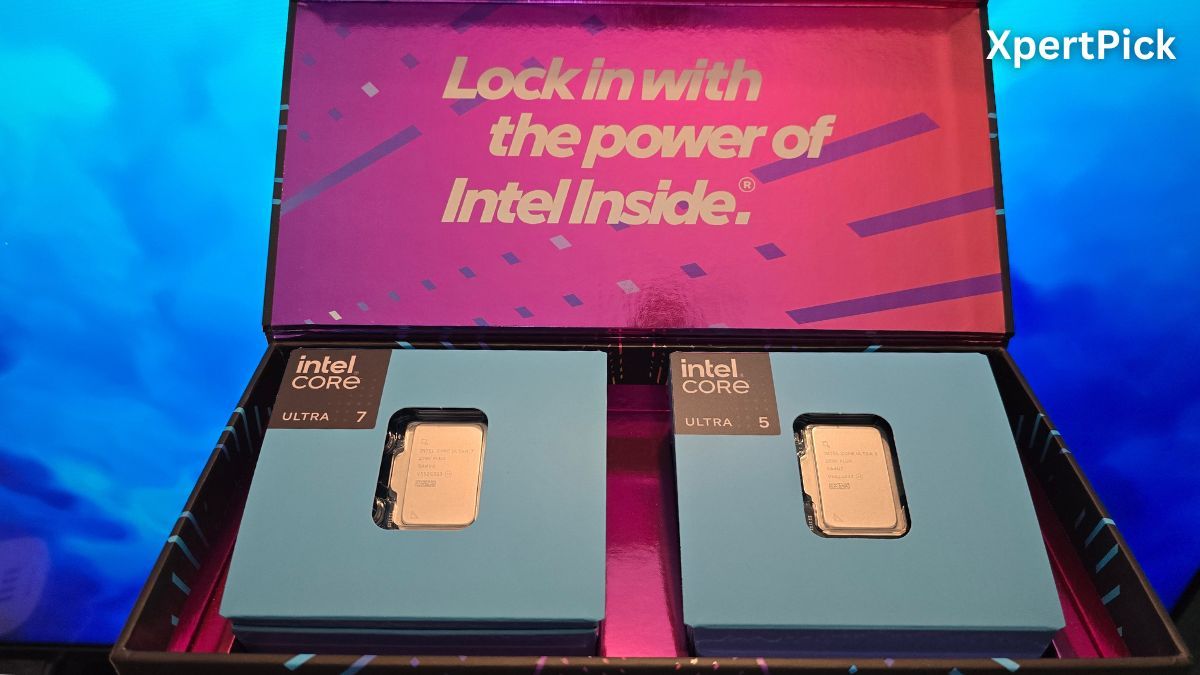
After spending time with the Core Ultra 200S Plus line-up, it becomes clear that Intel is not attempting to reclaim the absolute high-end gaming crown. Instead, it is taking a far more practical approach, pushing higher core counts, better tuning, and stronger value into the price segments where most buyers actually sit.
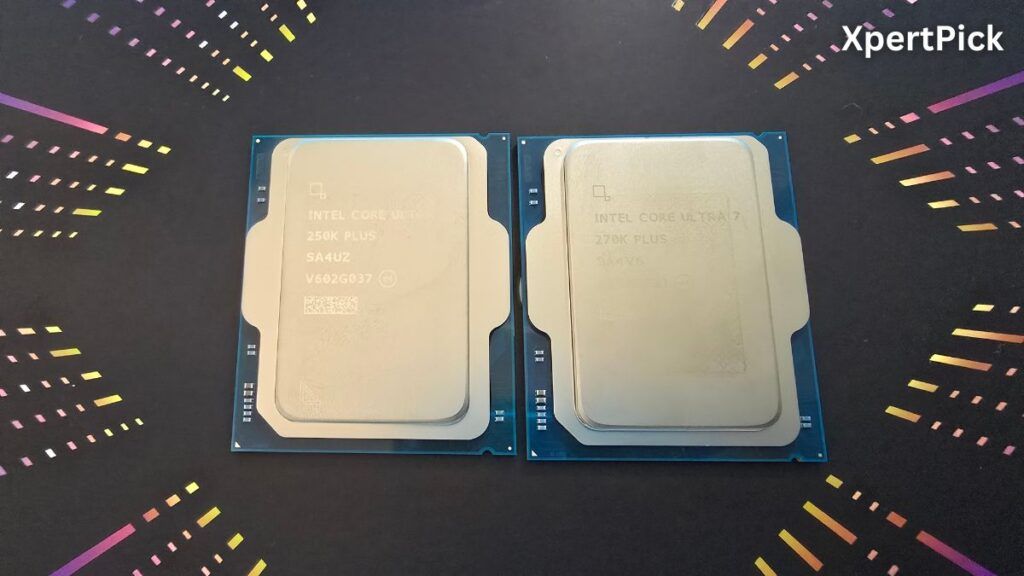
The Core Ultra 7 270K Plus and Core Ultra 5 250K Plus are at the centre of this shift. They do not introduce a new architecture, but they significantly reshape how Arrow Lake performs in real-world use.
The Test Bench and Chip overview
- Processors: Intel Core Ultra 7 270K and Core Ultra 5 250K
- GPU: Asus ROG Astral Nvidia GeForce RTX 5080
- Motherboard: ASUS Intel ROG Maximus Z890 Hero ATX Motherboard
- RAM: G.Skill Trident Z5 RGB Series (Intel XMP) 32GB (2 x 16GB) 288-Pin SDRAM DDR5 7200
- SSD: PCI e Gen 4 1 TB
- PSU: Corsair 1000W 80 Plus Gold
- Pricing and positioning: high core counts, lower entry point
The Core Ultra 7 270K Plus is priced at $299 (around ₹25,000), while the Core Ultra 5 250K Plus comes in at $199 (roughly ₹16,500). What stands out here is not just the price, but what you are getting for it.
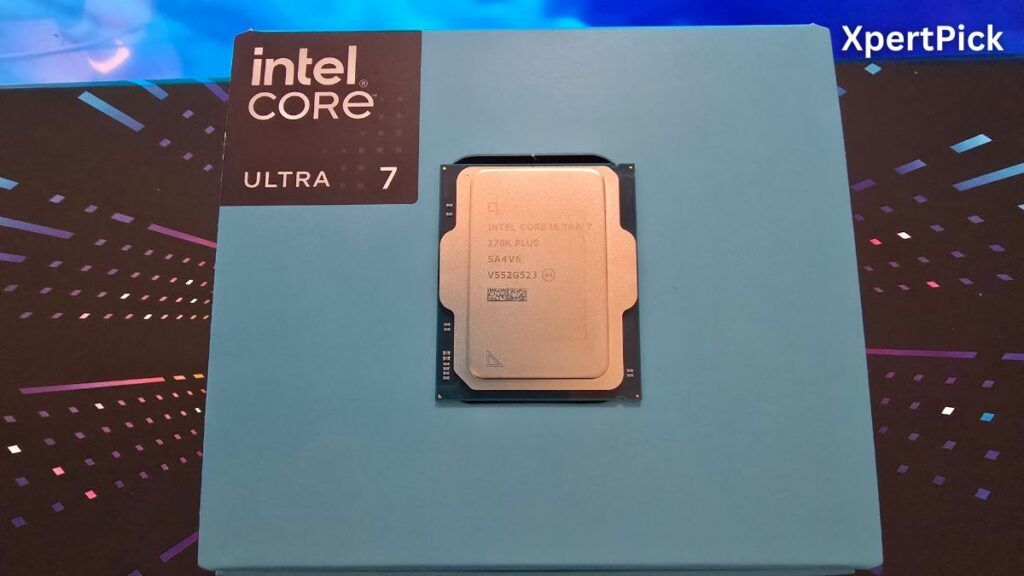
The 270K Plus offers a full 24-core configuration with 8 Performance cores and 16 Efficiency cores. The 250K Plus follows with 18 cores, split between 6 Performance and 12 Efficiency cores. These are configurations that were previously limited to significantly more expensive tiers.
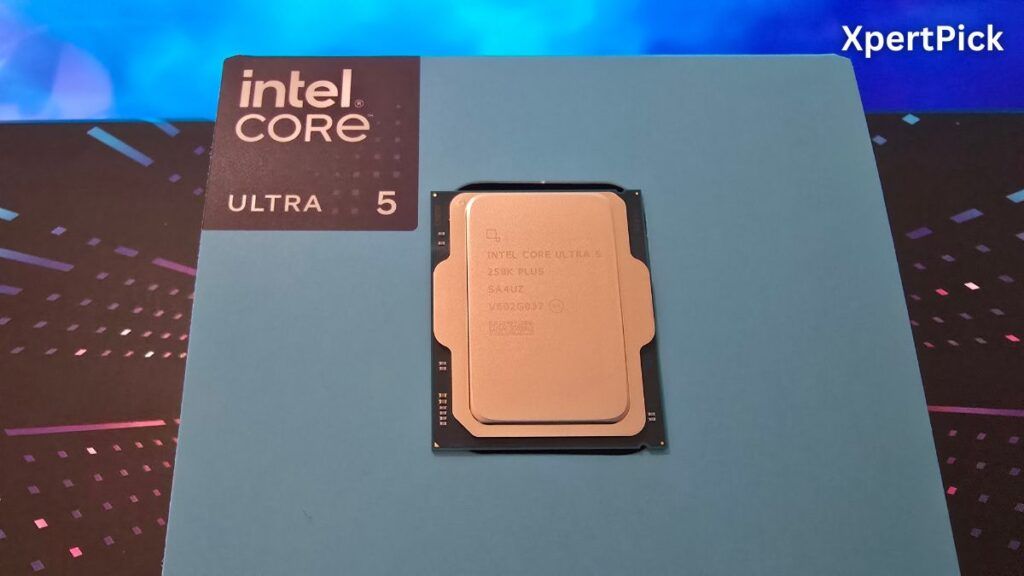
At a broader market level, this effectively pushes Intel’s older flagship positioning out of relevance. Instead of scaling upwards, Intel is bringing high-end performance down into more accessible segments.
Gaming performance: clear gains, but not a clean win
Across the tested titles, the Core Ultra 200S Plus processors show consistent but incremental gains over their previous-generation counterparts when paired with an RTX 5080. At 1080p with lower settings, where CPU performance is the main limiting factor, the Core Ultra 7 270K Plus leads across all games.
In Cyberpunk 2077, it delivers around 196 FPS on average with 1% lows near 134 FPS, placing it slightly ahead of the Core i7-14700K. The Core Ultra 5 250K Plus follows closely with an average of around 188 FPS, maintaining a small but clear lead over the Core i5-14600K. Similar patterns can be seen in Space Marine 2 and Baldur’s Gate 3, where both new chips hold a modest advantage in both average frame rates and 1% lows, indicating improved consistency.
| Processor | Cyberpunk 2077(1080p / 1440p) | Space Marine 2(1080p / 1440p) | Counter-Strike 2(1080p / 1440p) | Baldur’s Gate 3(1080p / 1440p) |
| Ultra 7 270K Plus | 196 / 140 | 130 / 95 | 766 / 682 | 156 / 127 |
| Core i7-14700K | 190 / 140 | 126 / 94 | 743 / 650 | 151 / 125 |
| Ultra 5 250K Plus | 188 / 138 | 125 / 91 | 675 / 594 | 146 / 121 |
| Core i5-14600K | 182 / 137 | 121 / 89 | 654 / 575 | 141 / 119 |
In highly CPU-sensitive titles such as Counter-Strike 2, the gains become more noticeable. The 270K Plus reaches up to around 766 FPS on average, with 1% lows exceeding 320 FPS, showing a clear uplift over the Core i7-14700K. The 250K Plus also scales well in this scenario, comfortably outperforming the Core i5-14600K. This indicates that the improvements in interconnect latency and task scheduling are having a tangible impact in high-refresh gaming scenarios.
At 1440p with maximum settings, the differences narrow across the board, which is expected as the workload shifts more towards the GPU. Even so, the 270K Plus maintains a slight lead, for instance reaching around 140 FPS in Cyberpunk 2077, while the 250K Plus remains close behind. Across all titles, the overall takeaway remains consistent: Intel has not significantly increased peak gaming performance, but it has improved frame consistency and slightly raised the performance ceiling, particularly in CPU-bound scenarios.
What actually changed: not clocks, but behaviour
Interestingly, the gains here are not coming from major increases in core clock speeds or any significant cache redesign.
Instead, Intel has focused on refining internal behaviour. Interconnect frequencies have been increased noticeably, with die-to-die communication rising from around 2.1 GHz to roughly 3.0 GHz. This helps reduce latency when data moves between tiles, which was one of the key limitations of the original Arrow Lake chips.
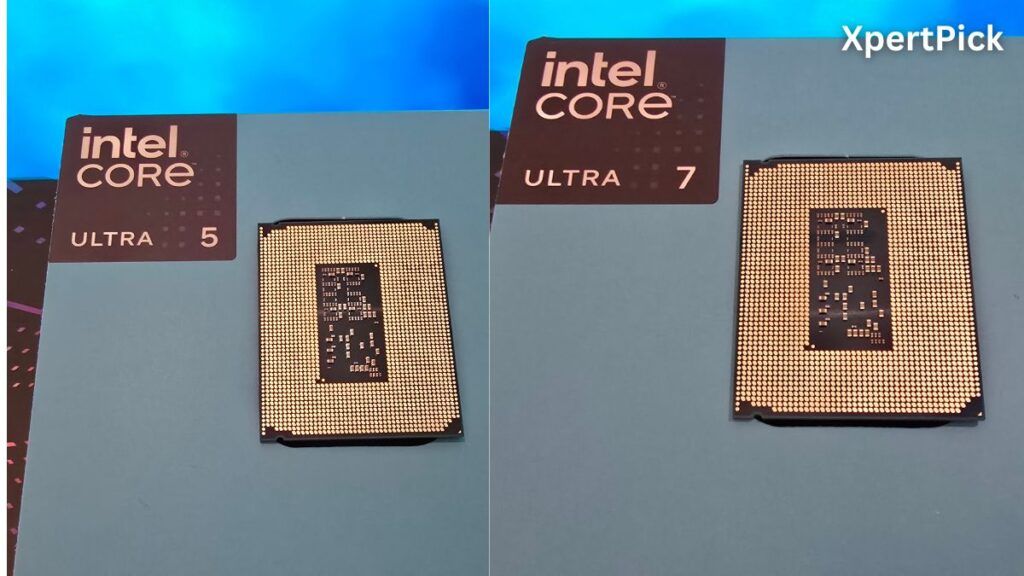
At the same time, Intel has placed a strong emphasis on software. The Intel Platform Performance Package introduces improved scheduling through Application Optimization, ensuring that gaming workloads remain on the Performance cores while background tasks are shifted to the Efficiency cores. In addition, tools such as iBOT dynamically reorganise instructions at runtime to improve execution efficiency without modifying the original application.
This combination of hardware tuning and software-level optimisation is where most of the meaningful gains are coming from.
Multi-threaded performance: where Intel dominates
This is where the new chips stand out the most.
| Processor | Cinebench 2024(Multi / Single) | Geekbench 6.3(Multi / Single) |
| Ultra 7 270K Plus | 2,515 / 140 | 23,966 / 3,325 |
| Core i7-14700K | 1,900 / 125 | 18,800 / 2,900 |
| Ultra 5 250K Plus | 1,872 / 134 | 20,643 / 3,220 |
| Core i5-14600K | 1,390 / 115 | 16,000 / 2,700 |
Starting with the Core Ultra 7 270K Plus, the jump over the Core i7-14700K is significant in multi-core workloads. In Cinebench 2024, it moves from 1,900 to 2,515, which is a big leap for a generational refresh. Geekbench shows a similar pattern, going from 18,800 to nearly 24,000. That’s not incremental anymore, that’s a clear shift in throughput. Single-core, though, only moves from 125 to 140 in Cinebench and 2,900 to 3,325 in Geekbench. So yes, it’s faster, but the gains are clearly not coming from IPC breakthroughs or major clock jumps.
The Core Ultra 5 250K Plus is where things get more interesting from a value perspective. Against the Core i5-14600K, it shows a very strong uplift in multi-core performance. Cinebench goes from 1,390 to 1,872, and Geekbench climbs from 16,000 to over 20,600. That’s a noticeable jump, especially for a chip in this segment. Again, single-core gains are modest, from 115 to 134 in Cinebench and 2,700 to 3,220 in Geekbench. The pattern stays consistent.
What this really highlights is Intel’s shift in strategy. These chips aren’t trying to win single-thread benchmarks. They’re pushing higher core counts and better utilisation to dominate multi-threaded workloads at their price points. For creators, developers, and heavy multitaskers, this translates directly into faster renders and better parallel performance. For gaming, the impact is more indirect, mostly improving consistency rather than dramatically increasing peak frame rates.
Power and thermals: the trade-off
The improvements don’t come without cost.
Both CPUs retain a base TDP of 125W, but under load, power consumption increases significantly. The 270K Plus can draw up to 250W, while the 250K Plus reaches around 159W.
| Processor | Temperature (°C) | Power Consumption (W) |
| Ultra 7 270K Plus | 78 | 142 |
| Core i7-14700K | 73 | 135 |
| Ultra 5 250K Plus | 66 | 96 |
| Core i5-14600K | 65 | 90 |
In testing, this translates to higher temperatures and greater cooling requirements. The Ultra 7, in particular, runs noticeably hotter and requires strong cooling to maintain stable performance.
Final thoughts: strong value and future predictions
The Core Ultra 7 270K Plus and Core Ultra 5 250K Plus are genuinely good processors. They improve gaming performance, deliver excellent multi-threaded results, and push core counts into more affordable segments.
At the same time, this feels like a correction rather than a breakthrough.
Intel has made Arrow Lake more competitive, but it hasn’t fundamentally changed the landscape. What this generation does well is reset expectations. It shows what Arrow Lake could have been at launch. The next step is whether Intel can carry this momentum forward into its next architecture. Right now, this feels like a strong step in the right direction.