With microwaves, we know now that you don’t put in steel or metal utensils in it. There is special microwave-grade cookware. But air fryers are relatively new in our kitchens, and sometimes we don’t really know what goes or does not go into the air fryer. And just like microwaves, not everything belongs in the air fryer either.
People line the air fryer baskets with tissue, use plastic containers, or glass bowls, and then they wonder why food cooks unevenly or why something smells burnt. If you’ve found yourself in a similar situation, I am going to help you figure out what you can safely put in your air fryer and what you can’t.
How an Air Fryer Works and Why Everything Doesn’t Work Inside It
For you to understand, consider the air fryer like a small convection oven. There’s a heating coil inside it that heats the air. Then there’s a powerful fan that circulates air around food. And then the fast-moving hot air evaporates the moisture in the food and browns the surface.
So, eventually, proper cooking depends on two things. Firstly, the cookware should have high heat tolerance and should be able to survive 180-200°C. And secondly, hot air should be able to reach every side of the food.
Simply put, if something melts at high heat, it is unsafe. And if something blocks airflow, food won’t cook properly.
What’s Allowed Inside an Air Fryer
As I mentioned earlier, materials that can tolerate heat and don’t choke airflow are generally safe. Here’s a list for you to understand better:
1) Aluminium foil
Aluminium foil is safe to be used inside an air fryer for lining small areas or wrapping food. But be careful, don’t cover the entire basket. Remember to leave space for air to move.
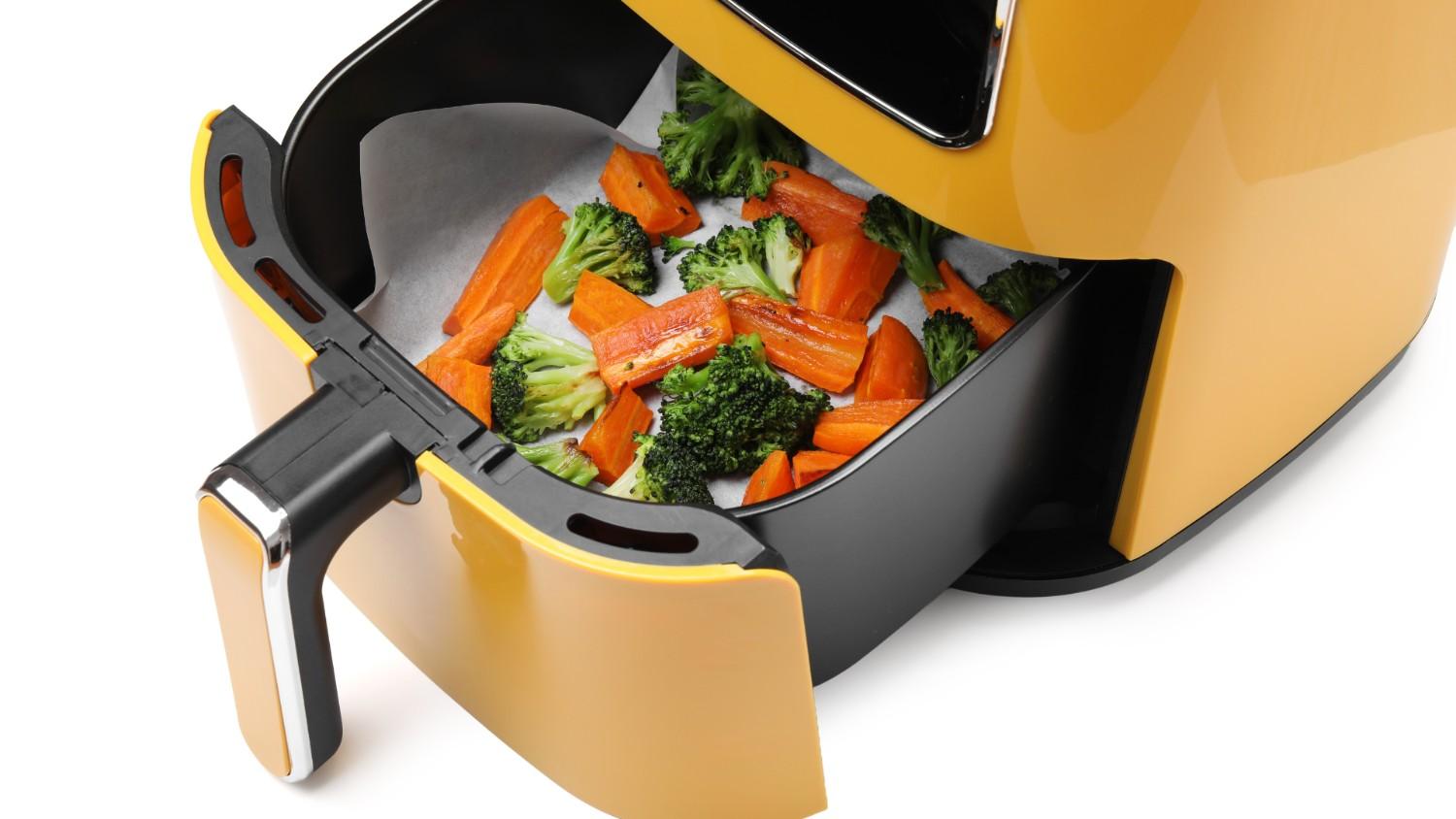
2) Butter/parchment paper
It is heat-resistant and good for sticky foods. But make sure that the food weighs it down. Loose paper can lift and burn.
3) Steel utensil
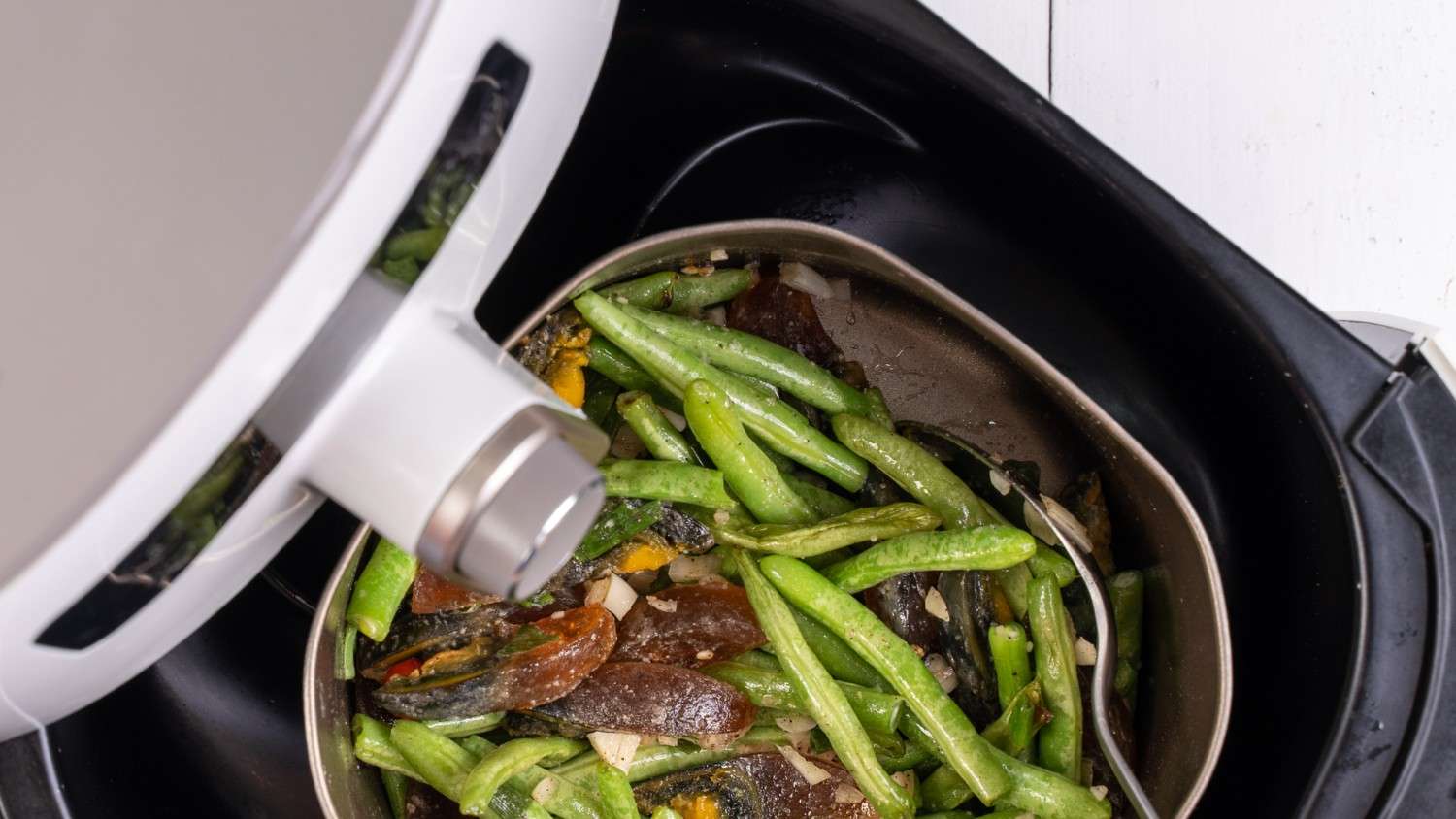
Small stainless-steel bowls and racks work well. They can handle heat, and you can use the racks to cook dishes like chicken tikka and all well.
4) Oven-safe glass bowls
You can use borosilicate or oven-rated glass in an air fryer. Don’t use regular glass as it easily cracks under high heat.
5) Silicone moulds
Food-grade silicone handles high temperatures pretty nicely and also prevents sticking. You can use it for cupcakes, eggs, and mini cakes.
What’s Not Allowed Inside an Air Fryer
Not every item is safe to be used inside an air fryer. Here’s what to avoid:
1) Plastic containers
Even microwave-safe plastic can melt and deform at air fryer temperatures. Melted plastic can damage the air fryer and even contaminate the food.
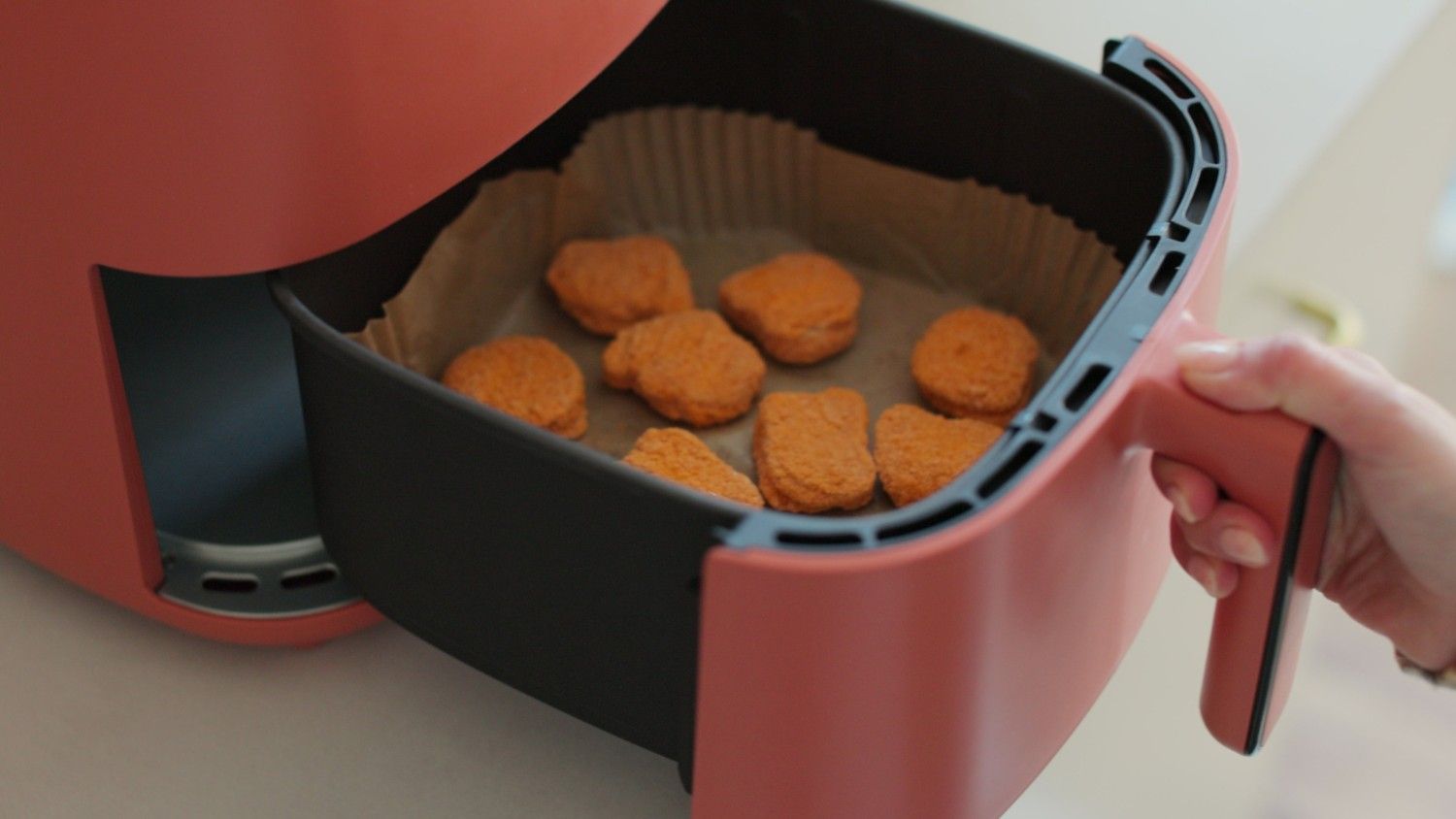
2) Loose paper or tissue
As I mentioned, you have to be careful with paper inside the air fryer. This is because the air fryer blows air upward, and paper can become caught in the airflow and potentially burn.
3) Foil touching the heating coil
If foil is placed too close to the heating element, it can spark and cause accidents. Better to use it in moderation.
4) Non-heatproof glass
It can easily crack due to a sudden temperature change.
What to Check If You’re Unsure
If you’re unsure about what to use, you can ask these three questions:
1) Is it oven-safe up to 200°C?
If yes, it can handle the heat.
2) Does it leave space for air to circulate?
If air can’t move properly, food won’t cook evenly.
3) Will it stay away from the heating coil?
Nothing should touch the top element.
Using Liners and Containers the Right Way
To sum it all up, liners and containers are useful for baking or reheating liquids, but they should never interfere with heat circulation. Perforated parchment is preferable over solid sheets, and always remember to weigh down parchment paper with food.
Small stainless-steel bowls or oven-safe glass can be used for dishes like dal or desserts because they tolerate high temperatures without warping or releasing fumes. And lastly, food-grade silicone liners are safer than plastic trays for non-stick cooking in an air fryer.
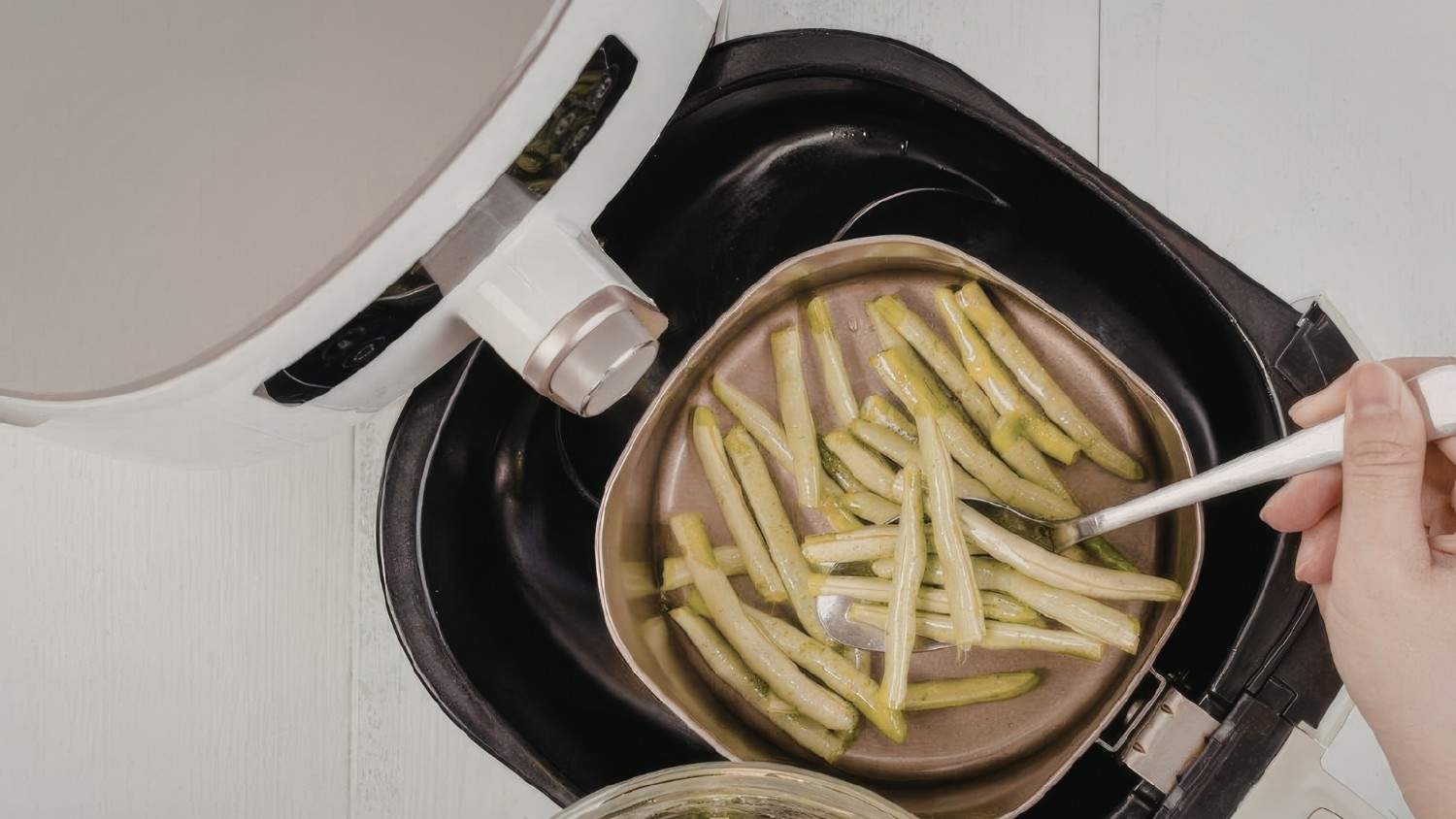
Just be careful, avoid overcrowding or stacking food tightly. As I said earlier, air fryers rely on moving heat to cook evenly. Cooking in batches and keeping the basket clean allows for consistent performance. In most cases, however, accessories are unnecessary; air fryers are designed to cook food directly in the basket, where airflow is properly delivered.