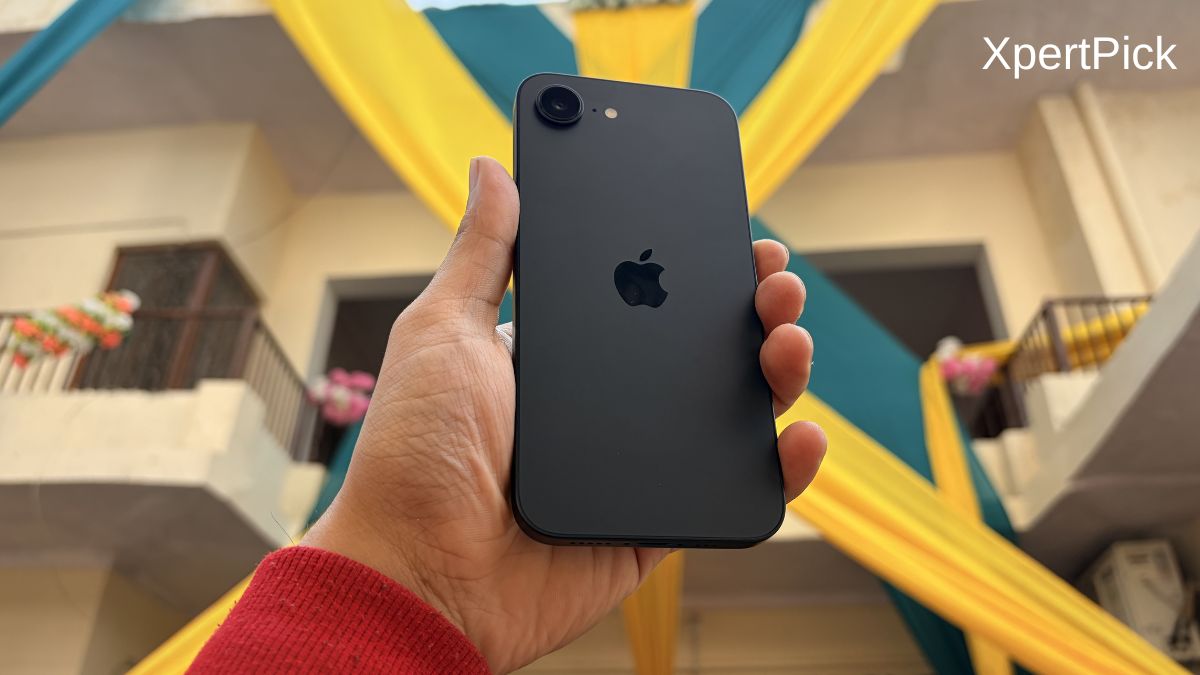
The iPhone 16e fits into Apple’s lineup as a modern “entry” iPhone built around the iPhone 13/14-era physical template, thanks to the classic notch and familiar chassis, but updated with the newer A18 platform and Apple Intelligence support.
In India, the iPhone 16e starts at ₹59,900 for the 128GB variant. For that price, you’re essentially paying for the A18 chip, a single 48MP “Fusion” camera system, a 6.1-inch OLED display, USB-C, Apple’s in-house C1 modem, and battery life rated at up to 26 hours of video playback.
However, here’s the catch: Apple also sells the iPhone 16 for around ₹69,900 for the base 128GB version, which can often be found for closer to ₹64,900 on platforms like Flipkart and Amazon, excluding bank offers. So, if you choose the iPhone 16e instead of the iPhone 16, what exactly are you missing for that price difference, and more importantly, how does the newer iPhone 17 reshape the value equation across Apple’s current lineup?
Another thing worth noting is that Apple has announced a product event on 4 March 2026, and multiple reports have been linking that date to new hardware announcements, often including speculation around a next-generation “e” iPhone. If you’re buying in late February 2026, it’s worth factoring that timing into your decision.
So, how does the iPhone 16e hold up as a smartphone, and does it justify its price tag in early 2026? Here’s the answer.
Apple iPhone 16e Design: Familiar Yet Refined
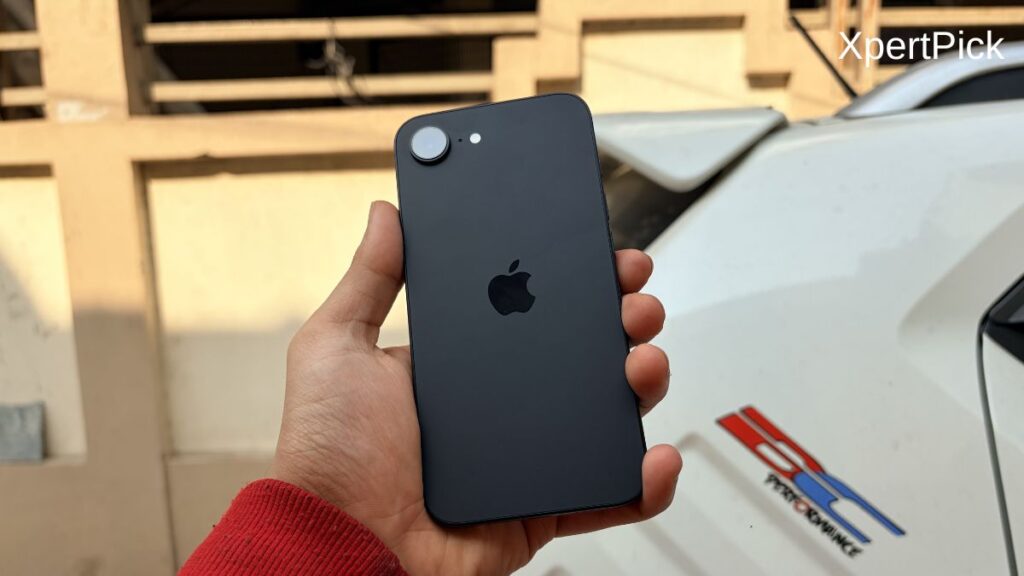
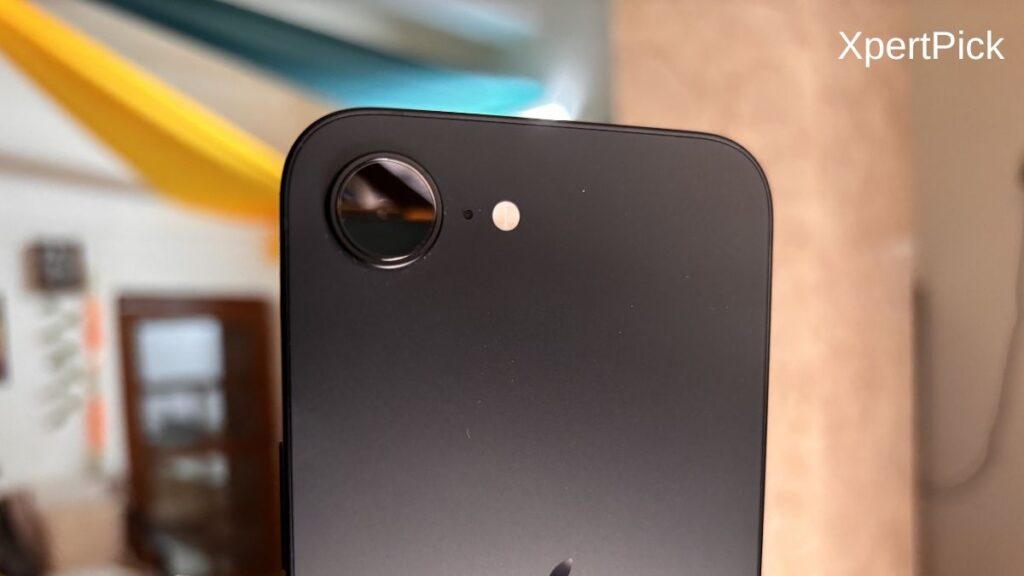
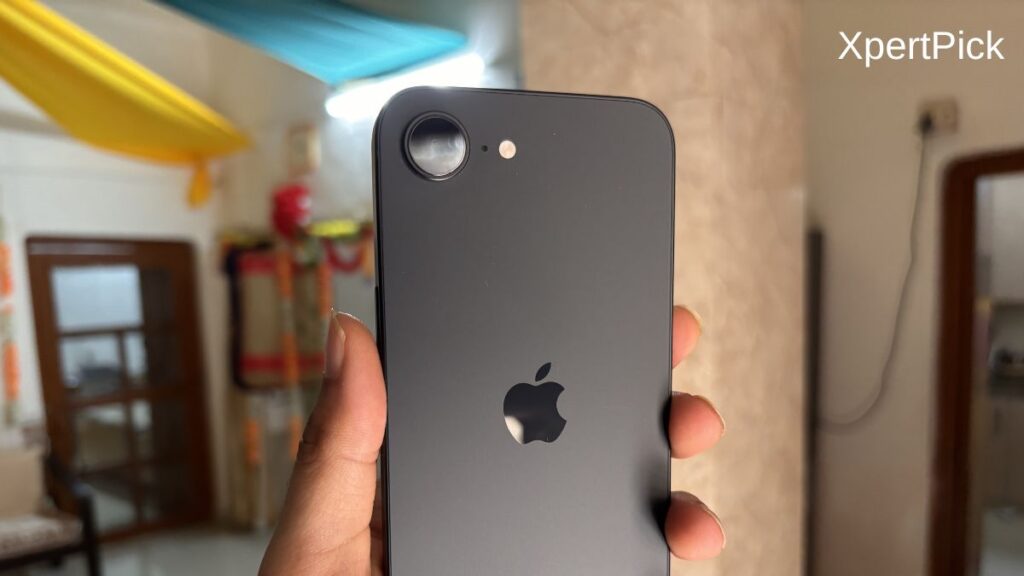
If you’ve used an iPhone 13 or iPhone 14, the iPhone 16e immediately feels familiar. It’s a compact-by-2026-standards 6.1-inch phone with the older front notch rather than Dynamic Island. The Black colourway, in particular, leans into that “clean slab” look: a single rear camera, minimal fuss, and a design that doesn’t scream for attention.
In the hand, the 16e has a very typical Apple-style build, comprising an aluminium frame and a glass back. It is slightly smaller and lighter than the iPhone 16, measuring 146.7 × 71.5 × 7.8 mm and weighing 167 g, compared to the iPhone 16’s 147.6 × 71.6 × 7.8 mm footprint and 170 g weight. The difference is minor on paper, but it is noticeable in daily use if you care about one-handed comfort.
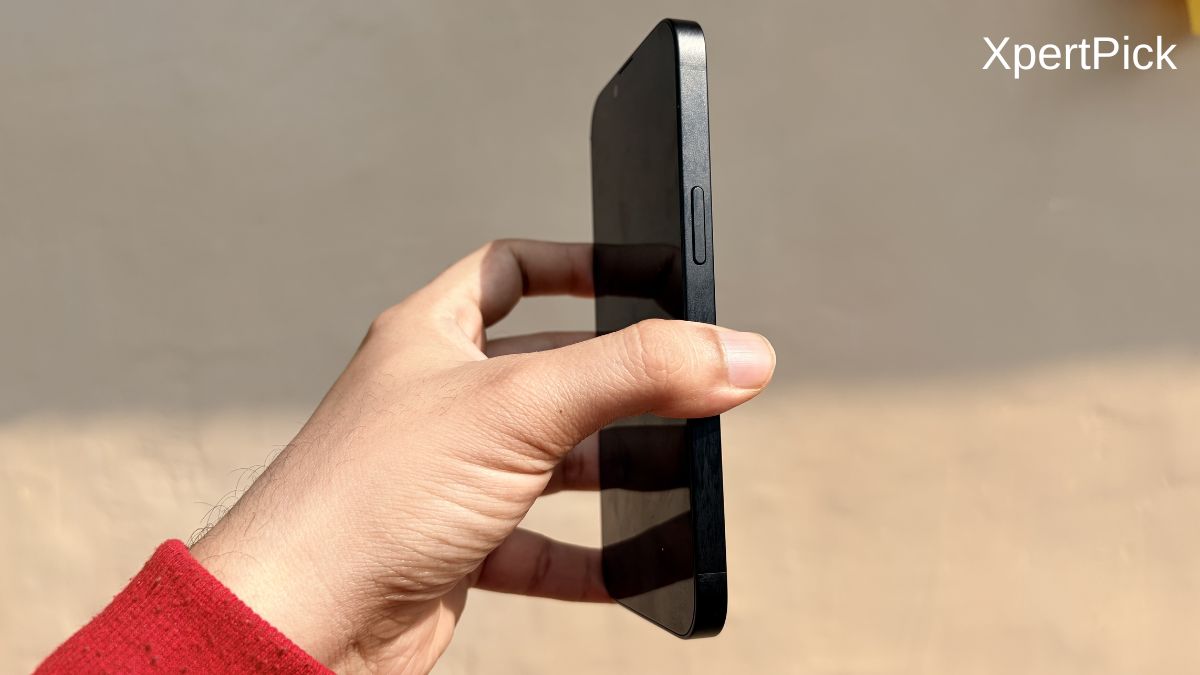
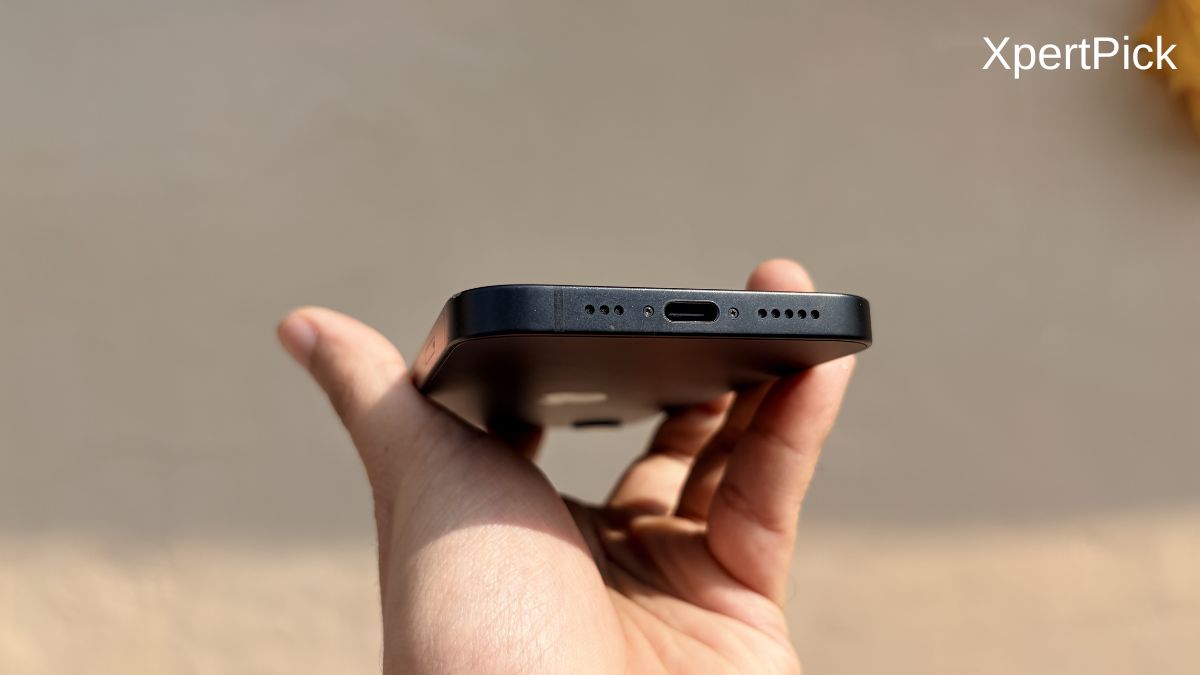
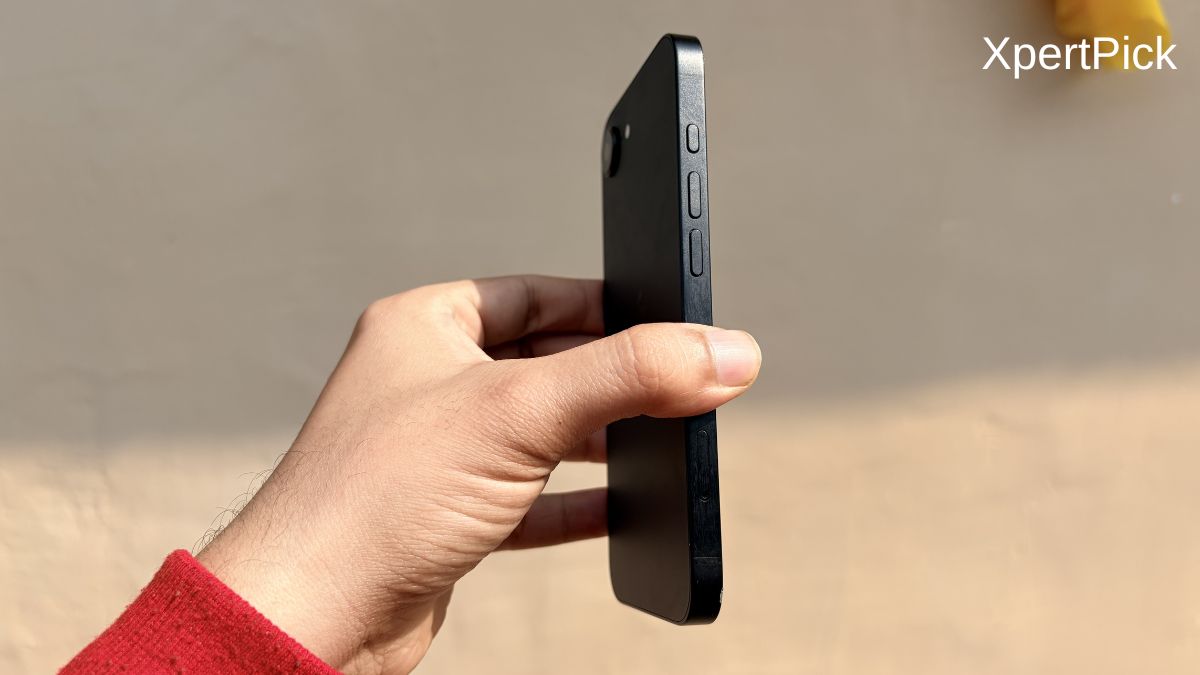
Where the iPhone 16e starts revealing its “value engineering” is in the feature cut list. You still get the Action button, USB-C, and the familiar button placement, but the iPhone 16e misses out on the newer Camera Control button that’s part of the iPhone 16 experience.
The other major design and ecosystem omission is MagSafe. The iPhone 16e supports Qi wireless charging, but it isn’t a MagSafe iPhone. This means the magnetic accessory ecosystem, such as snap-on wallets, docks, and battery packs, isn’t supported natively.
You can buy third-party MagSafe-compatible cases for the iPhone 16e that add magnets, allowing MagSafe chargers and accessories to stick, even though the phone itself doesn’t have built-in MagSafe support.
Apple iPhone 16e Display: Compact, Colour-Accurate, but Refresh-Limited
On paper, the iPhone 16e is straightforward: a 6.1-inch OLED panel that looks “iPhone-class” in colour and contrast, but it’s still capped at 60Hz, like the non-Pro iPhones. In brightness terms, it reaches around 800 nits in manual mode, while auto brightness and HDR content can push it to roughly 1,200 nits, which is respectable but not class-leading. In daily use, that means it’s smooth enough if you’re coming from older iPhones, but it’s immediately less fluid than any 120Hz Android flagship in this space.
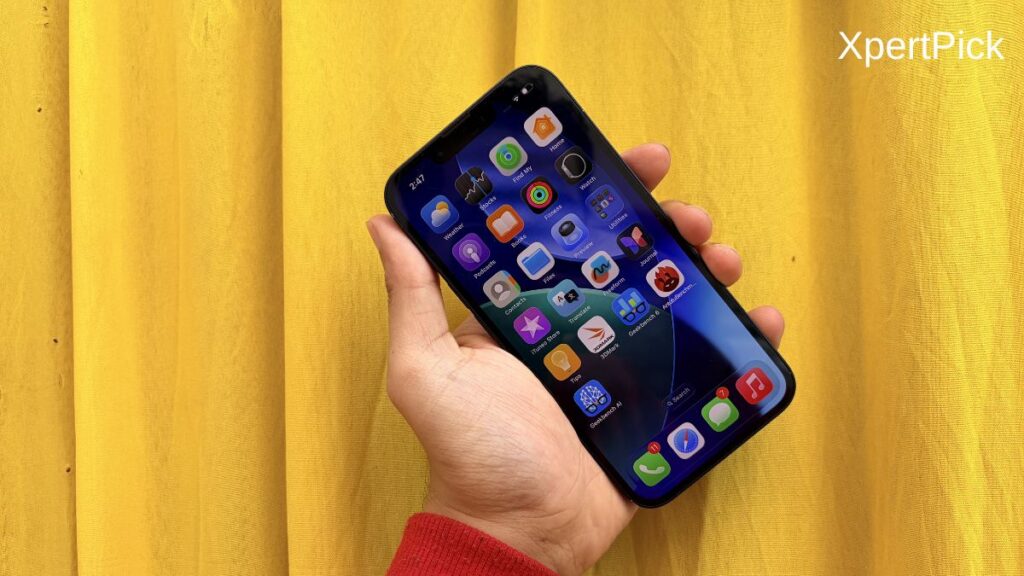
The most important comparison, though, the iPhone 16 also remains a 60Hz phone, but it adds a more “modern iPhone” feel via Dynamic Island (instead of the notch), and it pushes substantially higher peak brightness. The iPhone 16 can reach close to 1,000 nits manually, climbs to around 1,600 nits in HDR, and can peak at up to 2,000 nits outdoors, giving it noticeably more headroom in bright conditions.
The iPhone 17 meaningfully improves on both fronts. It finally moves to a 120Hz ProMotion display, instantly closing the smoothness gap that both the 16e and iPhone 16 suffer from, while also retaining the Dynamic Island design. Brightness sees another step up as well, with higher sustained outdoor visibility and improved HDR tone mapping, making the iPhone 17 not just smoother, but also more legible and consistent in harsh lighting. Together, these changes make the iPhone 17 feel like the first genuinely no-compromise display upgrade in Apple’s non-Pro lineup.
Apple iPhone 16e Camera: Computational Brilliance but Hardware-Limited
The Apple iPhone 16e features a streamlined, single-lens rear camera setup, utilising a 48MP Fusion sensor with an f/1.6 aperture and optical image stabilisation (OIS). In real-world use, the system delivers strong results overall, leaning heavily on Apple’s computational photography pipeline rather than sheer hardware versatility.
Apple positions this as a “2-in-1” camera system: by using the central 12 megapixels of the 48MP sensor, the phone delivers a genuinely useful, 2× crop at a 52mm equivalent focal length, which works particularly well for portraits and tighter framing.
When switching between the standard 1× wide shot and the 2× crop, colour consistency is absolute. Because both focal lengths are generated from the same physical sensor, there are no colour shifts, exposure changes, or white balance inconsistencies. This is an area where multi-camera systems can sometimes stumble.
For instance, the Samsung Galaxy S25 FE, with its three physically distinct lenses (50MP main, 12MP ultrawide, and 8MP telephoto), can occasionally show minor tonal variation when jumping between lenses, even if overall output remains strong.
From a camera perspective, both the iPhone 16 and the subsequent iPhone 17 clearly trump the iPhone 16e. The iPhone 16’s dual-camera system introduces a dedicated ultrawide lens, enabling true compositional flexibility for landscapes, group shots, architecture, and cramped indoor scenes, something the single-camera iPhone 16e simply cannot replicate.
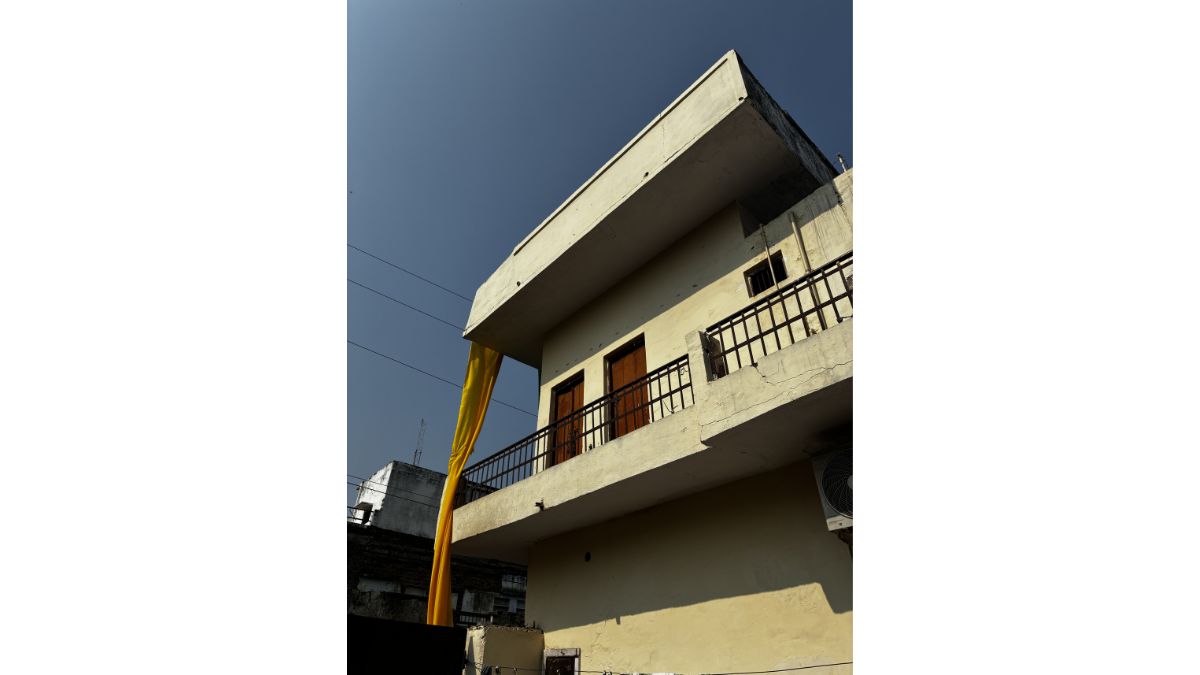

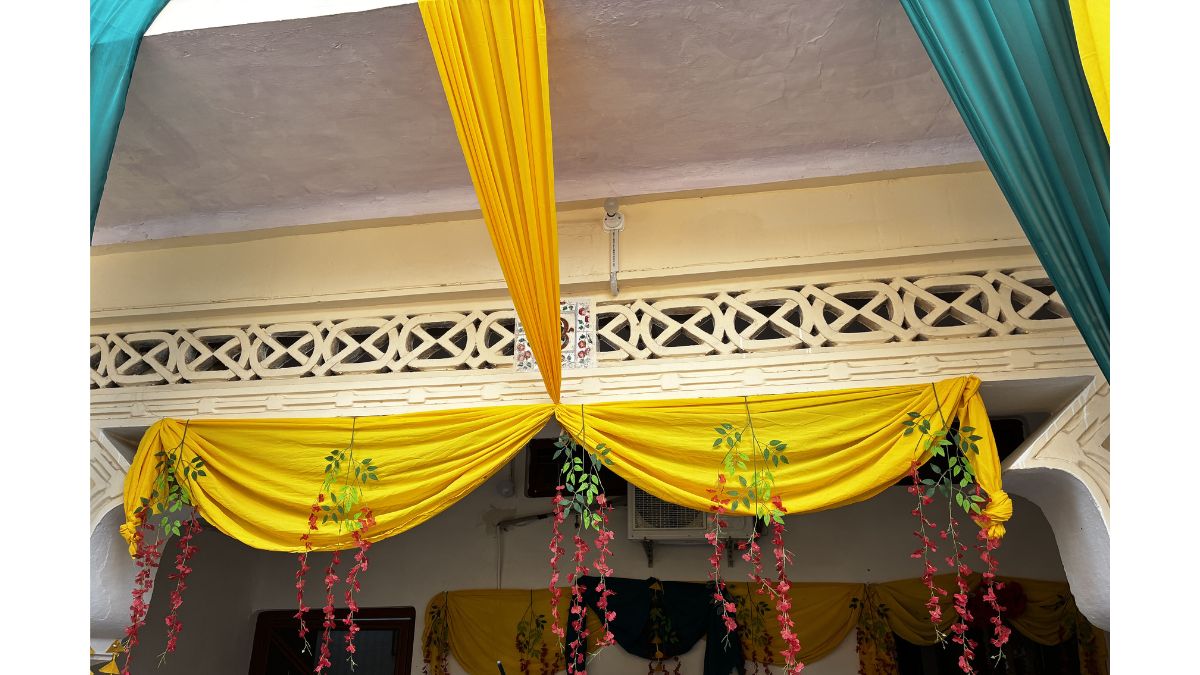

The iPhone 17 widens this gap further with a more refined dual-camera setup, delivering cleaner ultrawide output, better low-light consistency, and improved colour matching between lenses. In real-world use, this makes the iPhone 17 far more dependable for varied shooting scenarios, while the iPhone 16e remains limited by its single-lens approach.
This absence is felt most clearly in everyday scenarios like indoor group shots and travel photography, where the lack of an ultrawide option on the 16e becomes a genuine limitation rather than a spec-sheet omission.





Against Android competition, the Samsung Galaxy S25 FE also pulls ahead in hardware-driven flexibility. Its dedicated 8MP telephoto enables clean 3× optical zoom for distant subjects, while the 12MP ultrawide allows for sweeping scenes and macro-style close-ups that are simply not possible on the iPhone 16e. While the 16e supports up to 10× digital zoom, pushing beyond the 2× optical-quality crop results in rapid digital degradation, producing softer, watercolour-like textures best suited only for reference shots.
The primary 48MP Fusion camera on the iPhone 16e delivers excellent detail in most lighting conditions, thanks to the Photonic Engine and Deep Fusion processing that optimises images on a pixel-by-pixel level. Smart HDR 5 handles high-contrast scenes confidently, controlling highlights while lifting shadow detail without making images look artificially processed. However, in low-light situations, the absence of additional camera hardware becomes more apparent. Zoomed night shots rely heavily on algorithmic upscaling, an area where phones like the Galaxy S25 FE, with dedicated lenses, can retain slightly more usable detail.
Portrait photography is where the iPhone 16e makes a surprisingly strong case. Despite relying on a single lens and lacking dedicated depth hardware, Apple’s 16-core Neural Engine generates highly accurate depth maps. That said, it can still struggle with subjects that have more complex depth or fine, fuzzy strands of hair.
Video performance remains a core iPhone strength. The iPhone 16e supports 4K Dolby Vision HDR recording at up to 60fps, delivering exceptionally stable, cinematic footage with smooth exposure transitions and class-leading dynamic range. The limitation here is convenience. With only one rear camera, you miss out on ultrawide perspectives and seamless multi-lens switching, features that are available on the iPhone 16 and increasingly expected at this price point.
On the front, the iPhone 16e’s 12MP camera delivers reliable HDR, accurate skin tones, and consistent exposure, with autofocus, Night Mode, and deep integration with Apple’s software features like Animoji and Memoji.
Overall, the iPhone 16e is an excellent “one-camera iPhone” in terms of output quality and consistency, but the iPhone 16’s second camera lens feels less like a spec upgrade and more like a meaningful lifestyle advantage in daily use.
Apple iPhone 16e Performance: Benchmarks, Gaming, and Thermals
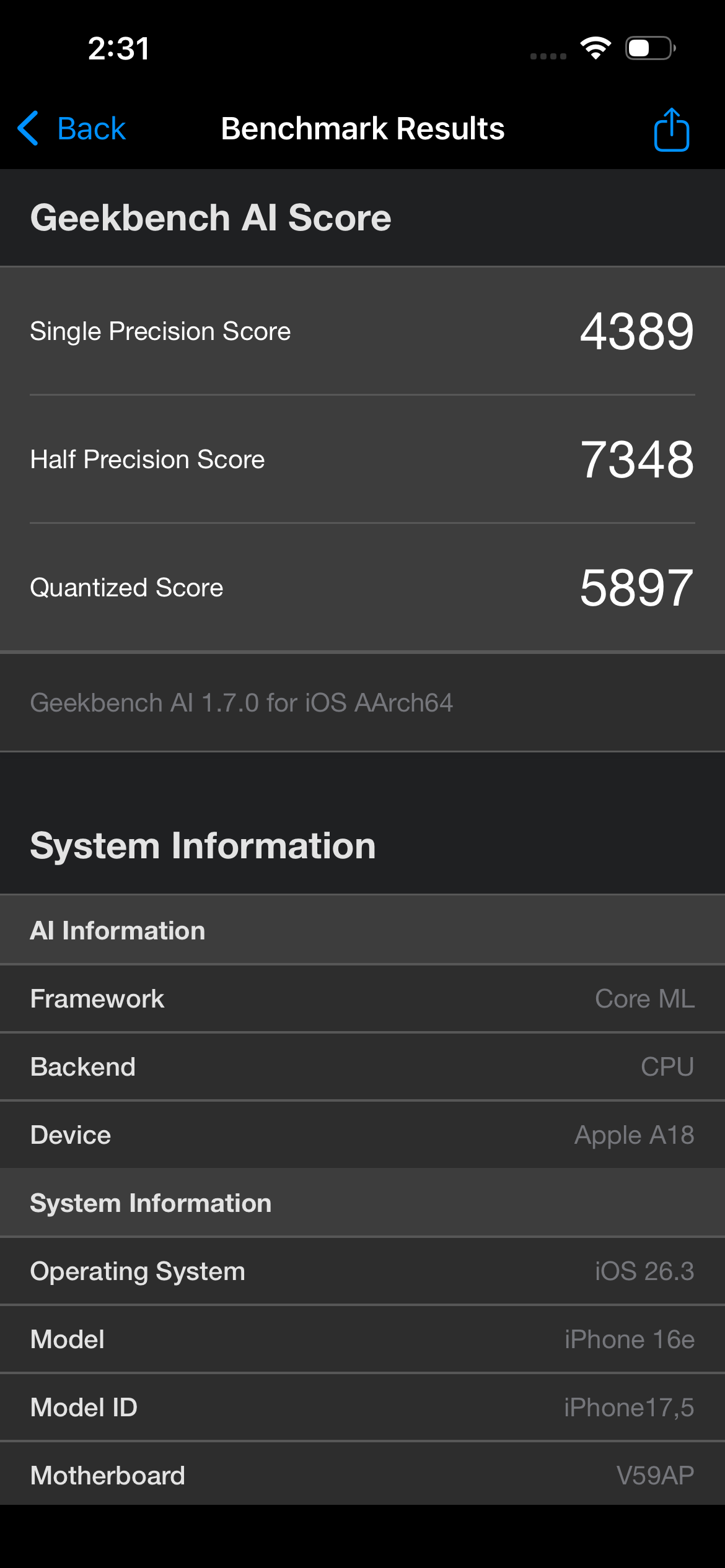
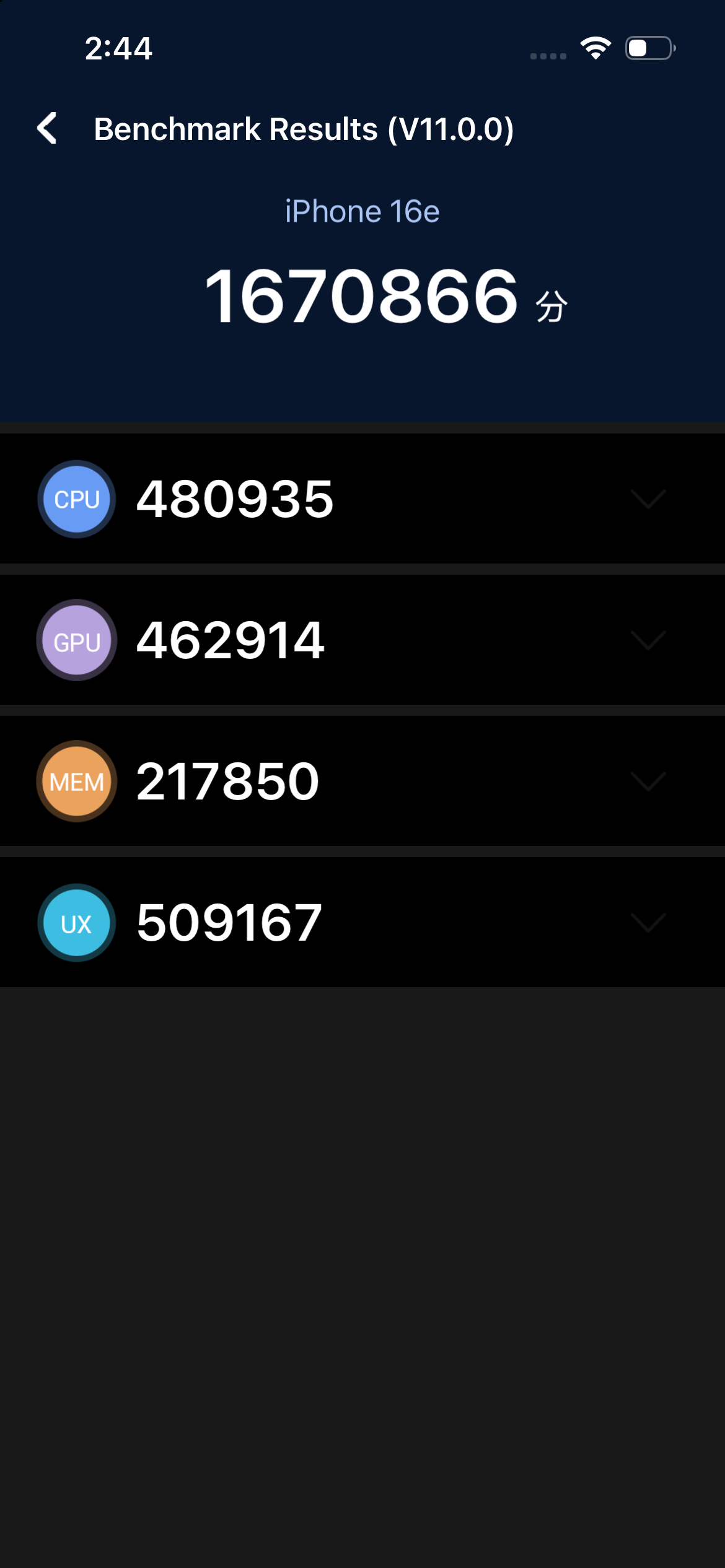
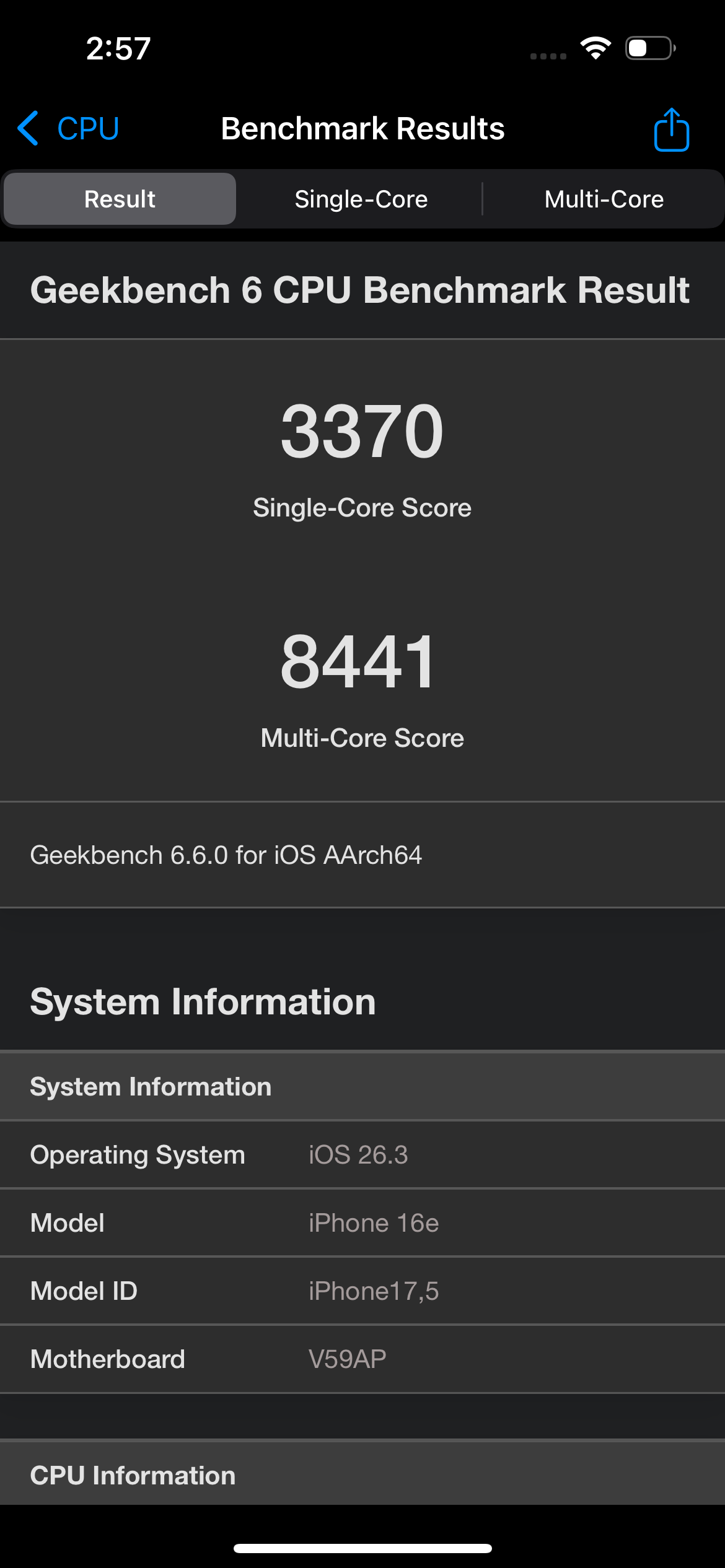
Performance is one area where the iPhone 16e genuinely earns its name. It runs on Apple’s A18 platform, crucially from the same overall family as the iPhone 16, but with a key difference: the 16e uses a cut-down A18 configuration with a 4-core GPU instead of the iPhone 16’s typical 5-core GPU. This difference is more noticeable in graphics-heavy workloads than in everyday app performance.
In the Geekbench 6 CPU tests, the iPhone 16e scores 3,370 in single-core and 8,441 in multi-core performance. The iPhone 16 is slightly ahead, scoring 3,395 in single-core and 8,569 in multi-core tests.
The gap becomes clearer in graphics benchmarks. In Geekbench’s Metal GPU test, the iPhone 16e scores 24,119, while the iPhone 16 scores 27,553, reinforcing that this is primarily a GPU-side trim rather than a massive CPU downgrade.
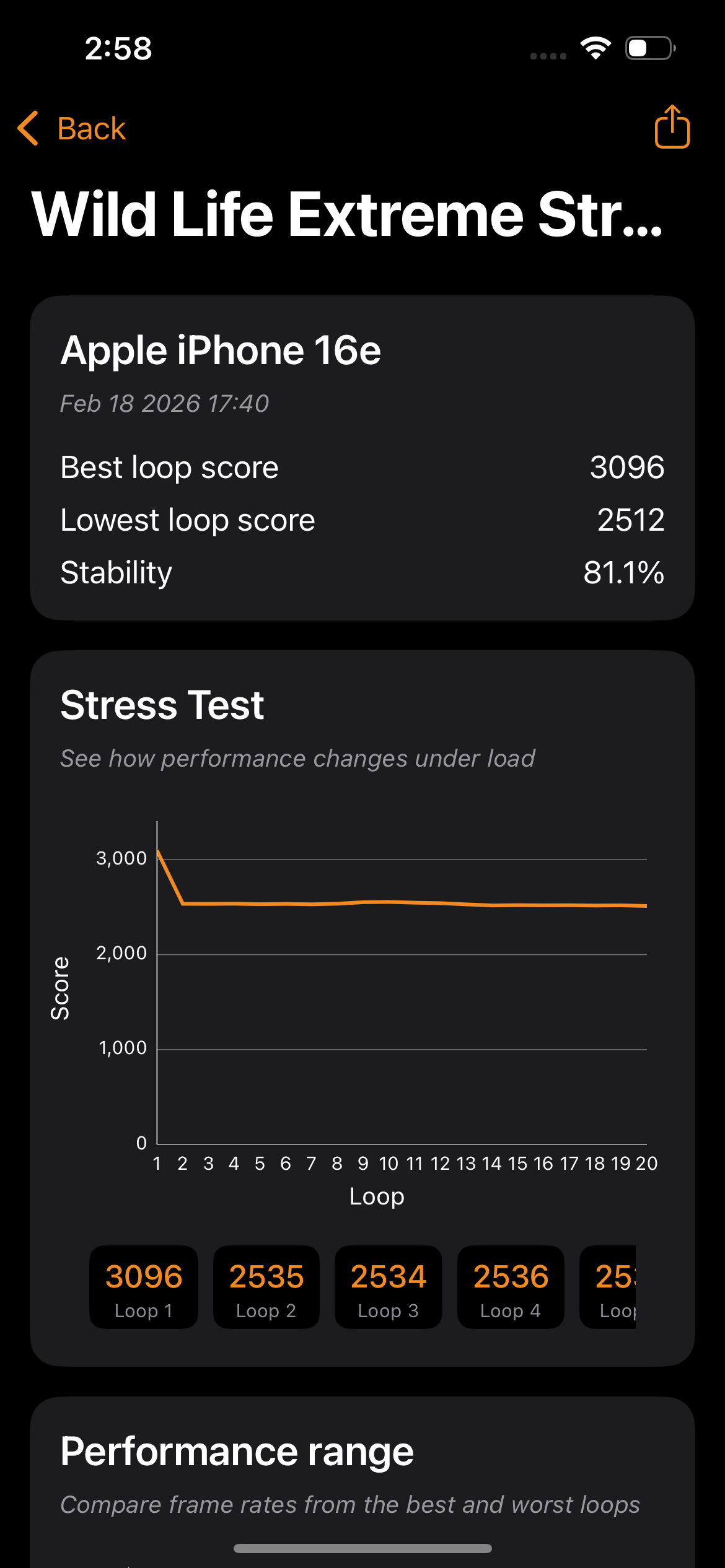
Looking at 3DMark’s Wild Life Extreme benchmark results, the iPhone 16e records 3,096 points, whereas the iPhone 16 hits 3,906 points. This gap is primarily due to the GPU configuration: the iPhone 16 uses a 5-core GPU as part of the A18 chipset, while the iPhone 16e comes with a 4-core GPU. That extra GPU core gives the iPhone 16 more raw graphics throughput.
Sustained performance is where the iPhone 16e actually looks surprisingly good. The iPhone 16e scored 81.1%, compared with 83.3% for the iPhone 16, as both offer good and satisfying results, much better than their Android counterparts, which usually end up anywhere between 40% and 70%.
In terms of gaming, the Apple iPhone 16 and 16e demonstrate limitations in real-world gaming scenarios. In Battlegrounds Mobile India (BGMI) and PUBG Mobile, tested at high graphics settings, the iPhone 16e delivers an impeccably smooth but hardware-locked 60 FPS experience. Due to the 60Hz display limitation, the device is physically incapable of rendering the game at 90 FPS or 120 FPS, placing competitive gamers at a distinct disadvantage.
In comparison, the newer iPhone 17, thanks to its more powerful A19 chip and 120Hz ProMotion display, easily unlocks and sustains 90 FPS and 120 FPS modes in BGMI. During intense 40-minute Erangel matches or crowded Team Deathmatch sessions, the Galaxy S25 FE maintains frame rates fluctuating between 100 and 120 FPS, making it clearly better suited for high-refresh-rate, competitive mobile gaming.
A similar trend continues in more demanding, open-world titles like Genshin Impact or Minecraft, tested at the highest graphics settings. While the iPhone 16e initially handles the rendering workload smoothly at 60 FPS, extended 30-to-45-minute sessions generate significant chassis heat, eventually leading to only minor frame drops of 1 to 2 FPS.
Apple iPhone 16e Battery Life: Endurance and Charging
In mixed daily use, social media, messaging, navigation, camera, and short video sessions, the iPhone 16e reliably delivers a full day of use, typically ending with around 20–30% battery remaining. In practical terms, it can comfortably last beyond a day, even with heavier workloads.
Lighter users can stretch the 16e to around a day and a half, while heavy users should still comfortably get through a full day. Apple’s claimed 26-hour video playback figure is optimistic, but it does reflect the phone’s strong efficiency during passive media use. Charging remains conservative: roughly 50% in under 30 minutes with a 20W adapter, but close to two hours for a full charge, with slower Qi wireless charging due to the absence of MagSafe.
Apple iPhone 16e Verdict: A Polished Performer Shadowed by Obsolescence
The Apple iPhone 16e is an efficiency-first sub-flagship built around raw CPU performance, excellent battery endurance, and Apple’s class-leading computational photography rather than broad hardware versatility. At ₹59,900, it delivers a polished, reliable experience that will appeal to users deeply invested in Apple’s ecosystem, particularly those who value software fluidity, Face ID security, long-term updates, and consistent point-and-shoot camera output.
Against the Samsung Galaxy S25 FE, the iPhone 16e holds clear advantages in single-core performance, app responsiveness, background efficiency, and video recording quality. The A18 chip feels faster in everyday use, battery life is more predictable, and Apple’s video pipeline remains unmatched. However, the Galaxy S25 FE counters with a brighter 120Hz display, superior gaming performance thanks to better cooling, faster charging, and far greater camera flexibility through its ultrawide and 3x telephoto lenses.
Against Apple’s own iPhone 16, the 16e’s advantages are narrower and mostly efficiency-driven, it delivers similar day-to-day performance and slightly better endurance in some usage patterns, but gives up meaningful quality-of-life upgrades like the Dynamic Island, MagSafe support, higher peak brightness, and a dual-camera system with an ultrawide lens, all of which make the iPhone 16 feel more complete at a slightly higher price.
Timing ultimately undermines the iPhone 16e’s value. With Apple’s March 4 event expected to introduce the iPhone 17e, likely addressing key compromises such as the notch, MagSafe omission, and aging design, buying the iPhone 16e at full price just days before its successor arrives is difficult to justify. Unless it sees a significant price drop, waiting for the iPhone 17e or opting for the more versatile Galaxy S25 FE is the more sensible choice right now.
Pros
-
Solid CPU performance with the A18 chip.
-
Great photography and video capabilities thanks to 48MP Fusion sensor.
-
Lightweight 167g compact chassis delivers peerless one-handed ergonomics.
-
Phenomenal battery efficiency guarantees reliable all-day endurance despite a smaller 4005mAh capacity.
Cons
-
Display hardware is severely bottlenecked by an archaic 60Hz refresh rate.
-
Binned 4-core GPU and lack of active vapor cooling result in thermal throttling during extended gaming sessions.
-
Complete absence of a dedicated ultrawide or true optical telephoto lens restricts photographic versatility.