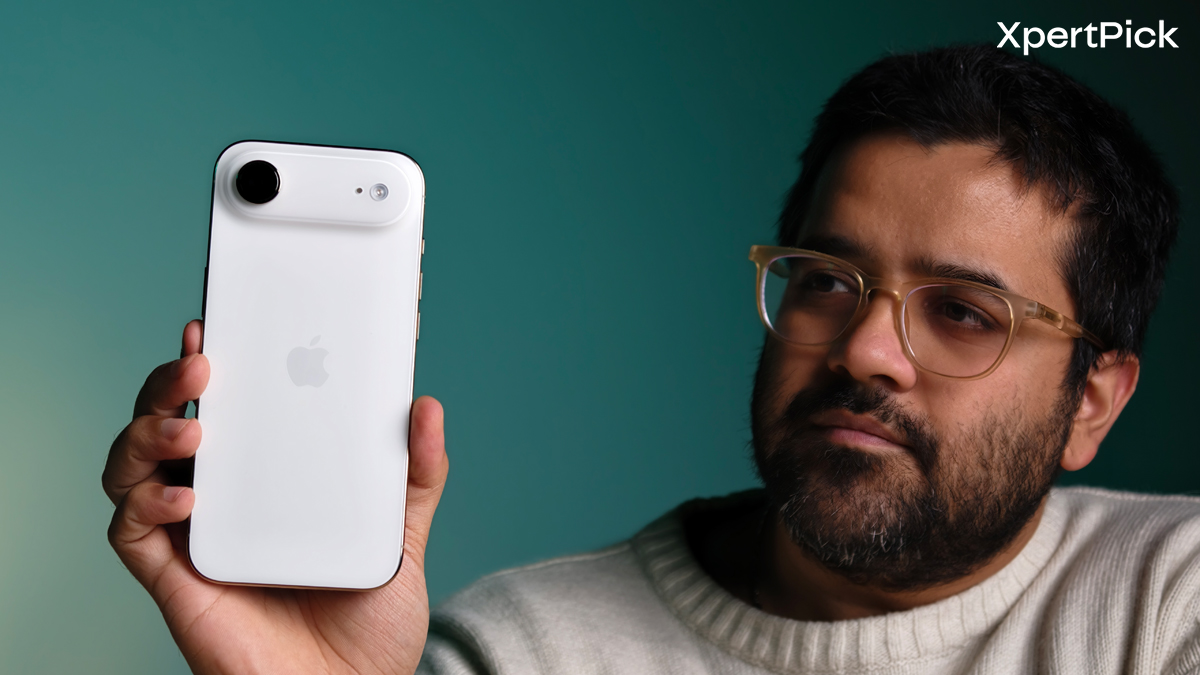
The iPhone Air is a smartphone Apple doesn’t think we’ll like very much. I say this because the level of compromise it demands for me to actually use a supposed flagship product is simply too high. Getting into the iOS walled garden itself was, and still is, a huge task. But the iPhone Air asks you to give up even more before it finally shows you what it has to offer.
So, months after its release and after using the iPhone 17 as my daily driver, I finally decided to take the iPhone Air for a spin, and the whole experience felt like stepping into a love-hate relationship. There are parts of the iPhone Air that genuinely, positively blew me away. But I wasn’t prepared for the level of commitment it asks in return. Keeping that in mind, here’s my Apple iPhone Air review.
Design: Extraordinary, Yet Subtle
The Apple iPhone Air is beautiful, on the outside and on the inside. The entire logic board sits underneath the camera assembly, and it’s exceptionally engineered. The way Apple has reorganised the internals to make this form factor possible feels less like aggressive cost-cutting and more like a deliberate act of restraint. Nothing here feels accidental. Every millimetre seems to be argued over, negotiated, and ultimately justified.
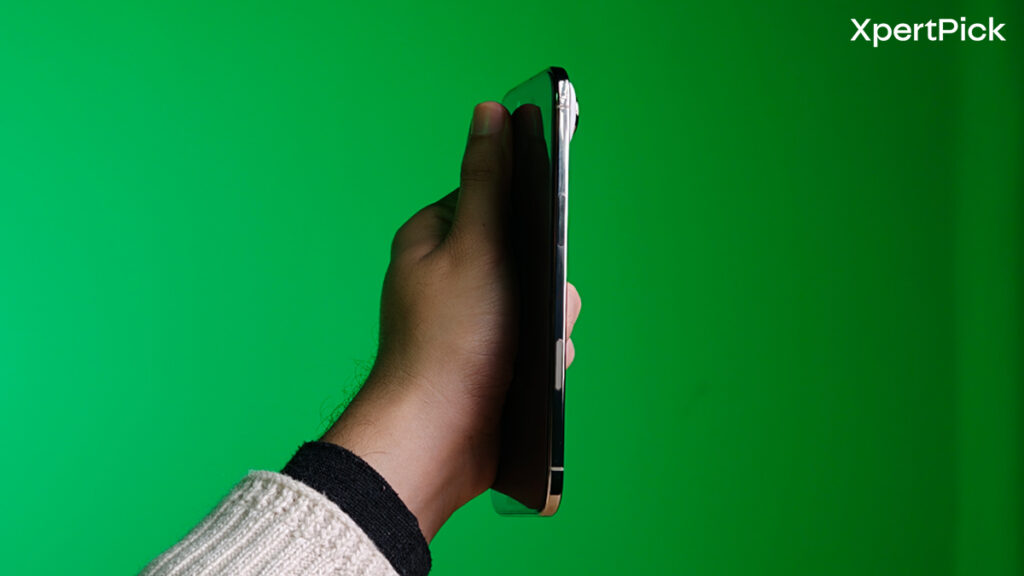
In terms of dimensions, the iPhone Air measures 160.2 × 76.1 × 5.6 mm and weighs just 164 grams. On paper, those numbers already look unusual for an iPhone, but they don’t fully prepare you for how different it feels in practice. By comparison, the iPhone 17 Pro Max is noticeably larger and thicker at 163.0 × 77.6 × 8.3 mm, tipping the scales at well over 220 grams. While the height and width of the iPhone Air still place it firmly in familiar large-phone territory, similar to the iPhone 17 Pro Max, the dramatically reduced thickness reshapes the experience entirely, making it feel less like a dense slab and more like a sheet of glass you happen to carry around.
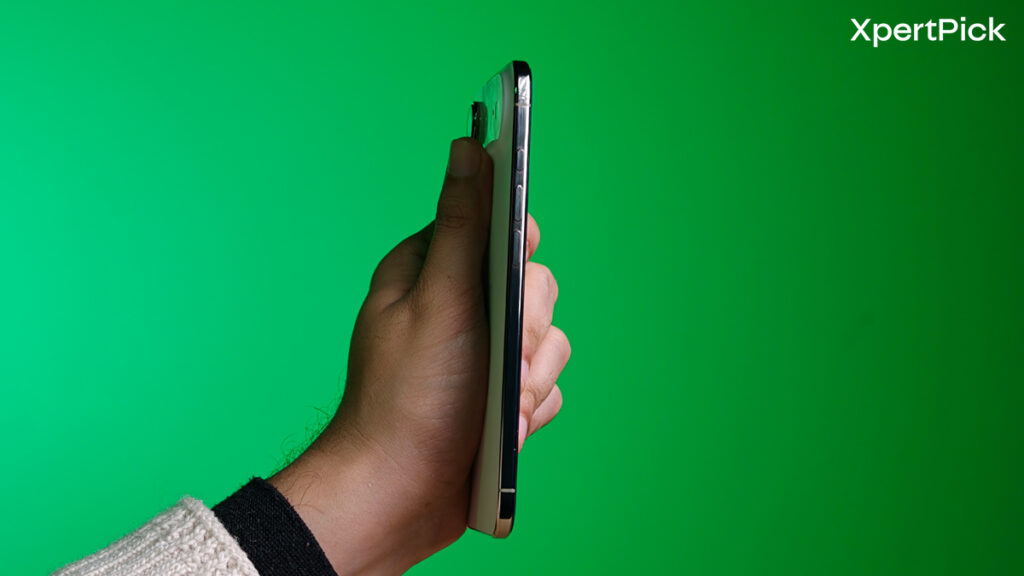
The iPhone Air uses the exact same battery cell as Apple’s official MagSafe battery pack for the iPhone Air. Same model number, same regulatory markings, the same 3,149 mAh capacity. iFixit even confirmed that you can physically swap the MagSafe battery into the phone, and it boots up and runs just fine.
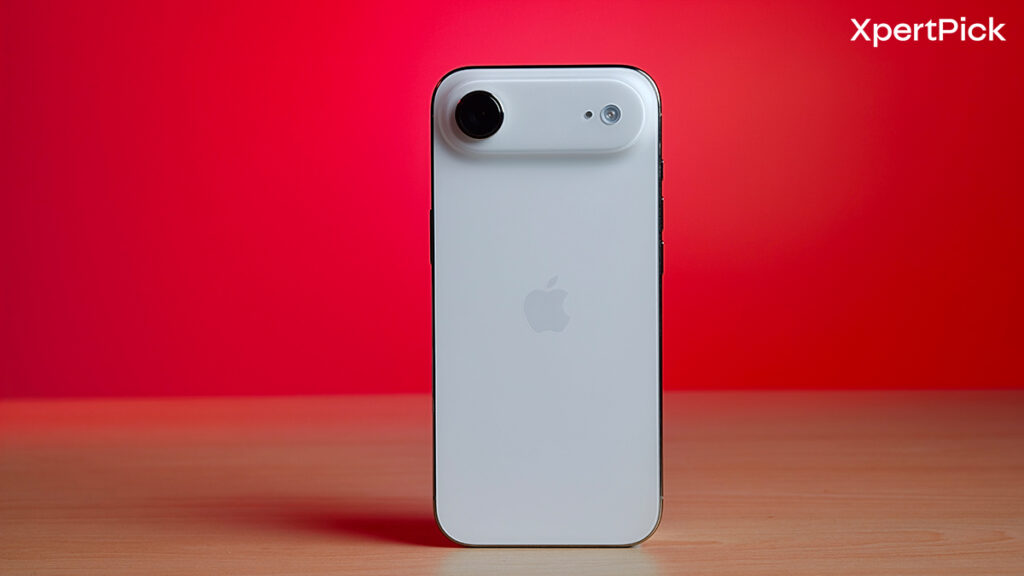
Instead of designing a bespoke ultra-thin battery just for the phone, Apple reused an existing battery design. That’s unusual for Apple, not that I’m complaining, especially in a product meant to show off engineering ambition. The repositioned logic board spilling into the camera plateau is also a clever choice, helping reduce bending stress.
Moreover, Apple has used a 3D-printed titanium housing for the USB-C port, which unfortunately remains limited to USB 2.0 speeds, despite the A19 Pro chip onboard. This is worth calling out because the same A19 Pro in the Apple iPhone 17 Pro Max supports USB 3.0, making the limitation here a deliberate design trade-off rather than a technical constraint. The 3D-printed port housing saves 30–50% in material and enables shapes that traditional machining can’t achieve, but the sum of these compromises also means Apple asks you to give up a physical SIM entirely if you want to experience the iPhone Air.
Apple had previously made all its iPhones eSIM-only in the US, and with the iPhone Air, this approach now extends worldwide. From an Indian perspective, this is a notable constraint, as the phone’s resale value takes a hit in the used market, which has largely avoided eSIM-only iPhones until now.
Display: A Familiar Yet Brilliant Screen
On paper, the iPhone Air’s display doesn’t look like a departure from what Apple has already been doing. It’s a 6.5-inch OLED panel, slightly larger than the 6.3-inch display on the iPhone 17 Pro, and technically very similar in most of the ways that matter.
Brightness on the iPhone Air is excellent for its class, feeling punchy in everyday use and pushing close to 3,000 nits under HDR, which makes outdoor visibility a non-issue with auto brightness enabled. Within Apple’s lineup, the Apple iPhone 17, with its 6.3-inch OLED display, reaches 1,010 nits manually, peaks at 3,000 nits automatically, and drops to 1 nit at minimum brightness.
The Apple iPhone 17 Pro Max, with its 6.9-inch OLED display, goes further, reaching nearly 1,100 nits manually, peaking at 3,272 nits, and dimming down to 1.6 nits. The iPhone Air doesn’t match that absolute headroom, but its colour calibration and overall tuning remain among the best OLED implementations on a smartphone.
Meanwhile, the Samsung Galaxy S25 Edge, with its 6.7-inch LTPO AMOLED display, reaches around 740 nits with manual boosted brightness enabled, with a maximum outdoor brightness of roughly 2,714 nits.
All that said, what stands out most is that there are no real compromises here. It feels like Apple’s best display tech, dropped into an impossibly thin body without asking you to accept anything less. For a device built around tradeoffs, the screen is refreshingly not one of them.
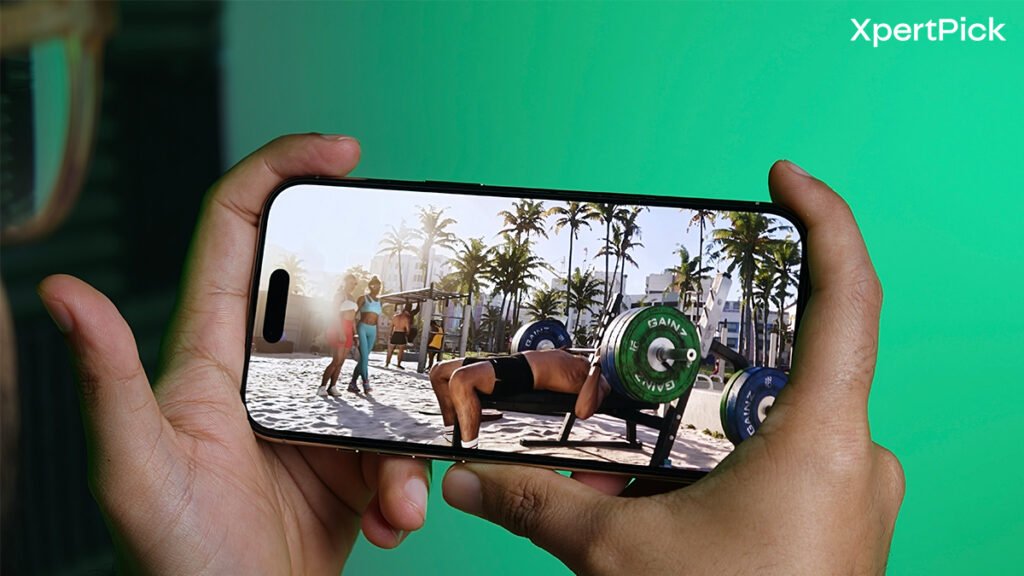
However, the single-speaker system will make the lack of bass immediately apparent when watching content.
Motion and responsiveness are exactly where they should be, and the experience is almost identical across the entire latest iPhone range, as all models feature a standard 120 Hz ProMotion display.
Scrolling feels fluid, animations are clean, and the panel’s response times are fast enough that even quick gaming or fast-moving content never looks smeared or soft. Viewing angles are excellent, with minimal brightness drop-off unless you’re really pushing the extremes.
There is one caveat worth mentioning. Like the 17 Pro, the iPhone Air uses PWM dimming, with a maximum frequency of 480 Hz. Apple does offer some pulse smoothing at lower brightness levels, but its effect is limited. If you’re particularly sensitive to PWM flicker, this is still something you may notice during extended use at low brightness, and it’s one of those areas where Apple hasn’t meaningfully moved the needle yet.
Gaming, Benchmarks and Thermals: The Good and The Bad
In terms of benchmarks, the iPhone Air starts off strong thanks to the A19 Pro chip, which features a 6-core CPU; however, it only gets a 5-core GPU instead of the 6-core graphics unit found in the A19 Pro used in the iPhone 17 Pro and Pro Max. By comparison, the Apple iPhone 17 runs the standard A19 chip, pairing a 6-core CPU with a 5-core GPU, which helps explain the performance gap. In Geekbench 6, the iPhone Air scores 3,750 in the single-core test and 9,565 in the multi-core test, beating the iPhone 17, which scores 3,351 and 8,591, respectively, before the Air’s performance tapers off under sustained load.
Similarily, the iPhone Air edges out in Geekbench 6 GPU test as well by beating the iPhone 17 by 966 points.
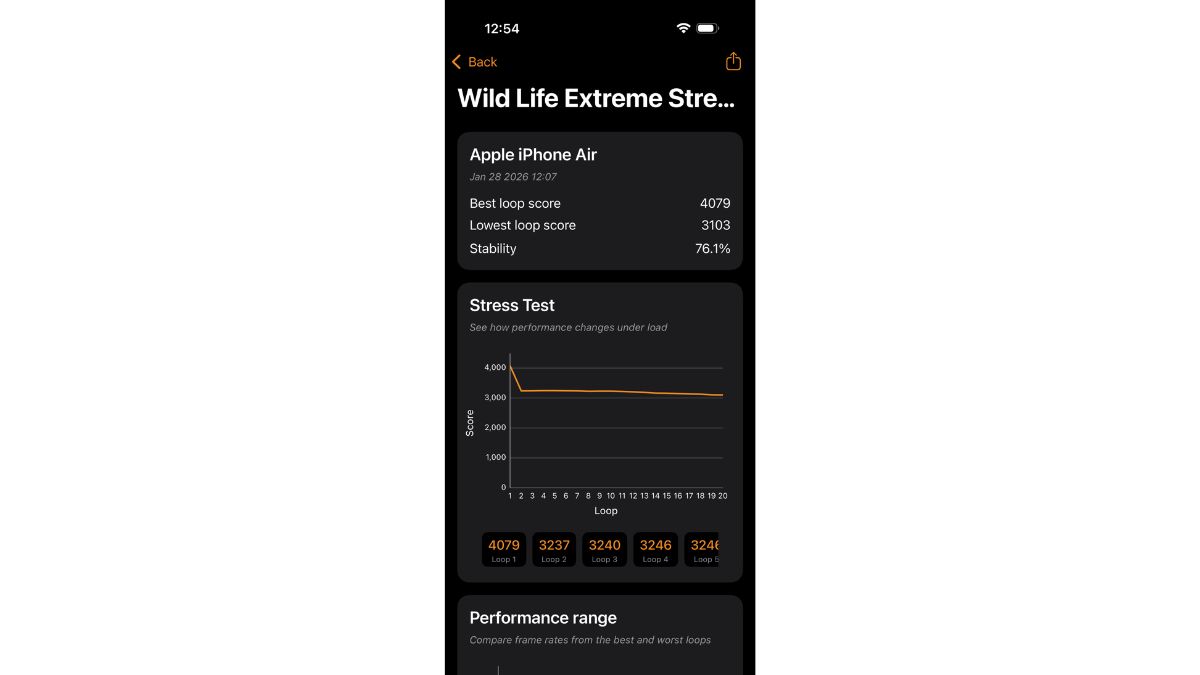
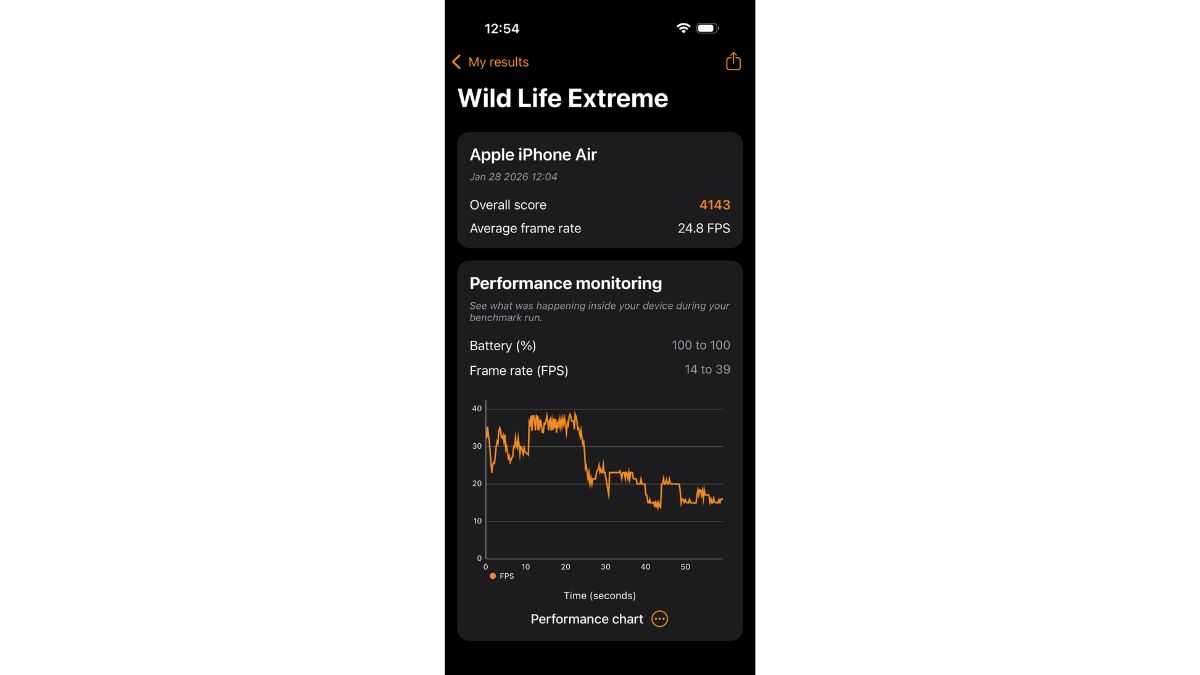
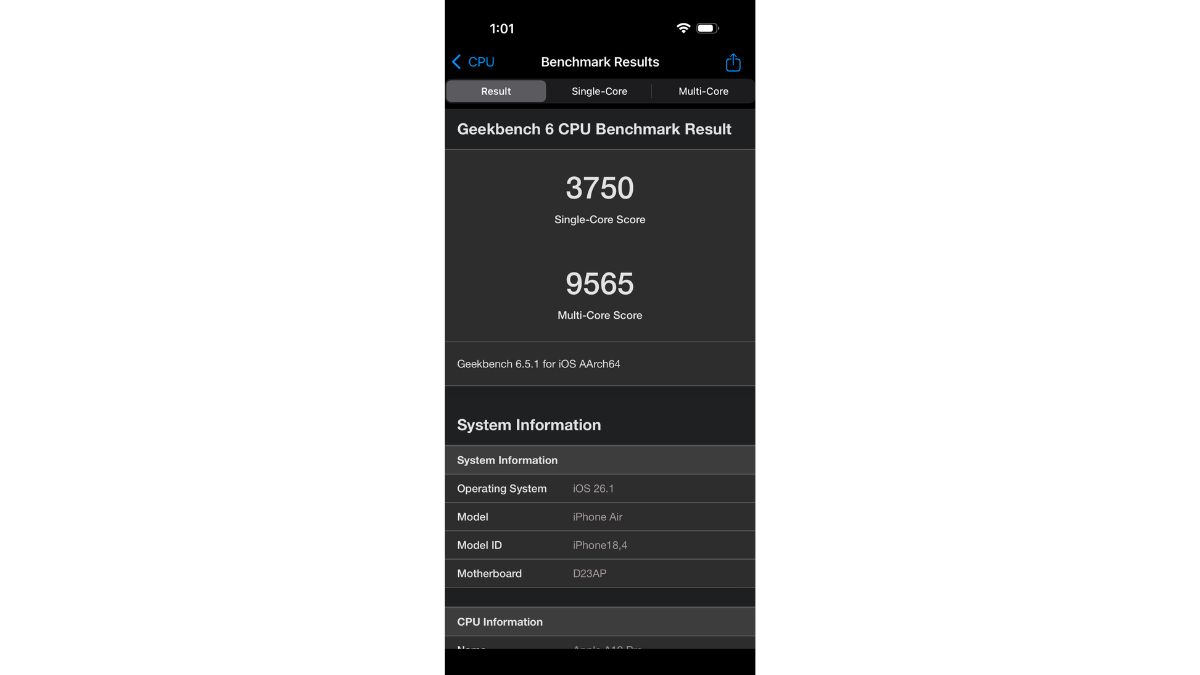
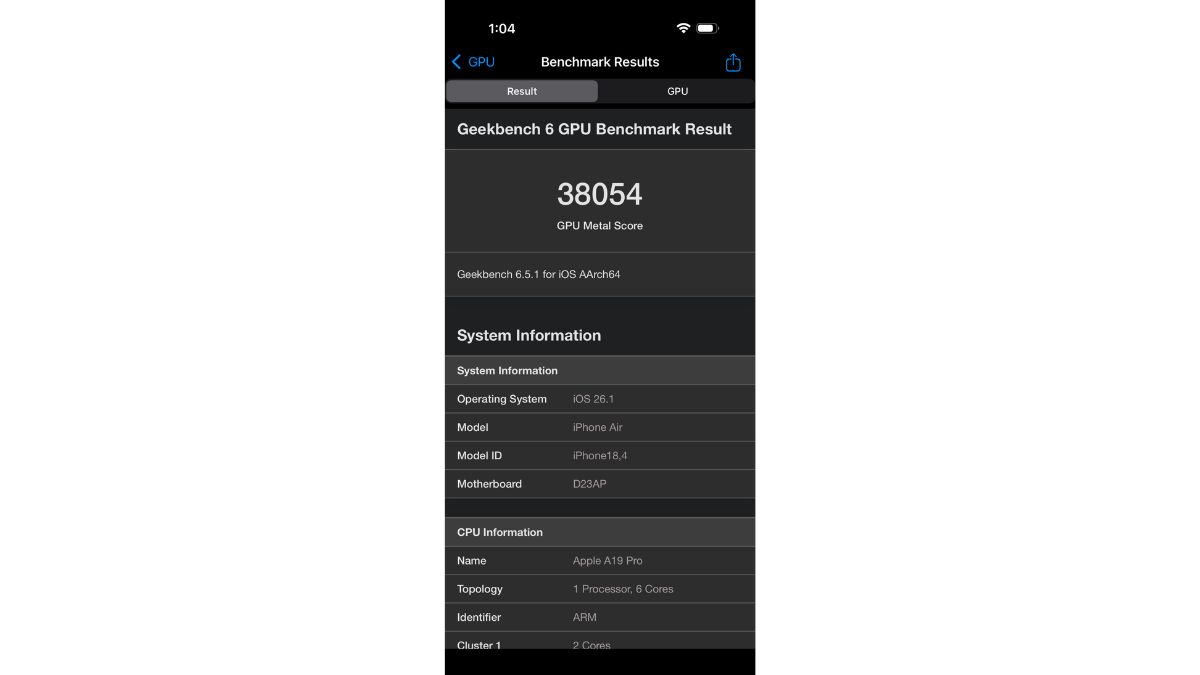
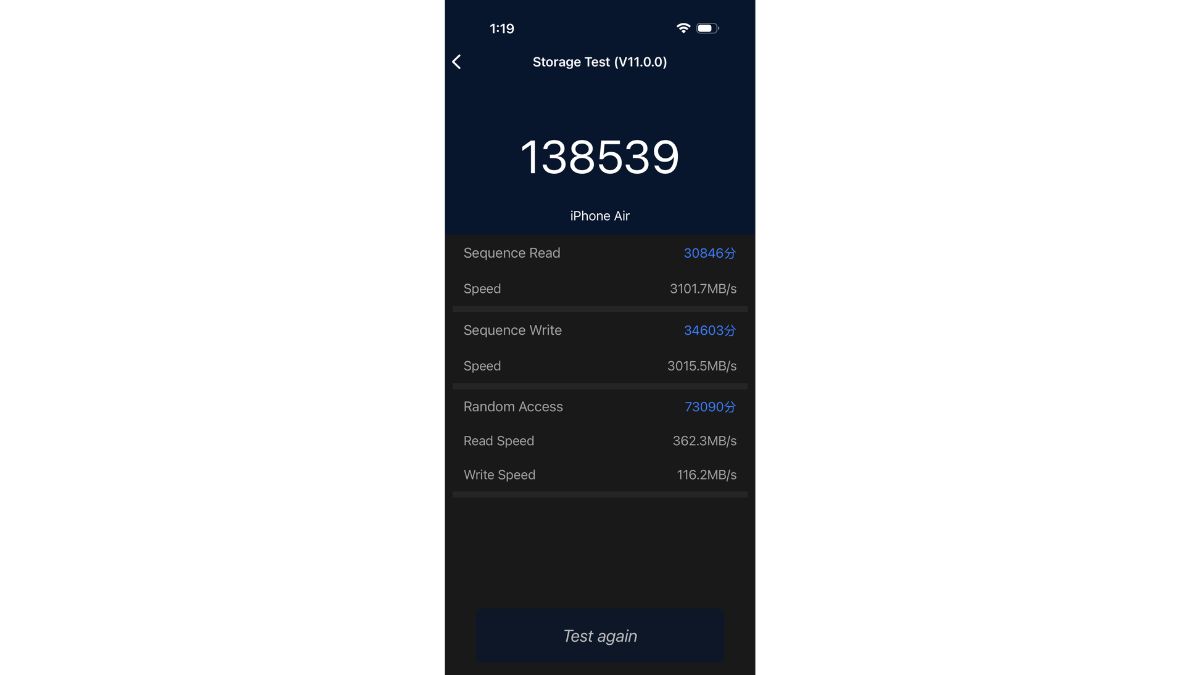
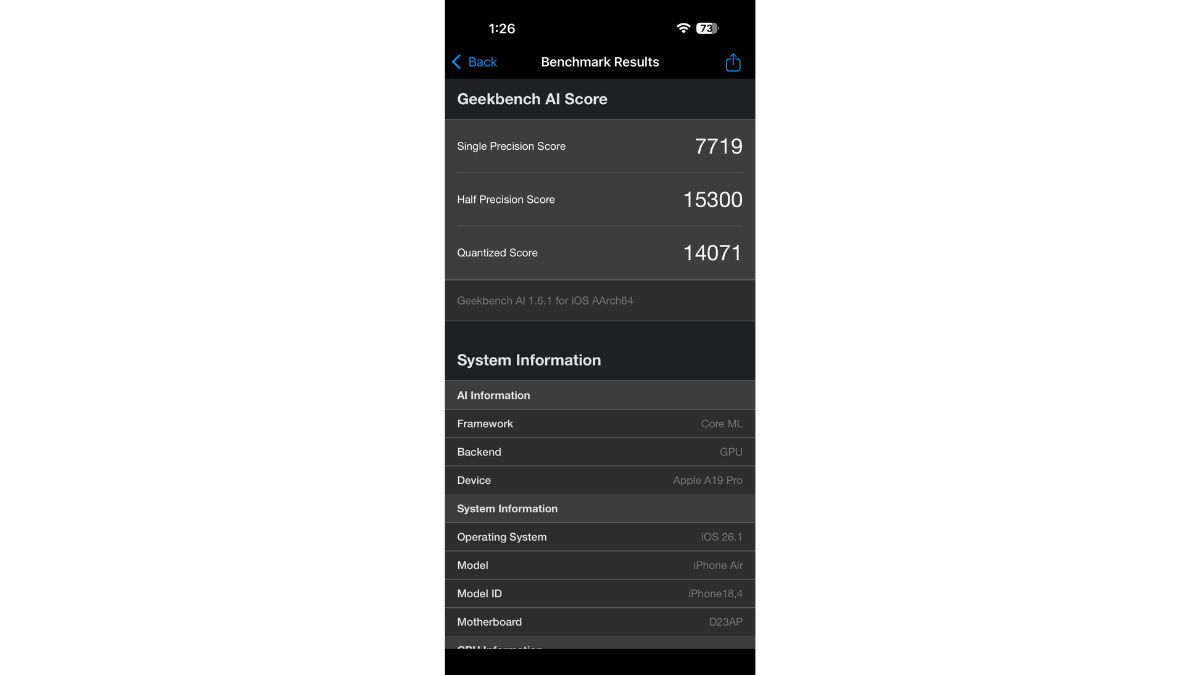
However, when it comes to long-term sustained performance, the much thinner iPhone Air naturally takes a back seat, scoring around 76.1% stability compared to the iPhone 17’s 83.9%. The iPhone Air manages its thermals well, reaching a maximum surface temperature of just 36.1°C, only 0.1°C higher than the iPhone 17.
The same pattern is evident during gaming, where the iPhone Air delivers a mixed but largely short-burst performance profile that reflects both the raw power of the A19 Pro chip and its thermal limits. In BGMI at the lowest graphics settings, the phone averages around 110 FPS over a 45-minute session, with 5% lows hovering near 95 FPS. By comparison, the Apple iPhone 17 pulls slightly ahead in the same test, averaging 115 FPS with stronger 5% lows at 98 FPS, indicating more stable sustained performance.
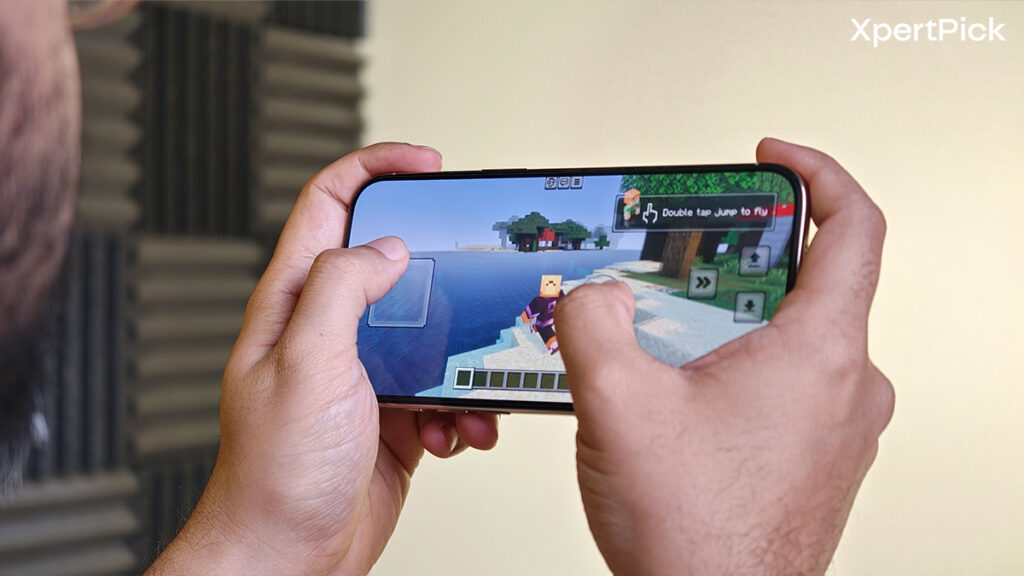
In Minecraft, both phones perform similarly. The iPhone Air runs the game at an average of 60 FPS on the highest settings, with 5% lows around 49 FPS, while the iPhone 17 maintains the same 60 FPS average with marginally better 5% lows at 50 FPS.
The gap becomes more noticeable in heavier titles. In Genshin Impact, tested at high settings with the 60 FPS cap enabled, the iPhone Air averages 58 FPS, dipping to 51 FPS in the worst 5% of frames, mostly during combat and effect-heavy moments. The iPhone 17, on the other hand, holds a full 60 FPS average with 5% lows at 58 FPS, making gameplay feel more consistent over longer sessions.
Asphalt 9 is where the iPhone Air looks most comfortable, delivering an average of 59 FPS with 5% lows at 60 FPS, resulting in smooth, uninterrupted gameplay. Even here, though, the iPhone 17 edges it out slightly, locking both its average and 5% lows at a steady 60 FPS.
Lastly, here’s how it performs in some other crucial benchmarks.
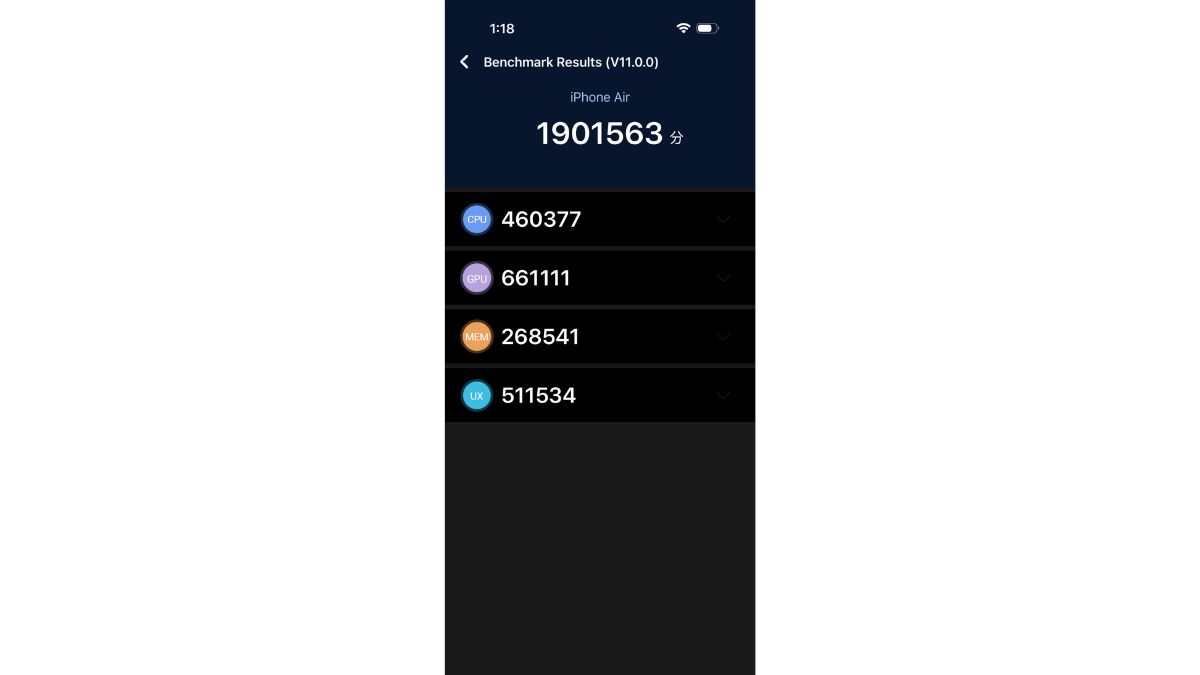
AnTuTu overall: 1,901,563
AnTuTu CPU: 460,377
AnTuTu GPU: 661,111
Geekbench single-core: 3,750
Geekbench multi-core: 8,591
Camera: Is The Single Lens Good Enough?
Short answer: It depends. The Apple iPhone Air camera features a 48 MP main sensor with a wide f/1.6 aperture and sensor-shift OIS. The physical size of the sensor is 1/1.56-inch. The camera system also supports Dual-Pixel PDAF, Apple’s autofocus technology. Together, these elements deliver a fairly competent photography experience, particularly for daylight and portrait shots.
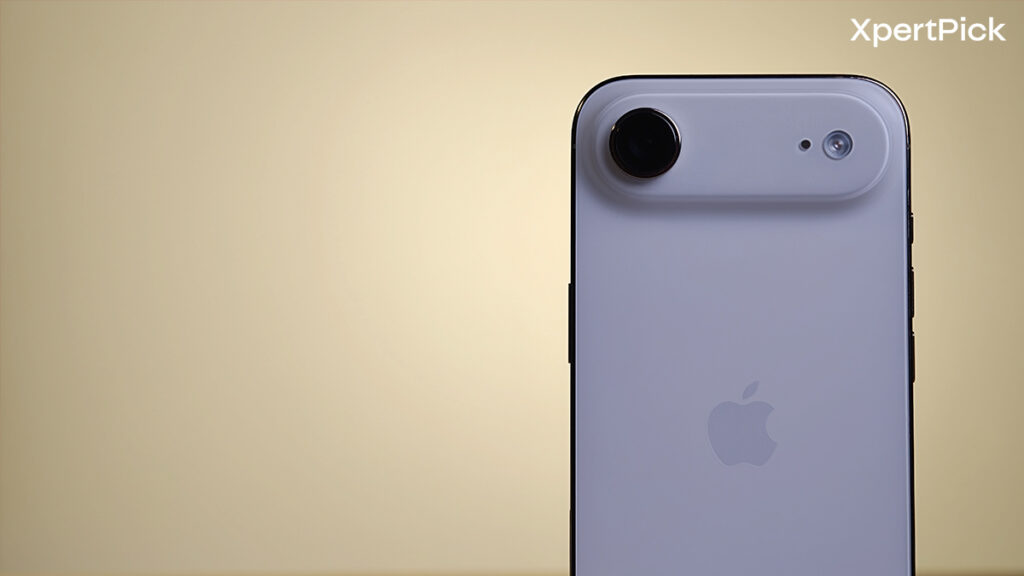
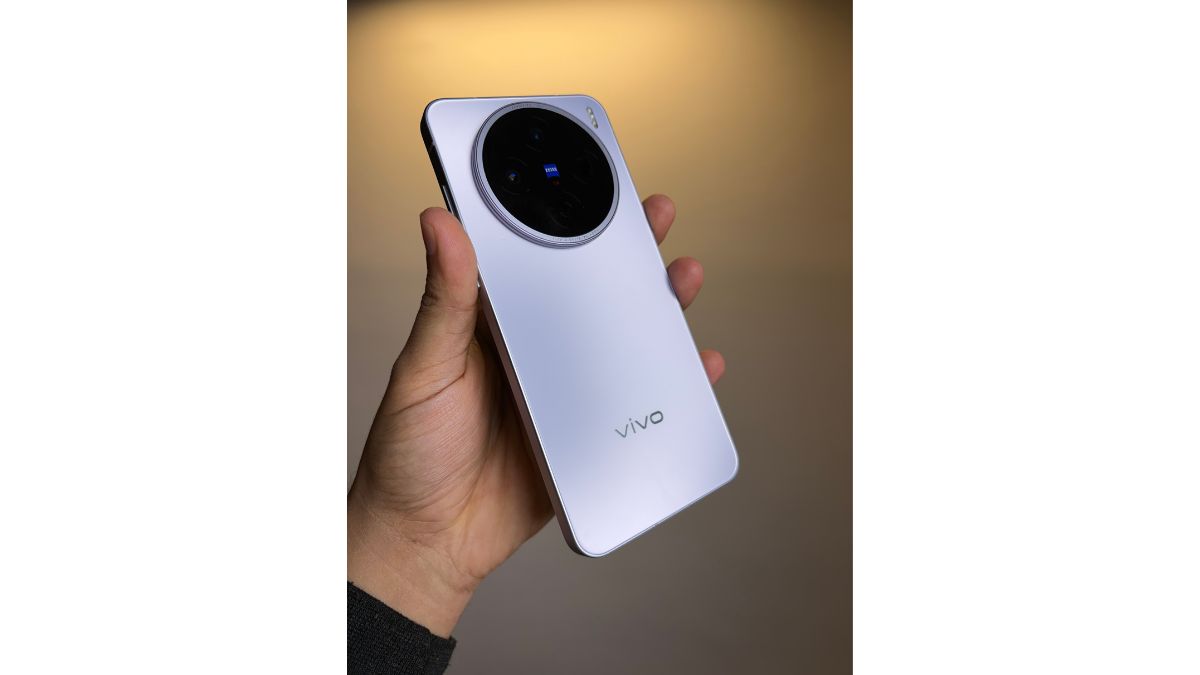
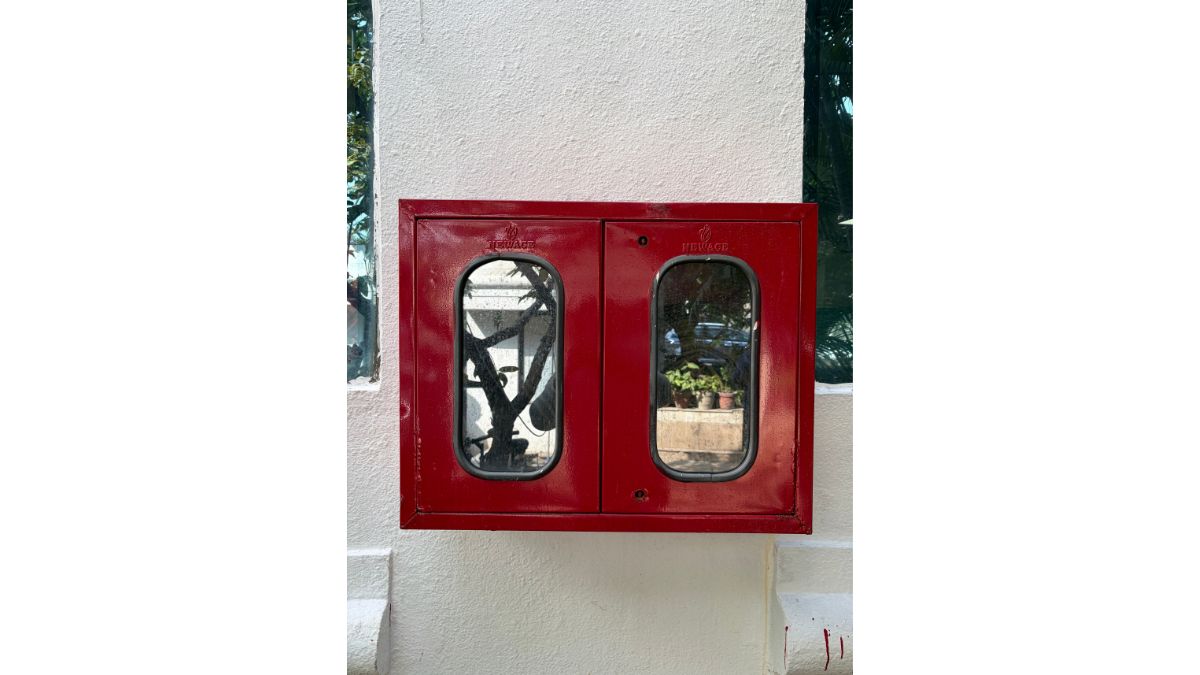
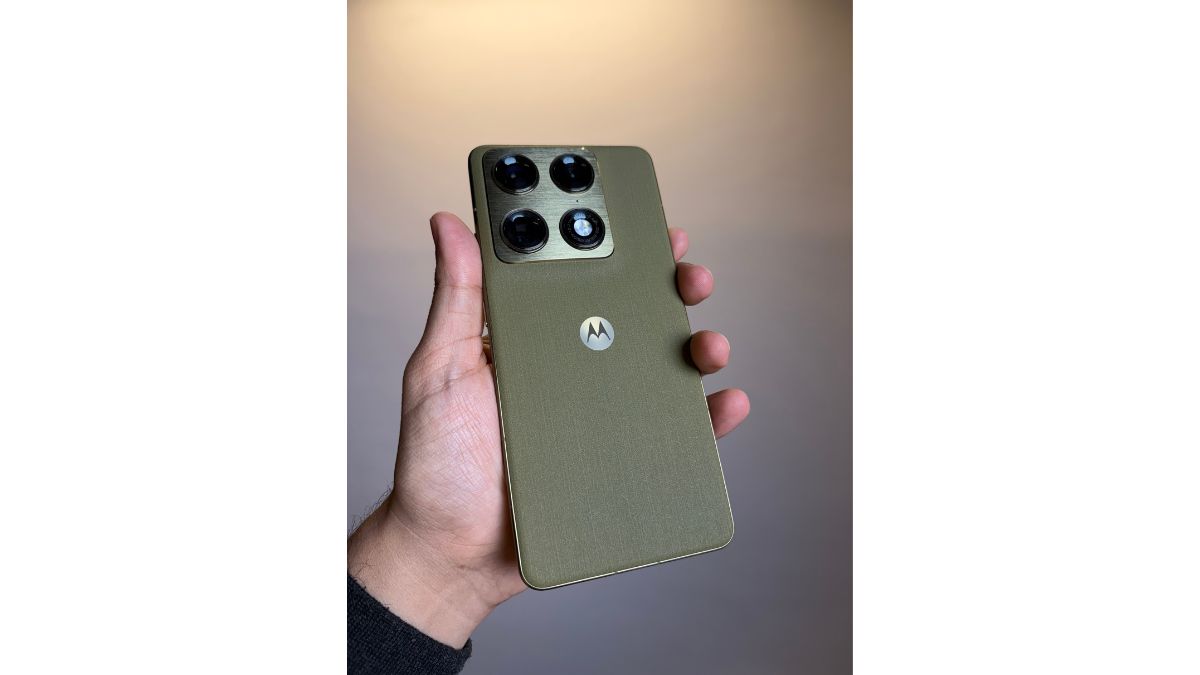
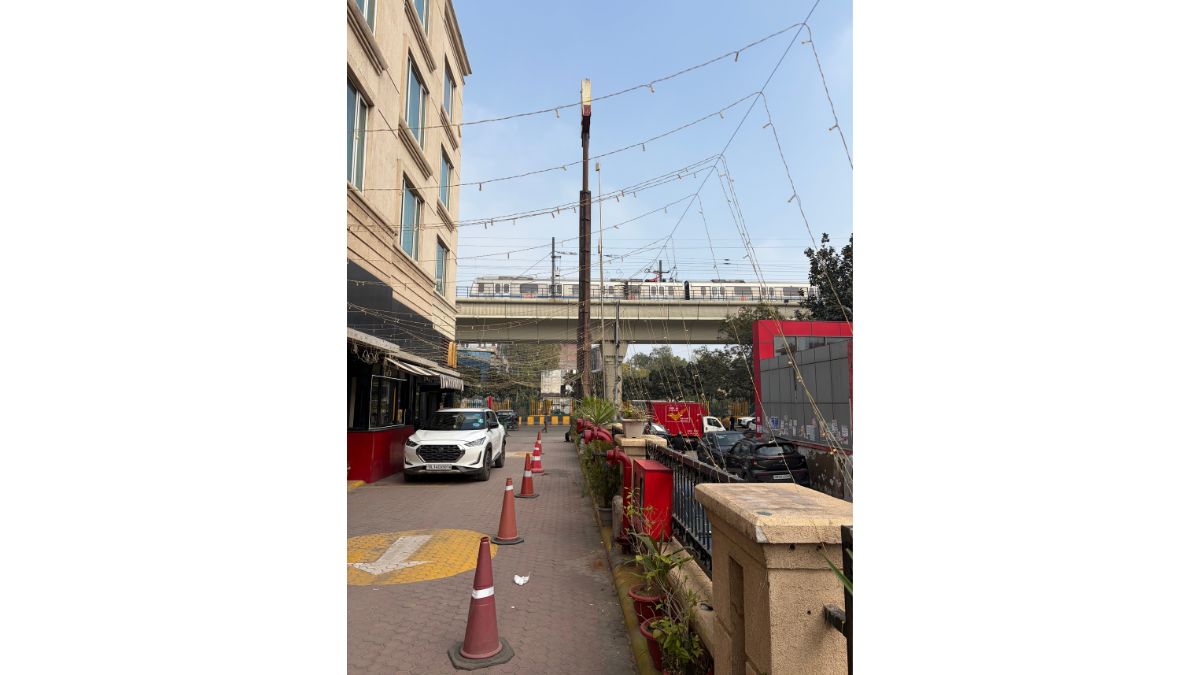
Images from the main camera look natural and are almost identical to what the iPhone 17 and 17 Pro produces. In natural light, colours are lifelike, and details are captured very well. Under warm lighting, however, the camera tends to slightly boost colours, as seen in the photos I took at Motorola Signature. Under neutral white lighting, colours once again retain their natural tone.








Portrait shots are a different story. While the iPhone Air reproduces colours and details accurately, it still struggles with consistent edge detection. The camera often fails to properly capture messy hair or loose threads on clothing. That said, edge detection works very well on simpler subjects.
The upgraded selfie camera is a clear boon. The entire latest iPhone lineup now features the same 18 MP front-facing sensor, paired with a multi-aspect design that maintains a consistent field of view across different ratios such as 4:3 and 16:9. It’s a genuine game-changer if you regularly shoot photos or videos using the front camera.





When it comes to video, the iPhone Air truly shines. The phone can record up to 4K at 60fps and delivers very stable footage even without Action mode enabled. It handles light transitions smoothly and captures moving subjects with ease. Apple’s new Dual Capture video feature is also present here, and it’s genuinely useful, especially for creators. It also doesn’t get the 4K 120 fps mode, which the A19 Pro-powered iPhone 17 Pro and Pro Max do.
However, one advantage of shooting with the iPhone Air is that its slim body is relatively easy to hold for extended periods. And since the entire logic board sits behind the camera module, that area is the only part that becomes noticeably warm during prolonged use.
So overall, the single camera on the iPhone Air is good enough only if you’re not an ardent photography enthusiast. Even the iPhone 17 Pro and Pro Max struggle to compete with more affordable Android flagships like the Vivo X300 Pro and Oppo Find X9 Pro, so it’s natural that the similarly priced iPhone Air can’t either.
Battery Life: Not What You Expect
The iPhone Air’s battery life is better than its design would suggest. Given how aggressively thin this phone is, expectations are naturally tempered going in, but in everyday use, the Air consistently manages a full day without anxiety.
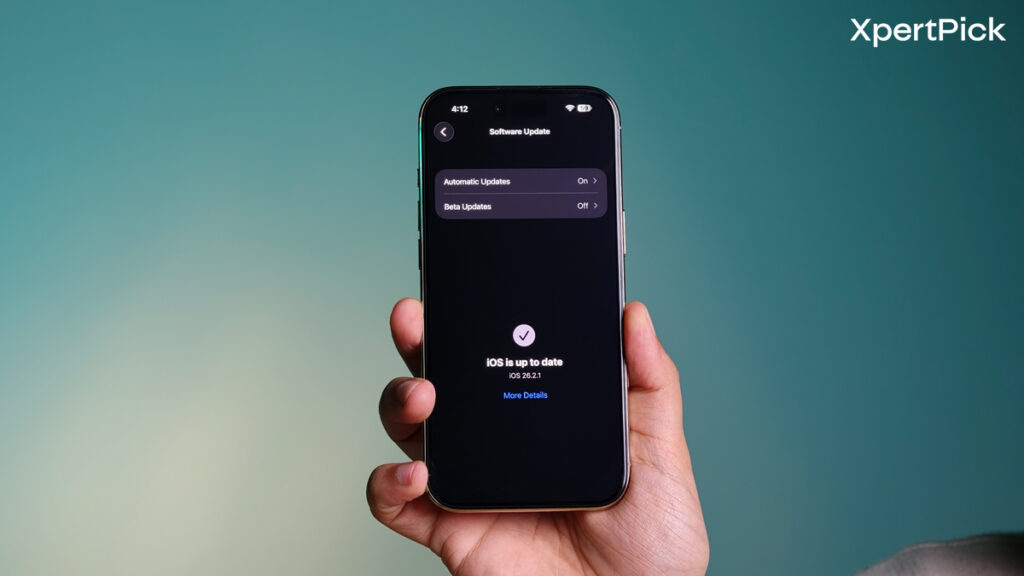
Within Apple’s lineup, the iPhone Air sits clearly on the lower end for endurance. With mixed usage, messaging, social media, camera use, navigation, Bluetooth audio, light video streaming, and background syncing, it typically delivers around 9.5 to 10 hours of screen-on time on a single charge. In comparison, my Apple iPhone 17, which packs a 3,692 mAh battery, averages around 18 hours of battery life, while the Apple iPhone 17 Pro Max, with its 5,088 mAh battery, can stretch to 22 hours or more on a single charge.
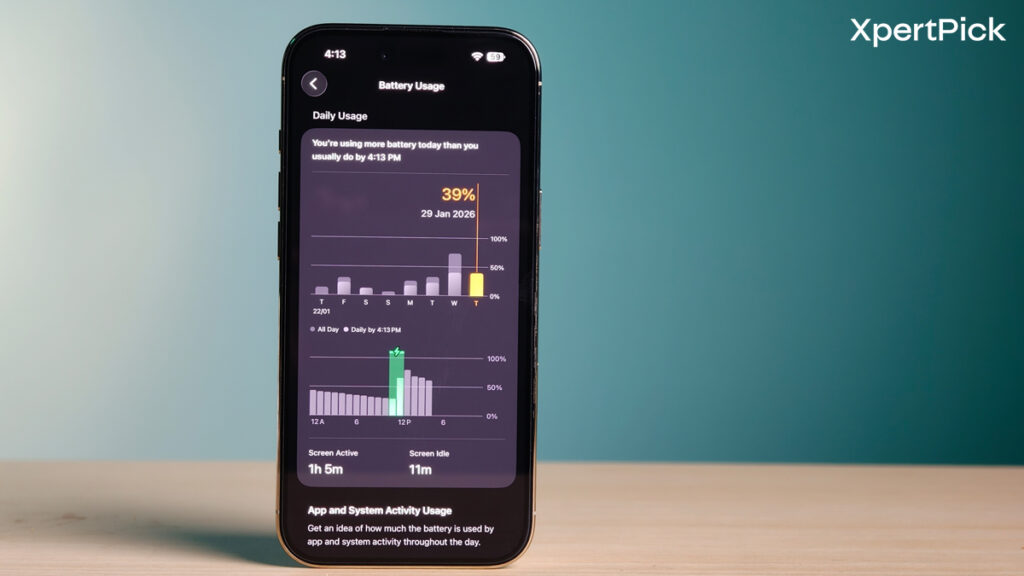
When compared to other slim phones, the Samsung Galaxy S25 Edge and the Apple iPhone Air end up very close, with the iPhone Air edging ahead slightly in endurance. Despite packing a larger 3,900mAh battery, the Galaxy S25 Edge manages only around 9 hours of average battery life, while the iPhone Air, with its smaller 3,149mAh battery, stretches a bit further thanks to better efficiency. The real outlier here is the much more affordable Tecno Pova Slim, which comfortably outlasts both, delivering roughly 17–18 hours of battery life. That longevity comes from its massive 5,160mAh battery, impressive for a smartphone that still maintains a similarly slim profile.
You are not buying the iPhone Air for record-breaking battery life, as it is priced and positioned primarily for a premium audience. That said, if you want a premium slim phone, the iPhone Air already offers the best battery life you can get in this price category. However, if you’re willing to sacrifice flagship-level performance and capabilities, the Tecno Pova Slim is currently the best slim phone for battery life.
Verdict: Luxury Design First, Practicality Second
The iPhone Air is a good smartphone, but it isn’t designed to please everyone. Its design leans unapologetically toward luxury, prioritising elegance and visual appeal over utilitarian choices. In contrast to the more industrial, almost brutalist approach of the iPhone 17 Pro, the iPhone Air stands out as Apple’s most overtly premium-looking device this year, and it executes that identity extremely well. But, like most luxury products, that refinement comes with trade-offs.
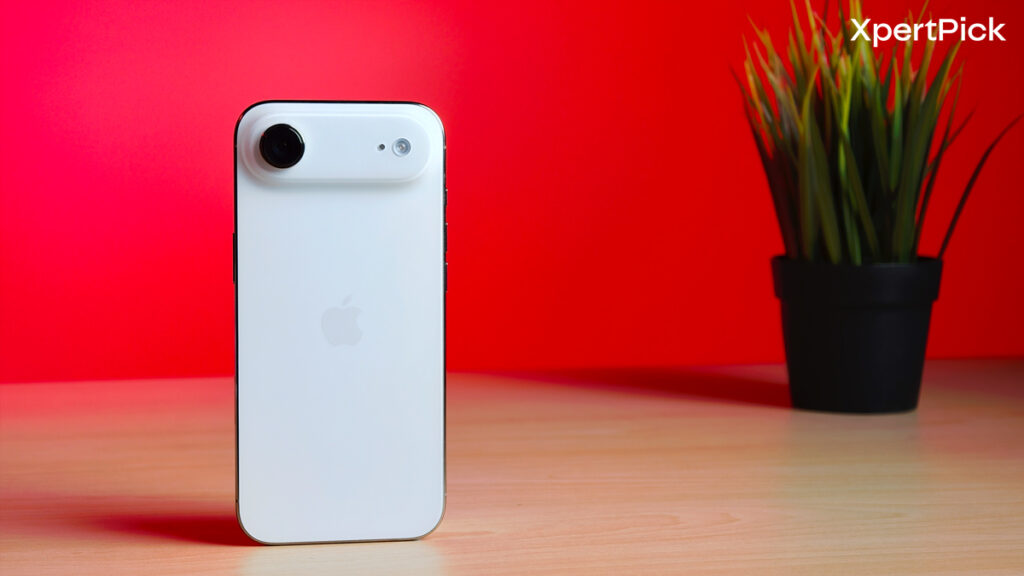
It delivers strong performance and undeniable visual appeal, yet compromises in thermal stability, battery life, camera versatility, connectivity options, and even audio hardware, leaving it at a disadvantage against other flagships at the same price point.
So, is the iPhone Air a good phone? Yes. Is it a luxurious phone, exactly as it sets out to be? Again, a resounding yes. But should you consider it if you expect your smartphone to handle heavy, all-day work without compromise? Probably not. Because other smartphones, including the ones in the Apple’s lineup, like the iPhone 17, offer much better value for money.
Pros
- Exceptionally thin and lightweight design that genuinely changes the in-hand experience
- Outstanding engineering with a cleverly reorganised internal layout and premium materials
- Excellent OLED display with accurate colours, fast response times, and very high peak brightness
- Strong burst performance from the A19 Pro chip, including high FPS in popular games
- Excellent video recording quality and a noticeably improved selfie camera
Cons
- Sustained performance drops under prolonged workloads due to thermal constraints
- Single-speaker setup lacks bass and feels underwhelming for media consumption
- USB 2.0–only connectivity, despite using the A19 Pro chi,p feels like a clear limitation
- eSIM-only implementation worldwide
- Limited camera versatility with just one rear sensor