Infinix is no stranger to jumping on trending design ideas, often building phones inspired by whatever the industry is experimenting with at the moment. With the Infinix Note Edge 5G, the brand has clearly taken cues from devices like Apple’s iPhone Air and Samsung’s Galaxy S25 Edge. The biggest selling point here isn’t raw performance or camera hardware; it’s the feel.
Slim phones always come with compromises. So the question becomes: what exactly are you giving up for that sleek form factor? Is it the camera? Battery life? Or is there more to the Note Edge 5G than just being another slim phone?
Pretty from Almost Every Angle
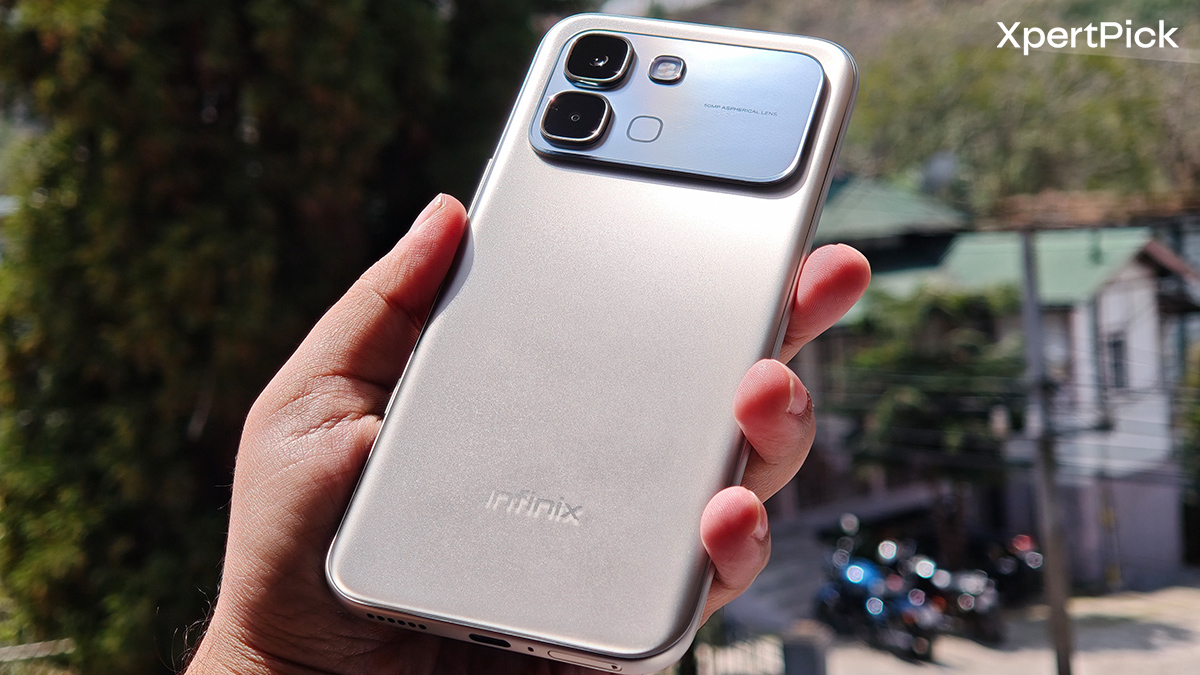
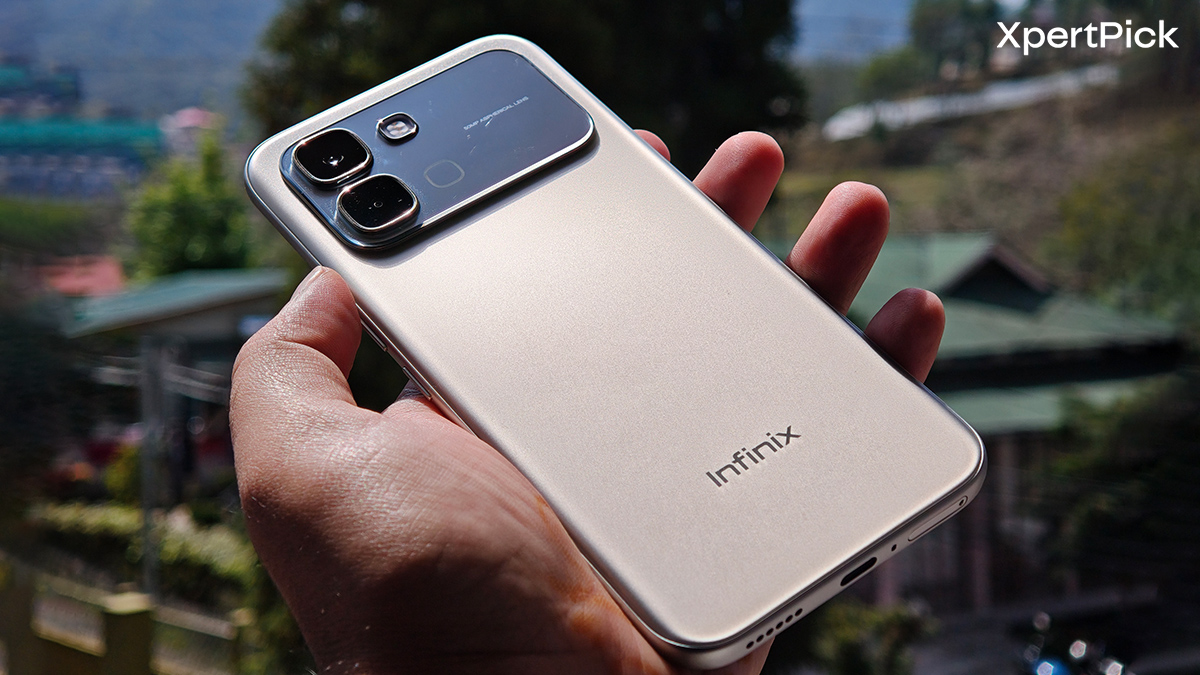
Just like most ultra-slim phones, the hand feel is the first thing that stands out. The 7.2mm body immediately feels different compared to traditional smartphones. While it isn’t the thinnest phone around, the slim profile still gives it a distinct presence in the near-Rs 20,000 segment, which most phones are usually close to the 8.5mm size.
To put that into perspective, the Motorola Edge 70 that I reviewed earlier pushes the slim concept even further with a 5.99 thickness and a lighter 159 gram body, built with an aluminium frame and Gorilla Glass protection. This made it feel feather-light in comparison, and its premium materials make it one of the most refined thin phones (despite not being a flagship)
Another interesting phone that was recently launched was the Tecno Pova Slim, which also measures around 5,9mm thick and weighs 156 grams, making it one of the slimmest Android phones out there. Just like the Note Edge, Infinix’s sister brand also built a thin phone, but with an even tighter budget.
Placed between these two, the Infinix Note Edge 5G doesn’t win the thickness race, but it arguably strikes a better balance when considering the cost, specs, and battery size (more of that later).
The curved edges on both the front and back make it very comfortable to hold, especially considering the tall display. It may not feel as razor-thin as the Edge 70, but the ergonomics help it feel slimmer in everyday use than the numbers suggest. Build materials are less impressive. The side frame and rear panel are plastic, which is understandable at this price. Though it does take away from the premium illusion. Thankfully, the phone never felt flimsy despite this.
One unusual aspect of the Note Edge’s design is its weight. At around 185 grams, it’s heavier than most slim phones. The Edge 70 and the Pova Slim come in significantly lighter. That somewhat defeats the purpose of the slim design on paper, but the Note Edge’s balanced weight distribution makes it feel lighter in hand than its numbers suggest.
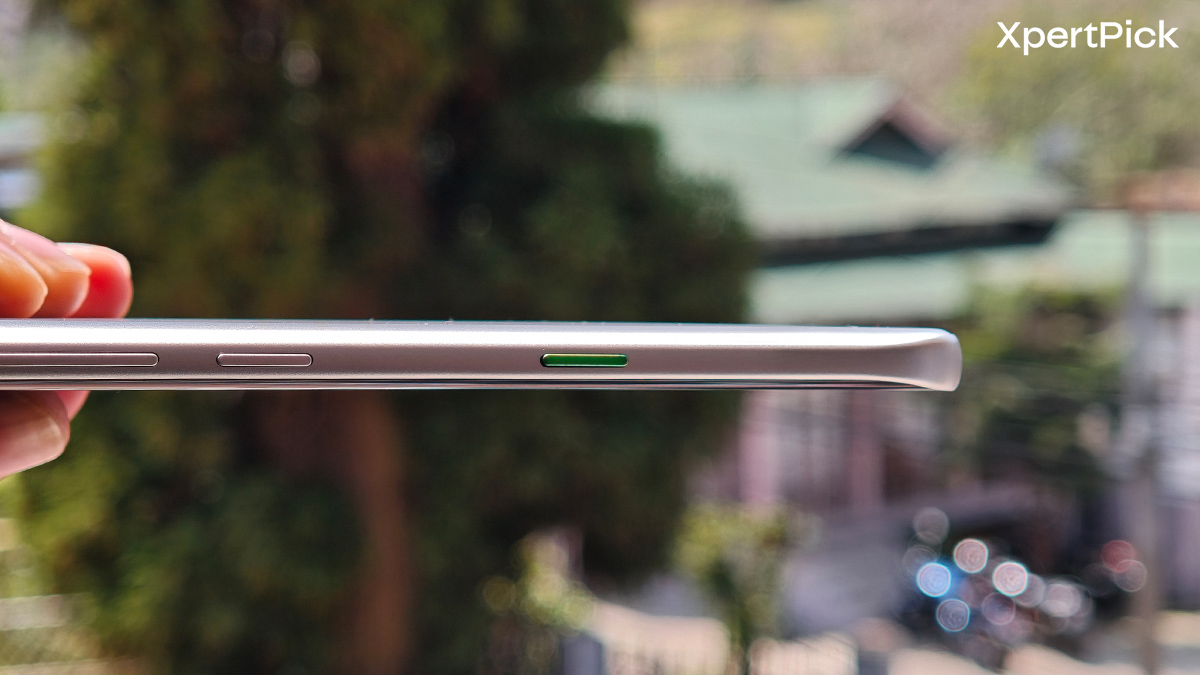
Durability is decent for the segment. You get Gorilla Glass 7i on the front, an IP65 rating for dust and water-resistance, and Infinix even bundles a protective case in the box.
Two visual highlights help the phone stand out. The RGB Halo lighting on the back activates for notifications, music playback, and other alerts. There’s also a One-Tap Button with a bright green accent on the side, adding a bit of personality to the otherwise clean design.
Display Does the Heavy Lifting
The display is easily one of the strongest aspects of the Note Edge 5G. Despite its slim form factor, the phone features a 6.78-inch AMOLED panel with 1.5K resolution and a 120Hz refresh rate. Peak brightness goes up to 4,500 nits (1600 nits HBM), which means the screen remains readable even under direct sunlight. All of this translates to a solid viewing experience with vibrant colours, smooth scrolling, and responsive input.
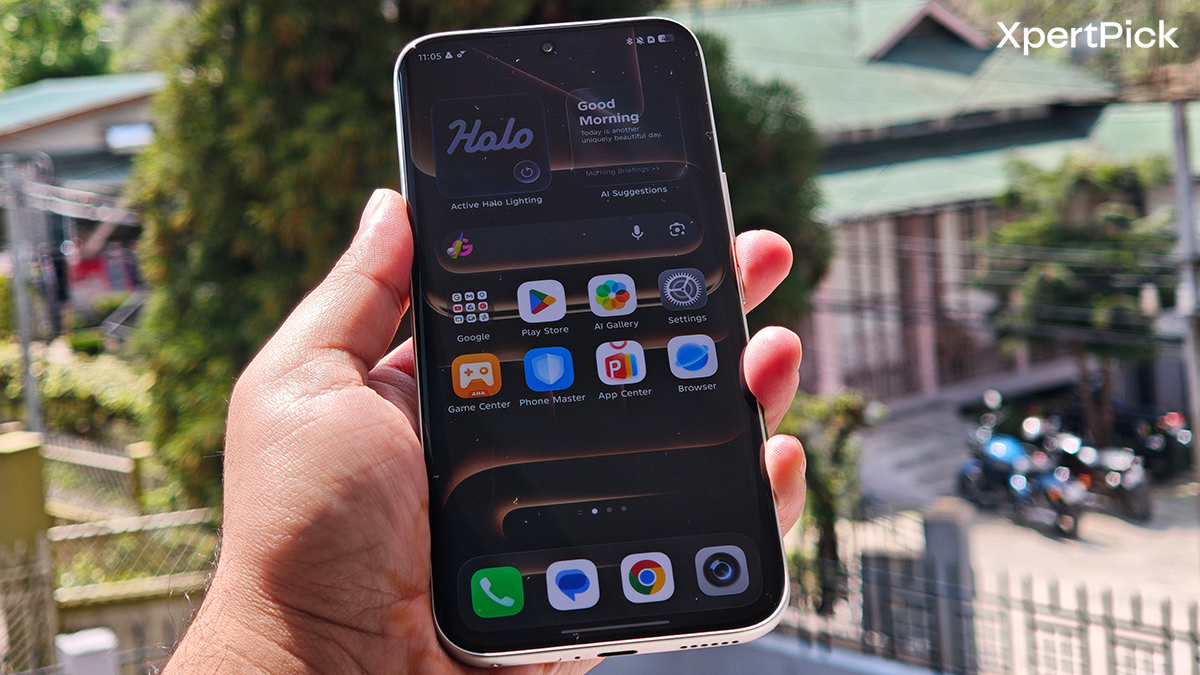
You also get 2160Hz PWM dimming, which helps reduce eye strain during nighttime use. Watching movies and videos feels immersive, and the curved edges visually minimise the side bezels. In many ways, the display complements the overall thin-phone experience.
Performance Was the First Casualty
Most of the praise for the Note Edge 5G stops with the design and display. Beyond that, it becomes clear where Infinix had to cut corners to keep the phone around the Rs 25,000 mark, and the first crack appears in performance. The device runs on the MediaTek Dimensity 7100, a chipset that sits firmly in the budget to mid-range category.
- AnTuTu – 785,753
- AnTuTu (CPU) – 327,224
- AnTuTu (GPU) – 102,722
- Geekbench: 995 (single) / 2,907 (multi)
Devices at this price range are never known for their “speed”, but improvements in chips have made even affordable phones feel capable enough for everyday use. To be fair, it’s not a terrible processor. The phone handles everyday tasks like social media, messaging, and web browsing without major issues. Synthetic benchmarks also suggest decent capability.
However, performance inconsistencies start appearing when you push the phone harder. Quick app switching can reveal small micro-stutters, and launching the camera quickly sometimes causes delays.
Gaming performance is even more telling. Popular titles run at playable frame rates, but stability isn’t great. More demanding games quickly expose the limitations of the chipset. The Note Edge 5G can manage casual gaming, but anything beyond that feels like a stretch. So I won’t recommend anything past some casual gaming with this one.
Big Battery, Mixed Results
Comparing the Note Edge 5G to ultra-thin flagship phones like the iPhone Air, Galaxy S25 Edge, or even Motorola’s Edge series quickly becomes unfair once you look at the battery. Infinix has somehow managed to pack a massive 6,500mAh battery inside the slim body, which is impressive engineering on its own.
If only Infinix used a more efficient chip or had better optimisation, there wouldn’t have been a big but at the end. Unfortunately, the real-world endurance doesn’t fully match the spec sheet expectations.
With light usage, the phone averaged around 7 hours of screen-on time. Moderate usage drained the battery faster than expected, often requiring a recharge within a day. While the battery life isn’t bad, it falls short of what you’d expect from such a large cell.
This could be a software optimisation issue, and overall endurance will likely get better over time. For clarity, the battery life isn’t bad, but my expectations were higher. Charging is handled by a 45W charger included in the box, though a full charge still takes roughly 1.5 hours.
One on the Front, One on the Back
Despite the large camera module on the back, the Note Edge 5G only includes one rear camera. The second cutout is purely cosmetic.
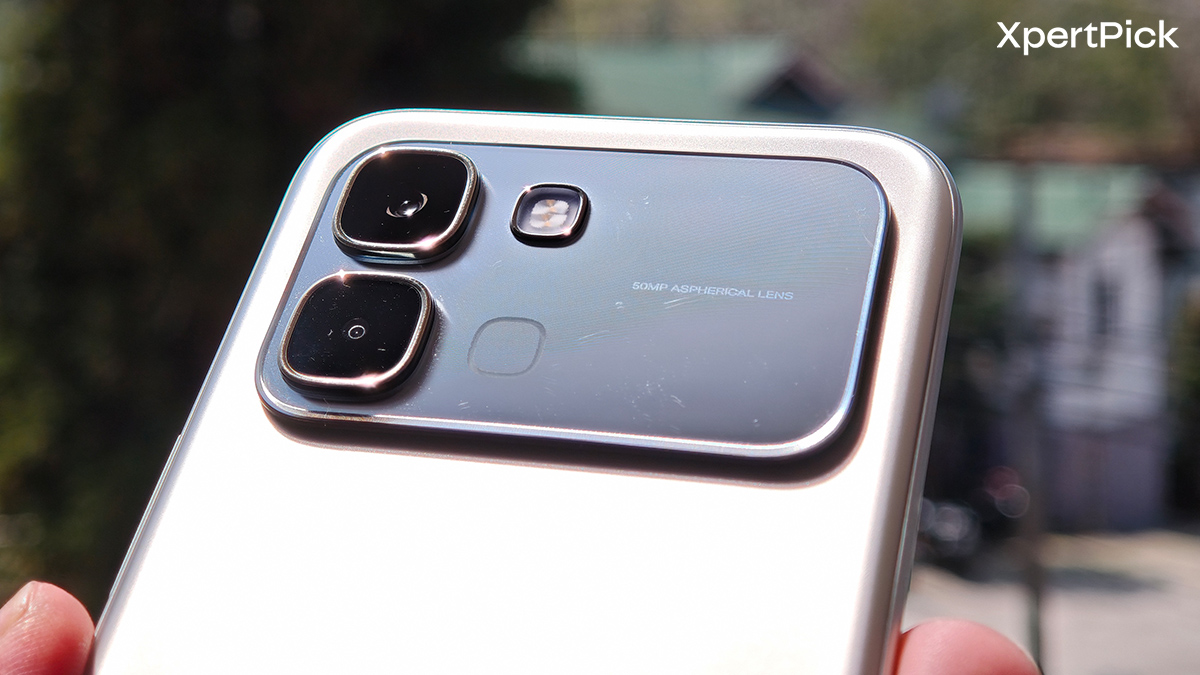
Camera hardware:
- 50MP 1/2″ GalaxyCore GC50D1 main camera (f/1.8)
- 13MP 1/3.1” GalaxyCore GC13A0 selfie camera (f/2.2)
The main camera performs decently in daylight. Photos retain good detail, and colours are vibrant, though slightly saturated. Dynamic range is acceptable, though difficult lighting situations can introduce halo effects or unnatural processing. There’s a 2x digital zoom option, which crops into the image. While usable, it inevitably reduces detail.









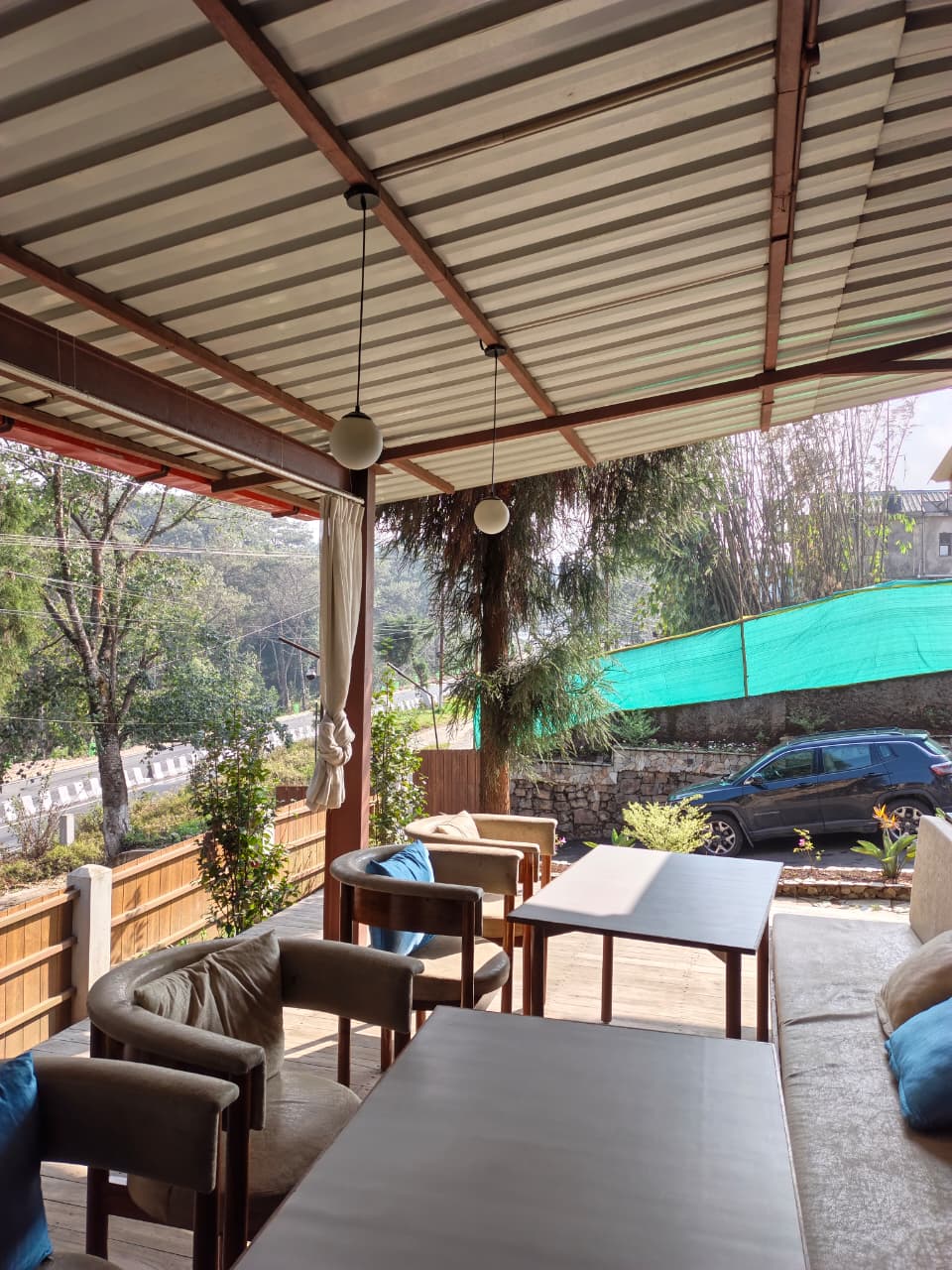











Low-light photography is passable. The phone aggressively relies on Night mode, which increases shutter time. Without optical stabilisation, even slight movement can cause blurry results. Indoor lighting and artificial lighting conditions actually produce better results than expected, showing that the camera has some potential despite the limited hardware.
Portrait mode relies entirely on software. Edge detection is reasonably accurate, though the background blur can sometimes look overly artificial. The selfie camera is a pleasant surprise, capturing well-exposed images with decent detail and natural skin tones.
Video recording tops out at 1440p30fps on the rear camera and 1080p60fps at a lower resolution. Shooting while standing is decent, but walking or panning introduces noticeable jitter since there is no OIS.
X-iOS 16
With XOS 16, Infinix has significantly refreshed its custom Android skin. The update introduces deeper customisation options, new AI-powered features, and a cleaner design language. One standout addition is Glow Space, a UI element that adds glass-like visual effects.
Other new features include AI MindHub, SnapMemo, and Dynamic Bar, which is Infinix’s take on Apple’s Dynamic Island. Lockscreen and homescreen customisation also get a lot of attention, with depth effects, new clock styles, and improved Always-On Display options.
Like many Chinese Android skins, the UI does lean heavily toward an iOS-inspired aesthetic and ships with some preinstalled apps. Thankfully, most of them can be removed.
But leaving these aside, there are a couple of new additions. One of the highlights is the new Glow Space. This is basically a fresh UI element that adds glass and light effects. Other new additions include AI MindHub and SnapMemo, which are similar to OnePlus’ Mind Space. Apple’s Dynamic Island also makes an appearance here as the Dynamic Bar.
Overall, XOS 16 feels smoother and more polished than previous versions, offering an experience that is similar to other major Android custom skins like OxygenOS 16 and ColorOS 16. Although the way Infinix implemented the One-Tap Button is still a bit frustrating. Users can only be mapped to long pressing. While you can change sound profiles, turn on flash, or perform other actions, there should be double-tap options for another input method, similar to the Vivo X300 Pro or Edge 70.
Verdict
The Infinix Note Edge 5G brings the slim-phone aesthetic to a much more affordable price segment. It succeeds in delivering a sleek design, a vibrant display, and a surprisingly capable everyday experience. While the performance and camera hardware reveal compromises that were necessary to hit this price point, the phone still feels well-rounded for what it costs. It is genuinely refreshing to see the effort that was put into the look and feel of this device.
Starting at Rs 21,999, the Note Edge 5G ends up doing a surprisingly good job of balancing its specs, features, design, and performance. Yes, it has its shortcomings, particularly in performance and photography, but taken as a complete package, it remains a solid contender in the near-Rs 20K segment. For users who care about style, a solid display, reliable everyday use, and decent battery life, the Note Edge 5G proves that you don’t need flagship money to get a distinctive smartphone experience.