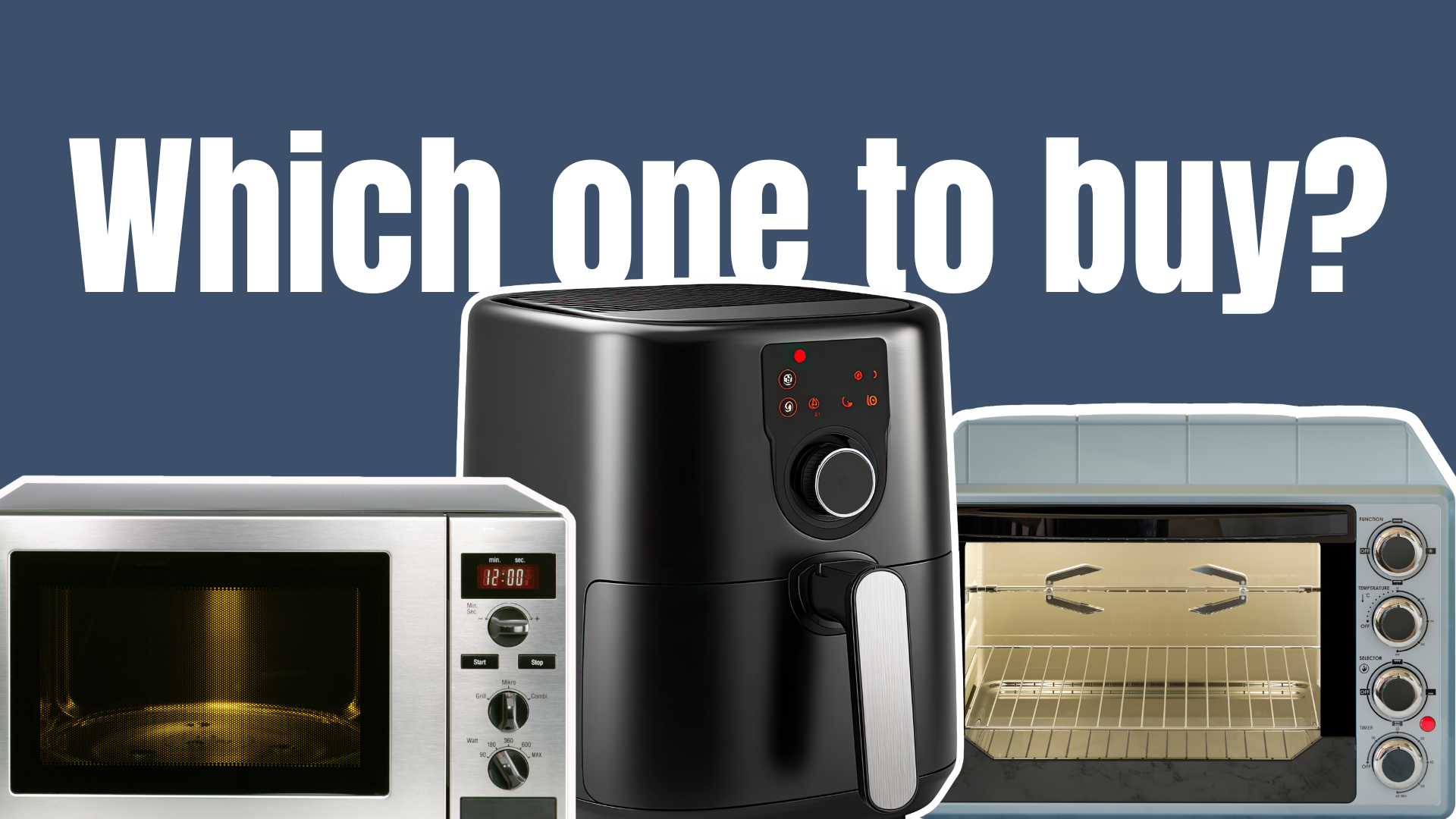
If you’re building your kitchen from scratch or trying to upgrade it, chances are you’re confused between a microwave, an OTG, and an air fryer. We regularly review and use all three, and the gap between marketing claims and real-world performance is bigger than most people think.
What becomes obvious very quickly is that they don’t just differ in features; they behave differently in daily use. Air fryers feel fast and impressive for small snack portions, but when you increase the batch size, the texture becomes inconsistent. Microwaves, on the other hand, are far more forgiving with quantity, but take slightly longer heating time.
These everyday differences are what actually shape your experience. And most buying regret comes from expecting one appliance to do everything equally well.
Main Difference: How Each Appliance Heats Food
Microwave
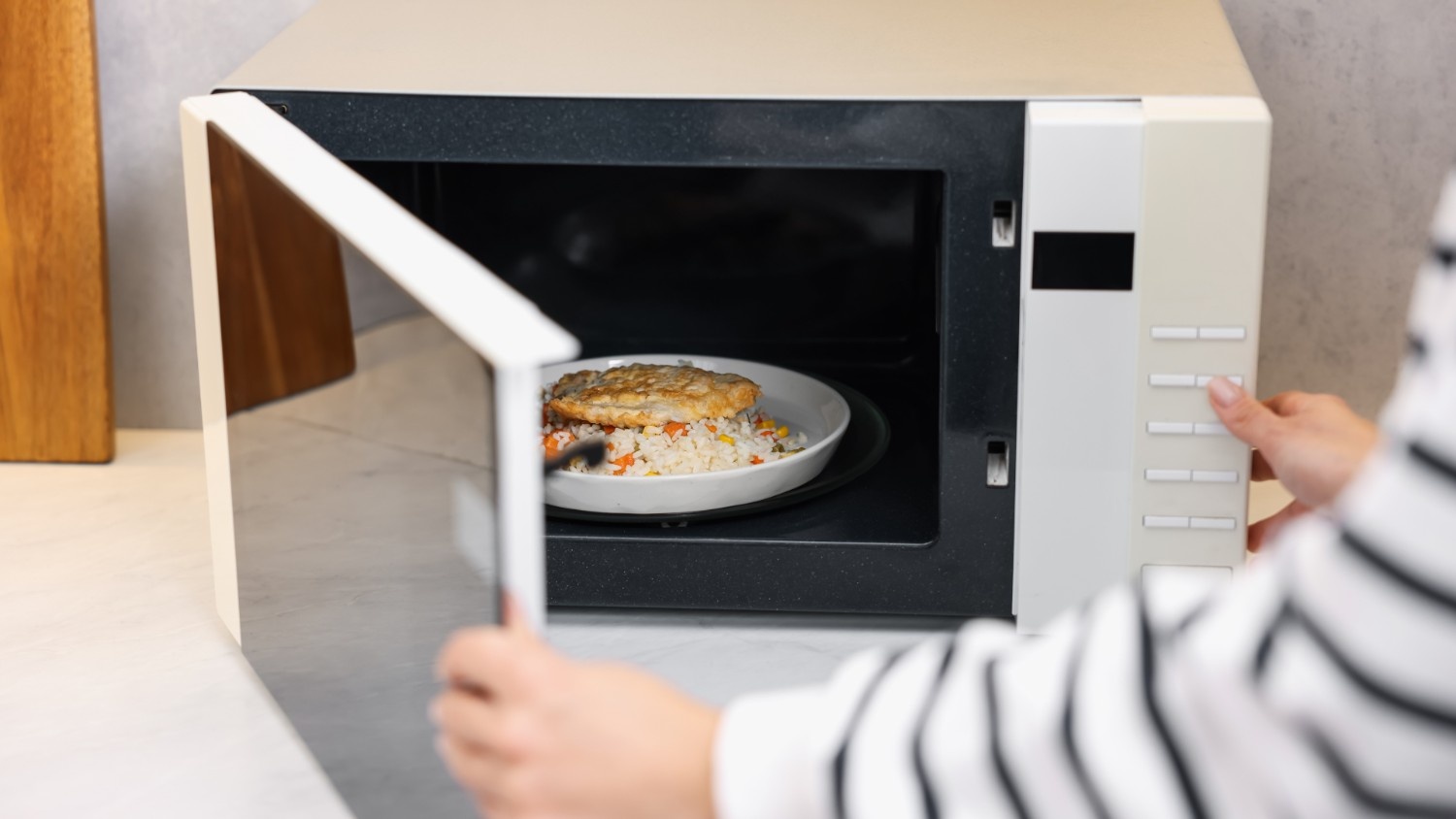
It heats up your food using electromagnetic waves that excite the water molecules present in the food. This allows the food to heat rapidly and evenly from the inside out. This works particularly well with dishes with high moisture content. Notice how rice comes out so nicely done? Yeah, now you know why. This is also why microwaves deliver a predictable result even when loaded heavily, as it is the moisture content that matters. Overall, microwaving is an efficient method that has been designed keeping in mind speed and energy conservation.
Oven Toaster Grill (OTG)
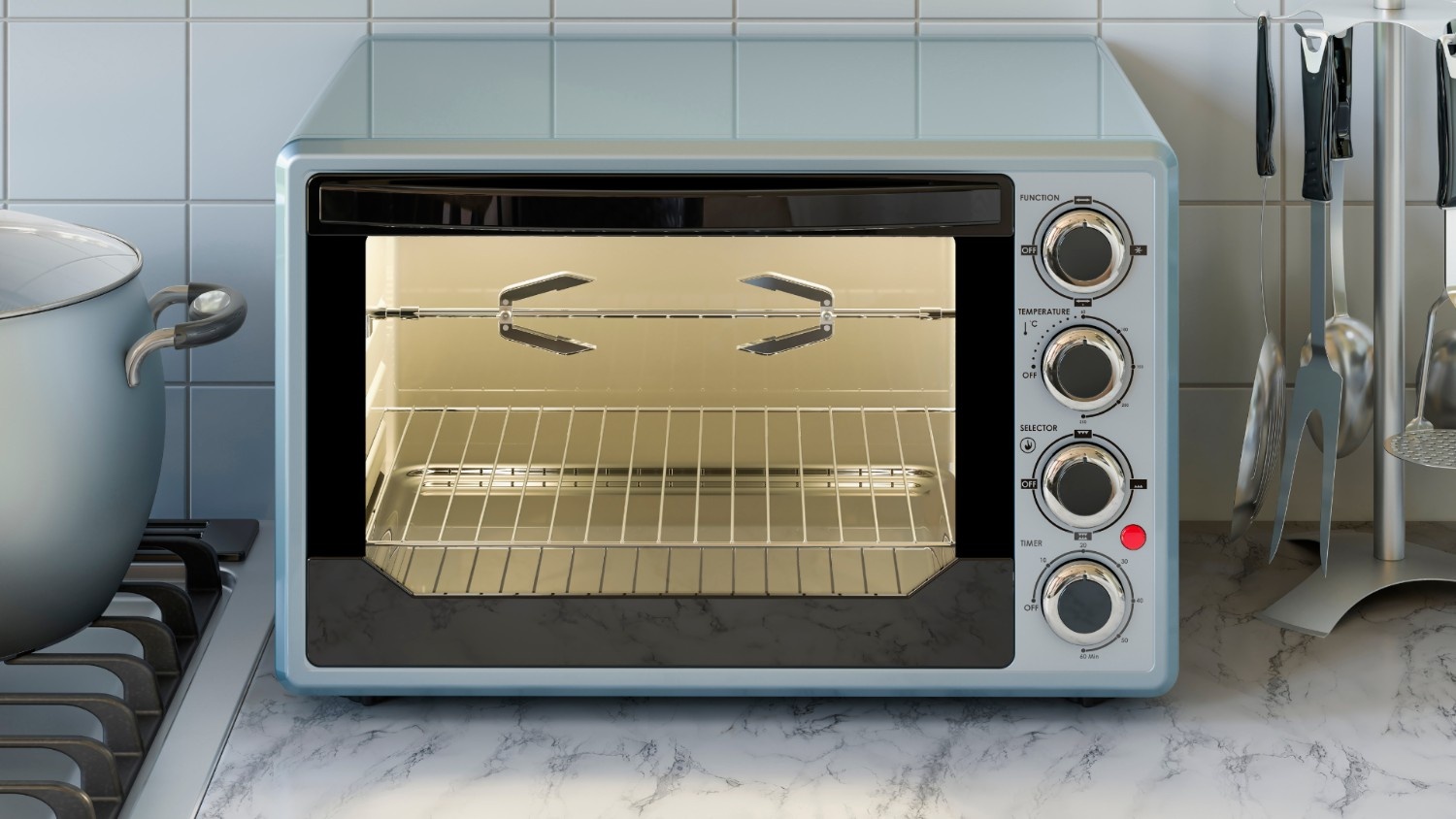
This relies on resistive heating elements that radiate heat into a relatively large cavity. The cooking here happens gradually as the surrounding air and surfaces heat up. This is closer to how traditional ovens work and does a good job with browning, baking, and roasting. And that’s why OTGs are relatively slow, and hence consume more power.
Air Fryer
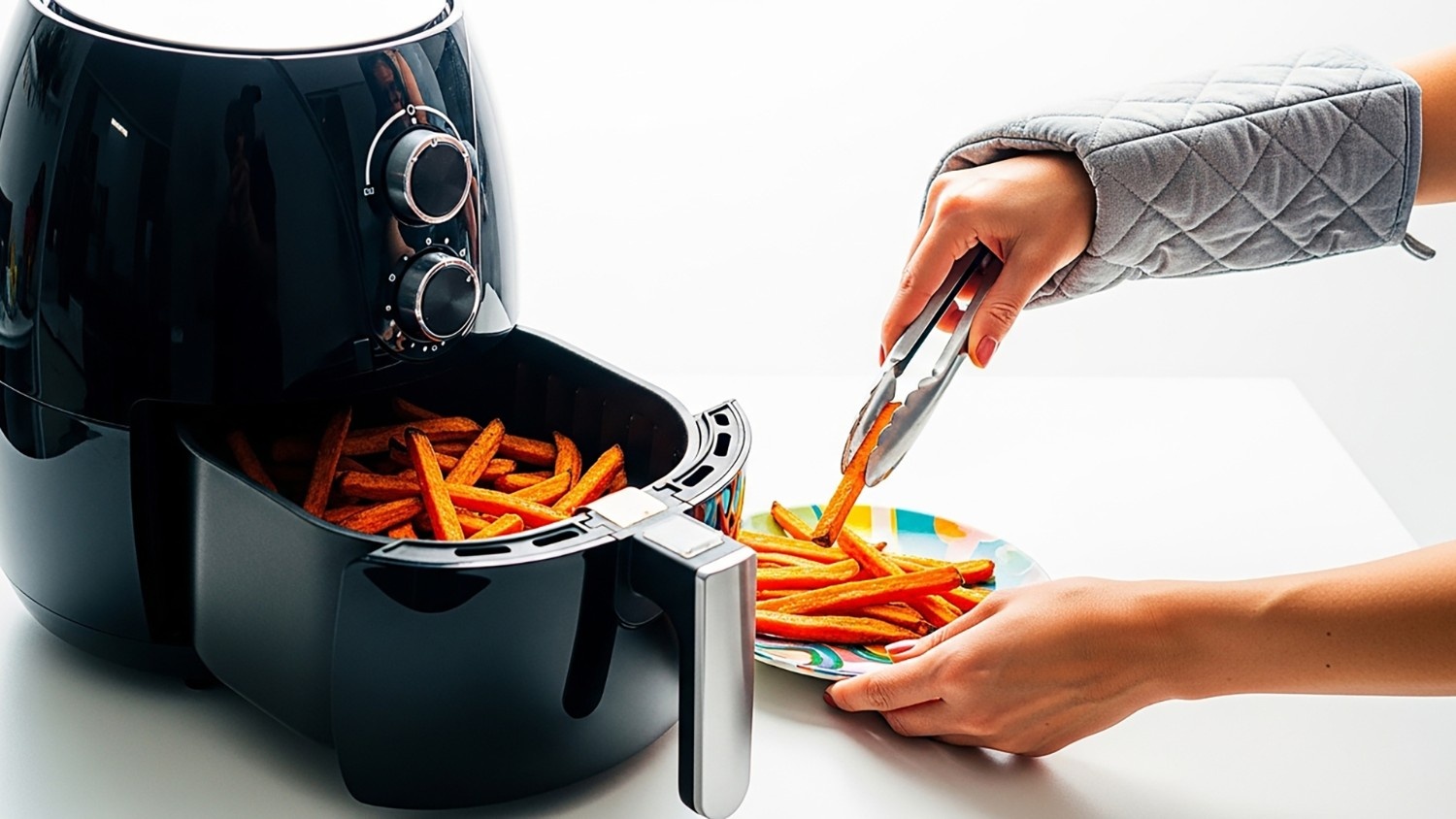
It uses powerful fans to circulate hot air at high speed in a small chamber. The result is faster cooking and better surface crisping compared to ovens that usually come take a lot more time. But the airflow is also why air fryers don’t perform so well when you overcrowd them.
Here’s a breakdown of which appliance works for which kitchens:
1) Microwave
This is the most widely used cooking appliance in Indian homes, a no-brainer. A major reason behind its popularity is that it is pretty convenient for quick, everyday tasks, especially in urban homes.
Best suited for:
Daily reheating and cooking
Urban households and busy professionals
Families that rely heavily on leftovers and quick meals
Overall, microwaves are pretty predictable and efficient. You also don’t have to understand too many settings and modes. Plus, they consume less power per cooking task and require minimal monitoring.
Types of Microwaves:
- Solo microwave
- Grill microwave,
- Convection microwave
Capacity Guide:
- 17-20 litres: Singles and couples
- 21-25 litres: Small families (2-3 people)
- 28-32 litres: Larger families (4-6 people)
Where Microwaves Fall Short:
Since microwaves heat water in the food, and not the surface, they’re great at reheating food but poor at making it crispy. That’s why your pizzas and rotis become soggy after being microwaved.
Things to keep in mind:
- In daily use, a 15-20 litre microwave can handle around 800-1000 grams of food in one batch; it mostly depends on the container size and shape. If you load it up to the brim, it will only take a lot more time and create minor cold pockets. You can easily fix that by pausing stirring or rearranging the food.
- Most microwaves draw 700-1200W, but because reheating usually takes just a few minutes, their actual electricity usage per task is the lowest of the three.
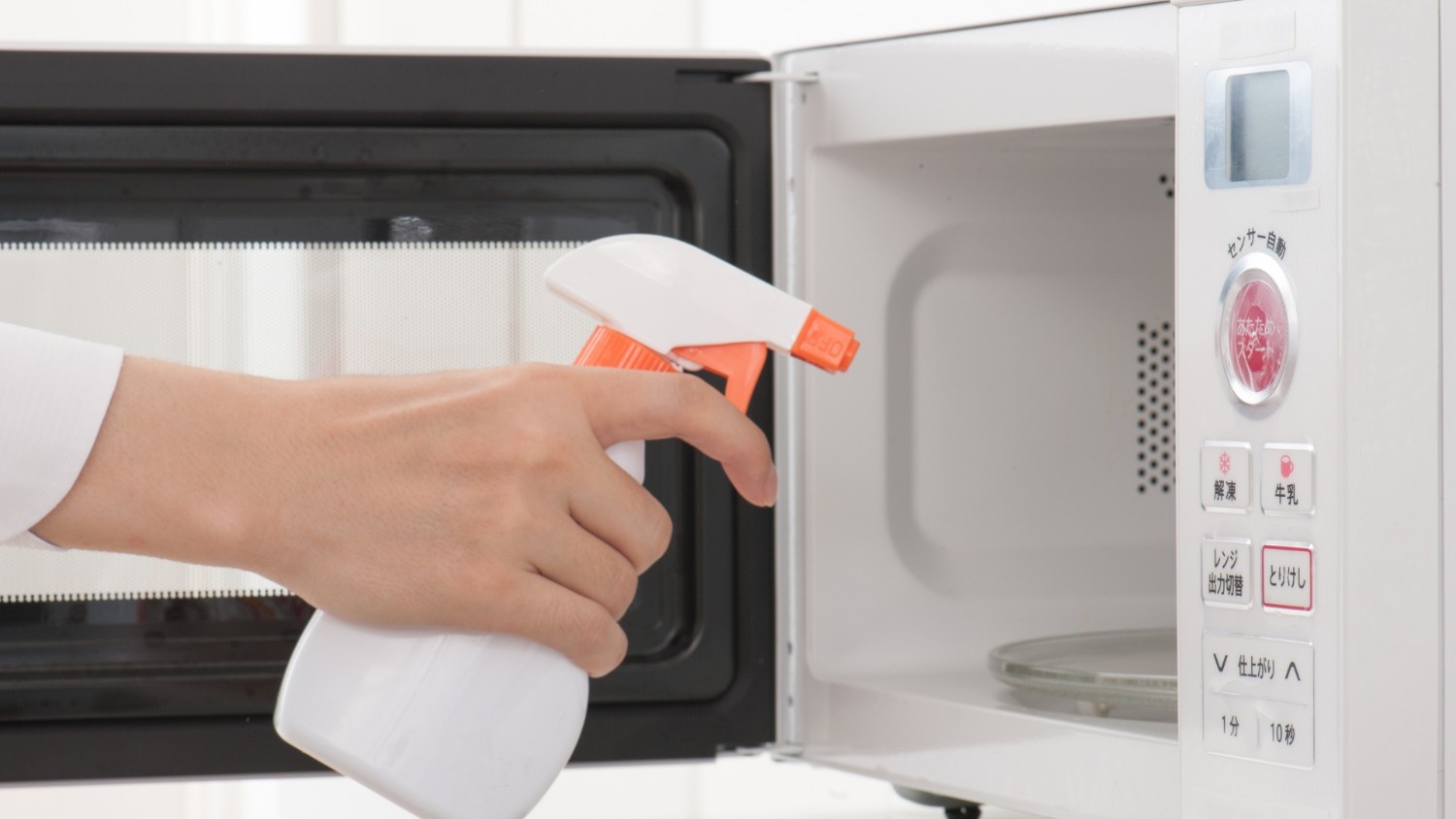
- To handle any mess inside the microwave, you simply have to wipe it out.
- It isn’t too loud, except for a low humming and occasional beeps.
- You need to create a permanent shelf space and give the microwave some ventilation space. It will depend on the capacity of your microwave.
2) OTG
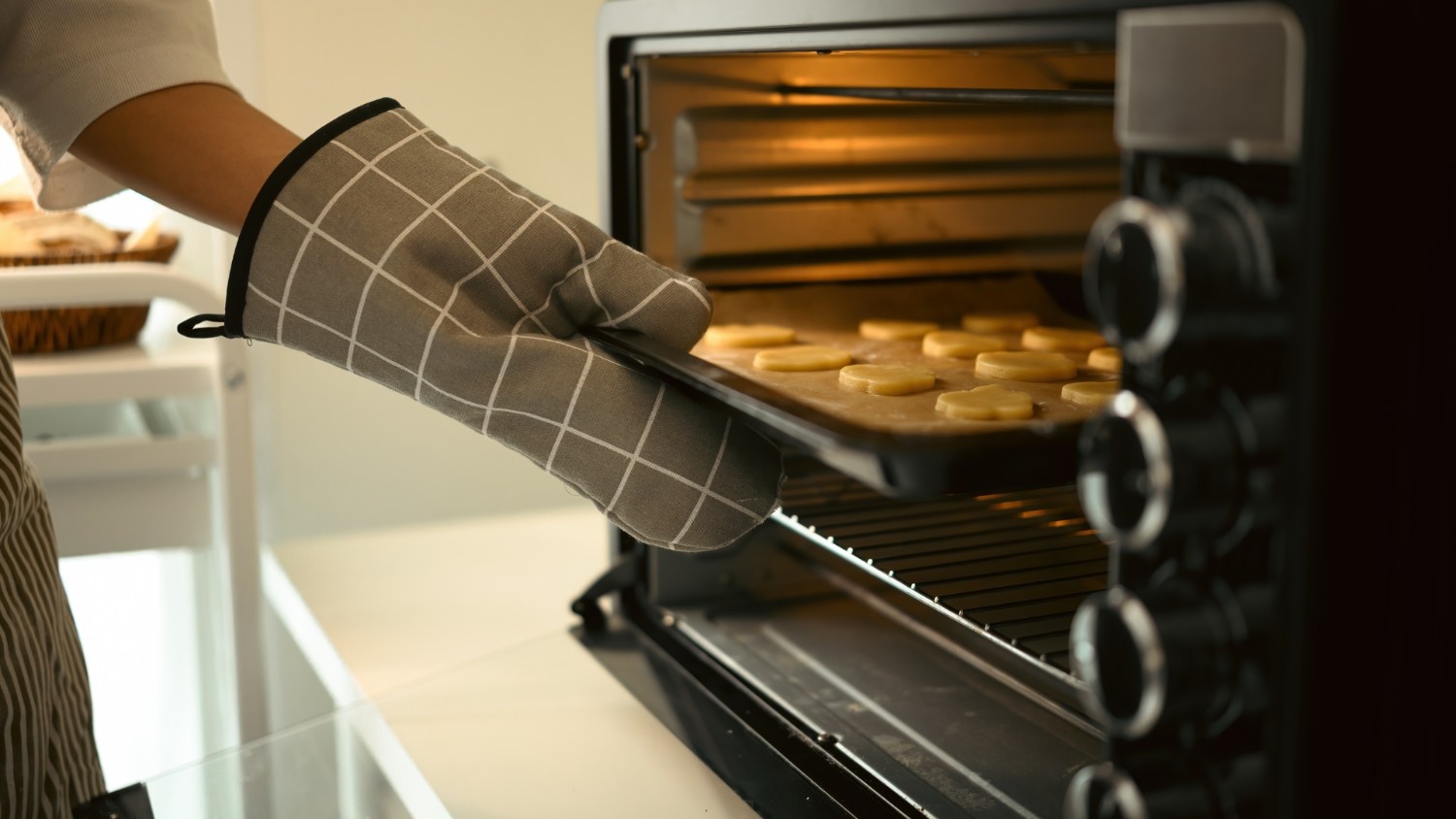
If you want the oven experience, that perfect texture, and slow-cooked food, then you can consider an OTG.
Best Suited For:
- Baking cakes, breads, cookies, pizza, etc
- Roasting vegetables and meats
- Medium to large families (3-6 people)
- Those who enjoy experimenting with cooking
Types of OTGs:
Basic OTG (manual controls)
Convection OTG
OTG with Rotisserie
Digital/Smart OTG
Capacity Guide:
10-20 litres: Toasting, light grilling, for 1-2 people
21-30 litres: Occasional baking, for small families
32-60 litres: Regular baking, roasting, and cooking family-sized meals
Where OTGs Fall Short:
With OTGs, pre-heating is almost non-negotiable. You have to be careful with the temperature and time dials, too. And the end result will also depend on placement, cookware, and your cooking/baking experience. Sometimes the cooking time can extend to 45-60 minutes as well.
Things to keep in mind:
- Most OTGs run at 1200-2000W and stay on far longer (often around 45-60 minutes) than other appliances. So in real use, they are the most expensive per cooking session.
- The trays need regular cleaning, and it also needs occasional deep cleaning as crumbs, oil, and burnt residue can collect inside. It isn’t the highest maintenance device of the three.
- The noise is really minimal, mostly silent.
- They do take up space and are also heavy. You might need as much space for an OTG as for a microwave, again depending on the capacity you go for.
3) Air Fryer
Having samosas or french fries without the guilt of it being deep-fried, yet getting that same texture easily; that’s how air fryers won us over. By shrinking the cooking chamber and increasing airflow speed, air fryers cook food faster and produce crisp exteriors with little or no oil.
Best Suited For:
Snacks and frozen food
Cutlets, samosas, fries, nuggets, roasted vegetables/meat
Small families (1-3 people)
Health-conscious users
Types of Air Fryers:
- Countertop Air Fryer
- Toaster-oven Air Fryer
- Basket-style Air Fryer
- Multi-cook Air Fryer
Capacity Guide:
2-3 litres: Bachelors and couples
3-5 litres: Small families (2-3 people)
5-8 litres: Families with four or more people
Where Air Fryers Fall Short:
Air fryers struggle with large quantities, liquid-heavy dishes, and complex baking. While you can use it to bake, the results are inconsistent compared to OTGs due to limited space and uneven heat zones.
Things to keep in mind:
- Air fryers work best when you keep the batch sizes small. A typical mid-size air fryer handles about 300–400 grams of fries per batch, 2 bread slices, or a small single-layer portion of snacks. If you fill it more than that, then the cooking time increases and the cooking is also uneven.
- Air fryers draw around 1200-1800W, but the cooking time is less. The consumption sits between a microwave and an OTG.
- You have to clean the basket and trays after every use due to oil buildup.
- The fan noise is loud; if you have a smaller kitchen, it will be most noticeable.
- Compared to microwaves and OTGs, air fryers take less space, but again that depends on the capacity.
So, Which One Should You Buy?
If reheating, steaming, and quick meals are most of your cooking routine, then a microwave is the obvious first pick for you. If baking, roasting, and texture matter more than speed, an OTG makes sense, as long as you’re willing to invest the time it demands. And if snacks, frozen food, and low-oil cooking are your comfort zone, an air fryer fits naturally into that lifestyle.
Here are some scenarios to consider:
– If reheating + defrosting = 50%+ of your usage: Microwave is best
– If you cook curry items daily: Avoid air fryers as the primary appliance
– If snacks dominate your evenings: Air fryer makes sense
– If you host guests often: Microwave + OTG combo
– If you live alone or as a couple: Microwave + compact air fryer
Personally, what I’ve seen is that most households end up using the microwave the most. If you want to experiment more with your cooking, you can then add an air fryer or an OTG to your kitchen setup.