There was a time when the microwave became a default purchase for Indian kitchens. Whether people actively used it or not, most homes simply had one. It was positioned as a must-have appliance, often bought without a clear idea of what it would be used for. Many opted for convection models, thinking they would cook more, bake more, and do more with them. In reality, for most households, the microwave ended up doing one job almost every day: reheating food.
Despite the space it occupied on the counter, it rarely solved real cooking problems. It did not reduce the number of vessels used, it did not replace stovetop cooking, and it did not meaningfully simplify meals. It existed because it was expected to exist, not because it added everyday value.
A similar pattern played out more recently with air fryers.
The Air Fryer Phase
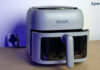
Over the last two years, air fryers have become the fastest-growing kitchen appliance category. Every brand rushed to launch one. Some launched multiple models across sizes and price points. For many households, the air fryer felt like a smarter, healthier upgrade. It promised faster cooking, less oil, and minimal effort.
And for a while, it delivered. Fries, frozen snacks, paneer, chicken, and reheated pizza. The air fryer did what it was good at, and it did it consistently.
But over time, usage narrowed. For most homes, it became a snack machine rather than a cooking solution. It rarely replaced traditional cooking. Full meals still required the gas stove, multiple utensils, and separate prep. The air fryer did not fail. It just stayed limited.
Like the microwave before it, it solved one problem well but left everything else untouched.
Why Kitchen Gadgets Are Shifting Again
This is where the next shift in kitchen appliances is starting to take shape.
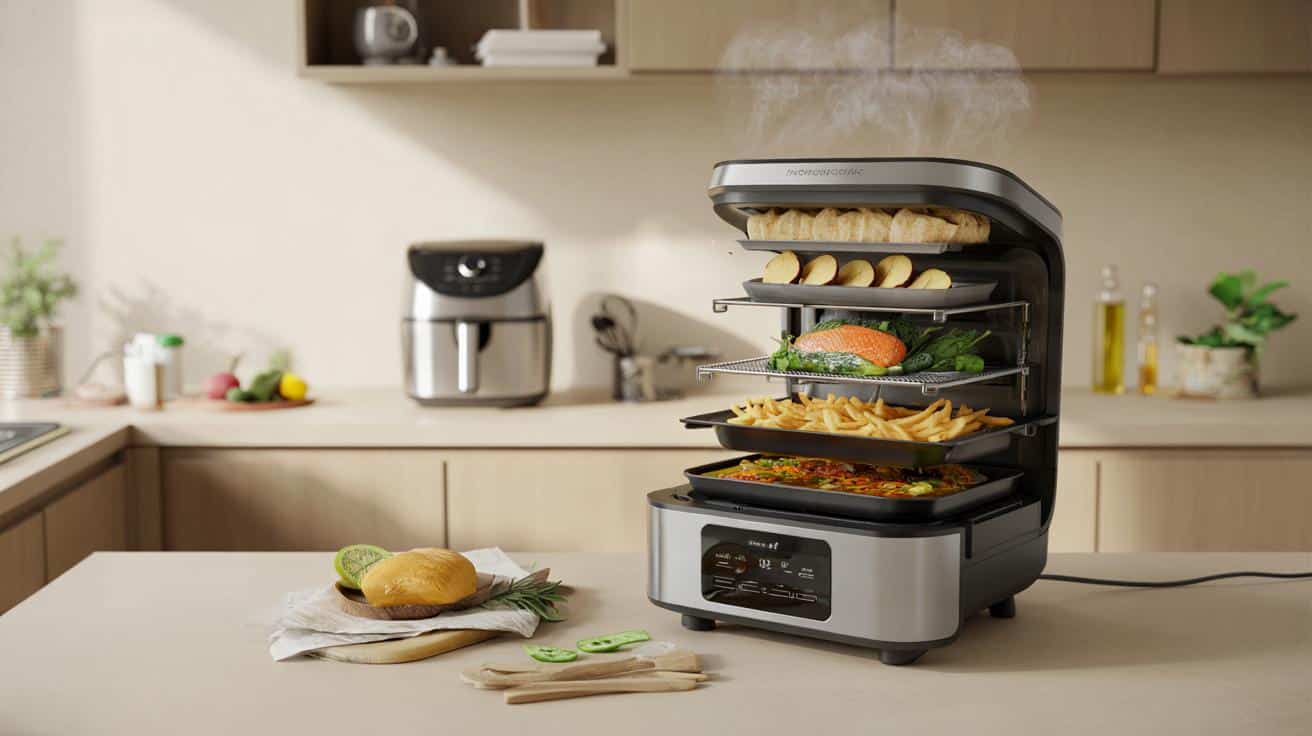
Instead of single-purpose gadgets, newer countertop devices are being designed to handle multiple cooking methods in one unit. Air frying is still part of the equation, but it is no longer the headline feature. These appliances can sauté, steam, slow cook, bake, roast, dehydrate, and in some cases pressure cook as well.
The difference is not just in features. It is in how people use them.
Rather than planning meals around what a gadget can do, users start cooking based on what they want to eat. One appliance takes care of most of the process, from basic prep to finishing. That reduces switching between utensils, burners, and machines.
For kitchens where counter space is limited, this matters.
So What Is This 9-in-1 Cooker, Really?
This new category of kitchen appliance is best understood as a multi-function cooker rather than a replacement for the air fryer. Air frying is just one of several modes it offers. Most models also support sautéing, steaming, slow cooking, baking, roasting, dehydrating, warming, and reheating.
In terms of size, these appliances are designed for small to mid-sized households. They can handle everyday meals for two to four people but are not built for large batch cooking. They usually occupy more space than a basic air fryer, but less than owning separate appliances for each task.
Where they add value is in reducing steps. You can sauté ingredients, add liquids, switch cooking modes, and finish a dish in the same vessel. That means fewer utensils, less cleanup, and a more streamlined cooking process during the week.
Where it Falls Flat Still
What they do not solve is scale. Large families, bulk cooking, and high-heat stovetop tasks still require traditional cookware. Air frying performance can also fall short of dedicated air fryers when cooking larger batches. Like air fryers, many users may eventually rely on only a few familiar modes.
This is why the 9-in-1 cooker should not be viewed as the next air fryer. It is more complex, less plug-and-play, and demands a small shift in cooking habits. For some kitchens, it will become central. For others, it may end up being used mainly for smaller batches and select dishes.
But it reflects a larger change in how people think about kitchen gadgets. Less interest in single-purpose devices, and more interest in appliances that justify the space they take.
That is not a trend. It is a correction.