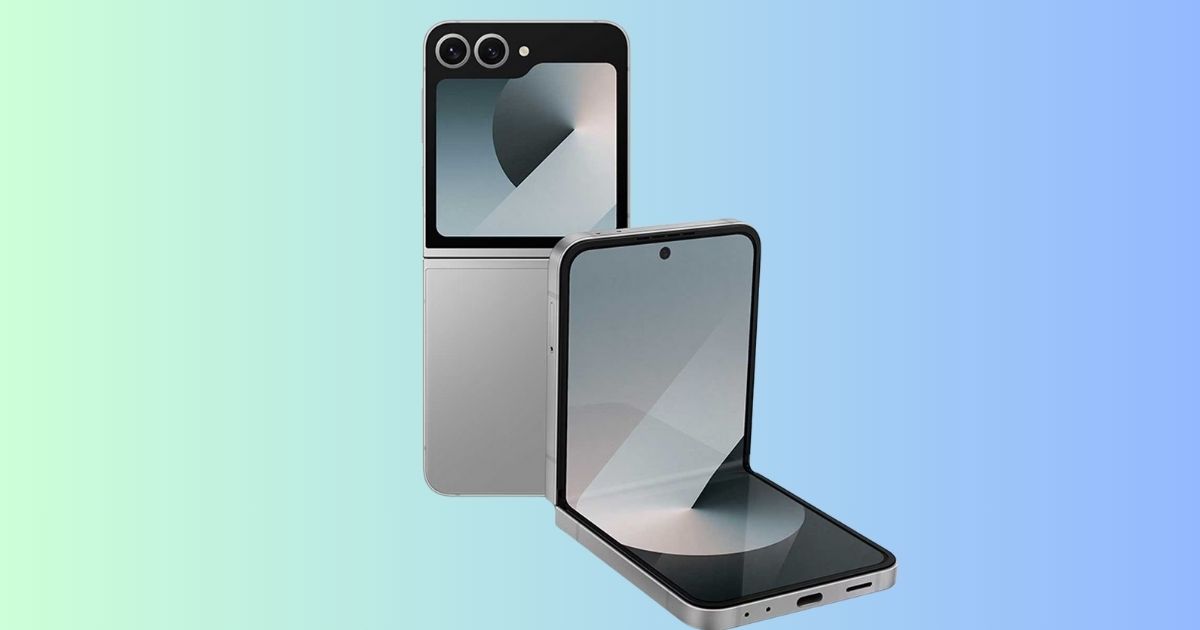
Samsung has filed a new design patent that hints at a different take on flip phones. The patent was spotted on the World Intellectual Property Organization (WIPO) website, and based on the drawings, it looks like Samsung is exploring a reversible front-and-back flip phone design.
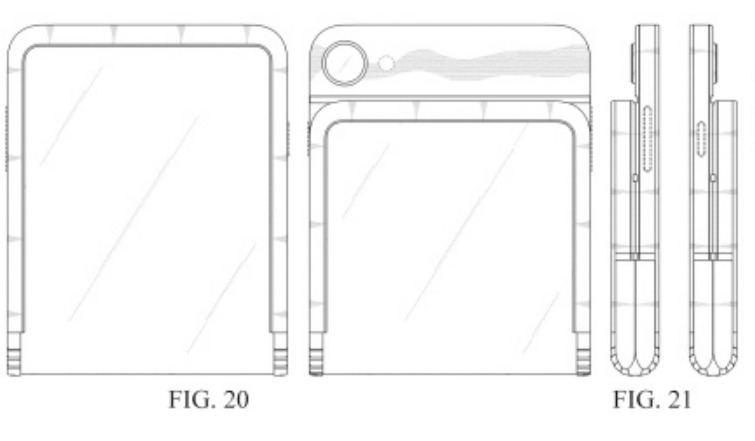
If we go by the sketches, the patent focuses heavily on the physical form of the device rather than internal hardware. The drawings show multiple perspective, front, rear, side, top, and bottom views of the same device in different folded and unfolded positions. This suggests Samsung is trying to protect the overall look and symmetry of the phone from every possible angle.
From the figures, it appears the flip phone does not have a clearly defined “front” or “back” when folded. Both outer panels look similar in size and shape, which hints at a reversible design where either side could face outward. This is different from current flip phones, which usually have a main cover display on one side and a plain rear panel on the other.
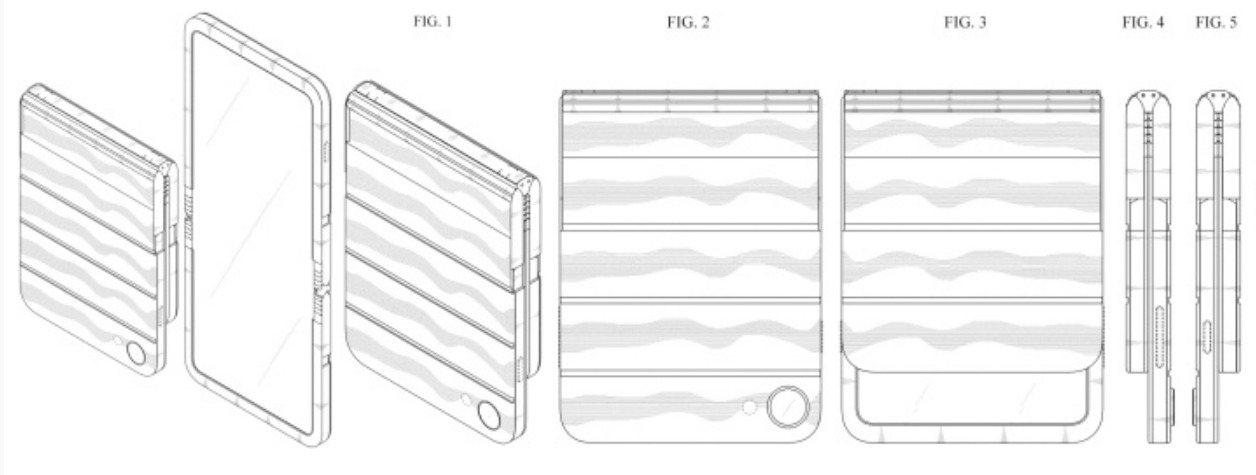
Some of the views show a circular cut-out on one of the outer surfaces. If we go by the drawings alone, this could be meant for a camera, sensor, or another functional element, though the patent does not clearly explain its purpose. The side views also suggest a uniform thickness and a clean hinge design, indicating that Samsung may be aiming for a consistent feel regardless of how the device is held or folded.
The patent includes several sets of figures showing the device from slightly different orientations. This makes it clear that Samsung is emphasising the reversible nature of the design and how the phone looks and functions in multiple states. As mentioned in the patent text, the broken lines in the drawings represent parts of the display device that do not form part of the claimed design, which is typical for design-focused patent filings.
As always, it is important to keep expectations in check. This is just a design patent, and there is no confirmation from Samsung that such a reversible flip phone will ever launch as a commercial product. Not every patent turns into a real device, and many of these filings are meant to protect early ideas or experimental designs rather than signal an upcoming release.