Vivo and Zeiss’ partnership has delivered some of the best camera-focused smartphones in recent years. While the Vivo X300 Pro represents the peak of that collaboration, Vivo has been extending that experience down to more accessible price points. That’s exactly where the Vivo V70 comes in.
Positioned as the entry-level model in this lineup, the V70 brings the Zeiss-tuned camera magic without the flagship price tag. But slapping a Zeiss logo on the back doesn’t automatically make a phone great. Other aspects like the display, performance, design, and the overall experience still need to hold up.
The bigger question is whether the Vivo V70 feels like a well-rounded package. Let’s find out in my review.
Comfortably Sleek and Slim
Smartphones are getting bigger every year, and most of them now demand two hands for comfortable use. That’s why the Vivo V70 felt like a breath of fresh air. While it might not be as comfortable to hold as the super-slim Motorola Edge 70 or Infinix Note Edge 5G, it is still relatively slim and lightweight.
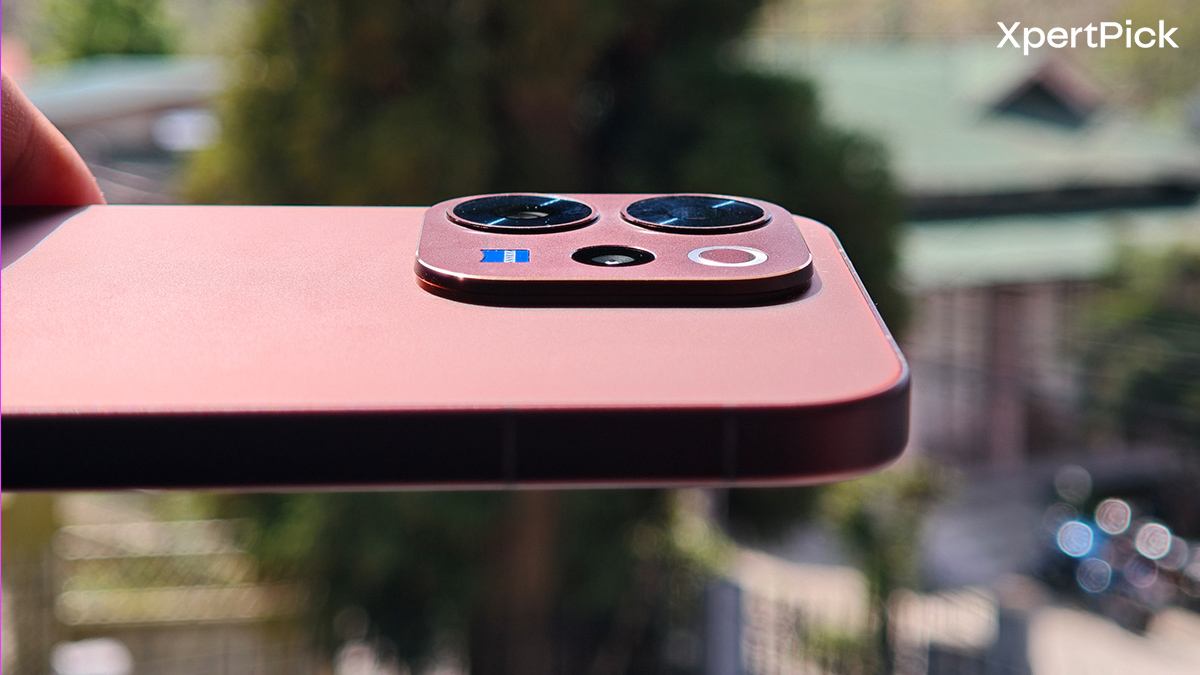
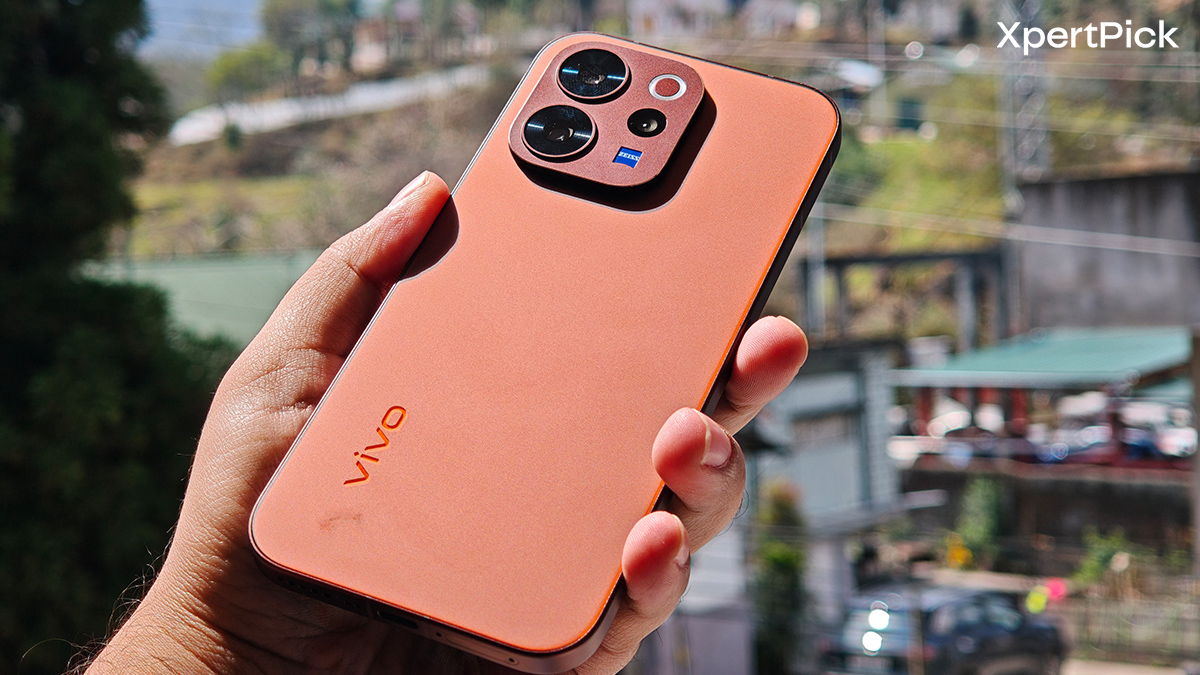
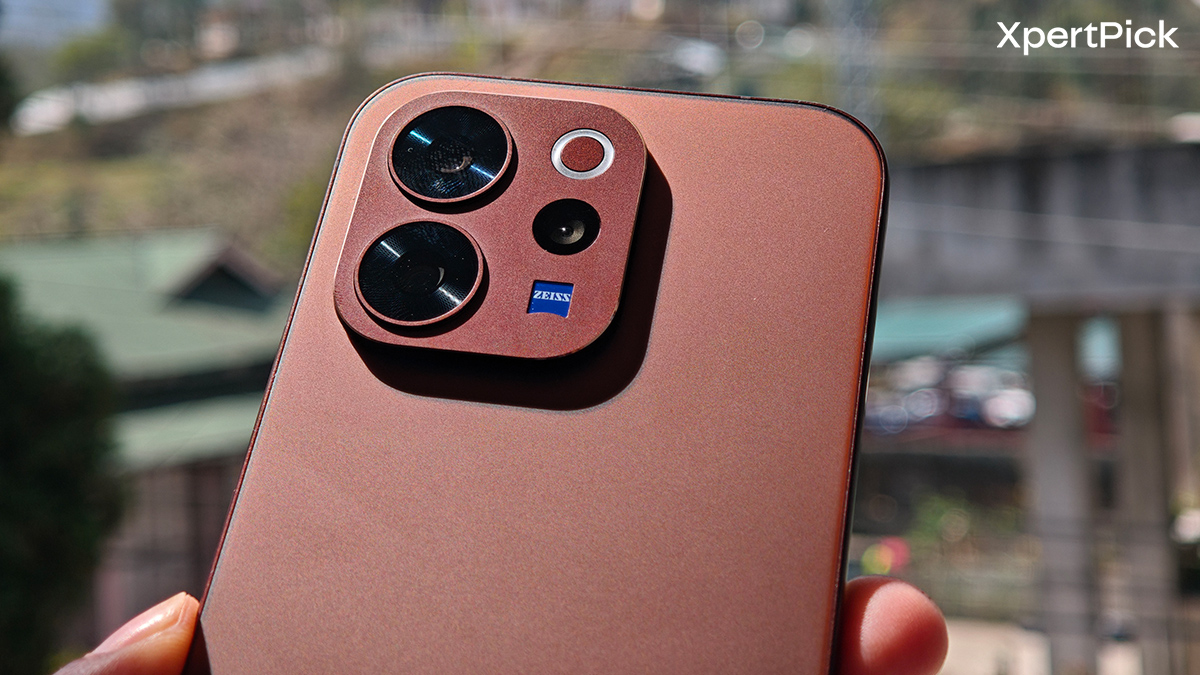
Measuring around 7.5mm thick and weighing 185 grams, it’s one of those phones that just sits nicely in your hand. Add curved edges and a balanced weight distribution, and it’s genuinely comfortable to use for long periods. Vivo also brings a touch of premium here. You get a glass back, a metallic frame, and a high-end IP68 + IP69 rating, along with a clear case in the box. It is a well-built phone that feels more expensive than it actually is.
The only slight annoyance is with the overall look. It resembles the iPhone 16 Pro a bit too much. Some previous V-series models had a more distinct design language, so this feels like a tiny downgrade and a little too heavily inspired by Apple. It still looks good, just not as memorable as it could have been.
A surprising screen upgrade
Ultrasonic fingerprint scanners, which were long seen as exclusive to premium phones, are finally arriving in more accessible devices, and the Vivo V70 is one of them. You get the higher sensor positioning, fast unlock speeds, and it doesn’t flashbang you in the dark. It’s one of those smaller upgrades that doesn’t sound exciting on paper, but you immediately appreciate it once you start using the phone daily.
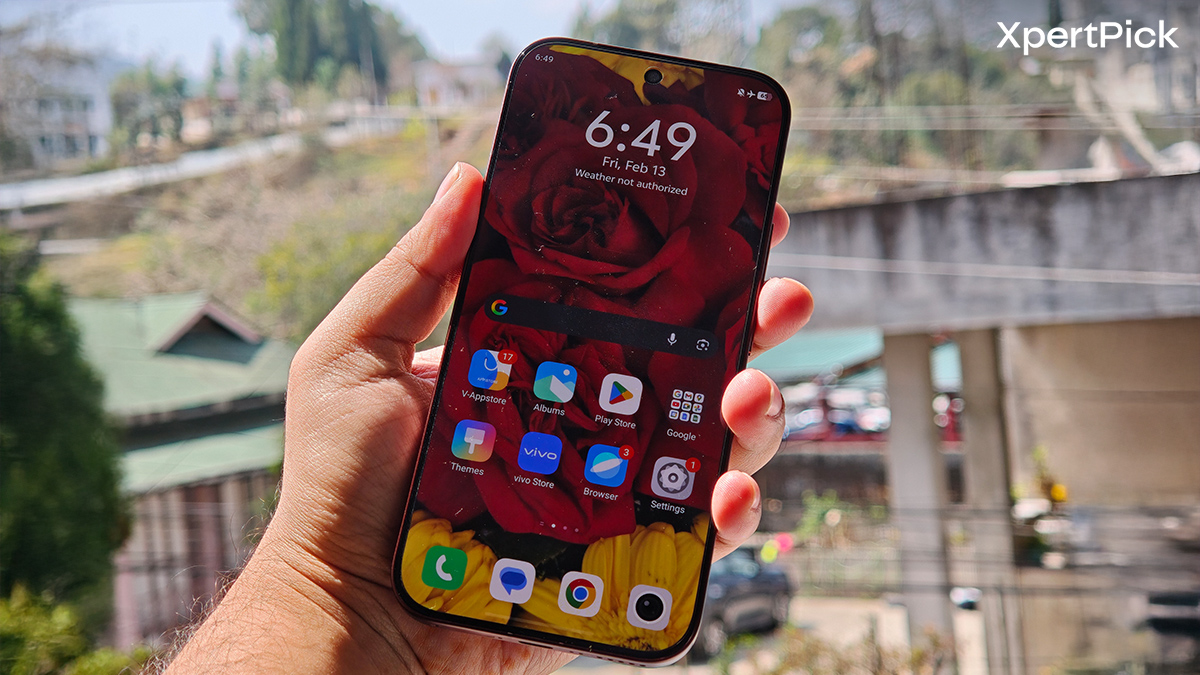
Aside from that, the display is in line with what you’d expect at this budget, and that’s a good thing. There’s a vibrant AMOLED screen with great colours, strong contrast, and brightness levels that never really gave me any reason to complain. The 120Hz refresh rate support makes everything feel super responsive and smooth, whether you’re scrolling through social media or hopping through apps.
Again, this is the standard now for phones at this price range, and it’s hard to pinpoint any cons here.
Not the fastest, but it was never meant to be
Brands build some phones like collector’s items, some run fast with flagship-grade chips, and some exist purely for the camera experience. But the Vivo V70 feels like it was built to be good at everything without trying too hard to dominate one category.
It’s closer to the old “jack of all trades, and master of none” saying. There are clearly faster phones at this price, and the OnePlus 15R, is the obvious example. That phone is unapologetically performance-first. It has a stronger gaming focus, better thermal setup, and the kind of speed that power users are going to appreciate.
But the Vivo V70 isn’t chasing that crowd. The Snapdragon 7 Gen 4 under the hood is more than capable of handling everyday tasks, heavier multitasking, and even a fair bit of gaming. It’s the same exact chip that has already proven itself in phones like the Motorola Edge 70, where it came across as a reliable all-rounder rather than a benchmark leader.
The phone stays cool, capable, and efficient in most situations. There were no real stutters in regular use, and games ran well for the most part. The only times it really struggled were in CPU- and GPU-heavy titles like Genshin Impact. But outside of these kinds of games, performance felt strong enough, with competitive titles easily hitting triple-digit frame rates.
This is also where the contrast with the OnePlus 15R becomes important. The 15R is clearly faster, and if all you care about is gaming or pushing the chip hard, that’s the phone to pick. But Vivo has taken a different route here. Rather than chasing peak performance, it offers something more rounded that doesn’t feel slow.
New battery standards are here to stay
Back in 2025, Chinese smartphone makers really started moving the needle with battery life thanks to newer battery technology. After some initial scepticism, these denser cells proved themselves in real-world performance. So when the Vivo V70 came in for review with a massive 6,500mAh battery pack, I already knew I was in for a pretty reassuring experience.
What this phone gives you is peace of mind. Every time you pick it up, there’s just enough juice left for another few hours. I had a couple of those moments where plans suddenly changed, and I had to head out without thinking too much about charging first. Not once did I have to second-guess the battery percentage.
Sure, the iPhones, Pixels, and Galaxies all have their unique strength and identities. But nailing the basics, especially battery life, should be the bare minimum at this point.
On a full charge, I could easily keep using this phone into the next day, with over 8 hours of screen-on time with moderate use. You can definitely run it dry in 24 hours, but you’d have to be gaming for a hot minute, shooting plenty of 4K videos, and clicking pictures all day. That’s exactly what I had to do while reviewing it, and the endurance still impressed me. Charging is handled by the 90W charger, which gets you to a full charge in just over an hour. So you spend more time with the phone and less time charging it.
Cameras got the magic tuning
The Vivo V70 is definitely a camera-centric phone, but the good thing is that Vivo hasn’t sacrificed the rest of the experience just to get there. The cameras with Zeiss tuning are the main attraction here, and the experience is still fun.
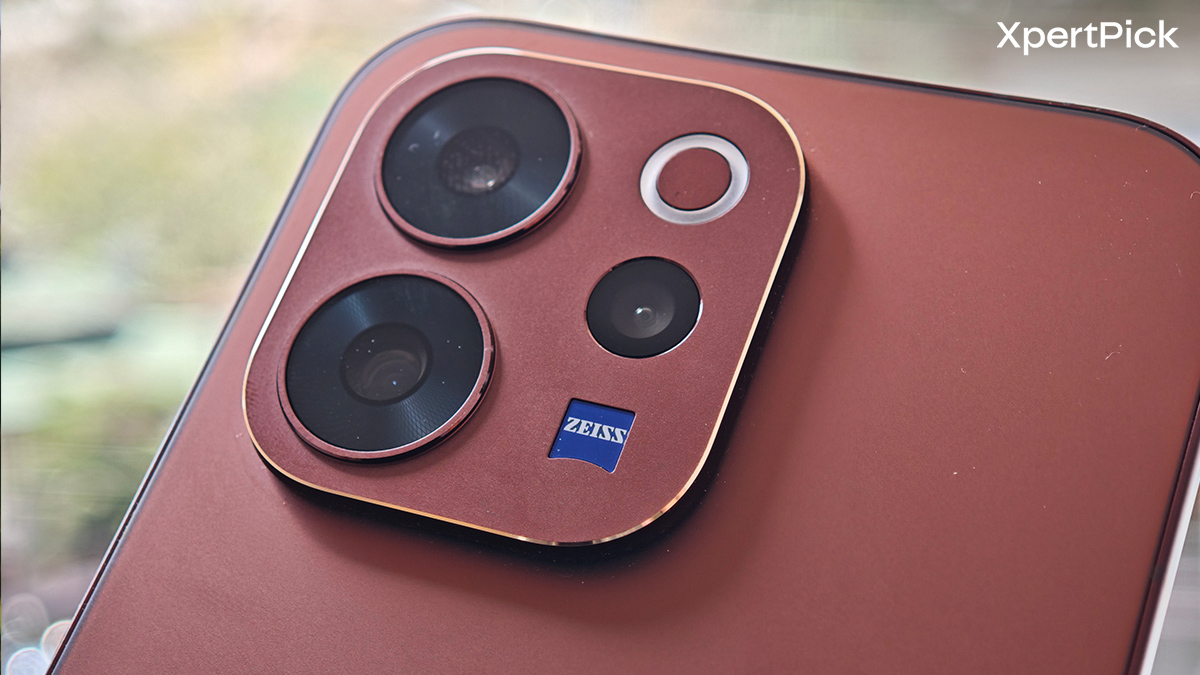
Camera hardware:
- 50MP 1/56″ Sony IMX766 main sensor (f/1.88 aperture, OIS)
- 8MP 1/1.4” (f/2.2)
- 50MP 1/1.95” Sony LYT600 periscope telephoto shooter (f/2.65, 3x optical zoom, OIS)
- 50MP 1/2.76” selfie camera (f/2.0, AF)
I took the V70 along on a recent trip to the mountains, and even though my daily driver is already a solid compact flagship, the V70 kept calling my name. Just the camera app experience alone made it fun. There are useful filters, quick tweaks, and a bunch of on-the-go options that make you want to actually experiment instead of just point and shoot. I even took plenty of shots in auto mode, but Vivo brings plenty of tools to play around with.

















In daylight, pictures are consistently a treat. Everything about the tuning makes the images look ready for a quick Instagram story update. Colours have that slight pop, exposure is expertly balanced, and every shot has good detail. On only a rare few occasions was I unhappy with the result, and it was primarily over the autofocus. The Vivo V70 can sometimes focus on the wrong subject during portrait shots or zoomed shots.
Low-light performance on the V70 is impressive, despite the device not packing a particularly large primary sensor. Vivo has done a great job here, carrying over the same colour consistency, details, and vibrancy, even in indoor or artificial lighting. Portraits are another highlight, with realistic background blurs and great image compression when you switch to the telephoto shooter.



And that telephoto is one of the reasons the V70 feels more complete than some of its similarly priced rivals. The familiar Sony telephoto sensor returns, and it is as reliable as ever. It sits just a step below the kind of hardware you’d see in top-end flagships, which means zoom photography here is genuinely enjoyable.
Going past the 3x native focal length is basically a digital crop-in, but even that is decent up to around 6x in daylight. Beyond that, the heavy sharpening and AI cleanup start getting too obvious.
The same praise extends to the dim lighting performance of the telephoto. Vivo also deserves credit for keeping colour tones consistent on a non-flagship phone. The ultra-wide is technically the weakest camera on paper, but it does a more competent job than expected in the day. While the soft edges and distortion are unavoidable, image quality overall seems solid. Once the lighting gets worse, it starts cranking up the ISO, which can add a fair bit of noise in the shots.







The reliable photography experience of the V70 also returns for the selfie camera. Skin tones in particular are well-rendered, with no annoying smoothening or fake beautification turned on by default. So selfies turn out looking natural.
Photography is also where the comparison with the OnePlus 15R becomes easy to draw. The V70 is easily the more versatile phone when it comes to photography, even if it lags behind in performance. It has a telephoto lens, stronger portrait capabilities, and is generally more refined for photography in general.
The video recording experience was the only real letdown of the V70. In good lighting, the video is fine, with decent stabilisation and sufficient details. But even once you step into the shadows, the video gets soft. There’s plenty of noise and exposure balancing, which also became messy. Walking around while recording also brought in big jitters.
It is Still OriginOS 6
When I reviewed the Vivo X300 Pro, it was genuinely difficult to find major faults with the phone. The only part that got the bulk of the criticism was the software experience. To be fair, OriginOS 6 is much better than FuntouchOS, but it still feels more inspired than fleshed out.
It is everything every other Android skin wants to be, but without a strong identity of its own. There are plenty of things it gets right, but there’s no real USP that makes it feel unmistakably Vivo. Still, once I stop holding that against it, a lot of the fun parts of the experience are still here.
Vivo stuffs the Android 16-based skin with all kinds of useful features. The customisation options are deep, from charging animation to Always-on Display settings to fingerprint unlock animations. Just about every part of the interface you interact with can be personalised. So no two Vivo phones really need to look the same.
AI is still one of the highlights, and the tools offered are comfortably ahead of what Apple currently offers on its iPhone. So once again: is it terrible? No. But I wish more ideas felt clever in a more distinct, less derivative way.
Verdict
Starting at Rs 45,999, the Vivo V70 is one of those phones that quietly gets a lot right. It doesn’t blow you away with benchmark numbers or some wildly experimental features, but it nails the kind of things that actually matter in daily use. It feels premium, the display is excellent, battery life is dependable, and the camera system, especially with the telephoto and Zeiss tuning, is what gives the phone its strongest identity.
That said, this isn’t an obvious pick for everyone. Many prioritise performance and gaming, so models like the OnePlus 15R or iQOO 15R make more sense. These are faster and built for a different type of user in mind. But if you want a phone that feels more balanced, with a genuinely versatile camera and a more polished all-round experience, the Vivo V70 makes a compelling case for itself. It isn’t the loudest phone in the segment, but it does feel like one of the smartest picks.
Pros
- Solid still photography with Zeiss tuning
- Dedicated telephoto cameras add real versatility in this budget
- Premium, slim, and comfortable design
- Strong battery life with fast charging
- Vibrant and smooth AMOLED display
Cons
- Video recording is noticeably weak
- Not the fastest phone in its class for gaming
- OriginOS still lacks a clear identity