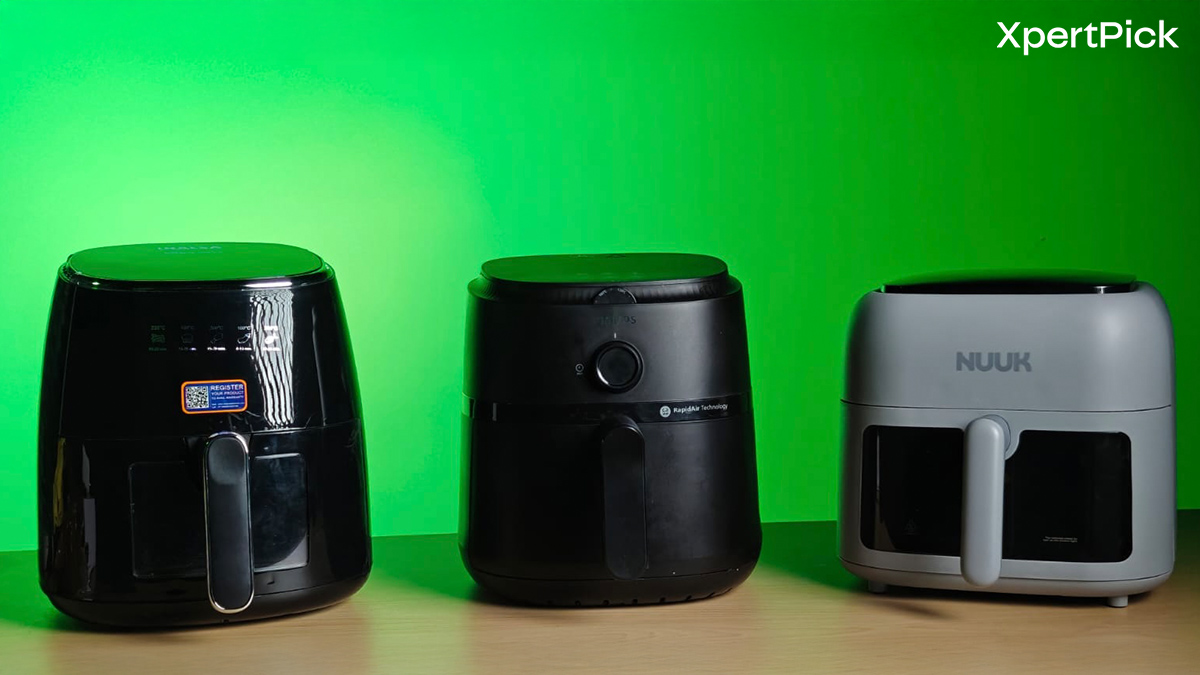
Air fryers have crossed the curiosity phase in India. They are now everyday appliances, used multiple times a week for snacks, reheats, and even full meals. As usage has increased, so have questions around safety, materials, and long-term health impact.
At XP, we’ve tested multiple air fryers hands-on over the last six months across basket-style, oven-style, and newer formats. Our focus is not just on cooking performance, but also on how these machines behave over repeated high-heat cycles, how surfaces age, and how easy they are to keep clean without degrading safety.
This section addresses the two biggest concerns we hear from readers: the cancer myth around air frying, and whether certain basket materials are actually safer than others.
Does Air Frying Cause Cancer? Understanding the Acrylamide Fear
Acrylamide often comes up in conversations around air fryers, usually without context.
What acrylamide is, in practical terms
Acrylamide can form when starchy foods like potatoes or bread are cooked at high temperatures in dry conditions. It is a byproduct of browning reactions that also occur in deep frying, baking, roasting, and even toasting.
This is not an air fryer-specific issue. It is a high-heat cooking outcome.
What matters more than the appliance
In our testing, acrylamide risk correlates far more strongly with:
-
how dark food is allowed to brown,
-
how long it stays in the fryer,
-
whether food is crowded or cooked in dry batches.
Air fryers can produce similar acrylamide levels to deep frying if food is heavily browned. They can also produce lower levels if cooking is controlled properly. The appliance itself is not the deciding factor; it also depends on how long you are cooking. If you are expecting that the food will be as crispy as fried in an air fryer, then you need to readjust your expectations. The texture that you get from frying or in a microwave will not be replicated in an air fryer but yes they will still taste well and have substancially lower calories.
How XP approaches this in testing
When testing air fryers, we deliberately stop starchy foods at a golden finish, not deep brown. Models that require longer cooking times to achieve crispness tend to push food toward over-browning, which we actively penalise.
So the bottom line is that Air frying does not “cause cancer.” Poor control over browning does. If food is golden rather than dark, acrylamide exposure stays within widely accepted dietary norms.
How XP Thinks About Air Fryer Materials (And Why We Rank Them This Way)
When readers ask us which air fryer material is “the safest,” they are usually looking for a simple answer. In reality, safety is not about absolutes. It is about how materials behave over time, how forgiving they are to real-world usage, and how likely they are to push users toward poor cooking habits.
At XP, our material preference is shaped by repeated testing, cleaning, reheating, and everyday use over months, not just first-week impressions.
Our current preference order is:
Ceramic-coated > Glass > PTFE (non-stick)
Here’s the reasoning behind that ranking.
1. Ceramic-Coated Baskets: The Best Balance for Most Users
Ceramic-coated baskets sit at the top of our list because they strike the most sensible balance between material reassurance, cooking performance, and usability.
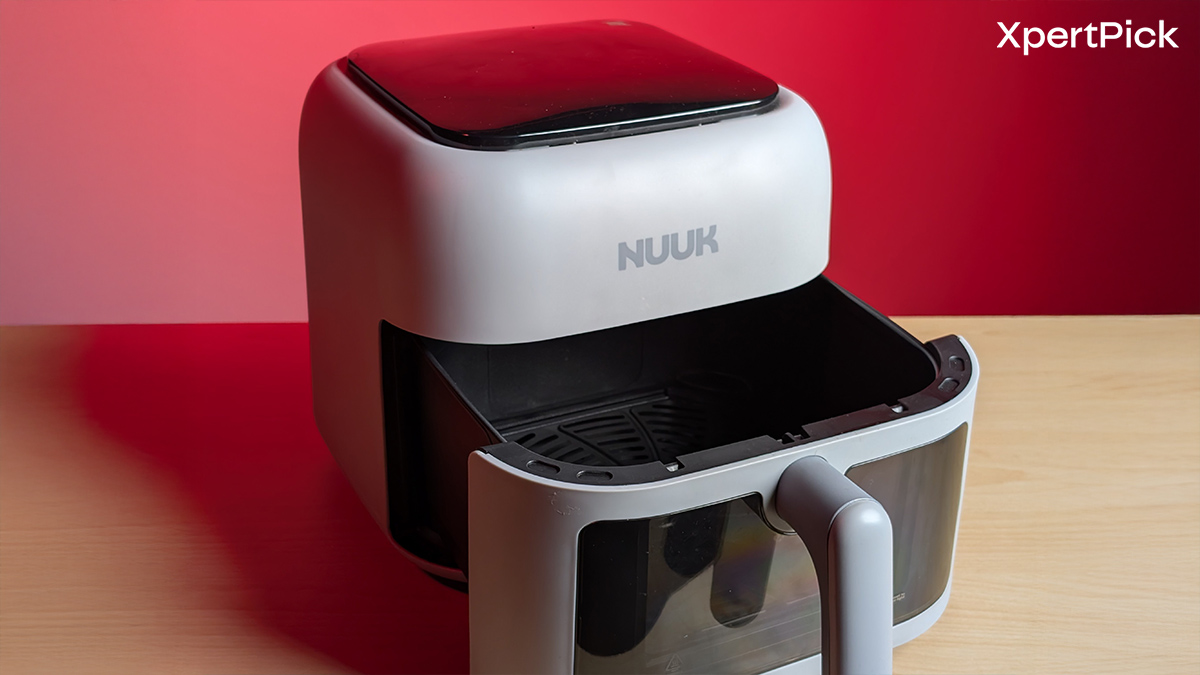
From a safety standpoint, ceramic coatings avoid traditional PTFE chemistry, which immediately puts many users at ease. But more importantly for us, ceramic surfaces tend to encourage better cooking behaviour. They usually require slightly more attention to spacing, temperature, and timing, which naturally discourages aggressive overcooking and excessive browning.
In our testing, ceramic baskets:
-
hold up well to repeated high-heat cycles when cleaned gently,
-
distribute heat evenly without forcing extreme temperatures,
-
deliver predictable results without pushing food into dark browning territory.
Cleaning is straightforward early on, though ceramic does not tolerate harsh scrubbing. Once damaged, performance drops quickly, which is why we always factor surface ageing into long-term scores.
Ceramic-coated baskets in the Indian market are still limited, with NUUK BRĪSK 6.5L Ceramic Air Fryer, Inalsa Tasty Fry CDW 5.5L (ceramic-coated basket), and Inalsa 4.5L Ceramic-Coated Air Fryer being among the few models explicitly positioned around non-Teflon, ceramic-style coatings.
Why XP ranks ceramic highest
Ceramic is not indestructible, but it is forgiving, stable, and nudges users toward controlled cooking. For frequent use without constant anxiety, it offers the best overall compromise.
You’ll see ceramic-coated baskets highlighted in select models from brands like Wonderchef and Agaro, especially in ranges marketed around health-focused cooking.
2. Glass Air Fryers: Material Confidence, With Trade-offs
Glass air fryers rank just below ceramic, not because glass is unsafe, but because it solves a different problem.
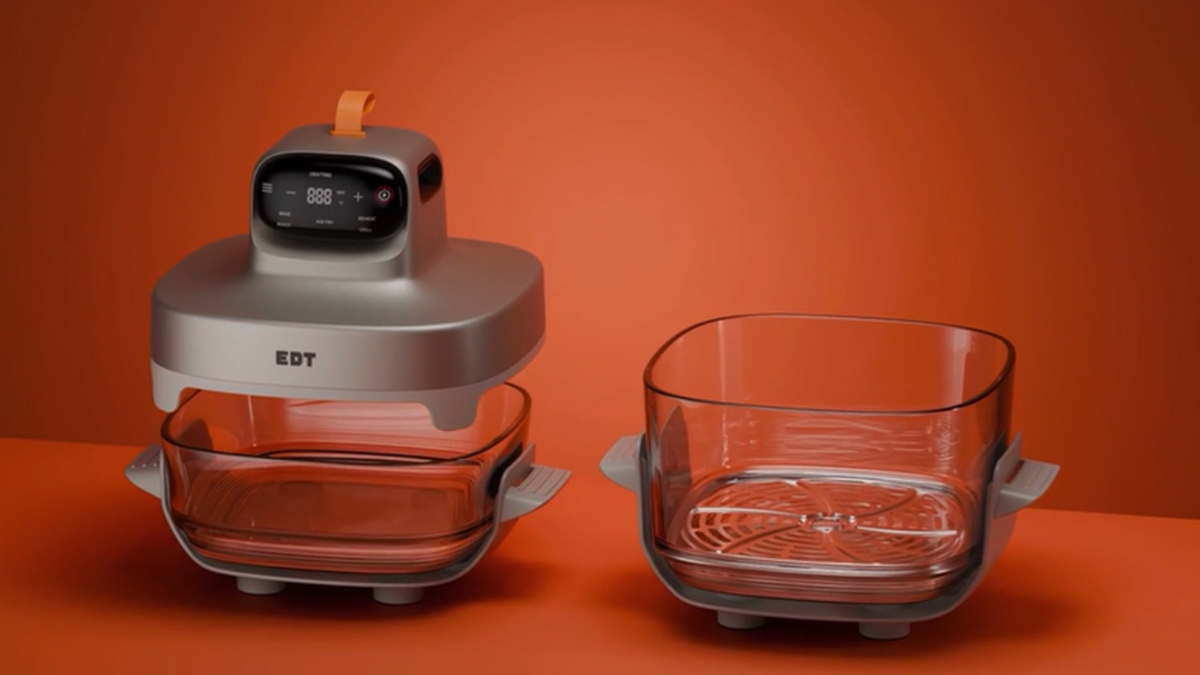
Glass is chemically inert. It does not degrade, flake, or react with food. From a pure material safety perspective, it is extremely reassuring. Where glass really shines is in visibility. Being able to see food cook in real time significantly reduces the chances of over-browning, which directly helps manage acrylamide formation in starchy foods.
However, glass does not automatically translate to better cooking outcomes. Performance still depends on airflow design, heating consistency, and basket geometry. In some designs, heat retention can be uneven, and the bulkier form factor is not always practical for daily use.
Cleaning is generally easy, often dishwasher-friendly, but handling large glass bowls can be inconvenient in compact kitchens. Glass-based air fryers available in India include the Prestige AirFlip 4.5L Glass Air Fryer, Acerpure Glass Bowl Air Fryer, and the Libra 4.5 Litre Glass Bowl Air Fryer, all of which use a glass cooking bowl to eliminate coated food-contact surfaces and allow visible monitoring during cooking.
Why XP ranks glass second
Glass offers maximum material neutrality and visual control, but at the cost of speed, compactness, and sometimes consistency. It is reassuring, not magical.
In India, brands like Prestige (with its AirFlip series) and Acerpure have leaned into glass-based designs to appeal to health-conscious buyers.
3. PTFE (Non-Stick) Baskets: Acceptable, but Least Forgiving
PTFE-coated baskets remain the most common air fryer format in India, and to be clear, they are not inherently unsafe. Established brands use modern coatings designed to operate safely within standard cooking temperatures.
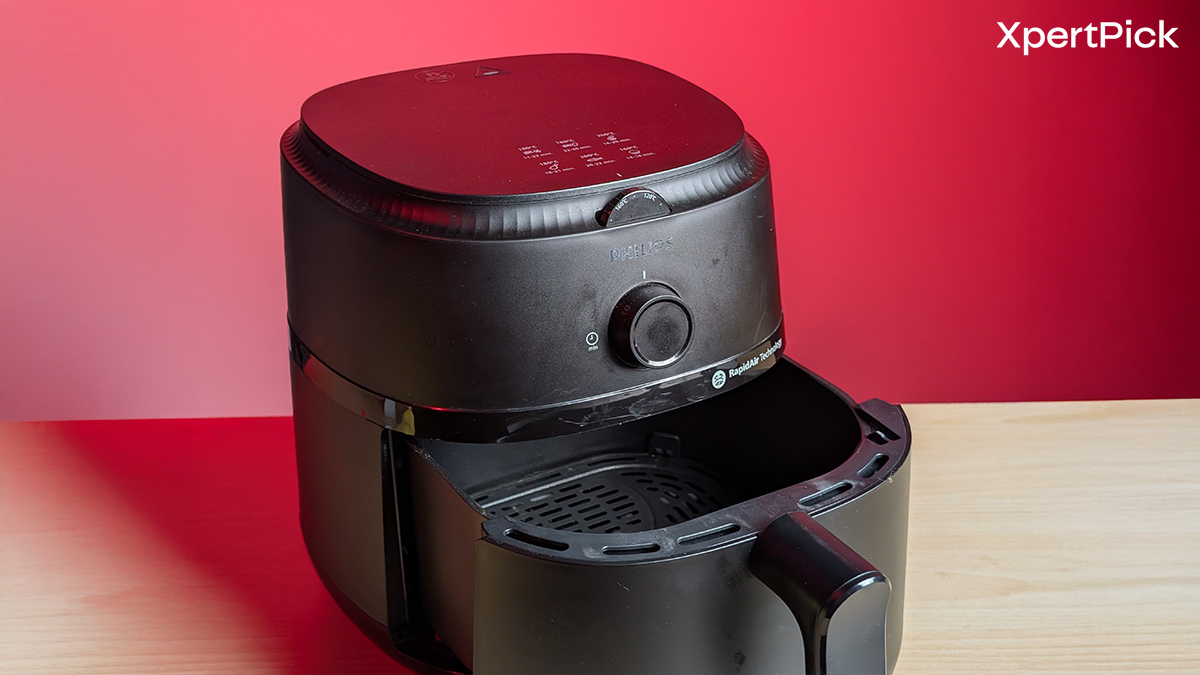
Where PTFE drops in our ranking is not chemistry alone, but ageing behaviour and user dependency.
In long-term testing, PTFE baskets:
-
clean easily when new,
-
deliver excellent food release,
-
but degrade fastest when exposed to repeated high heat, abrasive cleaning, or careless use.
Once a PTFE surface is scratched or flaking, users face a dilemma: continue using a compromised surface or replace a critical component. Many don’t replace it, which is where safety confidence and cooking quality both suffer. Most budget and popular brands are offering PTFE coating. The list includes multiple models from Philips, Prestige, Inalsa, Pigeon, Morphy Richards among others.
Why XP ranks PTFE last
PTFE works well when treated perfectly. Real kitchens are rarely perfect. That makes it the least forgiving option over time.
Most mainstream models from brands such as Philips, Havells, Instant, Xiaomi, and Inalsa use PTFE baskets across popular price segments.
The XP Lens: Why This Ranking Matters
Our material preference is not about fear or absolutes. It is about what holds up best under everyday Indian usage, where appliances are:
-
used multiple times a week,
-
cleaned quickly, not delicately,
-
shared across households with different cooking habits.
Ceramic ranks highest because it balances safety, durability, and cooking control.
Glass follows because it is inert and transparent, but less practical.
PTFE comes last because it demands the most care to stay safe over time.
That ranking is not static. If coatings improve or designs evolve, our preference will change. But based on current testing, this is where we stand.
Hybrid Air Fryers: Safety Through Control, Not Material
Hybrid air fryers combine air frying with baking, grilling, or rotisserie functions. Most of these are oven style air fryers that have a larger capacity and even their form factor is more like an oven than an air fryer.
Why they matter
-
Larger cavities allow better spacing, reducing over-browning.
-
Multi-rack cooking offers better heat control.
-
Steel interiors reduce long-term wear concerns.
Havells, Morphy Richards, Faber, and Philips are pushing air fryer-OTG hybrids aimed at family kitchens. It is also worth noting that hybrids are not safer by default, but they offer better control for users who cook larger batches or varied meals.
Cleaning behaviour
More accessories mean more cleaning, but steel racks and trays age well with regular maintenance.
How XP Tests Air Fryers for Safety
Beyond cooking results, XP evaluates air fryers on:
-
surface stability after repeated high-heat cycles,
-
ease of cleaning without degrading materials,
-
how quickly food browns at standard temperatures,
-
whether design encourages overcooking or controlled finishes.
Models that require excessive time or heat to perform basic tasks score lower, regardless of brand or material.
XP’s Final Word on Air Fryer Safety
Air fryers are not inherently unsafe. Most risks come from over-browning food, neglecting cleaning, or using damaged baskets.
Material choice matters, but cooking habits matter more. For most buyers:
-
Ceramic offers the best balance,
-
Glass offers reassurance and visibility,
-
PTFE remains acceptable with care.
After months of testing, XP’s position is clear: controlled cooking and good maintenance do more for safety than any single material claim.