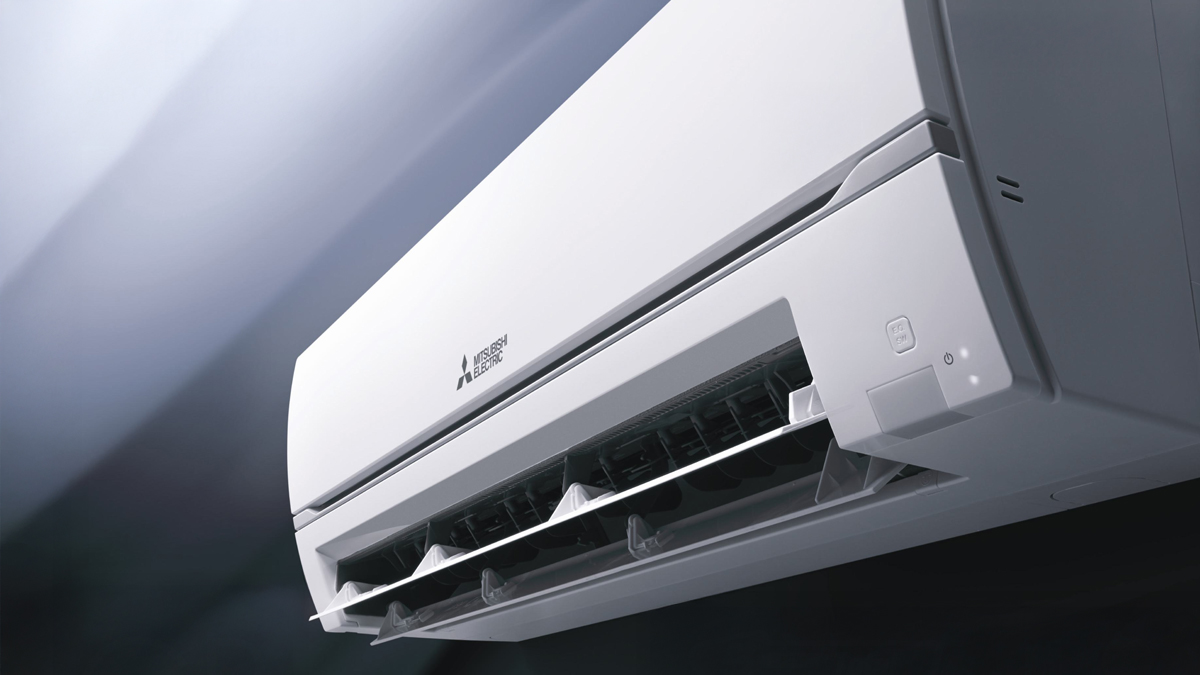
When Mitsubishi Electric inaugurated its ₹2,100-crore air conditioner and compressor manufacturing facility near Chennai, the move went beyond adding production capacity. It was a strategic signal that India has become one of the most important battlegrounds for global air-conditioning brands.
The new plant, spread across more than 210,000 square metres, will produce both room air conditioners and compressors, with annual capacities of about 300,000 units and 650,000 units respectively. The company expects its air-conditioning business in India to grow at a double-digit compound annual rate through the end of the decade, and the new facility is meant to anchor that expansion.
But the deeper story lies in why global manufacturers are accelerating investments in India at this moment.
India’s Cooling Market Is Entering a Structural Growth Phase
India remains one of the least air-conditioned large economies in the world. AC penetration is still in the low double digits, leaving tens of millions of households that will buy their first air conditioner over the next decade. Rising temperatures, longer summers, and urban heat islands are gradually turning cooling from a discretionary purchase into a necessity.
At the same time, urbanisation and income growth are changing appliance priorities. Smaller apartments, denser cities, and higher disposable incomes are pushing air conditioners higher on the purchase list for middle-class households.
Regulatory changes are also reshaping the market. New Bureau of Energy Efficiency norms from 2026 are pushing manufacturers toward more efficient inverter-based systems. That shift is forcing brands to redesign portfolios and localise production to keep costs under control.
Why Mitsubishi Needed a Local Manufacturing Base
Mitsubishi has traditionally been perceived as a premium, engineering-focused brand in India, with stronger recall in commercial and high-end residential segments. But that positioning alone is not enough in a market where price sensitivity and scale matter.
The Chennai plant addresses a few strategic priorities.
Local production helps reduce dependence on imports, particularly for compressors, which are among the most expensive components in an air conditioner. This gives the company better control over pricing and margins, especially at a time when input costs and efficiency requirements are rising.
It also improves supply stability. The AC market in India is highly seasonal, with demand spiking sharply during peak summer. A domestic manufacturing base allows quicker response to local demand and reduces the risks associated with global supply disruptions.
Finally, the facility positions Mitsubishi for the industry’s shift toward inverter technology. As efficiency norms tighten, inverter-based systems are expected to dominate sales, and local production gives the company a stronger footing in that transition.
A Broader Shift Across AC Brands
Mitsubishi’s move is part of a wider pattern across the industry. Most major air-conditioning brands are increasing local manufacturing capacity, especially for critical components like compressors. The goal is to reduce costs, comply with regulations, and improve supply resilience.
At the same time, companies are segmenting their portfolios more clearly. Mass-market models are being tuned for efficiency and affordability, while premium lines focus on connected features, AI-driven optimisation, and ecosystem integration.
There is also growing interest in commercial cooling. Demand from offices, retail, hospitals, and data centres is rising steadily, offering a more predictable revenue stream than the weather-dependent residential segment.
The Upside and Downside of the Chennai Investment
For Mitsubishi, the new plant offers several strategic advantages. Local compressor production improves cost control and reduces exposure to currency swings and import duties. It also helps the company respond faster to seasonal demand surges.
The facility strengthens its position in the inverter segment, which is expected to dominate future growth. It also supports expansion into commercial cooling categories, which typically deliver more stable demand than residential air conditioners.
The investment, however, is not without challenges. A ₹2,100-crore facility requires sustained growth to justify returns, and the AC market remains highly sensitive to weather patterns. A weak summer can quickly affect sales across the industry.
Competition is another factor. India’s AC market is crowded with domestic and multinational brands, many of which compete aggressively on price in the mass segment. Mitsubishi will need to scale volumes without diluting its premium, engineering-focused brand image.
XP Take
Mitsubishi’s Chennai plant is a bet on the next decade rather than the next summer. The company is positioning itself for a future where India becomes one of the world’s largest cooling markets, driven by climate pressures, urbanisation, and energy regulations.
Localising compressor and AC production gives Mitsubishi greater control over costs, supply chains, and technology. But the real challenge will be translating that manufacturing strength into a broader presence in India’s fiercely competitive residential segment.
If the market grows as projected, the Chennai facility could become one of Mitsubishi’s most important assets globally. If growth slows or price wars intensify, the path to returns could take longer than expected. Either way, the investment shows that the global cooling race is increasingly being decided in India.