Air fryers are often positioned as all-purpose appliances, capable of replacing everything from a deep fryer to a convection oven. In everyday use, however, they are far more specific in what they do well. Their strength lies in fast, dry, circulating heat that crisps surfaces efficiently. That same strength also creates clear limitations, especially with foods that rely on moisture, structure, or controlled heat transfer.
A lot of online advice around “what not to cook” in an air fryer tends to reduce these limitations to blanket rules. We wanted to see how accurate those rules actually are. So we tested a set of commonly cited foods that are supposed to fail in an air fryer, focusing on texture, browning, and overall usability. What emerged wasn’t a simple list of foods to avoid, but a pattern in how different types of food respond to airflow.
Wet Batter Doesn’t Behave the Way It Does in Oil
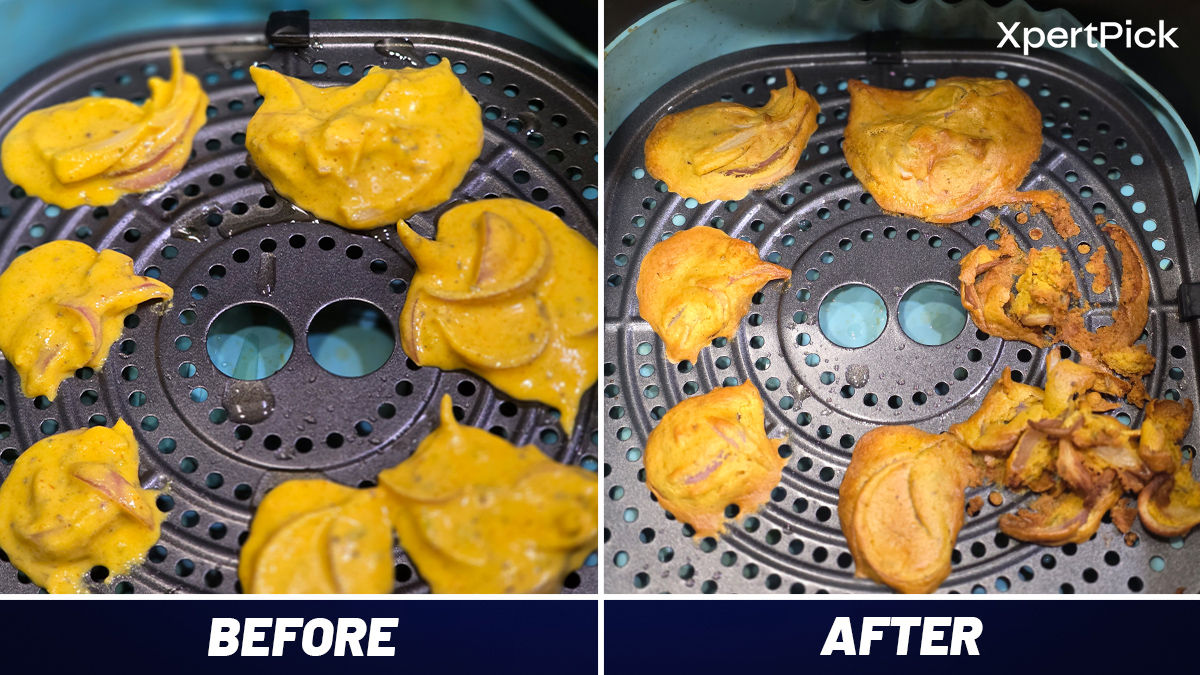
The most common advice is to avoid batter-coated foods entirely. In practice, the issue is less about whether they can be cooked and more about how the coating forms. In a deep fryer, hot oil immediately sets the batter into a crisp shell. In an air fryer, circulating hot air hits the coating before it fully stabilises, which can cause parts of the batter to drip through the basket or cook unevenly.
In our testing, we used the 160°C preset mode (in the Haier air fryer) for batter-coated foods like onion pakoras. The coating held together reasonably well, but the texture never developed the same crunch or crisp shell you would expect from deep frying. Browning consistency was also uneven, with some portions crisping better than others. Briefly chilling the coated food before cooking did help improve structure slightly, but the final texture still felt softer and less uniform compared to oil frying.
We also noticed that using the same loose batter typically meant for deep frying created another practical issue. Since the batter does not instantly set in an air fryer, parts of it tended to stick to the basket and tray during cooking, making cleanup noticeably messier. Thicker coatings or lightly pre-set batters worked better, but traditional runny batters were clearly less suited for air frying.
Verdict: Possible with adjustments, but not reliable by default
What this means: Air fryers struggle with foods that depend on rapid structural setting
Lightweight Foods Like Puffed Rice and Leafy Greens Are Too Light for the Airflow
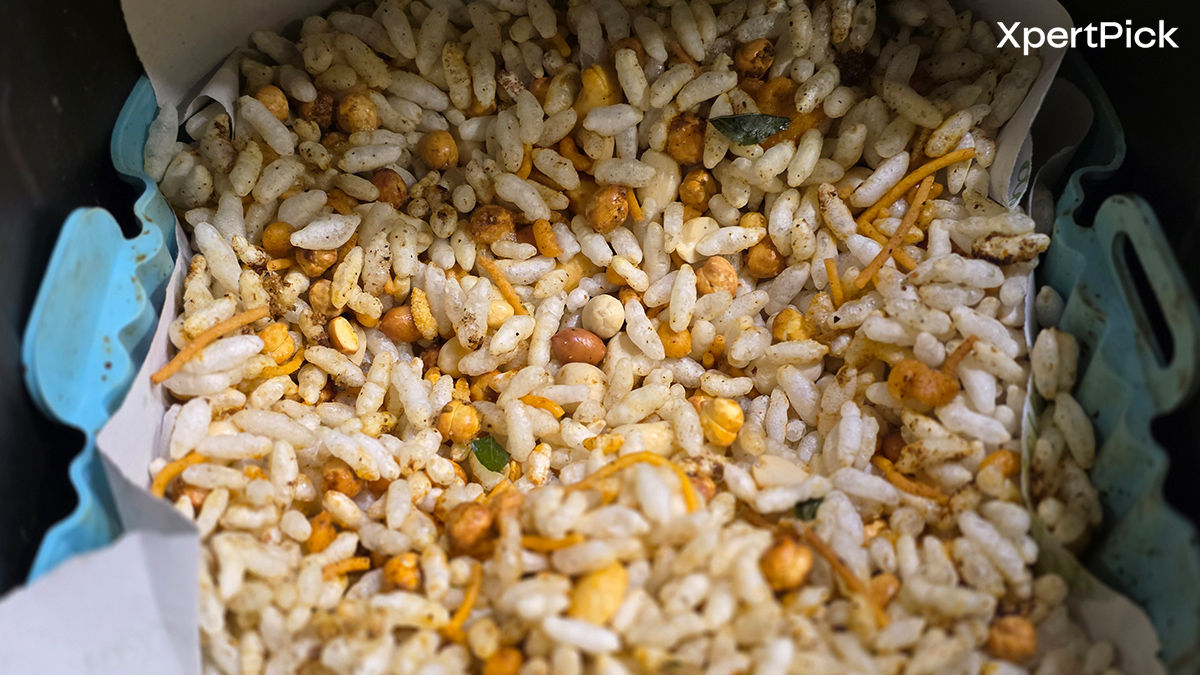
Lightweight foods like spinach highlight another limitation. The fan that helps crisp denser foods can move lighter ingredients around unpredictably. In some cases, leaves are lifted and shifted during cooking, leading to uneven exposure to heat. In others, edges burned quickly while the rest of the leaf remained undercooked. This was something that we also noticed while roasting papad or puffed rice. Some of the videos that we saw recomended sealing the puffed rice before cooking and honestly that tip helped and helped in more even roasting.
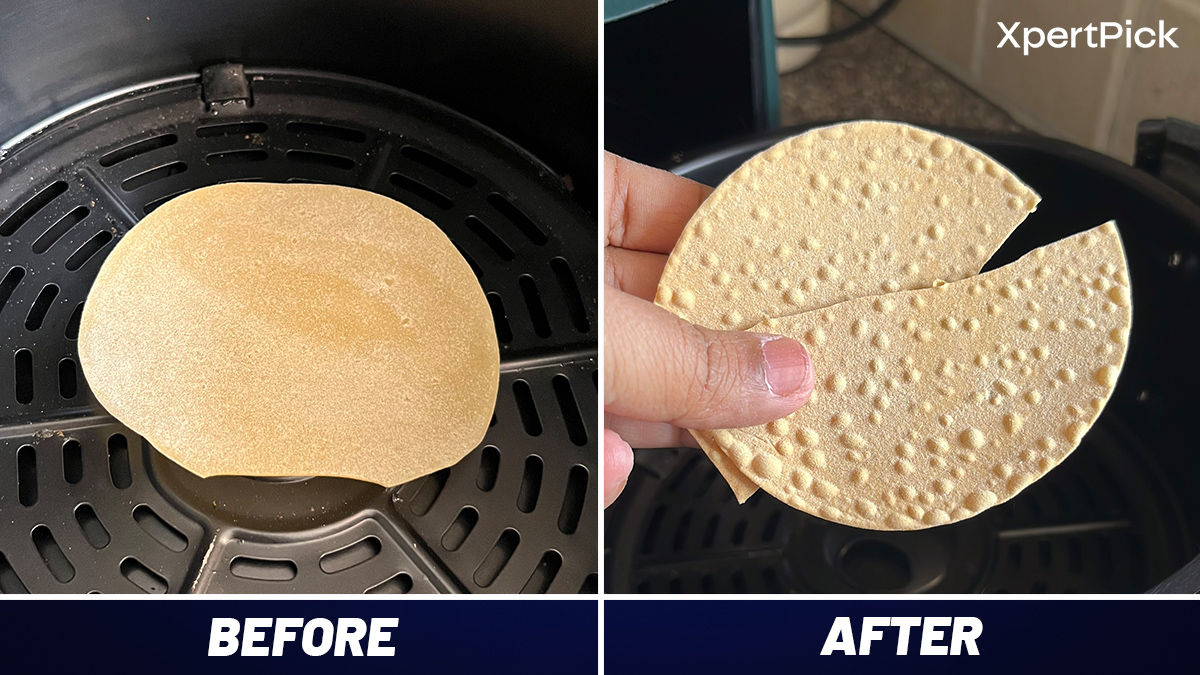
Adding a light coat of oil and arranging the greens more carefully reduced movement, but did not fully eliminate uneven results. This makes air fryers less dependable for delicate, low-density foods unless you are willing to monitor them closely.
Verdict: Inconsistent and easy to overcook
What this means: Strong airflow can work against very light ingredients
Cheese Needs Structure to Work
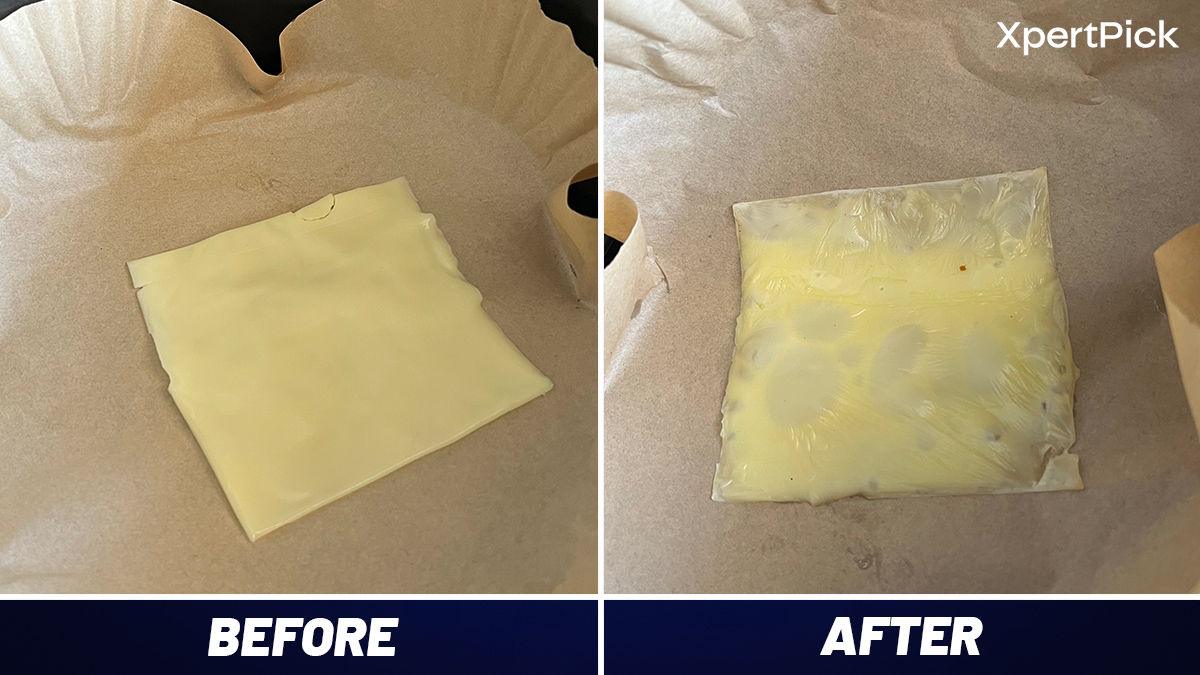
Cheese is often listed as something to avoid in an air fryer, but our testing showed the results depend heavily on the format and structure of the food. Items with a stable outer coating, such as cheese balls, generally held up well and developed a reasonably crisp exterior while keeping the filling warm inside. Foods where the cheese had less containment behaved very differently.
Pizza puffs, for instance, consistently caused problems during testing. At 180°C, the outer layer browned quickly while the cheese inside overheated, leaked out through weak spots, and created uneven melting. We tried reducing the temperature to 160°C, which did help slightly with leakage, but introduced a different issue: the filling often remained cold or undercooked while the outside stayed pale and visually unappealing.
Some users recommend cooking at 160°C first and then adding an extra minute or two at a higher temperature for browning on each side. We experimented with similar approaches, but the results still varied significantly between different air fryers. In some cases, the cheese remained unevenly melted, with certain sections fully liquefied while others stayed partially solid. We also noticed that overheated cheese could sometimes develop a slightly rubbery or plasticky texture instead of the smooth melt you would expect.
The bigger issue is consistency. Air fryers maintain circulating heat rather than direct oil contact, so cheese-heavy foods can react unpredictably depending on filling quantity, coating thickness, and even basket placement. Garlic bread and pizza slices generally fared much better because the cheese is spread across the surface rather than sealed inside a pressure point.
Verdict: Structured cheese snacks work better than sealed cheese pockets
What this means: Air fryers handle surface-level cheese more reliably than concentrated fillings that can burst, leak, or melt unevenly during cooking.
Rice and Grains Don’t Retain Moisture
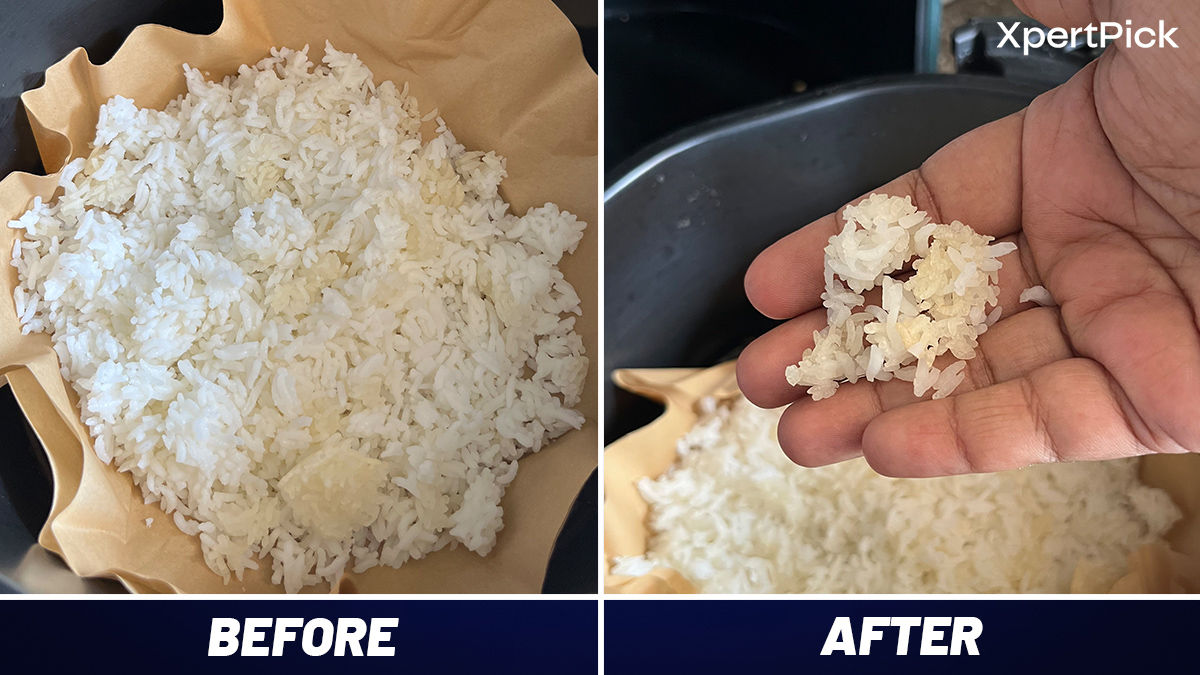
Reheating rice in an air fryer highlights the limits of dry heat. Unlike a microwave, which traps steam, an air fryer actively removes moisture from the surface. In our tests, this caused the rice to dry out quickly along the edges while still heating unevenly overall.
Some portions became extremely hot and hard to even touch comfortably, while other sections remained noticeably cold. The texture also deteriorated rapidly during reheating. Instead of becoming fluffy again, the grains turned dry, stiff, and in some cases almost inedible. We also noticed clumping, especially in areas where moisture escaped unevenly, creating patches of hardened rice stuck together.
Even with light oiling or stirring midway through cooking, the results never matched what we achieved using covered reheating methods that retain steam and moisture. This makes air fryers a poor choice for foods like rice that depend heavily on moisture retention for both texture and taste.
Verdict: Not suited for reheating or cooking grains
What this means: Dry convection heat works against moisture-dependent foods
Large Cuts Expose Size Limitations
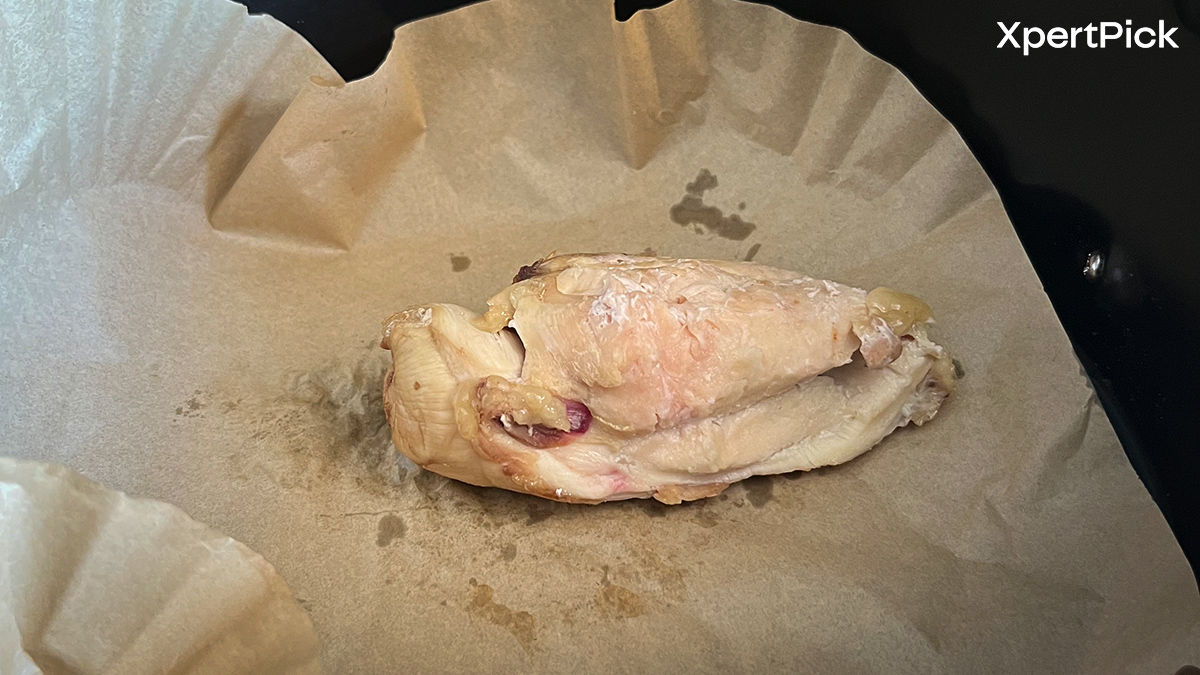
Air fryers are also constrained by their size and how air circulates within the basket. You would notice this even when you stuff the air fryers, and it is also true when cooking larger cuts, such as a whole chicken or thick portions of meat. For large cuts, especially those of meat, the outer layers are exposed directly to hot air while the interior takes longer to cook through. Also, edges that are thinner become too dry and rubbery. This creates a mismatch where the outside can overcook before the inside reaches the desired temperature.
Breaking food into smaller, evenly sized portions produced far more consistent results in the same appliance. This reinforces the idea that air fryers are designed for smaller, uniform cooking tasks rather than large-format meals.
Verdict: Works, but inefficient and uneven
What this means: Even airflow requires evenly sized portions
The Pattern Behind All of This
Across all these tests, a consistent pattern emerged. The foods that performed poorly shared at least one of three traits: they were too light, too wet, or too large. Each of these traits interferes with how hot air moves through the basket and transfers heat to the food.
Air fryers perform best when the food:
- Has a defined structure
- Is evenly sized
- Does not rely heavily on retaining moisture
Understanding this pattern is more useful than memorising a list of foods to avoid. It helps predict outcomes before you start cooking.
What This Means Before You Buy
If you are considering an air fryer, it helps to think of it as a specialised tool rather than a replacement for every cooking method. It is particularly effective for frozen snacks, pre-coated foods, and smaller portions that benefit from surface crisping.
It is less reliable for foods that require even internal cooking, moisture retention, or delicate handling. In those cases, an oven, stovetop, or microwave will often deliver better results with less effort.
Most “don’t air fry this” advice is rooted in real limitations, but it rarely explains the underlying reason. The issue is not the ingredient itself, but how that ingredient interacts with fast, dry airflow.
Once you understand that, the air fryer becomes far more predictable. It stops being a device that sometimes fails and becomes one that works exceptionally well within clearly defined boundaries.