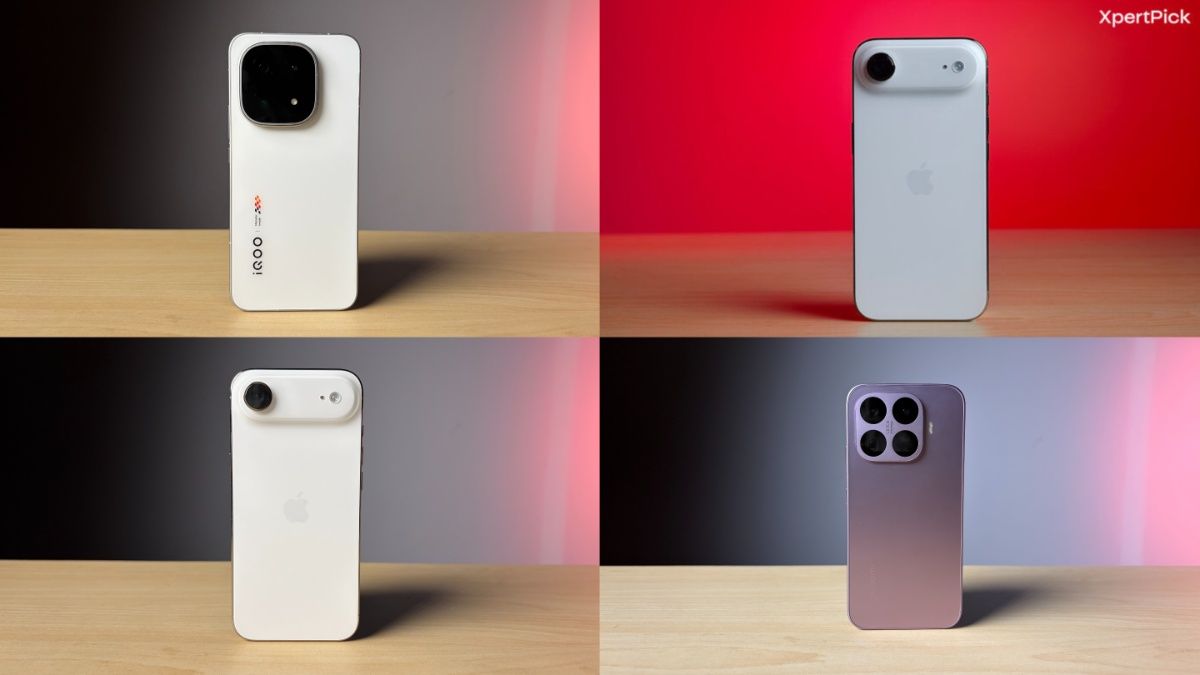
Phones Considered
The nine phones tested for this guide: the iPhone Air, OnePlus 15, Samsung Galaxy S26+, Vivo X300 FE, Xiaomi 17, iPhone 17, Oppo Find X9s, iQOO 15 and Motorola Signature.
Top Picks At A Glance
Every award below traces to an XP Lab measurement or a verified hardware specification. Full numbers follow in the comparison table.
| Category | My Pick | Price | Why We Picked It |
|---|---|---|---|
| Best Overall Under ₹100k | OnePlus 15 | ₹93,998 | The highest AnTuTu score here paired with the longest battery runtime and the fastest charging, no other phone leads on both speed and endurance. |
| Best Camera Under ₹100k | Oppo Find X9s | ₹79,999 | Three 50MP Hasselblad-tuned sensors all with OIS, plus an NPU score roughly ten times its Android rivals. |
| Best Gaming / Performance Under ₹100k | iQOO 15 | ₹76,999 | The highest 3DMark score in the guide and a Genshin Impact result, 107.9fps average, 82.1fps floor, that nothing else approaches. |
| Best Battery & Charging Under ₹100k | OnePlus 15 | ₹93,998 | 27h 13min on PCMark, the longest here, with 120W wired and 50W wireless charging. |
| Best Display (AMOLED / High-Refresh) Under ₹100k | iQOO 15 | ₹76,999 | 3,710 measured nits at 1440p and 508ppi, the brightest and sharpest panel in the guide. |
| Best Value-For-Money Under ₹100k | Motorola Signature | ₹62,499 | Flagship silicon, a 165Hz panel and four 50MP cameras at ₹14,500 below the next phone here. |
| Best For Clean Software & Updates Under ₹100k | Motorola Signature | ₹62,499 | Seven years of OS and security updates on a near-stock Android build, the longest stated commitment in this group. |
| Best Compact Flagship Under ₹100k | iPhone 17 | ₹81,900 | The smallest body here at 149.6 × 71.5mm, and the only phone in the guide to hold 83% stress stability. |
Under-₹100k Specs And Benchmark Comparison
A 🏆 marks the leader in each row.
| Test / Metric | OnePlus 15 | iQOO 15 | Oppo Find X9s | iPhone 17 | Motorola Signature |
|---|---|---|---|---|---|
| AnTuTu Overall | 3,932,097 🏆 | 3,891,344 | 3,048,471 | 2,118,014 | 3,044,435 |
| Geekbench (Single) | 3,662 | 3,529 | 2,247 | 3,351 | 2,925 |
| Geekbench (Multi) | 10,450 | 10,223 | 7,594 | 8,591 | 8,921 |
| Geekbench GPU | 23,923 | 23,573 | 19,046 | 37,088 🏆 | 17,723 |
| 3DMark Wild Life Extreme | 6,858 | 7,127 🏆 | 6,127 | 5,047 | 5,455 |
| 3DMark Stress Stability | 65.6% | 58.3% | 63.2% | 83.0% 🏆 | 67.0% |
| CPU Throttling Stability | 61% | 58% | 71% | 83.9% 🏆 | 51% |
| Peak Temperature | 43.8°C | 44.2°C | 38.0°C | 36.0°C 🏆 | 44.7°C |
| PCMark Battery | 27h 13min 🏆 | 23h 45min | 22h 56min | Not applicable | 15h 30min |
| Runtime per 1,000 mAh | 3h 44min 🏆 | 3h 24min | 3h 16min | Not applicable | 2h 59min |
| Peak Brightness (measured, auto) | 2,480 nits | 3,710 nits 🏆 | 2,670 nits | 3,000 nits | 1,929 nits |
| Genshin Impact (Avg / 5% Low) | 77.5 / 34.3 | 107.9 / 82.1 🏆 | 59.5 / 40.8 | 60.0 / 58.0 | 57.4 / 21.9 |
| BGMI (Avg / 5% Low) | 119.4 / 110.5 | 119.6 / 115.9 🏆 | 89.8 / 86.2 | 115.0 / 98.0 | 118.3 / 106.3 |
Two devices outside the table shape several of these rows. The iPhone Air recorded the highest Geekbench GPU score of any device here at 38,054 and the brightest Apple panel at 3,080 nits, but its 3DMark result of 4,143 is the lowest in the guide, a gap discussed in its section below. The Samsung Galaxy S26+ posted the highest Geekbench multi-core score of the nine at 10,657 and the highest Android GPU score at 25,744, while returning the lowest stress stability (49%), the shortest battery runtime (12h 57min) and the dimmest measured panel (1,920 nits) in the entire comparison. PCMark does not run on iOS, so neither iPhone has a comparable battery figure.
How I Tested These Smartphones
One methodology, applied identically across all nine units.
Test Conditions: Retail devices on publicly released firmware, benched at a controlled 28°C ambient, on the highest-specification variant available for each model.
Performance: AnTuTu v10 and Geekbench 6 for CPU, GPU and on-device AI throughput, three passes each with a fifteen-minute cooldown, median reported.
Sustained Load: Twenty consecutive 3DMark Wild Life Extreme loops with chassis temperature logged by external probe. At this price the stability percentage matters more than the peak score, because every phone here is fast enough that what you feel is the decline rather than the ceiling.
Gaming: BGMI, Minecraft, Genshin Impact and Asphalt 9 over extended sessions with frame times captured. The average describes the session; the 5% low describes its worst stretches.
Battery: PCMark Work 3.0 looped at fixed brightness until shutdown, with runtime per 1,000 mAh derived from that figure and the rated capacity. PCMark is Android-only, so the two iPhones carry no comparable result.
A note on camera awards: the camera scoring columns in this test cycle were left unpopulated for all nine devices, so the camera award below is made on verified sensor hardware, optical configuration and measured AI-processing throughput rather than on scored image comparisons. Where that changes the confidence level, it is said plainly.
The Phones In Detail
OnePlus 15 — Best Overall & Best Battery Under ₹100k
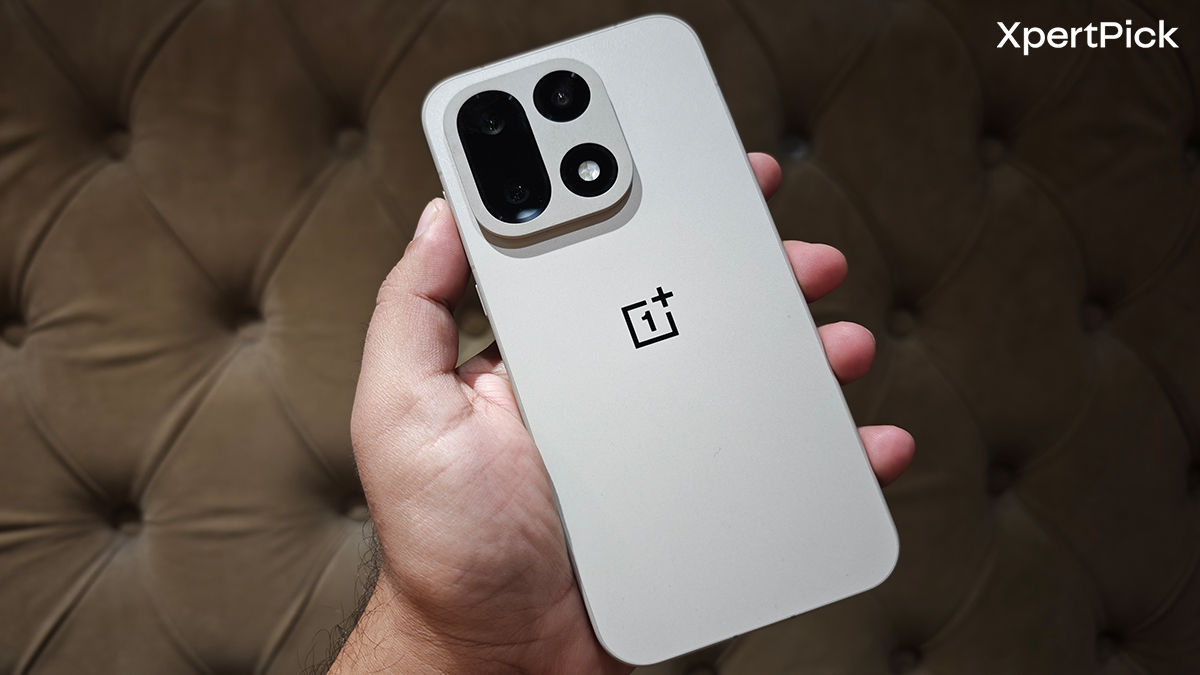
The OnePlus 15 is the only phone in this guide that finishes near the top of both the performance tables and the endurance tables, which is what the overall award is supposed to mean.
Why We Picked It
The OnePlus 15 makes its strongest case by combining top-tier peak performance with the best battery result in this comparison. Its AnTuTu score of 3,932,097 is the highest recorded here, while its Geekbench 6 multi-core result of 10,450 is second only to the Samsung Galaxy S26+. The AnTuTu lead over the iQOO 15 is only around 1%, so the benchmark margin itself is not especially meaningful. The more significant result is its 27h 13min PCMark runtime, the longest in the comparison by 2h 46min. It achieves that from a 7,300 mAh silicon-carbon battery, the largest here, with a normalised result of 3h 44min per 1,000 mAh, just two minutes behind the Vivo X300 FE.
Charging further strengthens the battery case. Its 120W wired charging is the fastest in this guide, ahead of 100W on the iQOO 15 and 90W on the Motorola, while 50W wireless charging is also supported. The OnePlus 15 also has IP66, IP68, IP69 and IP69K ratings, giving it the most extensive ingress protection among the phones tested here.
Gaming performance is similarly strong. Its BGMI average of 119.4 fps and 110.5 fps 5% low are effectively level with the iQOO 15’s best results, while its 77.5 fps Genshin Impact average is the second-highest in the comparison. The 165 Hz LTPO display runs at 2772 × 1272, giving it one of the sharper panels in this group.
Sustained performance is less convincing. Its 3DMark stress stability of 65.6% is only mid-table, while the chassis reached 43.8°C during testing. Genshin Impact also shows a substantial gap between its 77.5 fps average and 34.3 fps 5% low, indicating less consistent frame delivery under sustained load than the iQOO 15. Its measured brightness of 2,480 nits is also the lowest among the Android flagships that received an award here.
The camera system uses three 50 MP sensors: a Sony IMX906 main camera with OIS, a 50 MP 3.5x telephoto and a 50 MP ultrawide. OnePlus processes the output using its DetailMax Engine rather than a Hasselblad partnership. Geekbench AI produced a GPU Half Precision score of 4,667 and an NPU Quantised result of 922, which is competitive with the other Snapdragon-based phones but well behind the Oppo Find X9s and both iPhones.
OnePlus 15 Key Specifications
- Price: ₹93,998
- Processor: Snapdragon 8 Elite Gen 5 (3nm)
- Display: 6.78-inch (2772 × 1272) LTPO AMOLED, 165Hz refresh rate, 450ppi, 3,600 nits claimed peak
- Dimensions & Weight: 161.4 × 76.7 × 8.1 mm, 215g
- RAM: 12GB / 16GB LPDDR5X Ultra
- Storage: 256GB / 512GB UFS 4.1
- Battery: 7,300 mAh
- Charging: 120W SuperVOOC wired, 50W AirVOOC wireless
- Rear Camera: 50MP main (Sony IMX906, OIS) + 50MP 3.5x telephoto (OIS) + 50MP ultra-wide (116°)
- Front Camera: 32MP (Sony IMX709, autofocus)
- IP Rating: IP66 / IP68 / IP69 / IP69K
- HDR: HDR10+, HDR Vivid
OnePlus 15 XP Lab Test Data
- Battery Life (PCMark): 27h 13min
- Runtime per 1,000 mAh: 3h 44min
- AnTuTu Overall Score: 3,932,097
- Geekbench 6: 3,662 (Single-Core) | 10,450 (Multi-Core)
- Geekbench GPU Score: 23,923
- Geekbench AI Half Precision Score (GPU): 4,667
- Geekbench AI Quantised Score (NPU): 922
- PCMark Work 3.0 Score: 14,455
- PCMark Storage Score: 162,042
- AnTuTu Storage Score: 152,004
- 3DMark Wild Life Extreme: 6,858
- 3DMark Stress Test Stability: 65.6%
- CPU Throttling Test Stability: 61%
- Temperature After Stress Test: 43.8°C
- Peak Brightness (measured, auto): 2,480 nits
- BGMI (Lowest Graphics): 119.4 Average FPS | 110.5 5% Low FPS
- Minecraft (Highest Graphics): 67.4 Average FPS | 53.7 5% Low FPS
- Genshin Impact (High + 60fps): 77.5 Average FPS | 34.3 5% Low FPS
- Asphalt 9 (Highest Graphics): 59.3 Average FPS | 49.4 5% Low FPS
Pros
The highest AnTuTu score here, the longest battery runtime by nearly three hours, the fastest wired and wireless charging in the guide, the best Minecraft result of the nine, and the most complete IP ratings available.
Cons
Mid-table stress stability at 65.6%, a 43.8°C peak, uneven Genshin frame pacing, and the dimmest measured panel among the award winners.
Who Should Buy It
Buyers who want a single phone that is near the top on speed, near the top on battery and unambiguously top on charging, without having to pick which one matters more.
Who Shouldn’t Buy It
Anyone whose priority is sustained gaming frame pacing, or who wants the brightest screen at this price.
Expert Verdict: The most complete flagship under ₹1,00,000. It gets warm and it sheds performance under long load, but it is the only phone here that refuses to trade speed against endurance.
iQOO 15 — Best Gaming / Performance & Best Display Under ₹100k
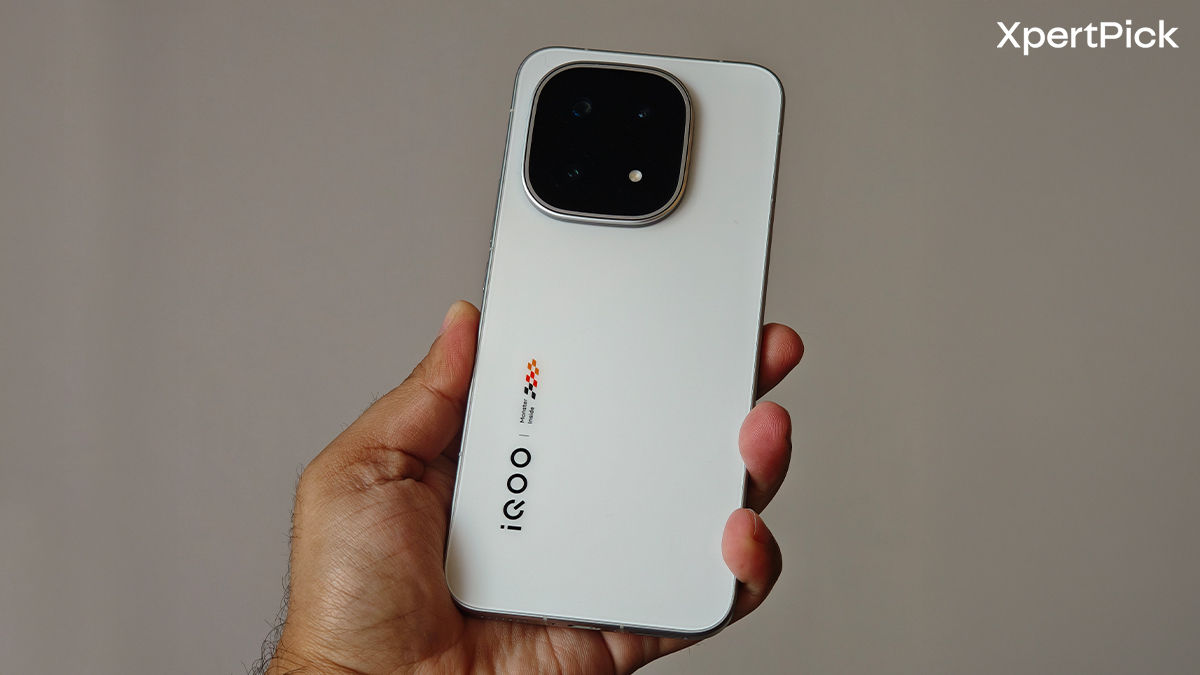
Two awards, both won by margins that are not close, on a phone that costs ₹17,000 less than the overall winner.
Why We Picked It
The iQOO 15 separates itself most clearly in sustained gaming, where its results are ahead of the rest of the field. In Genshin Impact, the most demanding title in the test suite, it averaged 107.9 fps with a 5% low of 82.1 fps. The next-best average was 77.5 fps from the OnePlus 15, while the next-highest frame floor was 58 fps on the iPhone 17. The iQOO’s 5% low therefore exceeds every other phone’s average. BGMI tells a similar story, with an average of 119.6 fps and a 5% low of 115.9 fps, both the highest in the comparison. Its 3DMark Wild Life Extreme score of 7,127 also leads the group.
The display is another clear strength. I measured 3,710 nits with auto brightness enabled, 630 nits higher than the iPhone 17 and the brightest result in this guide. It is also the only phone here with a 1440p-class panel, running at 3168 × 1440 with 508 ppi compared with 446 to 460 ppi on the other devices. The 144 Hz refresh rate completes a display specification that is unusually strong even within this flagship group.
Battery life is good, although it does not match the very best result here. Its 23h 45min PCMark runtime places it third, while the 7,000 mAh battery manages 3h 24min per 1,000 mAh. Charging is rated at 100W wired and 40W wireless.
The price of that gaming performance becomes apparent in the stress tests. Its 3DMark stability of 58.3% is the second-lowest in the comparison, ahead of only the Samsung Galaxy S26+, meaning it surrendered more than 40% of its graphics throughput across 20 loops. The chassis reached 44.2°C, while CPU throttling stability was also low at 58%. The 45-minute Genshin Impact run shows that this does not translate into a major practical collapse during the tested session, but the stress results indicate that the phone uses a large part of its thermal headroom to sustain its high performance.
Asphalt 9 provides a less consistent result. Its 5% low of 22.8 fps is the weakest among the award-winning phones, despite the much stronger Genshin Impact results. It is an outlier in the gaming data and is worth keeping in mind rather than trying to reconcile with the other results.
Geekbench AI recorded 4,394 in GPU Half Precision and 1,125 in the NPU Quantised test. The latter is the strongest NPU result among the three Snapdragon 8 Elite Gen 5 phones tested here, although it remains well behind the Oppo Find X9s and both iPhones.
iQOO 15 Key Specifications
- Price: ₹76,999
- Processor: Snapdragon 8 Elite Gen 5 (3nm) with Q3 supercomputing chip
- Display: 6.85-inch 2K (3168 × 1440) LTPO AMOLED, 144Hz refresh rate, 508ppi, 6,000 nits claimed peak
- Dimensions & Weight: 163.65 × 76.8 × 8.17 mm, 216.2g
- RAM: 12GB / 16GB LPDDR5X Ultra
- Storage: 256GB / 512GB / 1TB UFS 4.1
- Battery: 7,000 mAh silicon-anode
- Charging: 100W FlashCharge wired, 40W wireless
- Rear Camera: 50MP main (Sony IMX921, OIS) + 50MP ultra-wide (150°) + 50MP 3x periscope telephoto (Sony IMX882, OIS)
- Front Camera: 32MP
- IP Rating: IP68 / IP69
- HDR: HDR10+, HDR Vivid, Dolby Vision
iQOO 15 XP Lab Test Data
- Battery Life (PCMark): 23h 45min
- Runtime per 1,000 mAh: 3h 24min
- AnTuTu Overall Score: 3,891,344
- Geekbench 6: 3,529 (Single-Core) | 10,223 (Multi-Core)
- Geekbench GPU Score: 23,573
- Geekbench AI Half Precision Score (GPU): 4,394
- Geekbench AI Quantised Score (NPU): 1,125
- PCMark Work 3.0 Score: 16,464
- PCMark Storage Score: 164,196
- AnTuTu Storage Score: 143,694
- 3DMark Wild Life Extreme: 7,127
- 3DMark Stress Test Stability: 58.3%
- CPU Throttling Test Stability: 58%
- Temperature After Stress Test: 44.2°C
- Peak Brightness (measured, auto): 3,710 nits
- BGMI (Lowest Graphics): 119.6 Average FPS | 115.9 5% Low FPS
- Minecraft (Highest Graphics): 59.2 Average FPS | 51.4 5% Low FPS
- Genshin Impact (High + 60fps): 107.9 Average FPS | 82.1 5% Low FPS
- Asphalt 9 (Highest Graphics): 57.2 Average FPS | 22.8 5% Low FPS
Pros
A Genshin frame floor higher than every rival’s average, the best BGMI numbers here, the highest 3DMark score, the brightest and sharpest display in the guide, and 100W charging at ₹76,999.
Cons
Stress stability of just 58.3%, second-lowest here, a 44.2°C peak, and an Asphalt 9 frame floor of 22.8fps that sits oddly against its other gaming results.
Who Should Buy It
Gamers, and anyone who wants the best screen at this price. It is also the cheapest way into genuine top-tier performance in this guide.
Who Shouldn’t Buy It
Buyers who care more about sustained thermal composure than peak output.
Expert Verdict: The performance and display pick, and by some distance on both. Its stress stability is near the bottom of the guide, which is the honest price of how hard it runs.
Oppo Find X9s — Best Camera Under ₹100k
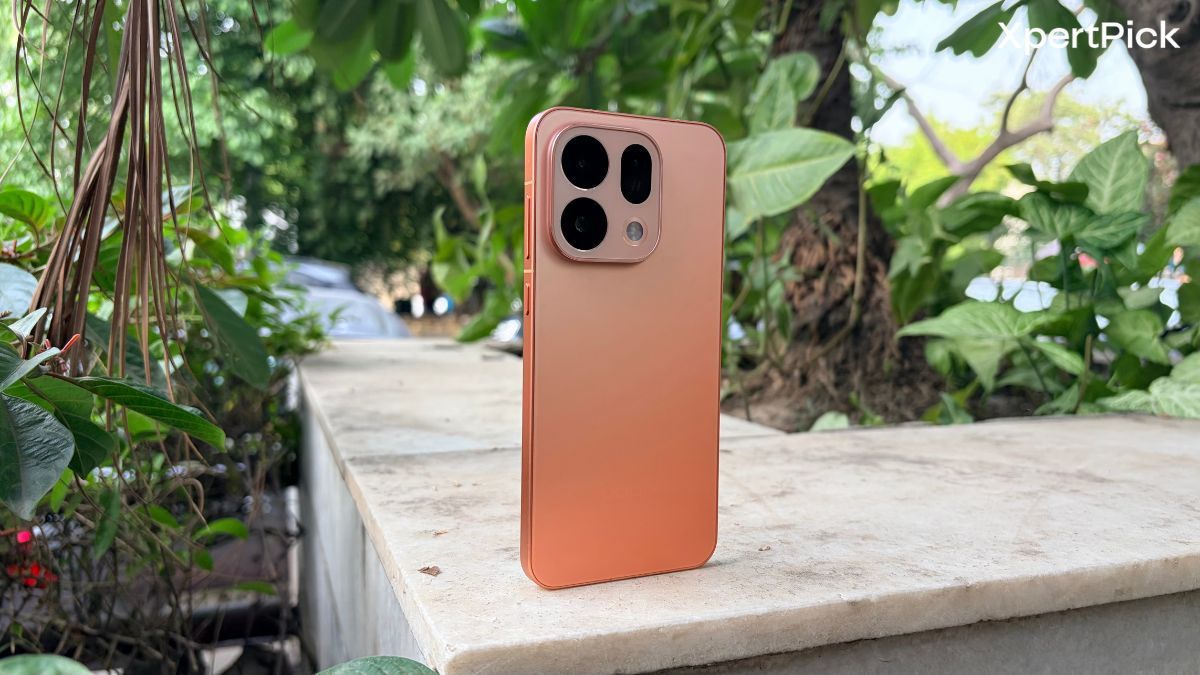
The Find X9s has the most complete camera hardware in this guide and the measured AI throughput to process it.
Why We Picked It
Oppo Find X9s Key Specifications
- Price: ₹79,999
- Processor: MediaTek Dimensity 9500s (3nm)
- Display: 6.59-inch FHD+ LTPS AMOLED, 120Hz refresh rate, 1,800 nits HBM / 3,600 nits claimed peak, Gorilla Glass 7i
- Dimensions & Weight: 7.99mm thick, 202g
- RAM: 12GB / 16GB LPDDR5X
- Storage: 256GB / 512GB UFS 4.1
- Battery: 7,025 mAh silicon-carbon
- Charging: 80W SUPERVOOC wired, MagVOOC wireless
- Rear Camera: 50MP main (OIS) + 50MP ultra-wide (120°) + 50MP periscope telephoto (OIS), Hasselblad-tuned, Dolby Vision 4K60 on all lenses
- Front Camera: 32MP
- IP Rating: IP66 / IP68 / IP69
- Software: ColorOS 16 (Android 16), five years of OS updates
Oppo Find X9s XP Lab Test Data
- Battery Life (PCMark): 22h 56min
- Runtime per 1,000 mAh: 3h 16min
- AnTuTu Overall Score: 3,048,471
- Geekbench 6: 2,247 (Single-Core) | 7,594 (Multi-Core)
- Geekbench GPU Score: 19,046
- Geekbench AI Half Precision Score (GPU): 1,472
- Geekbench AI Quantised Score (NPU): 11,468
- Geekbench AI Half Precision Score (NPU): 8,339
- PCMark Work 3.0 Score: 13,414
- PCMark Storage Score: 151,132
- AnTuTu Storage Score: 222,948
- 3DMark Wild Life Extreme: 6,127
- 3DMark Stress Test Stability: 63.2%
- CPU Throttling Test Stability: 71%
- Temperature After Stress Test: 38.0°C
- Peak Brightness (measured, auto): 2,670 nits
- BGMI (Lowest Graphics): 89.8 Average FPS | 86.2 5% Low FPS
- Minecraft (Highest Graphics): 57.2 Average FPS | 46.1 5% Low FPS
- Genshin Impact (High + 60fps): 59.5 Average FPS | 40.8 5% Low FPS
- Asphalt 9 (Highest Graphics): 116.9 Average FPS | 68.5 5% Low FPS
Pros
Three 50MP Hasselblad sensors with no weak focal length, Dolby Vision across every lens, an NPU roughly ten times faster than its Android rivals, the coolest Android thermals here, the best Android CPU throttling stability, and the highest Asphalt 9 average in the guide at 116.9fps.
Cons
The lowest single-core score of the nine, the weakest BGMI result among the award winners, and the slowest charging of the Android flagships.
Who Should Buy It
Photographers and video shooters who want consistent quality across wide, ultra-wide and telephoto, and who value a phone that stays cool.
Who Shouldn’t Buy It
Buyers who want peak CPU throughput or the highest frame rates, the iQOO 15 costs ₹3,000 less and is substantially faster.
Expert Verdict: The camera pick under ₹1,00,000 on hardware completeness and measured processing throughput. Its CPU results are the weakest of the award winners, which is the trade you are making.
Motorola Signature — Best Value & Best Software Under ₹100k
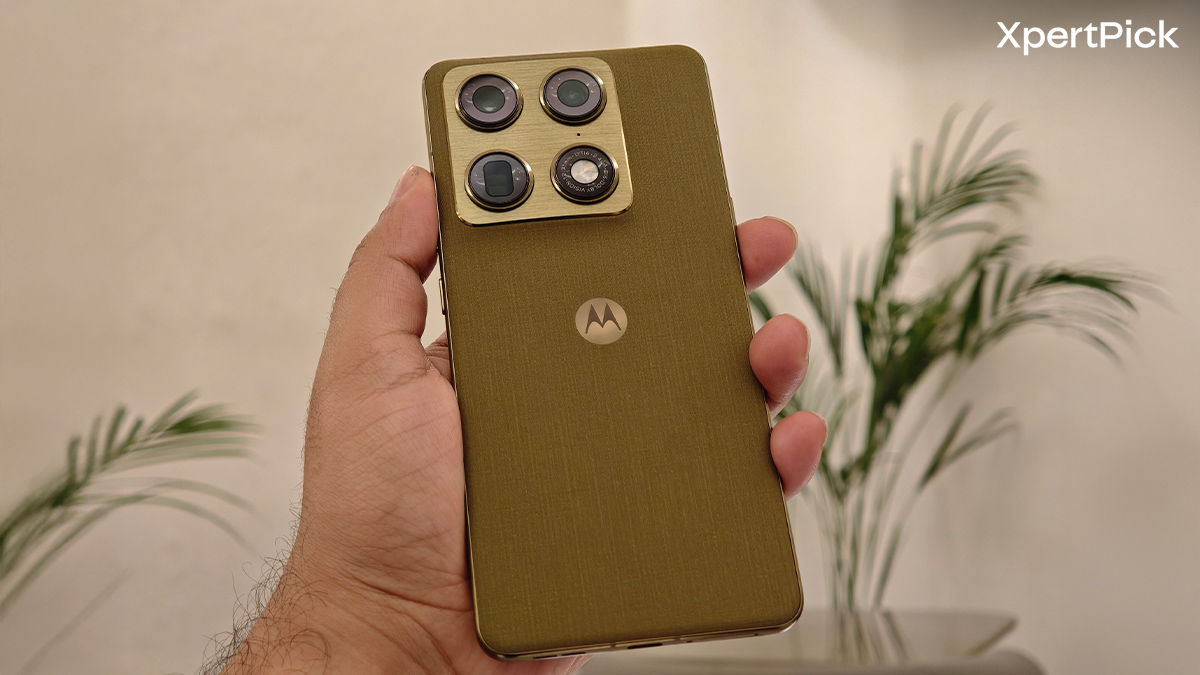
At ₹62,499 the Signature is ₹14,500 cheaper than anything else in this guide and gives up far less than that gap suggests.
Why We Picked It
Motorola Signature Key Specifications
- Price: ₹62,499
- Processor: Snapdragon 8 Gen 5 (3nm)
- Display: 6.8-inch (2780 × 1264) Extreme AMOLED LTPO, 165Hz refresh rate, 446ppi, 6,200 nits claimed peak, Gorilla Glass Victus 2
- Dimensions & Weight: 162.1 × 76.4 × 6.99 mm, 186g
- RAM: 12GB / 16GB LPDDR5X
- Storage: 256GB / 512GB / 1TB UFS 4.1
- Battery: 5,200 mAh silicon-carbon
- Charging: 90W TurboPower wired, 50W wireless, 10W reverse wireless
- Rear Camera: 50MP main (Sony LYT-828, OIS) + 50MP ultra-wide + 50MP periscope telephoto (Sony LYT-600, 3x optical, OIS)
- Front Camera: 50MP (Sony LYT-500)
- IP Rating: IP68 / IP69 (MIL-STD-810H certified)
- Software: Hello UX (Android 16), seven years of OS and security updates
Motorola Signature XP Lab Test Data
- Battery Life (PCMark): 15h 30min
- Runtime per 1,000 mAh: 2h 59min
- AnTuTu Overall Score: 3,044,435
- Geekbench 6: 2,925 (Single-Core) | 8,921 (Multi-Core)
- Geekbench GPU Score: 17,723
- Geekbench AI Half Precision Score (GPU): 3,600
- Geekbench AI Quantised Score (NPU): 905
- PCMark Work 3.0 Score: 20,323
- PCMark Storage Score: 213,204
- AnTuTu Storage Score: 247,338
- 3DMark Wild Life Extreme: 5,455
- 3DMark Stress Test Stability: 67.0%
- CPU Throttling Test Stability: 51%
- Temperature After Stress Test: 44.7°C
- Peak Brightness (measured, auto): 1,929 nits
- BGMI (Lowest Graphics): 118.3 Average FPS | 106.3 5% Low FPS
- Minecraft (Highest Graphics): 58.6 Average FPS | 44.4 5% Low FPS
- Genshin Impact (High + 60fps): 57.4 Average FPS | 21.9 5% Low FPS
- Asphalt 9 (Highest Graphics): 58.4 Average FPS | 47.5 5% Low FPS
Pros
Flagship-class scores at ₹14,500 below anything else here, four 50MP cameras with a DXOMARK Gold Label, a 165Hz panel, seven years of updates on near-stock software, a 6.99mm body at 186g, and the second-best PCMark Work score.
Cons
The second-shortest battery life here, a measured 1,929 nits against a 6,200-nit claim, the lowest CPU throttling stability in the guide at 51%, and a 44.7°C peak.
Who Should Buy It
Buyers who want flagship hardware and long-term software support without paying flagship prices, and who charge daily.
Who Shouldn’t Buy It
Anyone who needs the phone to last, or who uses it outdoors, the brightness gap here is large enough to see.
Expert Verdict: The most hardware per rupee in this guide, on the cleanest software with the longest support commitment. Its battery and its measured brightness are the two reasons it is not the overall pick.
iPhone 17 — Best Compact Flagship Under ₹100k
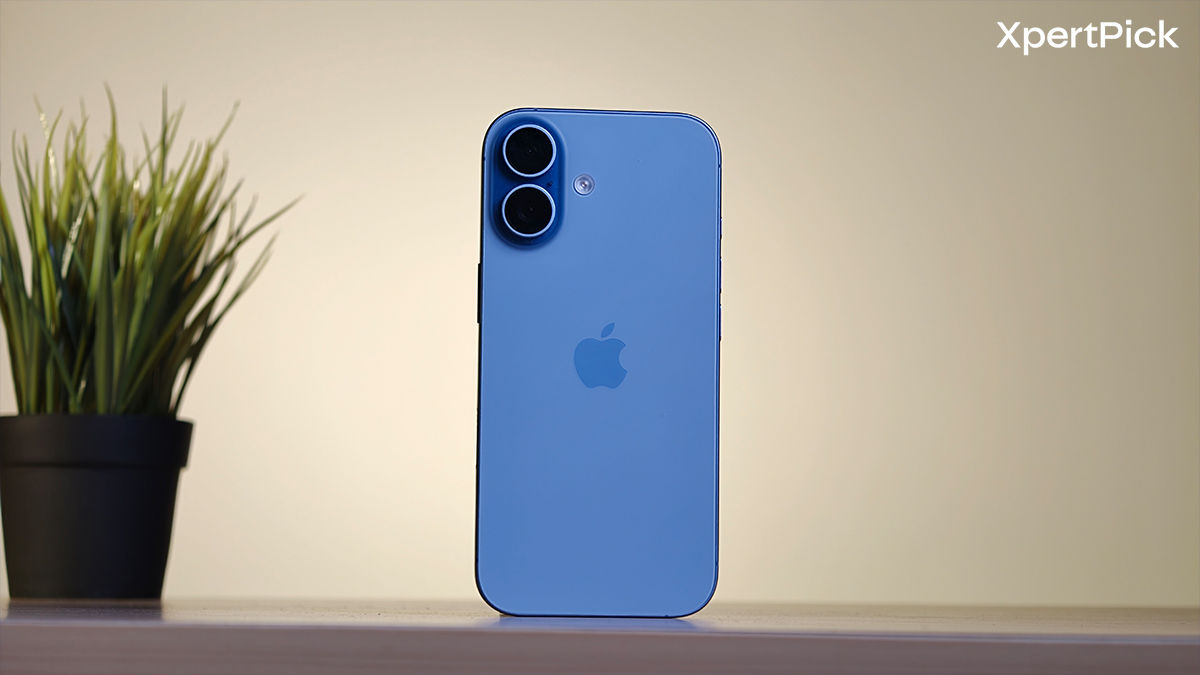
The smallest phone here is also the most thermally composed, and those two facts are related.
Why We Picked It
iPhone 17 Key Specifications
- Price: ₹81,900
- Processor: Apple A19
- Display: 6.27-inch (2622 × 1206) AMOLED, 120Hz refresh rate, 460ppi, 3,000 nits claimed peak
- Dimensions & Weight: 149.6 × 71.5 × 7.95 mm, 177g
- RAM: 8GB LPDDR5X
- Storage: 256GB / 512GB custom NVMe
- Battery: Capacity not published by Apple
- Rear Camera: 48MP Fusion main + 48MP ultra-wide
- Front Camera: 18MP Center Stage
- IP Rating: IP68
- HDR: Dolby Vision, HDR10+, HDR10, HLG
iPhone 17 XP Lab Test Data
- Battery Life (PCMark): Not applicable (PCMark is Android-only)
- Runtime per 1,000 mAh: Not available
- AnTuTu Overall Score: 2,118,014
- Geekbench 6: 3,351 (Single-Core) | 8,591 (Multi-Core)
- Geekbench GPU Score: 37,088
- Geekbench AI Half Precision Score (GPU): 14,585
- Geekbench AI Quantised Score (NPU): 40,991
- AnTuTu Storage Score: 122,941
- 3DMark Wild Life Extreme: 5,047
- 3DMark Stress Test Stability: 83.0%
- CPU Throttling Test Stability: 83.9%
- Temperature After Stress Test: 36.0°C
- Peak Brightness (measured, auto): 3,000 nits
- BGMI (Lowest Graphics): 115.0 Average FPS | 98.0 5% Low FPS
- Minecraft (Highest Graphics): 60.0 Average FPS | 50.0 5% Low FPS
- Genshin Impact (High + 60fps): 60.0 Average FPS | 58.0 5% Low FPS
- Asphalt 9 (Highest Graphics): 60.0 Average FPS | 60.0 5% Low FPS
Pros
The smallest body in the guide, the best stress stability and CPU throttling figures by a wide margin, the coolest thermals, the flattest frame-time profile of any phone here, a 37,088 GPU score, and NPU throughput roughly 36 times the Android field.
Cons
The second-lowest AnTuTu score, a 3DMark result behind every Android award winner, no telephoto camera, the lowest storage score of the nine, and no comparable battery data.
Who Should Buy It
Buyers who want a phone they can use one-handed and who value consistent, unwavering performance over peak numbers.
Who Shouldn’t Buy It
Anyone who needs a telephoto lens, or who wants a verified endurance figure before spending ₹81,900.
Expert Verdict: The compact pick, and the most thermally composed phone in this guide by a distance. Its raw throughput sits below the Android flagships, but nothing here holds its frame rate as flatly.
iPhone Air
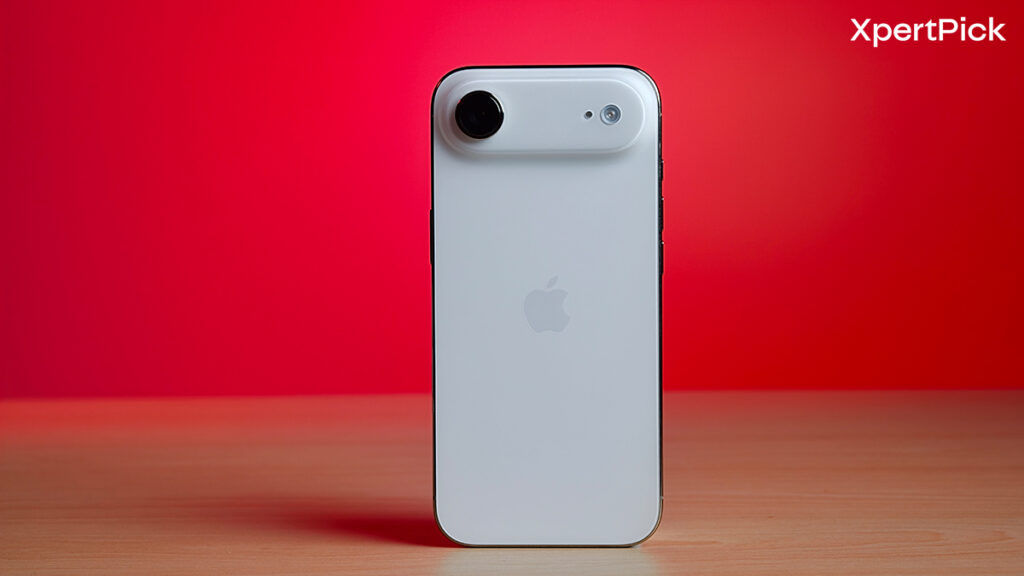
The most expensive phone in this guide wins no award, and the reason is a single measurement.
Why We Didn’t Pick It
iPhone Air Key Specifications
- Price: ₹97,900
- Processor: Apple A19 Pro
- Display: 6.5-inch (1260 × 2736) Super Retina XDR OLED, 120Hz refresh rate, 460ppi, 3,000 nits claimed peak
- Dimensions & Weight: 156.2 × 74.7 × 5.64 mm, 165g
- RAM: 8GB LPDDR5X
- Storage: 256GB custom NVMe
- Battery: Capacity not published by Apple
- Rear Camera: 48MP Fusion (single)
- Front Camera: 18MP Center Stage
- IP Rating: IP68
- HDR: Dolby Vision, HDR10+, HDR10
iPhone Air XP Lab Test Data
- Battery Life (PCMark): Not applicable (PCMark is Android-only)
- Runtime per 1,000 mAh: Not available
- AnTuTu Overall Score: 1,901,563
- Geekbench 6: 3,750 (Single-Core) | 9,565 (Multi-Core)
- Geekbench GPU Score: 38,054
- Geekbench AI Half Precision Score (GPU): 15,300
- Geekbench AI Quantised Score (NPU): 48,000
- AnTuTu Storage Score: 138,539
- 3DMark Wild Life Extreme: 4,143
- 3DMark Stress Test Stability: 76.1%
- CPU Throttling Test Stability: Not recorded
- Temperature After Stress Test: 36.1°C
- Peak Brightness (measured, auto): 3,080 nits
- BGMI (Lowest Graphics): 110.0 Average FPS | 95.0 5% Low FPS
- Minecraft (Highest Graphics): 60.0 Average FPS | 49.0 5% Low FPS
- Genshin Impact (High + 60fps): 58.0 Average FPS | 51.0 5% Low FPS
- Asphalt 9 (Highest Graphics): 60.0 Average FPS | 59.0 5% Low FPS
Pros
The highest Geekbench GPU and AI scores in this guide, the second-brightest panel, the lightest body at 165g, and 5.64mm thickness that no other phone here approaches.
Cons
The lowest 3DMark and AnTuTu scores of the nine, a single rear camera with no optical zoom, the highest price in the guide, and no comparable battery data.
Who Should Buy It
Buyers who want the thinnest, lightest phone available and whose workload is bursty, photography, AI features, everyday apps, rather than sustained 3D.
Who Shouldn’t Buy It
Gamers, anyone who wants a zoom lens, and anyone weighing it against the ₹16,000-cheaper iPhone 17, which is faster under sustained load and has two rear cameras.
Expert Verdict: Extraordinary silicon in a chassis that cannot sustain it. At ₹97,900 it is the most expensive phone here and the slowest under load, which is a difficult combination to recommend.
Vivo X300 FE
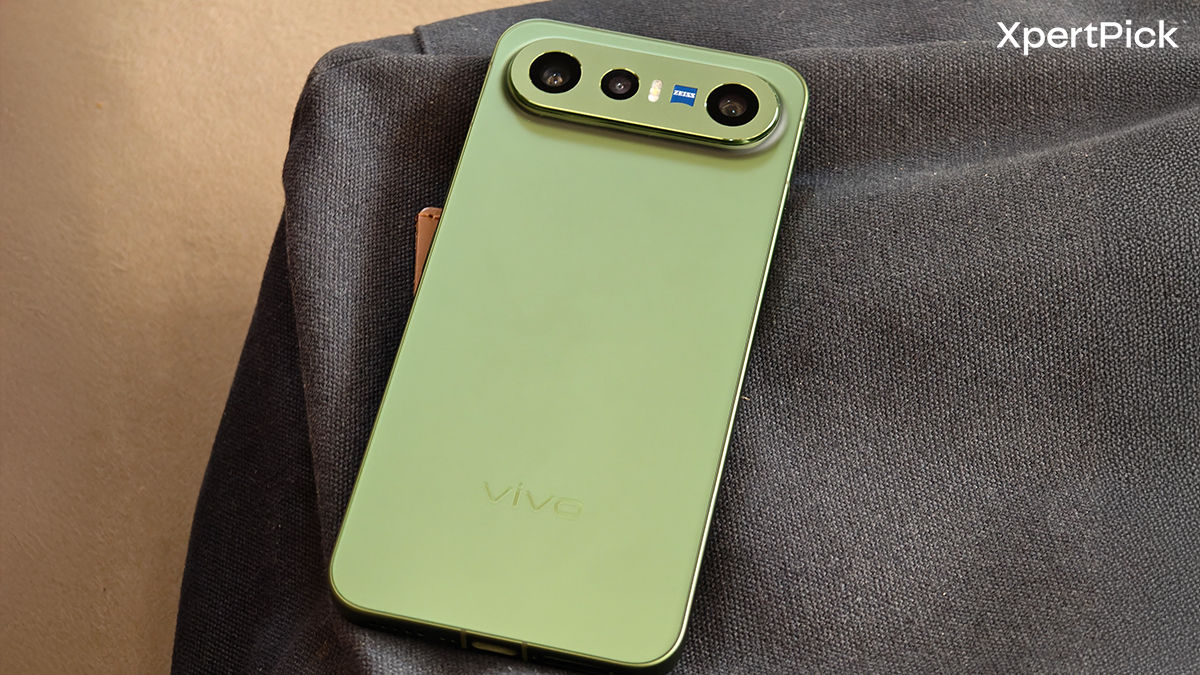
The most efficient phone in this guide, held back by the weakest graphics performance of the Android field.
Why We Didn’t Pick It
Vivo X300 FE Key Specifications
- Price: ₹89,999
- Processor: Snapdragon 8 Gen 5
- Display: 6.31-inch LTPO AMOLED, 120Hz refresh rate, 5,000 nits claimed peak
- RAM: 12GB
- Storage: 256GB / 512GB
- Battery: 6,500 mAh silicon-carbon
- Charging: 90W FlashCharge wired, 40W wireless
- Rear Camera: 50MP main (Sony IMX921, Zeiss, OIS) + 50MP 3x periscope telephoto (Sony IMX882, OIS) + 8MP ultra-wide (106°)
- Front Camera: 50MP Zeiss
- IP Rating: IP68 / IP69
- Software: OriginOS 6 (Android 16)
Vivo X300 FE XP Lab Test Data
- Battery Life (PCMark): 24h 27min
- Runtime per 1,000 mAh: 3h 46min
- AnTuTu Overall Score: 2,838,488
- Geekbench 6: 2,789 (Single-Core) | 8,864 (Multi-Core)
- Geekbench GPU Score: 17,117
- Geekbench AI Half Precision Score (GPU): 2,633
- Geekbench AI Quantised Score (NPU): 986
- PCMark Work 3.0 Score: 15,163
- PCMark Storage Score: Not recorded (test returned an error)
- AnTuTu Storage Score: 174,530
- 3DMark Wild Life Extreme: 3,986
- 3DMark Stress Test Stability: 68.3%
- CPU Throttling Test Stability: 70%
- Temperature After Stress Test: 38.2°C
- Peak Brightness (measured, auto): 2,830 nits
- BGMI (Lowest Graphics): 89.2 Average FPS | 84.3 5% Low FPS
- Minecraft (Highest Graphics): 51.4 Average FPS | 38.1 5% Low FPS
- Genshin Impact (High + 60fps): 39.5 Average FPS | 27.2 5% Low FPS
- Asphalt 9 (Highest Graphics): 58.1 Average FPS | 44.1 5% Low FPS
Pros
The best battery efficiency in this guide, the second-longest runtime, a 50MP Zeiss front camera, a genuine 6.31-inch compact body with a periscope telephoto, and cool, stable thermals.
Cons
The lowest 3DMark and GPU scores of the Android field, weak Genshin and BGMI results, an 8MP ultra-wide alongside two 50MP sensors, and a failed storage test.
Who Should Buy It
Buyers who want a compact Android flagship with a real telephoto and the longest practical battery life per gram of phone.
Who Shouldn’t Buy It
Gamers, as the ₹13,000-cheaper iQOO 15 is nearly twice as fast in 3DMark.
Expert Verdict: The efficiency champion of this guide and a strong compact camera phone, undermined by graphics performance that does not match its price or its chipset.
Xiaomi 17
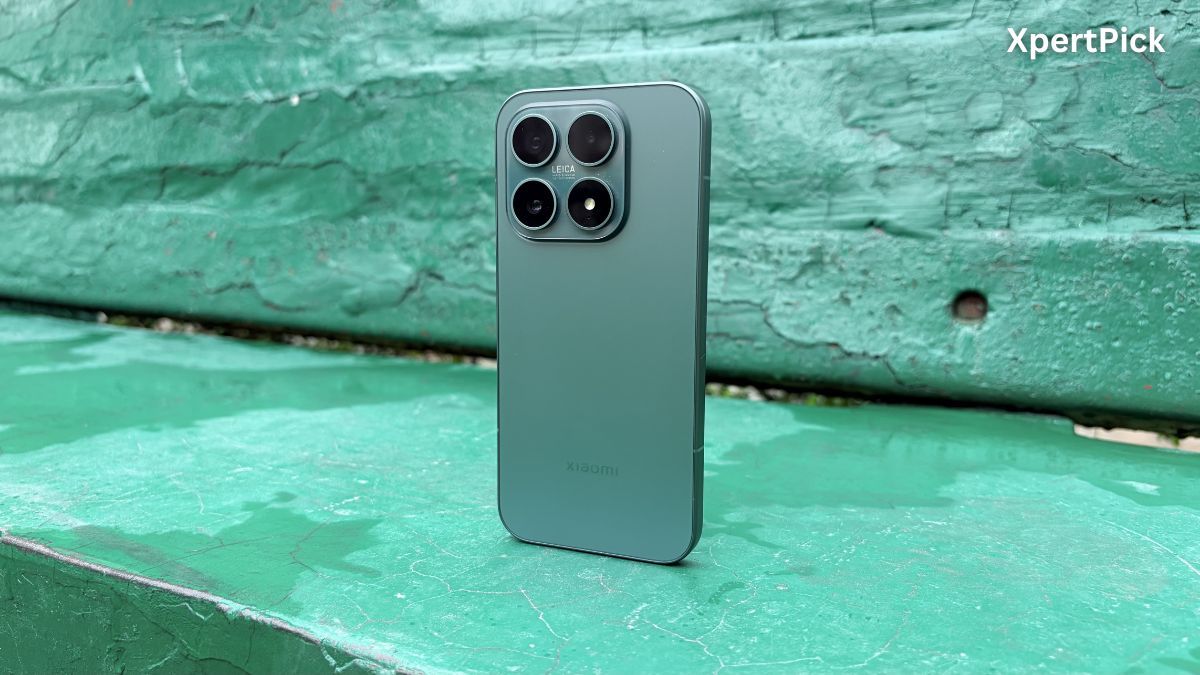
Fast storage and a bright panel, let down by the weakest sustained gaming results of any Snapdragon 8 Elite Gen 5 device here.
Why We Didn’t Pick It
Xiaomi 17 Key Specifications
- Price: ₹89,998
- Processor: Snapdragon 8 Elite Gen 5
- Display: 6.3-inch 1.5K LTPO AMOLED, 120Hz refresh rate, 3,500 nits claimed peak
- RAM: 12GB LPDDR5X
- Storage: 256GB / 512GB UFS 4.1
- Battery: 6,330 mAh silicon-carbon
- Charging: 100W HyperCharge wired, 50W wireless
- Rear Camera: 50MP main (Light Fusion 950, OIS) + 50MP telephoto + 50MP ultra-wide, Leica-tuned
- Front Camera: 50MP with autofocus
- IP Rating: IP68
- Software: HyperOS 3 (Android 16)
Xiaomi 17 XP Lab Test Data
- Battery Life (PCMark): 22h 35min
- Runtime per 1,000 mAh: 3h 34min
- AnTuTu Overall Score: 3,457,958
- Geekbench 6: 3,365 (Single-Core) | 9,717 (Multi-Core)
- Geekbench GPU Score: 22,236
- Geekbench AI Half Precision Score (GPU): 3,274
- Geekbench AI Quantised Score (NPU): 1,135
- PCMark Work 3.0 Score: 19,805
- PCMark Storage Score: 207,250
- AnTuTu Storage Score: 259,350
- 3DMark Wild Life Extreme: 5,897
- 3DMark Stress Test Stability: 72.0%
- CPU Throttling Test Stability: 53%
- Temperature After Stress Test: 44.7°C
- Peak Brightness (measured, auto): 2,760 nits
- BGMI (Lowest Graphics): 117.0 Average FPS | 105.5 5% Low FPS
- Minecraft (Highest Graphics): 47.9 Average FPS | 29.5 5% Low FPS
- Genshin Impact (High + 60fps): 39.4 Average FPS | 24.6 5% Low FPS
- Asphalt 9 (Highest Graphics): 58.6 Average FPS | 55.6 5% Low FPS
Pros
The fastest storage subsystem in this guide by both measures, the third-highest AnTuTu score, a strong BGMI result, 100W and 50W charging, and a Leica triple-50MP camera system.
Cons
The second-weakest Minecraft and Genshin results here, joint-hottest at 44.7°C, and a 53% CPU throttling figure.
Who Should Buy It
Buyers who want a compact-ish flagship with the fastest storage here and who play lighter titles like BGMI rather than heavy 3D games.
Who Shouldn’t Buy It
Anyone comparing it with the iQOO 15, which is ₹13,000 cheaper and better on nearly every measurement in this guide.
Expert Verdict: Excellent storage and solid synthetics, undone by heavy-game performance well below what its chipset should deliver and by a price that sits above a comprehensively better rival.
Samsung Galaxy S26+
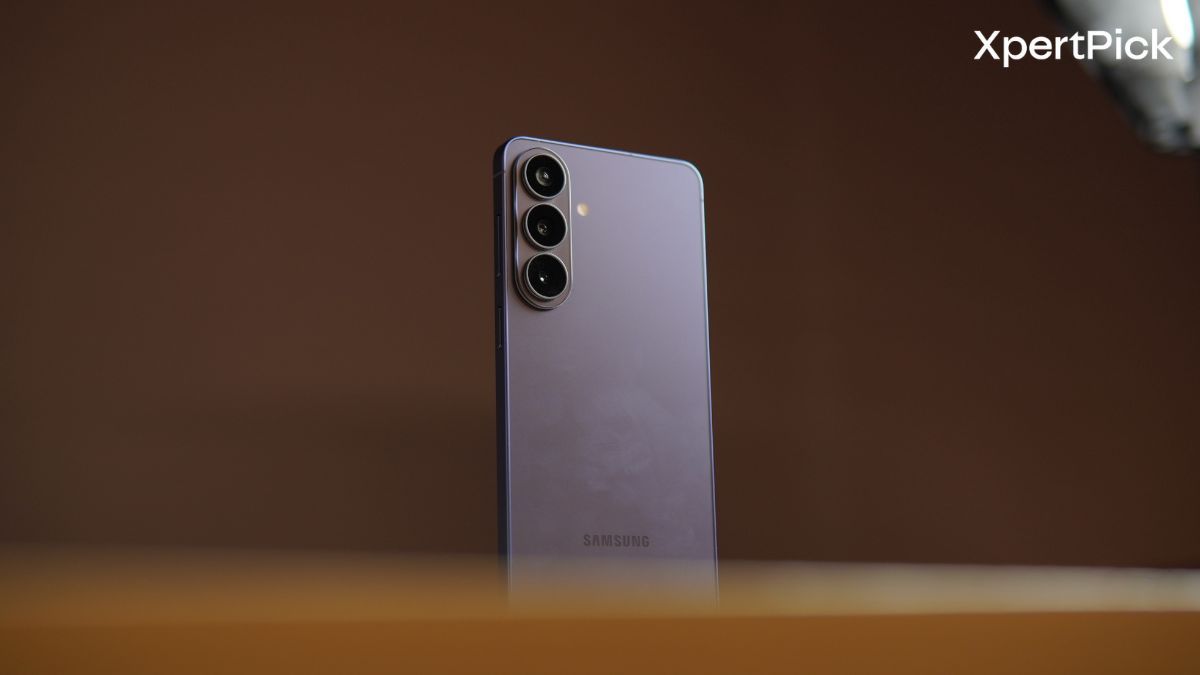
The fastest CPU in this guide, attached to the worst sustained-load and battery results of the nine.
Why We Didn’t Pick It
The Exynos 2600 makes an unusually strong first impression. Its Geekbench 6 multi-core score of 10,657 is the highest in this comparison, ahead of both the OnePlus 15 and iQOO 15, while its Geekbench GPU score of 25,744 is the highest among the Android phones. Its PCMark Work score of 21,652 also leads all nine devices. For short workloads, this is the fastest phone in the guide on several key measurements.
Sustained performance changes that picture considerably. Its 3DMark stress stability of 49% is the lowest recorded here, meaning the phone lost more than half of its graphics throughput over the 20-loop run. That helps explain the gap between its leading Geekbench GPU result and its 3DMark Wild Life Extreme score of 5,106, which trails the OnePlus 15, iQOO 15, Oppo Find X9s and Motorola Signature. Minecraft tells a similar story, averaging 49 fps with a 46.1 fps low, the weakest result among the nine phones.
Battery life is an even clearer weakness. Its 12h 57min PCMark result is the shortest in the comparison by more than 2h 30min, despite using a 4,900 mAh battery that is also the smallest here. That works out to 2h 39min per 1,000 mAh, the lowest efficiency among the seven phones with valid battery results. Charging is also relatively slow at 45W wired and 25W wireless, both the lowest rates among the Android flagships in this guide.
The display has a similar problem. I measured 1,920 nits, the lowest result in the comparison, marginally below the Motorola Signature and roughly half the iQOO 15’s 3,710 nits. That is despite Samsung’s 2,600-nit claim and a QHD+ Dynamic AMOLED 2X panel that should otherwise be one of the stronger displays here.
There are still some convincing strengths. The phone reached 39.6°C during the stress test, keeping it below the four hottest devices, while CPU throttling stability of 67% is around the middle of the group. BGMI averaged 114.5 fps with a 93.2 fps 5% low, making it competitive with the stronger gaming phones. Samsung also matches Motorola’s seven-year commitment to OS and security updates, while One UI 8.5 remains one of the most feature-rich Android interfaces in the comparison. The 10 MP 3x telephoto is lower-resolution than the 50 MP periscopes used elsewhere, but it remains a genuine optical zoom.
At ₹89,499, the comparison with the iQOO 15 is difficult to ignore. The Samsung costs ₹12,500 more, while the iQOO 15 delivers better 3DMark performance, higher display brightness, longer battery life, better efficiency, faster charging and stronger results in every gaming test except BGMI.
Samsung Galaxy S26+ Key Specifications
- Price: ₹89,499
- Processor: Samsung Exynos 2600 (2nm)
- Display: 6.7-inch QHD+ Dynamic AMOLED 2X, 1–120Hz adaptive refresh rate, 2,600 nits claimed peak, Gorilla Glass Victus 2
- Dimensions & Weight: 158.4 × 75.8 × 7.3 mm, 190g
- RAM: 12GB
- Storage: 256GB / 512GB UFS 4.x
- Battery: 4,900 mAh
- Charging: 45W wired, 25W wireless, 4.5W reverse wireless
- Rear Camera: 50MP main (OIS) + 12MP ultra-wide + 10MP 3x telephoto
- Front Camera: 12MP
- IP Rating: IP68
- Software: One UI 8.5 (Android 16), seven years of OS and security updates
Samsung Galaxy S26+ XP Lab Test Data
- Battery Life (PCMark): 12h 57min
- Runtime per 1,000 mAh: 2h 39min
- AnTuTu Overall Score: 2,942,306
- Geekbench 6: 3,112 (Single-Core) | 10,657 (Multi-Core)
- Geekbench GPU Score: 25,744
- Geekbench AI Half Precision Score (GPU): 3,868
- Geekbench AI Quantised Score (NPU): 1,391
- PCMark Work 3.0 Score: 21,652
- PCMark Storage Score: 148,511
- AnTuTu Storage Score: 171,743
- 3DMark Wild Life Extreme: 5,106
- 3DMark Stress Test Stability: 49.0%
- CPU Throttling Test Stability: 67%
- Temperature After Stress Test: 39.6°C
- Peak Brightness (measured, auto): 1,920 nits
- BGMI (Lowest Graphics): 114.5 Average FPS | 93.2 5% Low FPS
- Minecraft (Highest Graphics): 49.0 Average FPS | 46.1 5% Low FPS
- Genshin Impact (High + 60fps): 59.0 Average FPS | 49.4 5% Low FPS
- Asphalt 9 (Highest Graphics): 50.3 Average FPS | N/A
Pros
The highest multi-core and PCMark Work scores in this guide, the best Android GPU result, seven years of updates, a QHD+ Dynamic AMOLED 2X panel, and a competitive BGMI frame floor.
Cons
The lowest stress stability of the nine at 49%, the shortest battery life and worst efficiency here, the dimmest measured panel, the slowest charging of the Android flagships, and a 10MP telephoto against 50MP periscopes elsewhere.
Who Should Buy It
Buyers committed to One UI and Samsung’s ecosystem who want the longest update support available and whose usage is bursty rather than sustained.
Who Shouldn’t Buy It
Gamers, anyone who needs the phone to last a full heavy day, and anyone weighing it against the ₹12,500-cheaper iQOO 15.
Expert Verdict: The quickest silicon here in short bursts and the least able to sustain it. A 49% stability figure and a 12h 57min battery result are difficult to defend at ₹89,499.
Frequently Asked Questions (FAQs)
Which is the best phone under ₹1,00,000 overall?
The OnePlus 15. It posted the highest AnTuTu and multi-core scores here and the longest battery runtime at 27h 13min, with the fastest wired and wireless charging in the guide. It runs warm at 43.8°C, which is the main thing to weigh against it.
Which phone under ₹1,00,000 is best for gaming?
The iQOO 15, and it is not close. Its Genshin Impact 5% low of 82.1fps is higher than every other phone’s average in that test, and it leads the guide on 3DMark and BGMI. Its 58.3% stress stability is the lowest here, which is the trade.
Which phone under ₹1,00,000 has the best battery life?
The OnePlus 15 at 27h 13min, ahead of the Vivo X300 FE at 24h 27min. At the other end, the Samsung Galaxy S26+ managed just 12h 57min. The X300 FE is the more efficient phone, returning 3h 46min per 1,000 mAh against the OnePlus’s 3h 44min from a cell 800 mAh smaller. Neither iPhone has a comparable figure, since PCMark does not run on iOS.
Do flagship phones hold their performance under sustained load?
Generally not. Across the nine phones here, 3DMark stress stability ranged from 49% to 83%, meaning the average device surrendered around a third of its graphics output over twenty consecutive loops. The iPhone 17 was the most composed at 83%; the Samsung Galaxy S26+ the least at 49%, giving up more than half its throughput. Five of the nine ended above 43°C.
Which phone under ₹1,00,000 has the brightest display?
The iQOO 15, at 3,710 measured nits under auto brightness, 630 nits ahead of the iPhone 17 and nearly twice the Samsung Galaxy S26+’s 1,920 nits, the dimmest here. It is also the only 1440p panel in this guide at 508ppi.
Is a compact flagship worth the trade-offs at this price?
Less than it used to be. The iPhone 17 is the smallest phone here and also the most thermally stable, which is unusual. But the Vivo X300 FE at 6.31 inches carries a periscope telephoto the iPhone lacks, and the Xiaomi 17 at 6.3 inches has the fastest storage in the guide. Small no longer means compromised at this price.
Is the ₹35,000 gap between the cheapest and most expensive phone here justified?
Not on measured performance. The ₹62,499 Motorola Signature scored higher in AnTuTu and 3DMark than the ₹97,900 iPhone Air. What the extra money buys is a brighter screen, a better camera system or longer battery life depending on which phone you choose, not more speed.
Why Trust XpertPick
Nothing on this page comes from a press release or a manufacturer’s claimed figure. Every number was measured on a device in our hands.
Independent testing: All nine phones were benched in-house on retail units running shipping software. No manufacturer-supplied performance data was used in the analysis.
Standardised conditions: Identical benchmark, stress, gaming and battery suites at 28°C ambient on the top variant of each device, so the comparison between them holds.
Layered methodology: Peak scores, twenty-loop sustained load, logged frame times across four titles and full battery rundowns. At this price the peak is the least informative number, two phones on the same chipset here returned Genshin averages of 39.4fps and 107.9fps.
Transparent about data: Every failed test, missing figure and inconsistent reading in this guide is listed above under its own heading, including the reason one shortlisted phone was removed and replaced. Gaps are reported as gaps.