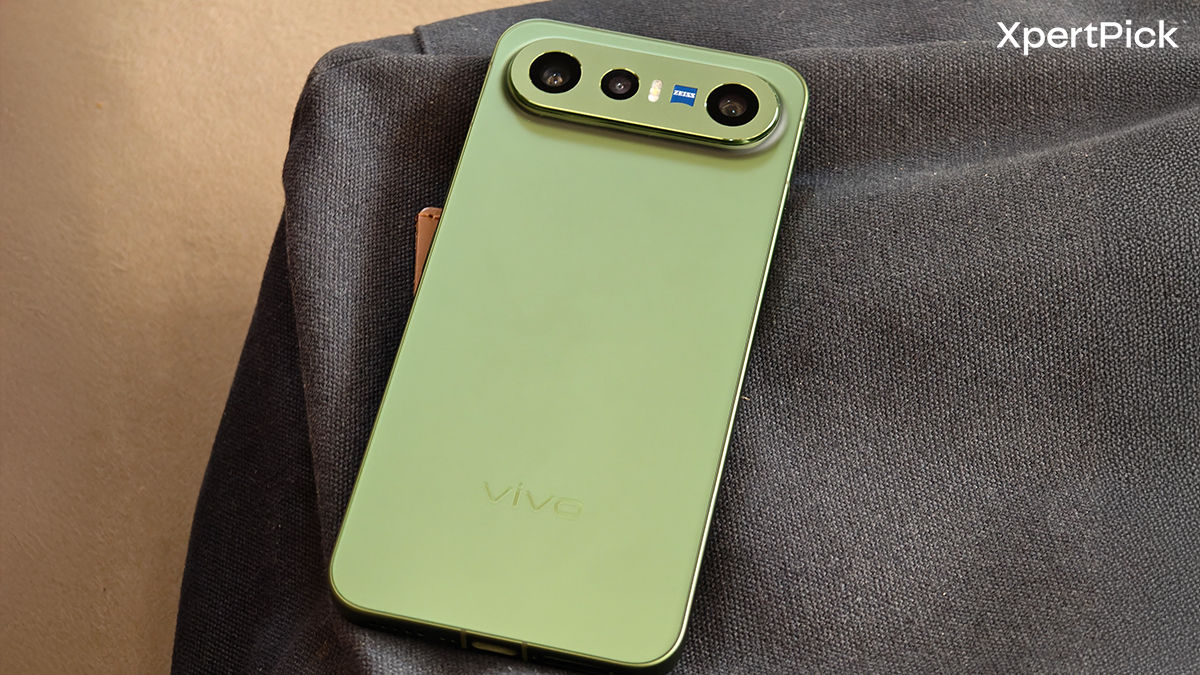
When Vivo announced the Vivo X300 FE, I was surprised that the brand was launching yet another compact premium phone in the market. The standard Vivo X300 had already impressed with its serious camera chops in a smaller body. Though the X300 FE feels like a slightly cut-down remix of that device.
A Fan Edition isn’t a new concept. The branding promises premium specs at an approachable price. However, at a launch price of Rs 79,999, the supposed “entry-level” X300 FE somehow ends up costing more than the regular X300. This instantly turns this into a much trickier phone to recommend. The specs alone don’t explain the price, and the whole thing starts feeling like a bit of a pricing circus. Still, after spending time with it, I don’t think the answer is as simple as writing it off. With the right context, it has the makings of a good phone for what it offers.
Design: Gorgeous Colours, Premium build, and a New Camera Layout that Really Sticks
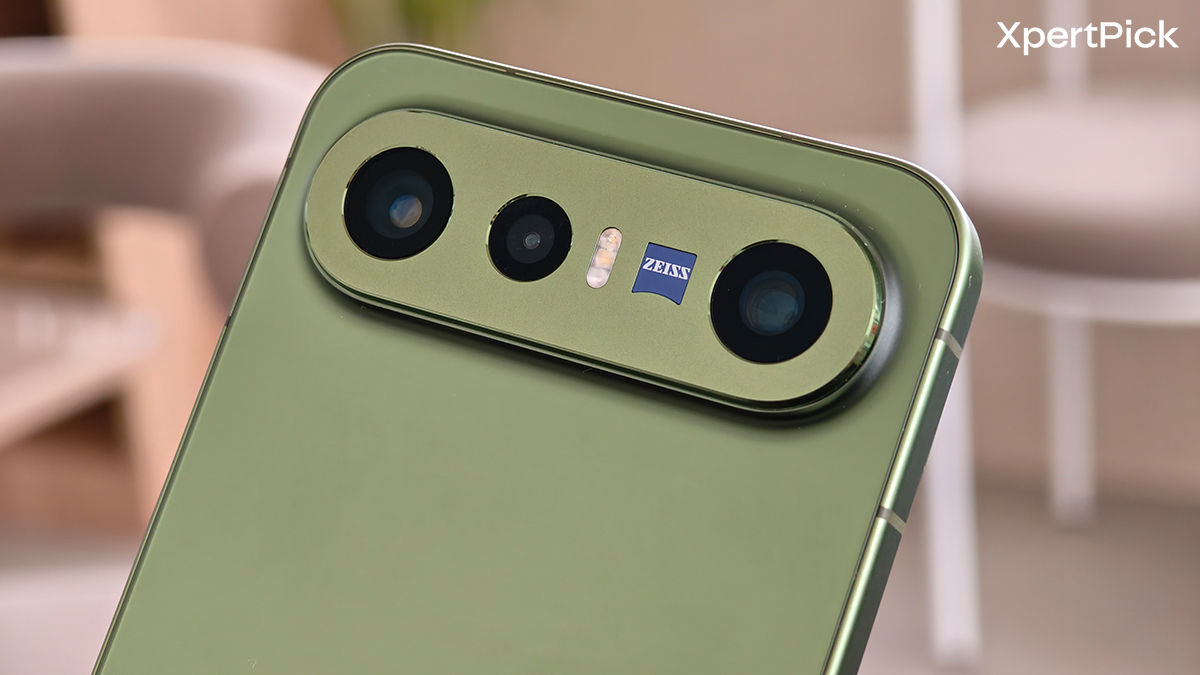
Vivo makes a strong first impression with the X300 FE. Even before you pick it up, the smaller footprint stands out, along with a completely new camera layout at the back. At a glance, it looks like a blend of the iPhone Air and Google’s Pixels, with a horizontal pill-shaped camera module stretching across the rear. But what really helps it stand out are the colour options, which immediately make it feel more distinct than the rest of the X300 lineup.
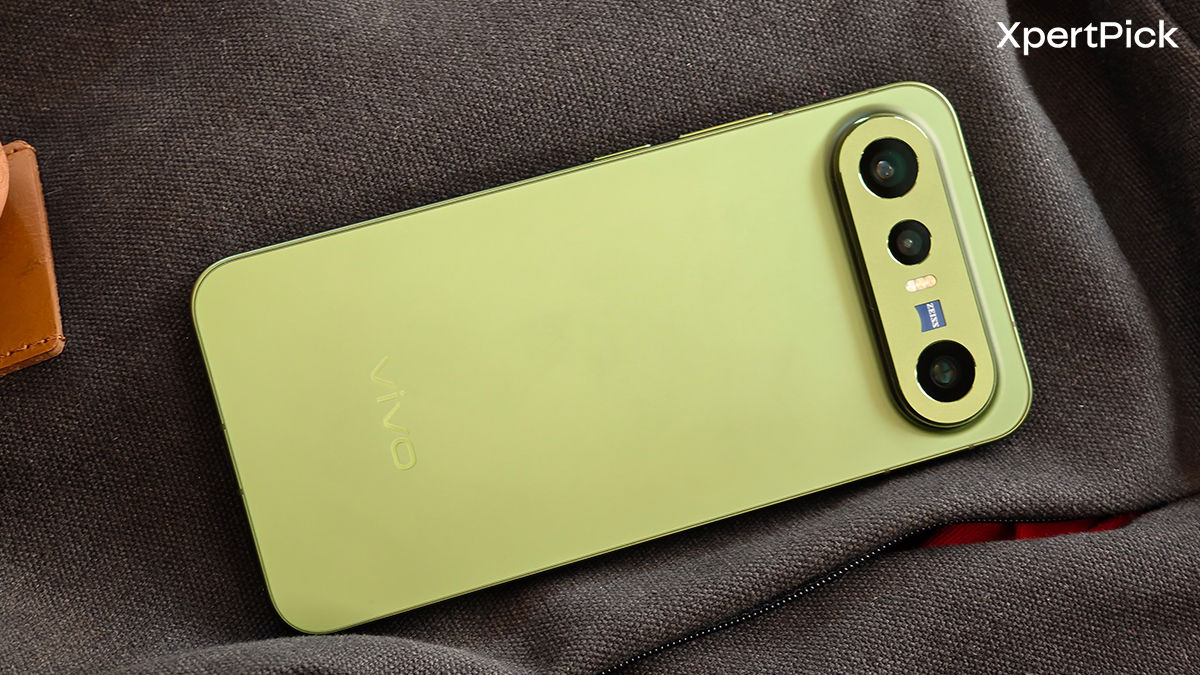
You still get the expected black finish if you want to play it safe, but the Pink and Olive variants are where the FE really comes alive. My review unit was Olive, and it’s easily my favourite of the lot. There’s something refined about it without feeling too dressed up, especially for what is technically Vivo’s first attempt at this particular design direction.
Thankfully, it is not just a pretty slab. The X300 FE is built with an aluminium frame, Schott Xensation Core glass, and IP68 + IP69 protection, which means it feels properly premium in hand and secure enough to use without constantly worrying about water or dust. Vivo also includes a matching protective case in the box, though I honestly never wanted to put it on. You also get a pre-applied screen protector, which is a nice touch. At 8.2mm thick and around 190 grams, the phone feels very balanced and properly flagship-like in hand.
Display: Impressively Bright and Great for One-Handed Use
I’m still not the biggest fan of tall screens on phones, but over the last couple of years, brands have at least become more willing to build devices that are easier to use with one hand. The compact flagship idea has become one of my favourite trends, and the Vivo X300 FE fits into it nicely.
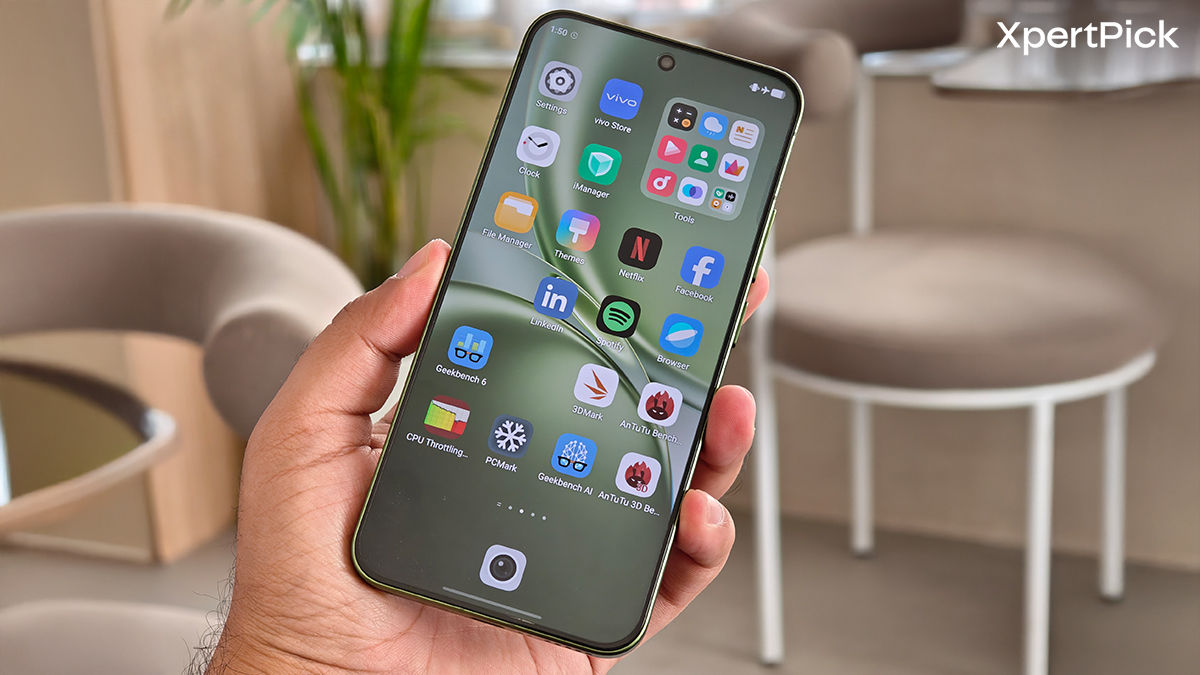
The 6.31-inch LTPO AMOLED display has a sharp 1.5K resolution and a 1–120Hz variable refresh rate, so it manages to feel smooth and efficient at the same time. Except for the lack of perfectly uniform bezels, this is a proper flagship-grade screen. It gets an impressive 5,000nits peak brightness with 1,800nits HBM, has Zeiss Master Color Display tuning, 4,320Hz PWM dimming, and an ultrasonic in-display fingerprint scanner.
This combination makes it extremely easy to like. It’s bright, sharp, and very comfortable to use, even outdoors. HDR10+ support also means streaming looks great on platforms like YouTube and Netflix. There really aren’t many meaningful complaints to raise here.
The display is also where the FE feels more justified against similarly priced phones. The Oppo Find X9 has a very good 6.59-inch AMOLED display of its own, while the iPhone 17 finally moved to a 120Hz panel, but the FE still feels like the more enthusiast-friendly display experience of the lot, especially if you care about LTPO, brightness, and biometric convenience.
Performance: Powerful Enough for Everything you Throw at it
Once you cross a certain price point, strong performance stops being a bonus and starts becoming an expectation. The Vivo X300 FE doesn’t disappoint in that regard. It runs on Qualcomm’s Snapdragon 8 Gen 5, with my review unit carrying 12GB of LPDDR5X Ultra RAM and 512GB of UFS 4.1 storage.
Data from Benchmarks
- AnTuTu – 2,925,836
- AnTuTu (CPU) – 655,282
- AnTuTu (GPU) – 650,506
- Geekbench – 2,686 (single) / 8,468 (multi)
- CPU Throttling – 69%
On paper, those figures place it a step below the absolute top-end phones. But in real life, you’d barely notice. The X300 FE is snappy, fluid, and basically never stutters. Yes, the Vivo X300 with the Dimensity 9500 is faster, but the gap rarely shows up in day-to-day use. The phone still feels every bit like a premium device in regular use.
Gaming is where the compromises become clearer. The OnePlus 15R is the obvious comparison because it chases the same sort of buyer looking for flagship-grade speed without flagship pricing, and it still has the edge in both average frame rate and sustained stability. After around 45 minutes of playtime, BGMI on the lowest settings averaged around 89fps, while Minecraft at the highest settings pulled 51.4fps. Genshin Impact at high settings was playable but not especially graceful, averaging around 39.2fps. Asphalt 9 looked better at 58.1fps, but again, the 15R does much more with that same class of hardware.
This is why the FE doesn’t really make sense as a gaming-first phone. It is more than capable for casual gaming and short bursts, but if you intend to game often, there are better and cheaper options. In that respect, the FE lands somewhere between the more performance-first OnePlus 15R. It’s fast enough for almost anyone. It just isn’t the best value if gaming is the priority.
Battery: Runs long and Charges Quick
One area where the X300 FE clearly pulls ahead of the base X300 is battery size. It packs a 6,500mAh cell, which is a huge win for a phone this size. In the PCMark battery test, it managed 24 hours and 27 minutes, and in actual use, I was averaging around 7 hours of screen-on time. With moderate use and plenty of screen-off time, the phone easily lasted through one full day and only really needed charging near the end of the second.
Charging is another strong point. 90W wired charging keeps downtime to about an hour for a full top-up, and the phone also supports 40W wireless charging, which helps it feel more complete than many Android rivals around this price. This is one of those areas that really rounds out the FE’s identity. A compact phone that does not come with compact-phone battery anxiety is immediately more appealing.
Camera: The Zeiss-tuned Photography Experience Still Impresses
The camera system is still the main reason to care about the X300 FE. Vivo and Zeiss have built some fantastic camera phones together, and the moment I saw the Zeiss branding here, I knew this was going to be more about experience than just spec-sheet flexing.
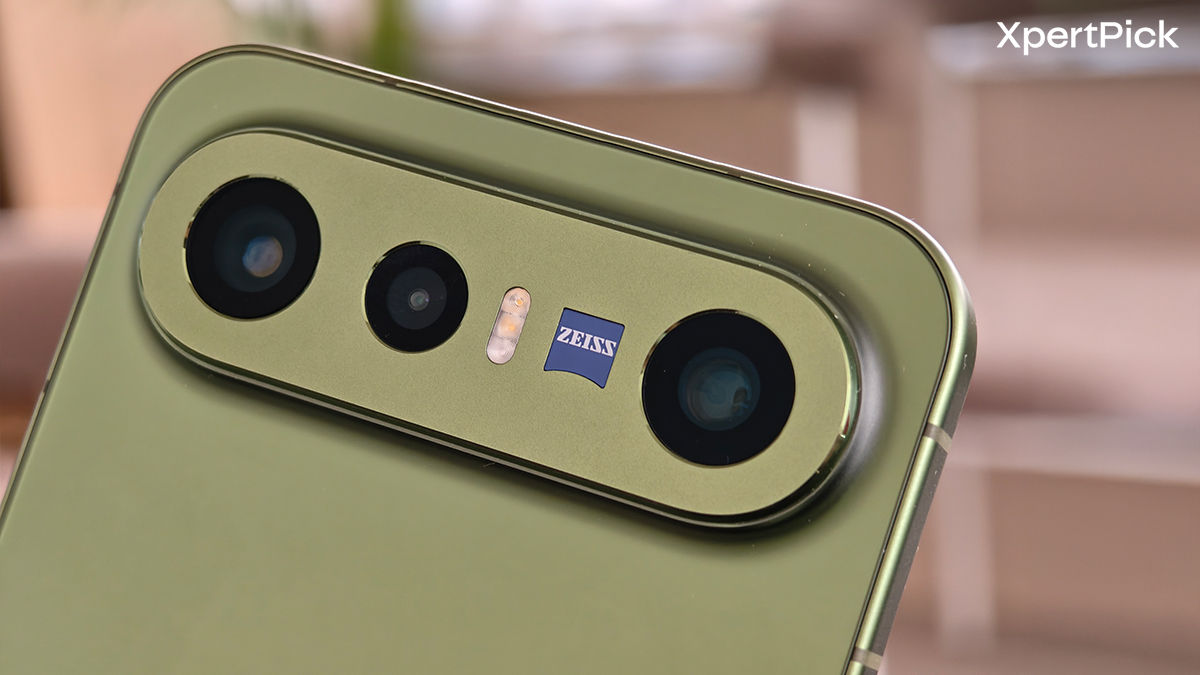
- 50MP 1/1.56″ Sony IMX921 main sensor (f/1.57 aperture, OIS)
- 50MP 1/1.95” Sony IMX882 telephoto shooter (f/2.65, Autofocus, OIS)
- 8MP 1/4” OmniVision OV08F10 ultra wide lens (f/2.2)
- 50MP 1/2.76” Samsung JN1 selfie camera (f/2.2, Autofocus)
My view on smartphone photography hasn’t really changed. The best camera phone isn’t just the one with the biggest sensor, it’s the one that makes you want to keep shooting. That’s why iPhones, Pixels, and Galaxy phones remain so popular. They are consistent, refined, and do a lot of the heavy lifting for you. The X300 FE gets surprisingly close to that feeling, even if it is clearly a cut-down take on the base X300.
But the real fun factor is still here. The camera app is loaded with good filters, scene suggestions, and enough shooting options to make the phone feel playful rather than clinical. In daylight, the main camera is a strong performer. It handles hard HDR scenes well, keeps detail intact, and delivers the kind of slightly punchy but attractive results that most people will happily upload straight away. Contrast can get boosted a little too much indoors, and some shots lean slightly more stylised than neutral, but the overall experience is very good.




















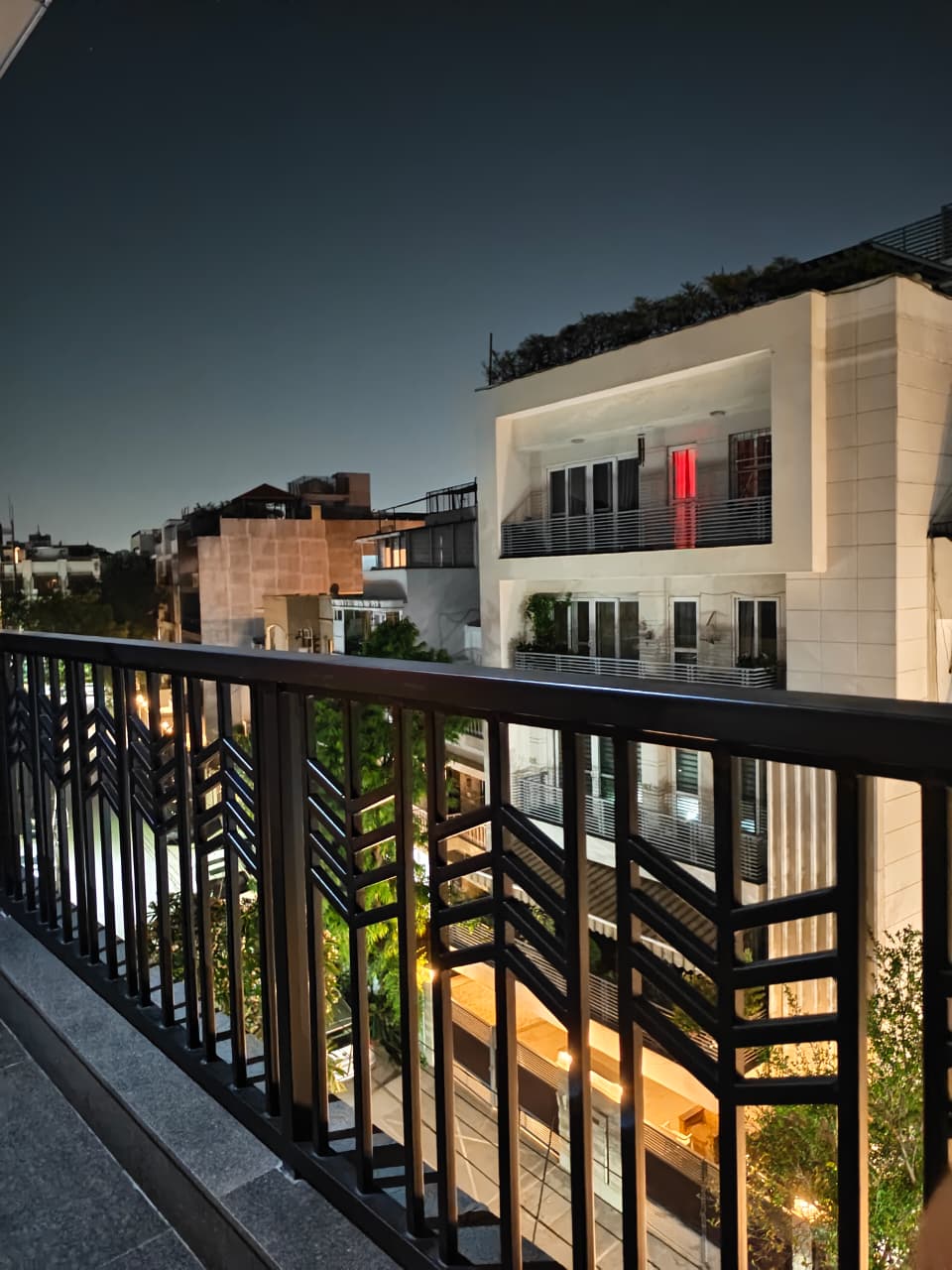

You also get a 2x digital zoom preset, and thankfully, there isn’t a huge drop in quality there. Since the main camera is the largest of the three, it is also the best in low light. It handles noise reasonably well, keeps artificial light sources under control, and avoids the usual over-brightened night look.
The telephoto is the camera I ended up using the most. On a recent visit to Lodhi’s Art District, the 3x optical zoom was just a lot of fun. Murals and street art retained their texture nicely, and portrait shots looked especially good thanks to that more compressed focal length and strong edge detection. This is still a big part of why the X300 FE works as a camera phone. It gives you a proper telephoto experience rather than forcing everything through a crop. The ultra-wide is the clear weak link. It’s only really useful during the day, and even then, the soft edges and distortion are hard to ignore. At this price, an 8MP ultra-wide feels like a very obvious compromise.
Although, the FE is not flawless. Indoors, there was a noticeable colour shift between the main and telephoto cameras, and in properly dim lighting, the telephoto starts picking up more noise.
The selfie camera is a nice surprise, though. Autofocus helps, the wider field of view is useful, and skin tones lean slightly warm but are still natural enough. Video is also quite good overall. The main camera is the best of the bunch again, and you even get 8K recording. The telephoto goes up to 4K and is usable, but the ultra-wide is locked to 1080p, and without OIS, it is the least reliable for video.
The telephoto is the camera I ended up using the most, especially during a recent visit to Lodhi’s art district. Clicking the colourful murals from across the street, the 3x optical zoom took some gorgeous shots. Shots retained the texture of the artwork. But portrait shots were easily a highlight. In portrait mode, the compressed look always helps take images that appear to have a near-natural bokeh with accurate edge detection.
The bigger problem isn’t that the X300 FE has bad cameras. It’s that the regular Vivo X300, which launched for less, has a stronger and more rounded setup with a larger 1/1.4-inch 200MP main sensor, plus 50MP periscope and ultra-wide cameras. That makes the FE’s pricing much harder to defend. And at this price, it’s also walking into iPhone 17 and Oppo Find X9 territory, where buyers are going to expect either stronger consistency or better-rounded hardware.
Software: OriginOS is Better than Ever Before, But it Could Use a Little More Freshening Up
OriginOS is in a much better place now than Vivo’s old software ever was. If you’ve used any of Vivo’s recent premium phones, you already know the story. It is smooth, packed with features, and much more modern than the old FunTouchOS days ever managed to feel. The X300 FE benefits from that same maturity.
There’s still a strong iOS influence running through the whole experience, but compared to Vivo’s older skins, this feels far more polished. The animations are fluid, the customisation runs deep, and the ecosystem features are genuinely useful if you’re using the phone across multiple devices. You can tweak charging animations, the AOD, fingerprint effects, icon styles, and plenty more, which helps the software feel more personal than stock Android or some of the cleaner skins out there.
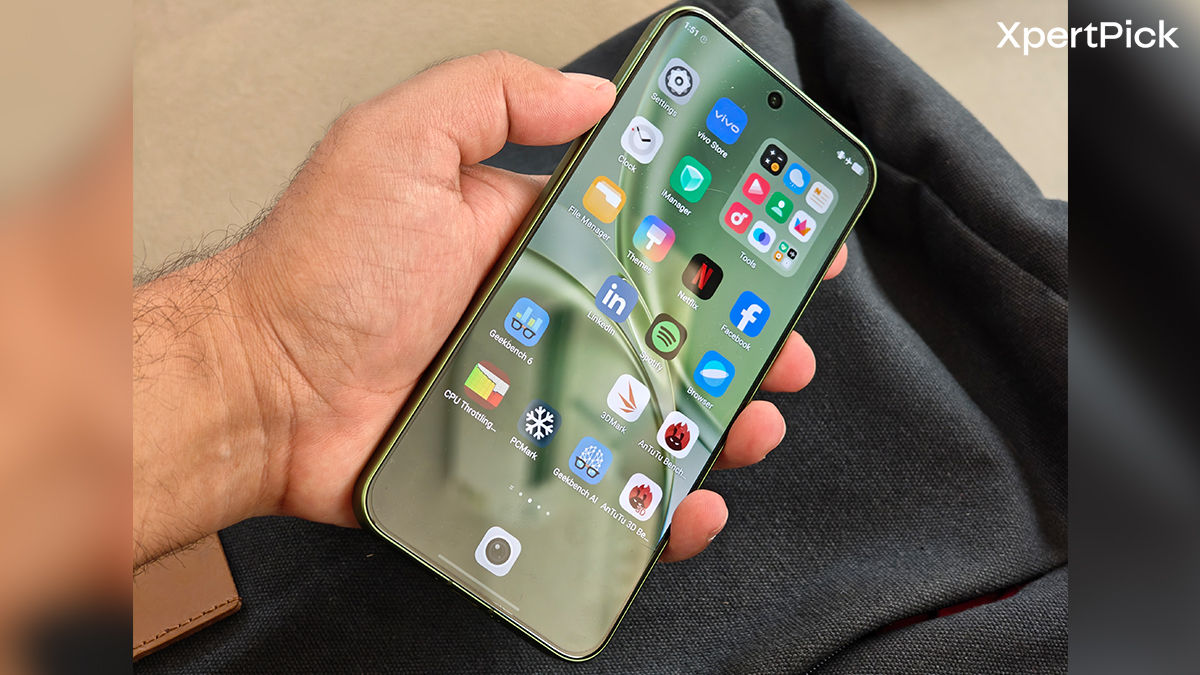
AI is another big part of the package. You get the expected writing tools, live translation, note and summary features, and other quality-of-life additions that are becoming standard in this segment. And unlike some cheaper phones, the X300 FE at least feels like it is getting the full premium Vivo software treatment rather than a stripped-down version.
Still, OriginOS lacks a bit of freshness. Compared to the cleaner confidence of the iPhone 17, the more cohesive polish of the Oppo Find X9, or even the distinct visual identity that Nothing has built on its phones, OriginOS still feels a little too inspired at times. It works well, but I still wish Vivo would push harder on ideas that feel unmistakably its own.
Verdict
The Vivo X300 FE is a very easy phone to like and a much harder phone to justify at its launch price. At Rs 79,999, the whole positioning feels awkward because the regular Vivo X300 launched at Rs 75,999 and is simply the more rounded camera phone, while the iPhone 17’s 256GB model sits close enough at around Rs 82,900 to make Apple feel like a legitimate alternative for buyers shopping on refinement and brand pull alone.
Add the Oppo Find X9 and Motorola Signature into the wider conversation, and the FE starts looking like a phone with a lot going for it. The good news is that the company is offering 10% instant cashback and a Rs 5,000 upgrade bonus, which can bring down its price to around Rs 66,999 and make the value equation much more sensible.
So, should you buy the Vivo X300 FE? Yes, but only at the right price. At the effective offer price, this becomes a genuinely compelling compact premium phone with a great display, strong battery life, fun Zeiss-tuned cameras, and flagship-like day-to-day performance.
Pros
- Excellent compact in-hand feel
- Flagship-grade LTPO AMOLED display
- Strong battery life for a compact phone
- Fun and versatile Zeiss-tuned camera experience
- Premium build and matching in-box case
Cons
- Launch pricing makes little sense
- The ultra-wide camera is weak for the price
- Gaming falls behind cheaper rivals like the OnePlus 15R