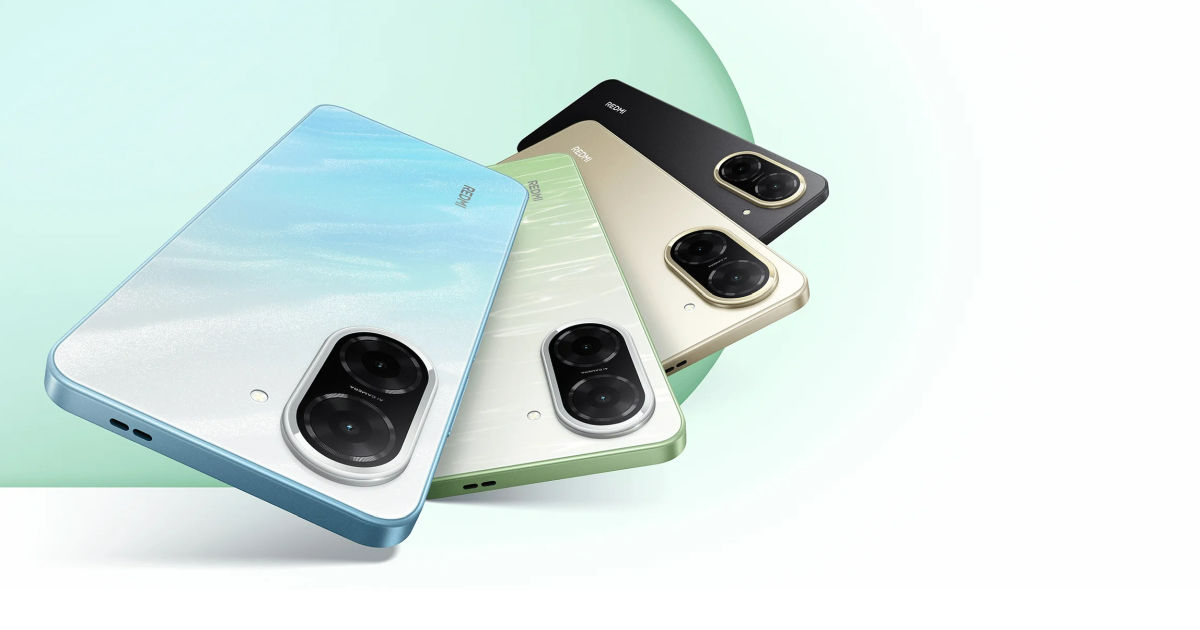
Recently, the upcoming Redmi A7 Pro was spotted at some certification platforms, such as the UAE’s TDRA and Thailand’s NBTC. The listing hinted that the company could also be preparing a standard Redmi A7 variant alongside it. In a fresh development, the Redmi A7 has now surfaced in the same database, confirming its model number and revealing key connectivity details.
Redmi A7 NBTC certified
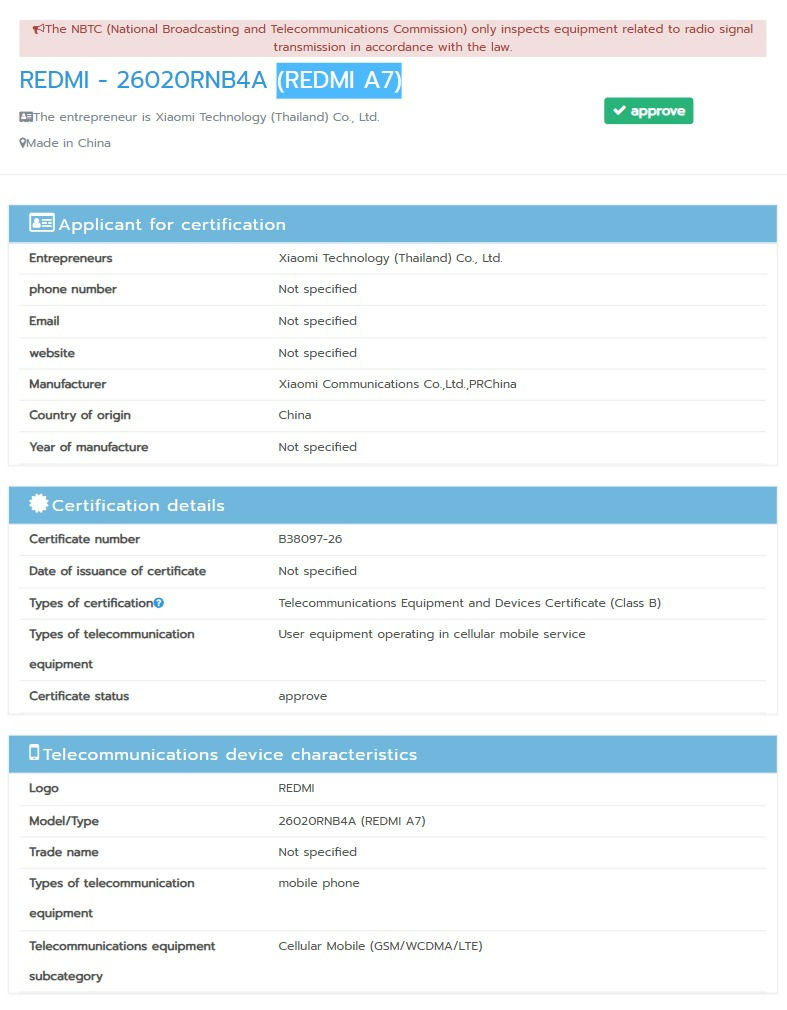
The Redmi A7 has been listed on the NBTC database with the model number 26020RNB4A. The device has also previously received approval from the EEC authority. For reference, the Redmi A7 Pro carries model numbers 25128RN17A, 25128RN17Y, and 25128RN17G.
The NBTC listing confirms that the Redmi A7 will not support 5G connectivity. The Pro variant is also expected to arrive without 5G support. More details regarding specifications and launch timelines are likely to surface in the coming weeks.
Xiaomi’s sibling brand Poco is reportedly developing the Poco C81 and Poco C81 Pro. These devices could potentially be rebranded as the Redmi A7 and A7 Pro in certain markets. While there is no official confirmation, the specifications may remain largely similar, with possible differences in memory or storage configurations.
Reports suggest that the Poco C81 and C81 Pro may feature a 6.9-inch HD+ LCD screen with a 120Hz refresh rate, Android 15 based on HyperOS 3, and the Unisoc T7250 chipset. The devices are tipped to include 4GB LPDDR4x RAM, up to 128GB storage, a 6,000mAh battery with 15W charging, a 13-megapixel selfie camera, and a 50-megapixel rear camera.
Xpert Pick
The appearance of the Redmi A7 on NBTC suggests that Redmi is preparing to strengthen its entry-level portfolio in global markets. While the lack of 5G may limit its appeal in some regions, a large display, 120Hz refresh rate, and 6,000mAh battery could make it attractive for users prioritising screen size and endurance over next-generation connectivity. If priced aggressively, the Redmi A7 series could compete well in the budget 4G segment, especially in markets where affordability remains the key purchase factor.
These devices are also expected to launch in India, but they haven’t been certified in the country yet.