Spend ₹25,000 and you are not choosing between minor variations of the same hardware. This price band is sharply divided. Three of the eight phones I tested cleared 1,000 points in 3DMark Wild Life Extreme, while the other five scored between 360 and 386, less than a third as much. Yet some of these devices are separated by less than ₹3,000. Battery life shows a similarly wide gap, ranging from just over 14 hours to almost 30 hours. Specifications alone do little to reveal where a phone will actually land. The benchmarks do.
I put all eight devices through the same battery of synthetic benchmarks, sustained-load stress tests, thermal logging, frame-time captures across four games and full battery rundown tests. The results show exactly where each phone stands in this price range.
Phones Considered
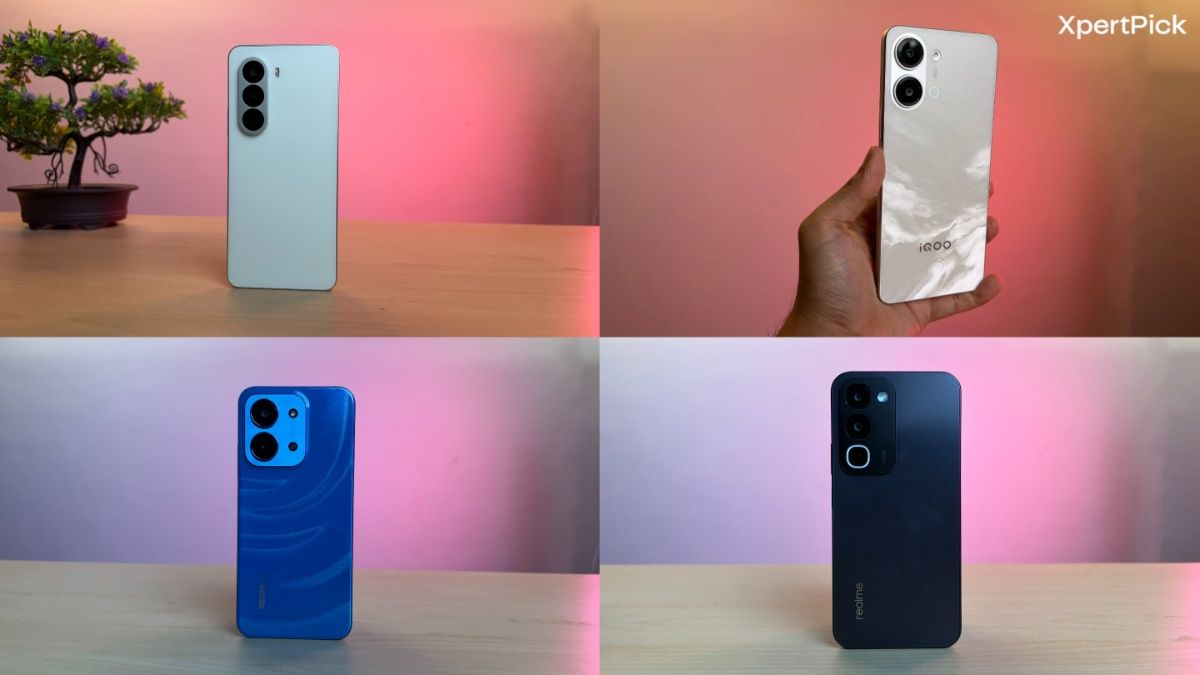
Eight phones under ₹25,000 went through the bench: the OnePlus Nord CE6 Lite, iQOO Z11 Lite, OnePlus N6, REDMI 15C 5G, realme P4x 5G, OPPO K14, vivo T5x 5G and realme P4R 5G.
Top Picks At A Glance
Every award below traces back to a measured XP Lab result or a verified hardware specification. The comparison table that follows puts the shortlist side by side.
| Category | My Pick | Price | Why We Picked It |
|---|---|---|---|
| Best Overall Under ₹25k | OnePlus Nord CE6 Lite | ₹24,999 | The only million-point AnTuTu score here, the brightest measured panel, 24-hour endurance and clean OxygenOS. |
| Best Camera Under ₹25k | vivo T5x 5G | ₹24,999 | A Sony IMX852 main sensor paired with the only 32MP front camera in the group. |
| Best Gaming / Performance Under ₹25k | realme P4x 5G | ₹21,999 | Top GPU and 3DMark scores here, plus the strongest Genshin Impact frame floor in the comparison. |
| Best Battery & Charging Under ₹25k | iQOO Z11 Lite | ₹24,499 | 29h 33min from the smallest cell here, 4h 33min per 1,000 mAh, comfortably the most efficient. |
| Best Display (High-Refresh) Under ₹25k | OnePlus Nord CE6 Lite | ₹24,999 | 1,060 measured nits on a 144Hz FHD+ panel, the brightest reading in this group. |
| Best Value-For-Money Under ₹25k | realme P4x 5G | ₹21,999 | Segment-leading silicon at the lowest price in this comparison, ₹3,000 below the phones it matches. |
A note on the display category: none of these eight ships an AMOLED panel. Every device here uses LCD, so this award goes to the best-measured high-refresh screen rather than to a panel technology that simply is not available at this price today.
Under-₹25k Performance Benchmark Comparison Table
A 🏆 marks the leader in each row.
| Test / Metric | Nord CE6 Lite | iQOO Z11 Lite | realme P4x | vivo T5x | realme P4R |
|---|---|---|---|---|---|
| AnTuTu Overall | 1,001,250 🏆 | 579,955 | 966,382 | 954,883 | 599,567 |
| Geekbench (Single) | 1,009 | 730 | 1,054 | 1,060 🏆 | 784 |
| Geekbench (Multi) | 2,974 | 1,917 | 2,991 🏆 | 2,715 | 1,978 |
| Geekbench GPU | 2,869 | 1,412 | 3,061 🏆 | 3,053 | 1,407 |
| 3DMark Wild Life Extreme | 1,017 | 366 | 1,030 🏆 | 1,015 | 386 |
| 3DMark Stress Stability | 99.4% | 99.5% 🏆 | 99.5% 🏆 | 99.5% 🏆 | 99.2% |
| Peak Temperature | 39.6°C | 31.2°C 🏆 | 34.6°C | Not documented | 31.2°C 🏆 |
| PCMark Battery | 24h 00min | 29h 33min | 16h 28min | 29h 37min 🏆 | 22h 00min |
| Runtime per 1,000 mAh | 3h 26min | 4h 33min 🏆 | 2h 21min | 4h 07min | 2h 45min |
| Peak Brightness (measured, auto) | 1,060 nits 🏆 | 820 nits | 702 nits | 921 nits | 973 nits |
| Genshin Impact (Avg / 5% Low) | 42.6 / 29.8 | Not recorded | 47.3 / 37.3 🏆 | 47.0 / 29.6 | 28.6 / 10.0 |
How I Tested These Smartphones
One methodology, applied identically to all eight units, so that the numbers describe the phones rather than the conditions.
Test Conditions: Retail units on publicly released firmware, benched in a 28°C ambient environment, using the top-specification variant wherever multiple configurations exist.
Performance: AnTuTu v10 and Geekbench 6 cover CPU, GPU and on-device AI. Each suite runs three times with a fifteen-minute cooldown between passes; the median is what gets published.
Sustained Load: Twenty back-to-back loops of 3DMark Wild Life Extreme, with an external probe logging chassis temperature throughout.
Gaming: BGMI, Minecraft, Genshin Impact and Asphalt 9 across extended sessions with frame times captured. The average tells you what the session felt like overall; the 5% low tells you how bad the dips got.
Battery: PCMark Work 3.0 looped at a fixed brightness until the device powers off. Runtime per 1,000 mAh is derived from that result and the rated cell capacity, so that efficiency can be read separately from sheer capacity.
The Phones In Detail
OnePlus Nord CE6 Lite — Best Overall & Best Display Under ₹25k
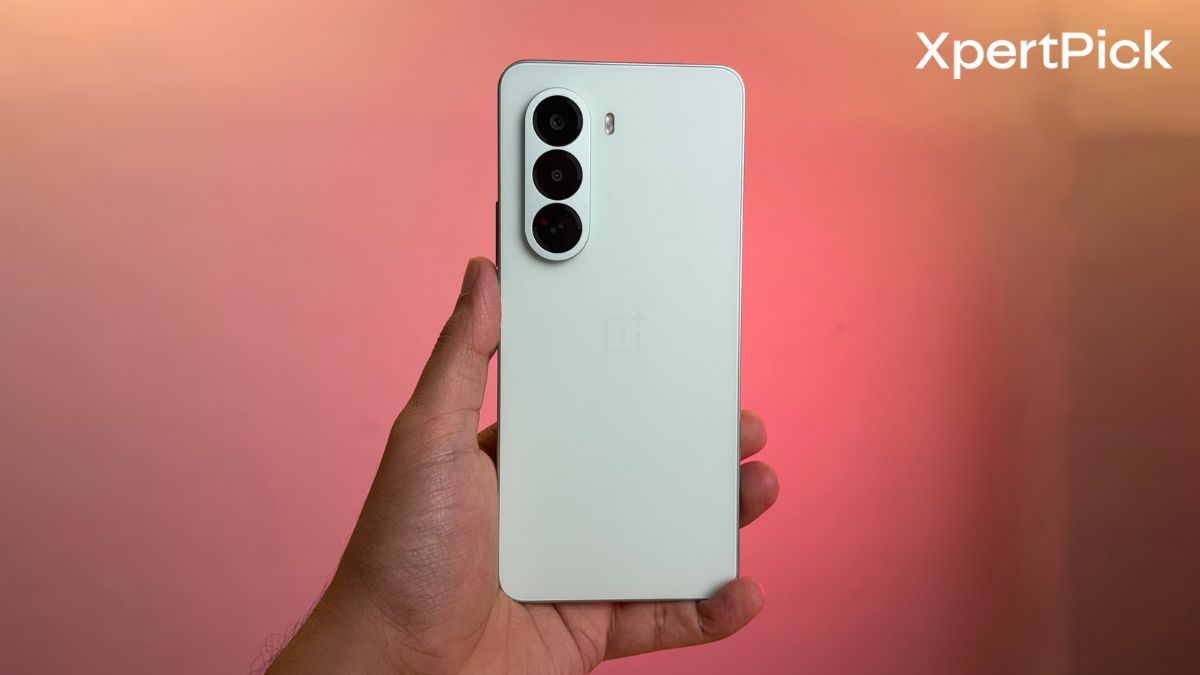
Two awards, and both rest on the Nord CE6 Lite being the only phone here that refuses to have an obvious weak spot.
Why We Picked It
The Nord CE6 Lite wins this comparison by being unusually well-rounded. It leads in AnTuTu, battery life, display brightness, gaming frame-rate lows and on-device AI, although the margins vary considerably between tests. Its 1,001,250 AnTuTu score is the only seven-figure result here, putting it roughly 3.6% ahead of the realme P4x, while its 24-hour PCMark battery result is also the best in the group.
The display is another clear strength. I measured 1,060 nits with auto brightness enabled, making it 9% brighter than the next panel here and 51% brighter than the dimmest. The FHD+ LCD also runs at 144 Hz. AMOLED is still absent from this price bracket, but among the LCD panels tested here, the Nord CE6 Lite has the strongest showing.
Gaming results reinforce that lead. Its BGMI 5% low of 55 fps and Asphalt 9 5% low of 29.4 fps are both the best in this comparison, indicating more consistent frame delivery where some of its rivals fall away.
On-device AI is where the Nord CE6 Lite separates itself most clearly. Geekbench AI tests the silicon used for workloads such as computational photography, on-device photo editing, live transcription and other local AI features. Its GPU Half Precision score of 790 is fairly ordinary and sits around the middle of the group. The NPU tells a different story, with scores of 5,535 in Quantised and 2,142 in Half Precision. Both are roughly twice the second-placed result and more than 14 times the scores recorded by the weakest devices here. Whatever OnePlus has done with the Dimensity 7400 Apex’s AI hardware, the benchmark results show a substantial advantage.
OxygenOS also contributes to the phone’s overall showing. The interface is relatively clean, with little pre-installed software to remove, and OnePlus’ software support record remains competitive.
There are some clear limitations. The Nord CE6 Lite reached 39.6°C after the stress loop, the highest temperature recorded among the eight phones, while its 86% CPU throttling stability was the lowest. The processor therefore gives up more performance under sustained load than its competitors. Minecraft was another weak point, averaging 34.7 fps despite the phone’s stronger results elsewhere.
OnePlus Nord CE6 Lite Key Specifications
- Price: ₹24,999
- Processor: MediaTek Dimensity 7400 Apex
- Display: 6.72-inch FHD+ (1080 × 2400) LCD, 144Hz refresh rate, 1,000 nits claimed peak brightness
- Dimensions & Weight: 166.0 × 76.0 × 8.5 mm, 208g
- RAM: 6GB / 8GB LPDDR5
- Storage: 128GB / 256GB UFS 3.1
- Battery: 7,000 mAh
- Charging: 45W SUPERVOOC wired (10W reverse wired supported)
- Rear Camera: 50MP primary + 2MP depth
- Front Camera: 8MP
- IP Rating: IP64 (MIL-STD-810H certified)
OnePlus Nord CE6 Lite XP Lab Test Data
- Battery Life (PCMark): 24h 00min
- Runtime per 1,000 mAh: 3h 26min
- AnTuTu Overall Score: 1,001,250
- Geekbench 6: 1,009 (Single-Core) | 2,974 (Multi-Core)
- Geekbench GPU Score: 2,869
- Geekbench AI Half Precision Score (GPU): 790
- Geekbench AI Quantised Score (NPU): 5,535
- PCMark Work 3.0 Score: 10,497
- 3DMark Wild Life Extreme: 1,017
- 3DMark Stress Test Stability: 99.4%
- CPU Throttling Test Stability: 86%
- Temperature After Stress Test: 39.6°C
- Peak Brightness (measured, auto): 1,060 nits
- BGMI (Lowest Graphics): 59.5 Average FPS | 55.0 5% Low FPS
- Minecraft (Highest Graphics): 34.7 Average FPS | 16.7 5% Low FPS
- Genshin Impact (High + 60fps): 42.6 Average FPS | 29.8 5% Low FPS
- Asphalt 9 (Highest Graphics): 57.1 Average FPS | 29.4 5% Low FPS
Pros: The only million-point AnTuTu result here, the brightest measured screen, class-leading NPU performance, the best BGMI and Asphalt frame floors, and genuinely clean software.
Cons: The hottest phone in the group at 39.6°C, the weakest CPU throttling stability at 86%, and a modest Minecraft average.
Who Should Buy It: Anyone who wants one phone that does everything competently at ₹25,000 rather than a device that trades three weaknesses for one strength.
Who Shouldn’t Buy It: Buyers chasing maximum endurance, the Z11 Lite and T5x both run five hours longer.
Expert Verdict: The most rounded phone under ₹25,000. It runs warm under load, but no rival here matches its combination of performance, screen and software.
vivo T5x 5G — Best Camera Under ₹25k
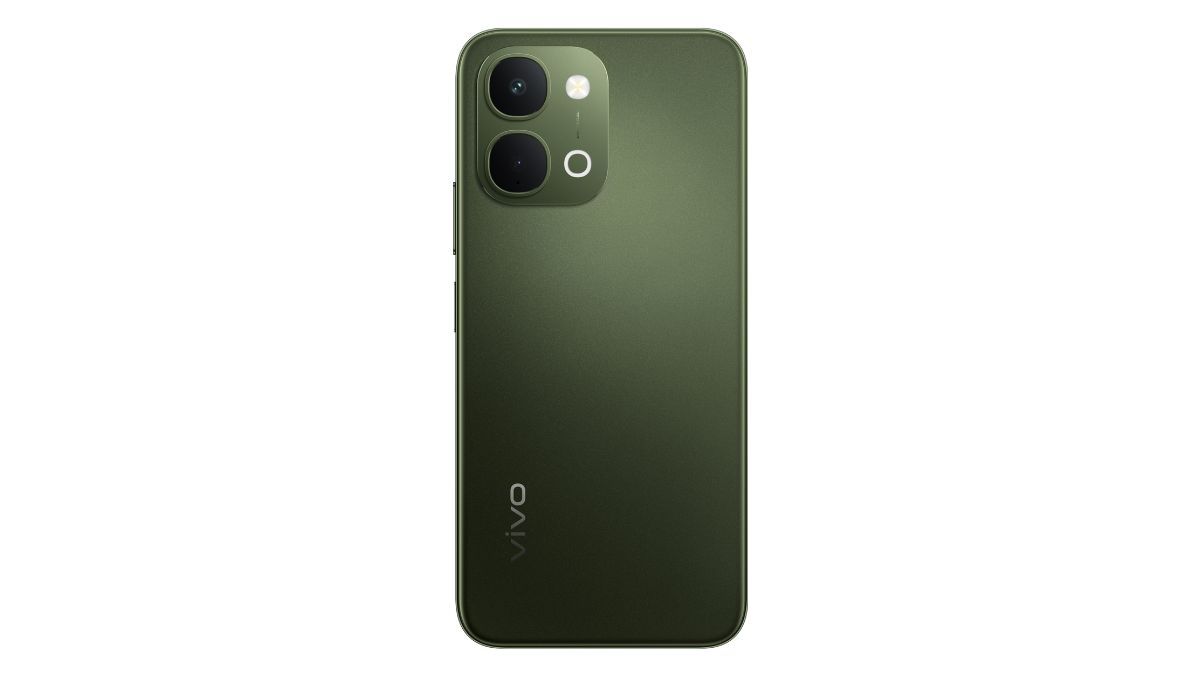
The T5x wins the imaging award on hardware, not on processing claims, it is the only phone in this group with a serious front camera.
Why We Picked It
The T5x’s strongest advantage is not its main camera. With all eight phones using 50 MP primary sensors, there is little to separate them on paper. The more meaningful difference is at the front, where the T5x uses a 32 MP sensor. That is four times the resolution of the 8 MP cameras used by most rivals and more than six times the 5 MP unit on the iQOO Z11 Lite. For selfies, video calls and vertical video, that gives the T5x a clear hardware advantage. Its primary camera uses Sony’s IMX852 sensor.
Performance is equally convincing. The T5x recorded the highest Geekbench single-core score in this comparison at 1,060, while its GPU score of 3,053 was within eight points of the overall leader. Its 29h 37min PCMark battery result was also the longest recorded here, and it maintained 99.5% stability through the 20-loop stress test, matching the best result in the group.
Its AI performance is competitive as well. Geekbench AI exercises hardware used for workloads such as computational photography and on-device editing. The T5x’s GPU Half Precision score of 817 is unremarkable, but its dedicated NPU managed 2,558 in Quantised and 1,316 in Half Precision. Those results put it third overall and several times ahead of the phones using the Dimensity 6300.
The display is less impressive. Its measured brightness of 921 nits places it around the middle of the group, while the LCD panel cannot match the contrast of AMOLED screens, particularly in darker scenes.
There is also an important gap in the thermal data. No post-stress temperature was recorded for this unit, as noted in the test results, so its thermal behaviour cannot be compared directly with the other seven phones. That makes the T5x’s otherwise strong performance and stability results slightly harder to put into context.
vivo T5x 5G Key Specifications
- Price: ₹24,999
- Processor: MediaTek Dimensity 7400 Turbo
- Display: 6.76-inch FHD+ (1080 × 2344) LCD, 120Hz refresh rate, 1,200 nits claimed peak brightness
- Dimensions & Weight: 166.64 × 78.43 × 8.39 mm, 219g
- RAM: 6GB / 8GB LPDDR4X
- Storage: 128GB / 256GB UFS 3.1
- Battery: 7,200 mAh
- Charging: 44W Flash Charge
- Rear Camera: 50MP primary (Sony IMX852) + 2MP depth
- Front Camera: 32MP
- IP Rating: IP68 / IP69
vivo T5x 5G XP Lab Test Data
- Battery Life (PCMark): 29h 37min
- Runtime per 1,000 mAh: 4h 07min
- AnTuTu Overall Score: 954,883
- Geekbench 6: 1,060 (Single-Core) | 2,715 (Multi-Core)
- Geekbench GPU Score: 3,053
- Geekbench AI Half Precision Score (GPU): 817
- Geekbench AI Quantised Score (NPU): 2,558
- PCMark Work 3.0 Score: 11,927
- 3DMark Wild Life Extreme: 1,015
- 3DMark Stress Test Stability: 99.5%
- CPU Throttling Test Stability: 93%
- Temperature After Stress Test: Not documented
- Peak Brightness (measured, auto): 921 nits
- BGMI (Lowest Graphics): 59.2 Average FPS | 51.0 5% Low FPS
- Minecraft (Highest Graphics): 28.7 Average FPS | 16.9 5% Low FPS
- Genshin Impact (High + 60fps): 47.0 Average FPS | 29.6 5% Low FPS
- Asphalt 9 (Highest Graphics): 57.3 Average FPS | 18.6 5% Low FPS
Pros: The only 32MP front camera here, the highest single-core score in the group, the longest absolute battery runtime, and IP68/IP69 sealing.
Cons: A mid-table LCD panel, the highest price in this comparison, and no stress-test temperature on record.
Who Should Buy It: Buyers who shoot a lot of selfie and video-call content and want strong endurance alongside it.
Who Shouldn’t Buy It: Anyone who wants a bright screen, the Nord CE6 Lite is 139 nits ahead.
Expert Verdict: The camera pick under ₹25,000, and a strong all-rounder besides. Its display is the weak link, and one missing thermal reading keeps its stress profile incomplete.
iQOO Z11 Lite — Best Battery & Charging Under ₹25k
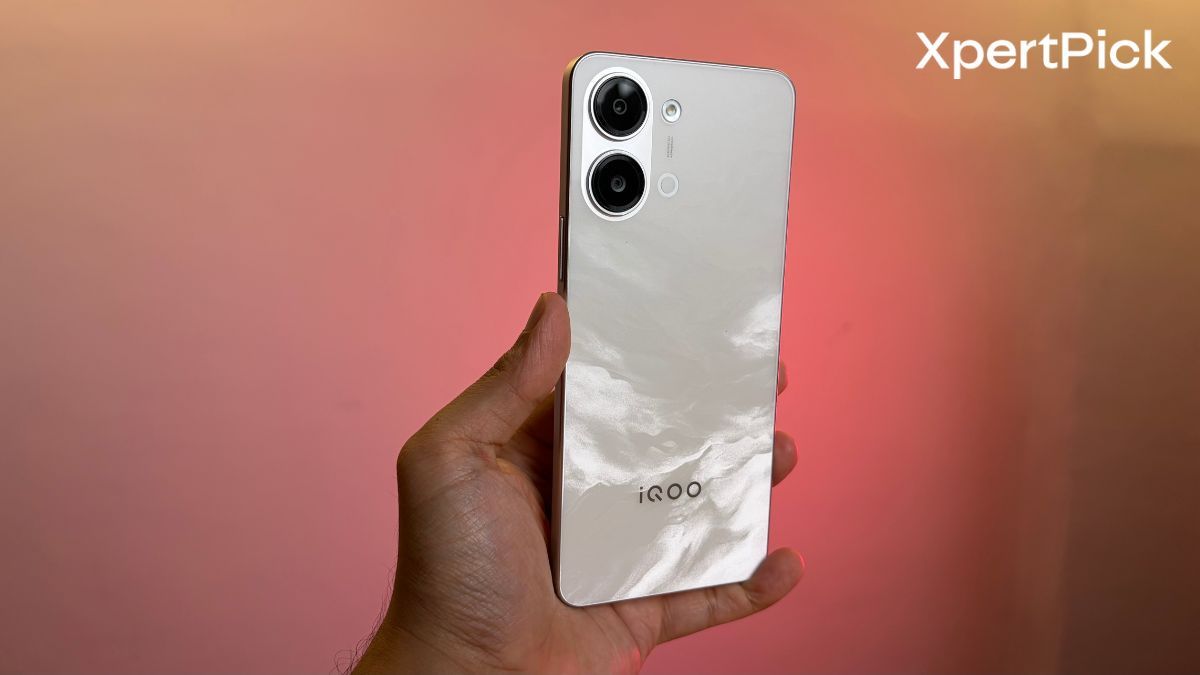
The Z11 Lite squeezes almost 30 hours out of the smallest battery in this comparison, which is a more impressive achievement than it first sounds.
Why We Picked It
The iQOO Z11 Lite is the most efficient phone in this comparison, even though it does not have the largest battery. Its PCMark result of 29h 33min is only four minutes behind the vivo T5x, a difference of 0.2% over a roughly 30-hour test and well within normal run-to-run variation. The two are therefore effectively level on absolute runtime. The Z11 Lite gets there with a 6,500 mAh battery, however, compared with 7,200 mAh in the T5x. Normalised for capacity, it manages 4h 33min per 1,000 mAh versus 4h 07min for the T5x, giving it a 10% efficiency advantage and the best result in this comparison by a clear margin. It also supports 44W charging and costs ₹500 less than the T5x.
The thermal results support that efficiency story. The phone reached just 31.2°C after the 20-loop stress test, matching the coolest result in the group, while maintaining 99.5% stability. For a phone aimed at endurance rather than maximum gaming performance, that combination of low temperatures, sustained stability and efficient power use is more relevant than peak benchmark scores.
Gaming performance is where the Z11 Lite gives up ground. Its 3DMark Wild Life Extreme score of 366 places it firmly in the lower tier, while its Geekbench GPU score of 1,412 is less than half that of the leaders. Geekbench AI shows a similar pattern. Its GPU Half Precision score of 567 and NPU Quantised result of 381 are well behind the Nord CE6 Lite and the two Dimensity 7400-based phones, although the Z11 Lite still has the strongest NPU result among the Dimensity 6300 phones tested here.
There are also some gaps in its lab record. The CPU throttling test produced no valid result, while Genshin Impact and Asphalt 9 were not recorded. The Minecraft figures came from a run affected by chunk-rendering problems at reduced draw distance, as noted in the test results. Those results therefore cannot be compared directly with the corresponding figures from the other phones.
iQOO Z11 Lite Key Specifications
- Price: ₹24,499
- Processor: MediaTek Dimensity 6300 (6nm)
- Display: 6.74-inch HD+ (720 × 1600) LCD, 120Hz refresh rate, 1,200 nits claimed HBM brightness
- Dimensions & Weight: 167.4 × 77.1 × 8.39 mm, 209g
- RAM: 4GB / 6GB LPDDR4X
- Storage: 128GB / 256GB (expandable up to 1TB via microSD)
- Battery: 6,500 mAh
- Charging: 44W FlashCharge
- Rear Camera: 50MP primary (Sony IMX852, f/1.8) + 0.08MP secondary
- Front Camera: 5MP
- IP Rating: IP65 (MIL-STD-810H certified)
iQOO Z11 Lite XP Lab Test Data
- Battery Life (PCMark): 29h 33min
- Runtime per 1,000 mAh: 4h 33min
- AnTuTu Overall Score: 579,955
- Geekbench 6: 730 (Single-Core) | 1,917 (Multi-Core)
- Geekbench GPU Score: 1,412
- Geekbench AI Half Precision Score (GPU): 567
- Geekbench AI Quantised Score (NPU): 381
- PCMark Work 3.0 Score: 9,811
- 3DMark Wild Life Extreme: 366
- 3DMark Stress Test Stability: 99.5%
- CPU Throttling Test Stability: Not available
- Temperature After Stress Test: 31.2°C
- Peak Brightness (measured, auto): 820 nits
- BGMI (Lowest Graphics): 58.9 Average FPS | 47.8 5% Low FPS
- Minecraft (Highest Graphics): 56.6 Average FPS | 31.5 5% Low FPS
Pros: The most efficient phone in this guide by a clear margin, joint-coolest thermals, 99.5% stress stability, and the lowest price among the three ₹24k-plus devices.
Cons: Bottom-tier GPU performance, an HD+ panel at ₹24,499, only a 5MP selfie camera, and several incomplete lab results.
Who Should Buy It: Buyers whose single priority is running all day and most of the next one, on a phone that stays cool doing it.
Who Shouldn’t Buy It: Gamers, and anyone who cares about screen sharpness, an HD+ panel at this price is a hard sell.
Expert Verdict: The endurance specialist of this guide. Its efficiency is genuinely class-leading, but the HD+ display and weak GPU mean you are paying ₹24,499 for battery life and little else.
realme P4x 5G — Best Gaming / Performance & Best Value-For-Money Under ₹25k
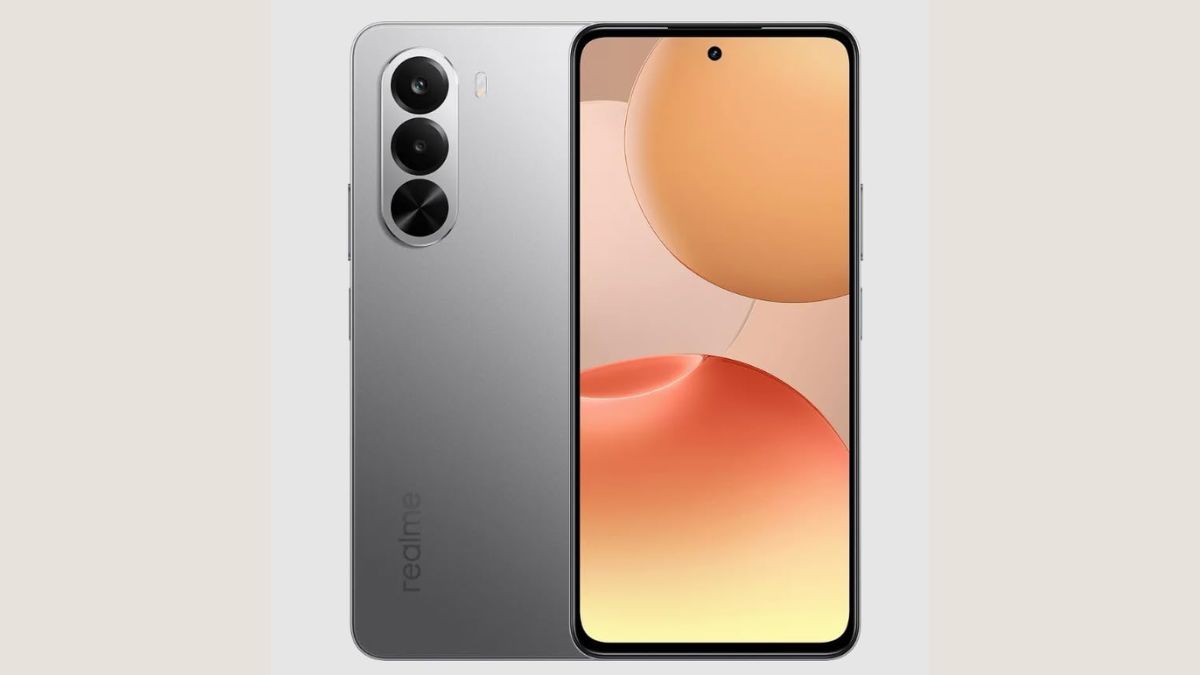
The cheapest phone in this comparison also turned in its fastest silicon, which is an unusual thing to be able to write.
Why We Picked It
The P4x tops the two measurements that matter most for sustained 3D work: a Geekbench GPU score of 3,061 and a 3DMark Wild Life Extreme result of 1,030, both the highest here. Its Geekbench 6 multi-core figure of 2,991 also leads the group, and its AnTuTu total of 966,382 sits within 4% of the far pricier Nord CE6 Lite. In Genshin Impact, the most demanding title in the suite, it averaged 47.3fps with a 5% low of 37.3fps, not just the best average here but a frame floor 7.5fps clear of anything else, meaning it holds up when the scene gets busy rather than collapsing.
It is also outstanding at moving data. Its PCMark Work 3.0 score of 15,838 is 33% ahead of second place, and its PCMark storage result of 31,978 is higher than any other phone here by a similar margin. UFS 3.1 storage does a lot of quiet work in how fast a phone feels day to day.
The value case follows directly. At ₹21,999 it is ₹3,000 below the Nord CE6 Lite and the vivo T5x while matching or beating both on GPU, 3DMark and multi-core CPU. Geekbench AI, which measures the silicon behind on-device photo processing and assistant features, backs that up, 832 Half Precision on the GPU and 2,787 on the NPU Quantised test, second only to the Nord CE6 Lite and roughly seven times what the Dimensity 6300 phones here manage.
The trade-offs are concentrated in two places, and they are not small. Its 702-nit measured brightness is the dimmest reading in this guide, well behind the 973 to 1,060 nits at the top of the table, which matters in Indian daylight. And its 16h 28min PCMark result from a 7,000 mAh cell works out to 2h 21min per 1,000 mAh, second-worst efficiency here, and roughly half what the Z11 Lite achieves. A phone this fast should not be this thirsty.
Its Minecraft result of 16fps average is also flatly inconsistent with its Genshin and 3DMark performance (see notes) and has been excluded from any conclusion drawn above.
realme P4x 5G Key Specifications
- Price: ₹21,999
- Processor: MediaTek Dimensity 7400 Ultra (4nm)
- Display: 6.72-inch FHD+ (1080 × 2400) LCD, 144Hz refresh rate, 1,000 nits claimed peak brightness
- Dimensions & Weight: 165.85 × 75.95 × 8.39 mm, 208g
- RAM: 6GB / 8GB LPDDR4X
- Storage: 128GB / 256GB UFS 3.1 (expandable up to 2TB via microSD)
- Battery: 7,000 mAh typical (6,830 mAh rated)
- Charging: 45W SUPERVOOC (bypass charging supported)
- Rear Camera: 50MP primary (OV50D40, f/1.8) + 2MP monochrome (f/2.4)
- Front Camera: 8MP (f/2.0)
- IP Rating: IP64 (MIL-STD-810H certified)
realme P4x 5G XP Lab Test Data
- Battery Life (PCMark): 16h 28min
- Runtime per 1,000 mAh: 2h 21min
- AnTuTu Overall Score: 966,382
- Geekbench 6: 1,054 (Single-Core) | 2,991 (Multi-Core)
- Geekbench GPU Score: 3,061
- Geekbench AI Half Precision Score (GPU): 832
- Geekbench AI Quantised Score (NPU): 2,787
- PCMark Work 3.0 Score: 15,838
- 3DMark Wild Life Extreme: 1,030
- 3DMark Stress Test Stability: 99.5%
- CPU Throttling Test Stability: 89%
- Temperature After Stress Test: 34.6°C
- Peak Brightness (measured, auto): 702 nits
- BGMI (Lowest Graphics): 59.6 Average FPS | 51.3 5% Low FPS
- Minecraft (Highest Graphics): Anomalous result withheld (see notes)
- Genshin Impact (High + 60fps): 47.3 Average FPS | 37.3 5% Low FPS
- Asphalt 9 (Highest Graphics): 57.8 Average FPS | 26.4 5% Low FPS
Pros: The highest GPU, 3DMark and multi-core scores in this guide, by far the strongest Genshin frame floor, the fastest storage subsystem here, and the lowest price of the eight.
Cons: The dimmest measured panel in the comparison, poor efficiency for a 7,000 mAh cell, and only IP64 sealing.
Who Should Buy It: Gamers, and anyone who wants the most silicon per rupee available under ₹25,000.
Who Shouldn’t Buy It: Buyers who spend their day outdoors or away from a charger, the display and the battery are both real compromises.
Expert Verdict: The performance and value pick of this guide, delivered at the lowest price here. A dim screen and mediocre endurance are the cost of that speed, and you should decide whether you can live with them before you buy.
realme P4R 5G
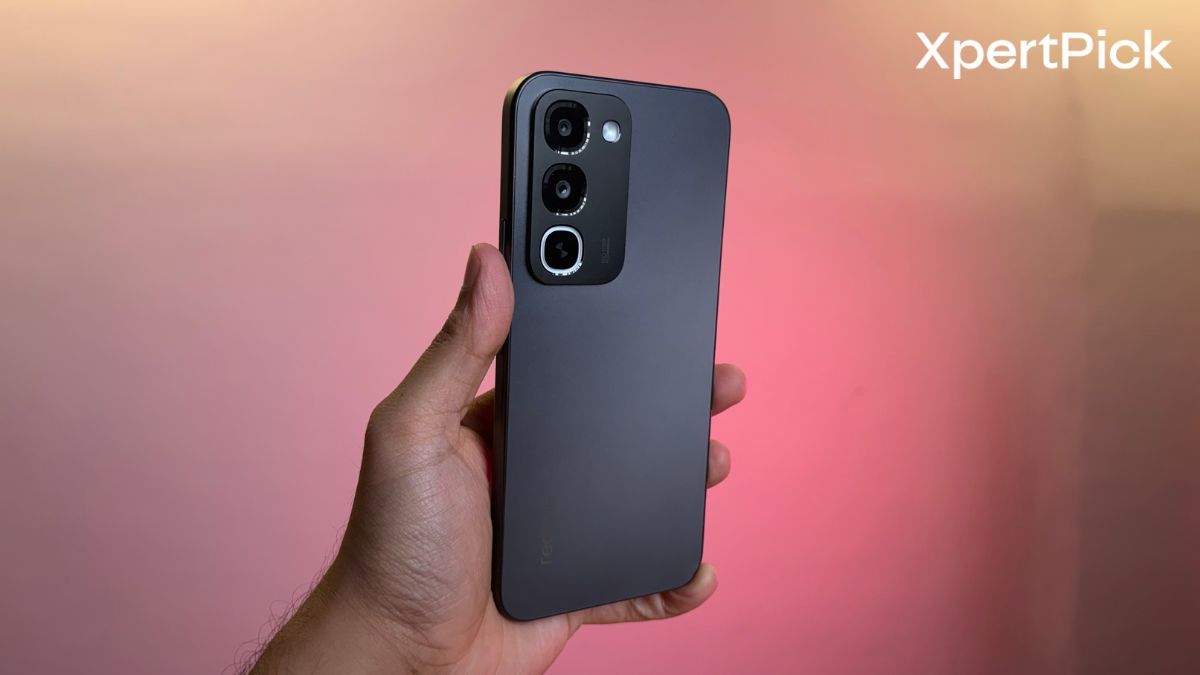
Bright, cool and long-lasting, but the P4R runs out of processing power the moment you ask anything of it.
Why We Didn’t Pick It
The iQOO Z11 Lite has a few clear strengths, starting with its 8,000 mAh battery and bright 144 Hz display. It managed a solid 22-hour PCMark battery result, while its measured brightness of 973 nits was the second-highest in this comparison. It also stayed at 31.2°C after the stress loop, matching the coolest result here, and maintained 99.2% stability. Its BGMI 5% low of 51.6 fps was another strong result, placing second in the group.
Performance outside those areas is considerably weaker. Its AnTuTu score of 599,567 and 3DMark Wild Life Extreme result of 386 put it in the slower half of the comparison. The latter is barely a third of the 1,030 achieved by the realme P4x at the same ₹21,999 price. Geekbench AI is weaker still, with a GPU Half Precision score of 582 and an NPU Quantised result of just 138, the lowest NPU score among all eight phones tested.
The gaming results show where that hardware limitation becomes visible. Genshin Impact averaged 28.6 fps, with the 5% low dropping to 10 fps during demanding sections. Minecraft managed 28.7 fps on average with an 11.6 fps floor. A 144 Hz panel therefore has limited practical value once a demanding 3D workload is involved.
The price makes the performance gap harder to overlook. At ₹21,999, the Z11 Lite costs exactly the same as the realme P4x, which is substantially faster across the performance benchmarks and also delivers much stronger Genshin Impact results. The Z11 Lite makes sense primarily if battery capacity and display brightness carry more weight than sustained performance.
realme P4R 5G Key Specifications
- Price: ₹21,999
- Processor: MediaTek Dimensity 6300 (6nm)
- Display: 6.81-inch HD+ (720 × 1570) LCD, 144Hz refresh rate, 1,200 nits claimed peak brightness
- Dimensions & Weight: 166.4 × 78.2 × 8.8 mm, 224g
- RAM: 4GB / 6GB
- Storage: 128GB / 256GB (expandable via microSD)
- Battery: 8,000 mAh
- Charging: 45W SUPERVOOC (bypass and reverse wired charging supported)
- Rear Camera: 50MP primary
- Front Camera: 8MP
- IP Rating: IP65 (MIL-STD-810H certified)
realme P4R 5G XP Lab Test Data
- Battery Life (PCMark): 22h 00min
- Runtime per 1,000 mAh: 2h 45min
- AnTuTu Overall Score: 599,567
- Geekbench 6: 784 (Single-Core) | 1,978 (Multi-Core)
- Geekbench GPU Score: 1,407
- Geekbench AI Half Precision Score (GPU): 582
- Geekbench AI Quantised Score (NPU): 138
- PCMark Work 3.0 Score: 10,526
- 3DMark Wild Life Extreme: 386
- 3DMark Stress Test Stability: 99.2%
- CPU Throttling Test Stability: 90%
- Temperature After Stress Test: 31.2°C
- Peak Brightness (measured, auto): 973 nits
- BGMI (Lowest Graphics): 59.3 Average FPS | 51.6 5% Low FPS
- Minecraft (Highest Graphics): 28.7 Average FPS | 11.6 5% Low FPS
- Genshin Impact (High + 60fps): 28.6 Average FPS | 10.0 5% Low FPS
- Asphalt 9 (Highest Graphics): 57.7 Average FPS | 26.3 5% Low FPS
Pros: The largest battery here alongside a 22-hour runtime, the second-brightest measured panel, joint-coolest thermals, and a strong BGMI frame floor.
Cons: Weak silicon, the lowest NPU score in the guide, a Genshin frame floor of 10fps, and an HD+ panel behind that 144Hz refresh rate.
Who Should Buy It: Buyers who want a big, bright, cool-running phone for messaging, video and casual games, and who will never open a demanding 3D title.
Who Shouldn’t Buy It: Anyone comparing it with the identically priced P4x, which is faster in every performance measurement taken.
Expert Verdict: A capable everyday phone with a genuine endurance and brightness story, undermined by silicon that cannot keep up and by a rival at the same price that comprehensively outruns it.
OPPO K14
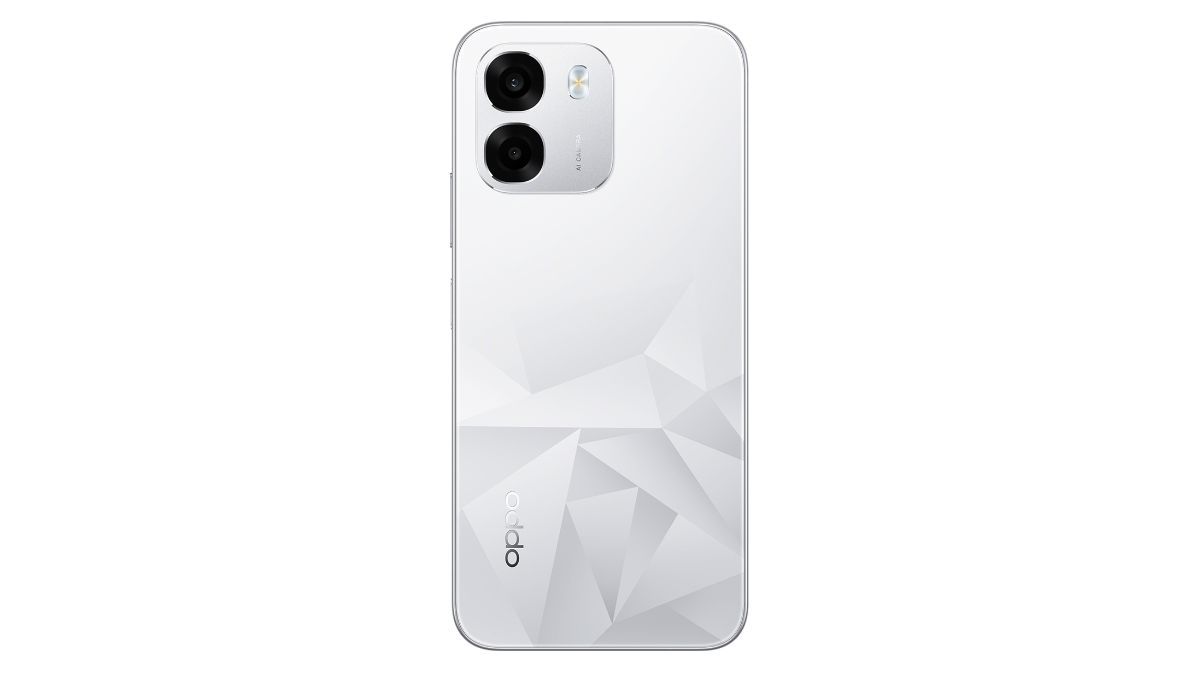
Cool and stable in the lab, but the K14 combines weak performance with the most incomplete test record in this guide.
Why We Didn’t Pick It
The K14 sits firmly in the lower performance tier of this comparison. Its AnTuTu score of 613,106 and 3DMark Wild Life Extreme result of 366 are broadly in line with the other Dimensity 6300 phones tested here, but well behind the three faster devices. Geekbench AI shows a similar pattern. Its GPU Half Precision score of 577 and NPU Quantised result of 210 place it in the bottom third of the group for on-device workloads such as computational photography, editing and assistant features.
Its sustained-load behaviour is relatively stable, with 98.9% stability and a peak temperature of 34.6°C. That stability does not translate into consistent gaming performance, however. Asphalt 9 produced a 5% low of just 4.9 fps, the lowest frame floor recorded in this comparison and low enough to result in visible stuttering. The Genshin Impact test also crashed before producing a valid result.
Battery testing was another limitation. Repeated failures meant no valid PCMark runtime could be recorded, so there is no measured efficiency figure to compare with the other seven phones. That leaves a significant gap in the test data, particularly in this price segment where battery life can be an important part of the buying decision. Manufacturer video-playback claims cannot fill that gap, as they represent a substantially lighter workload than PCMark’s mixed-use test.
The display is similarly difficult to assess because no measured peak brightness was documented in the test records. Its screen performance therefore cannot be compared directly with the other phones in this guide.
OPPO K14 Key Specifications
- Price: ₹23,999
- Processor: MediaTek Dimensity 6300 (6nm)
- Display: 6.75-inch HD+ (720 × 1570) LCD, 120Hz refresh rate, 1,125 nits claimed peak brightness
- Dimensions & Weight: 166.6 × 78.5 × 8.6 mm, 216g
- RAM: 6GB / 8GB LPDDR4X
- Storage: 128GB / 256GB UFS 2.2 (expandable up to 1TB via microSD)
- Battery: 7,000 mAh
- Charging: 45W SUPERVOOC
- Rear Camera: 50MP primary (f/1.8) + 2MP portrait (f/2.4)
- Front Camera: 8MP (f/2.0)
- IP Rating: IP69
OPPO K14 XP Lab Test Data
- Battery Life (PCMark): Not recorded (test failed repeatedly)
- Runtime per 1,000 mAh: Not available
- AnTuTu Overall Score: 613,106
- Geekbench 6: 792 (Single-Core) | 2,043 (Multi-Core)
- Geekbench GPU Score: 1,406
- Geekbench AI Half Precision Score (GPU): 577
- Geekbench AI Quantised Score (NPU): 210
- PCMark Work 3.0 Score: 7,863
- 3DMark Wild Life Extreme: 366
- 3DMark Stress Test Stability: 98.9%
- CPU Throttling Test Stability: 92%
- Temperature After Stress Test: 34.6°C
- Peak Brightness (measured, auto): Not documented
- BGMI (Lowest Graphics): 58.5 Average FPS | 40.7 5% Low FPS
- Minecraft (Highest Graphics): 53.1 Average FPS | 18.7 5% Low FPS
- Genshin Impact (High + 60fps): Not recorded (run crashed)
- Asphalt 9 (Highest Graphics): 46.4 Average FPS | 4.9 5% Low FPS
Pros: Cool under sustained load, stable through the stress loop, a large 7,000 mAh cell, and IP69 sealing.
Cons: The worst frame floor in this guide at 4.9fps, a crashed Genshin run, no verified battery result, and the lowest BGMI 5% low here.
Who Should Buy It: Buyers who want a large-battery phone strictly for light everyday use and are willing to accept unverified endurance.
Who Shouldn’t Buy It: Gamers, and anyone who wants a battery figure that has actually been measured rather than claimed.
Expert Verdict: Stable and cool, but with the thinnest lab record of any phone here. Two failed tests and a 4.9fps frame floor keep it off the recommended list.
REDMI 15C 5G
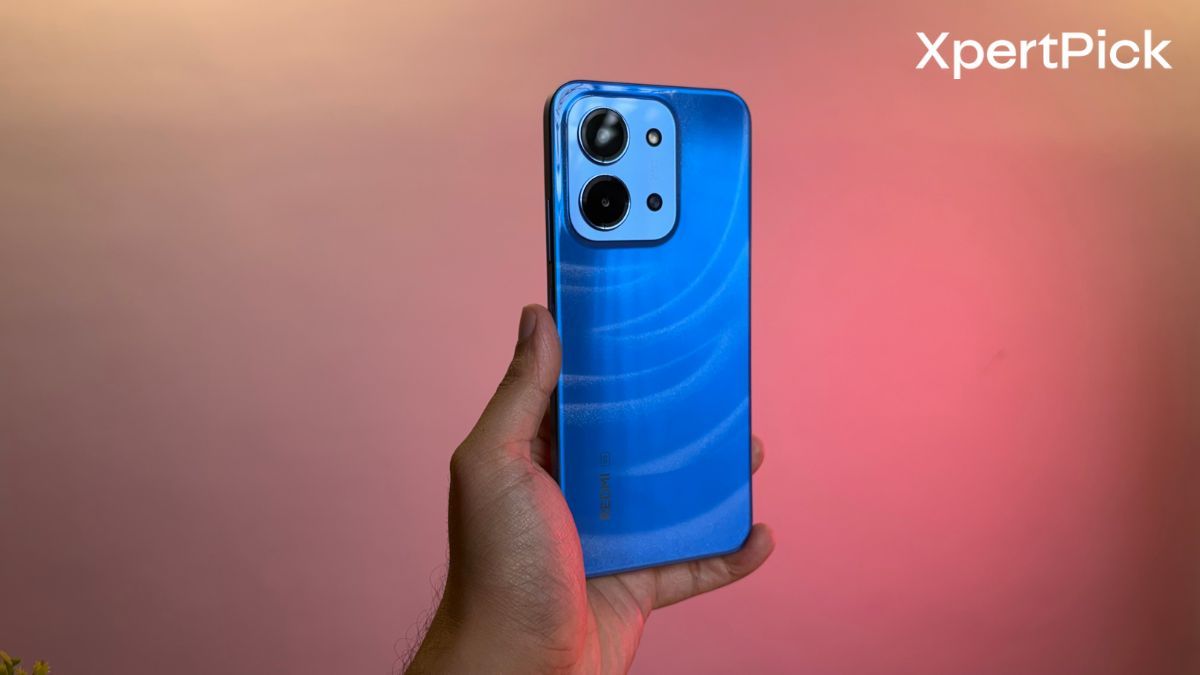
The 15C is the coolest-running phone in this comparison and the shortest-lasting, which is an awkward combination to build a case around.
Why We Didn’t Pick It
The biggest weakness of the REDMI 15C is endurance. Its 14h 1min PCMark result is the shortest in this comparison by more than two hours, while its 6,000 mAh battery is also the smallest here. At 2h 20min per 1,000 mAh, it records the lowest battery efficiency in the group. For context, the iQOO Z11 Lite lasts more than 15 hours longer in the same test, despite being in the same broad price segment.
Performance does little to make up for that shortfall. Its AnTuTu score of 574,213 is the lowest recorded here, while its 3DMark Wild Life Extreme result of 361 places it alongside the other entry-level devices in this comparison. Geekbench AI is similarly weak, with GPU and NPU scores of 561 and 202 respectively in Half Precision and Quantised testing. Both are the lowest results among the eight phones, indicating limited headroom for workloads such as computational photography and other on-device AI features.
There are a couple of positives. The phone reached just 30.4°C after the stress test, the lowest temperature recorded in the group, while its measured brightness of 940 nits makes it the third-brightest panel here. The display itself is less convincing, however. It uses an HD+ resolution across a large 6.9-inch panel, giving it roughly 254 pixels per inch. Text and fine details therefore look noticeably softer than on the higher-resolution screens in this comparison.
Gaming results expose the performance limitations further. Genshin Impact averaged 31.3 fps, but its 5% low fell to just 1.4 fps, representing a complete stall rather than a minor drop in frame rate. Its BGMI 5% low of 43.6 fps was also the second-lowest result in the comparison.
REDMI 15C 5G Key Specifications
- Price: ₹21,999
- Processor: MediaTek Dimensity 6300
- Display: 6.9-inch HD+ (720 × 1600) IPS LCD, 120Hz refresh rate, 810 nits claimed HBM brightness
- Dimensions & Weight: 171.56 × 79.49 × 7.99 mm, 211g
- RAM: 4GB / 6GB / 8GB LPDDR4X
- Storage: 128GB UFS 2.2 (expandable up to 1TB via microSD)
- Battery: 6,000 mAh
- Charging: 33W wired
- Rear Camera: 50MP AI dual camera
- Front Camera: 8MP
- IP Rating: IP64
REDMI 15C 5G XP Lab Test Data
- Battery Life (PCMark): 14h 01min
- Runtime per 1,000 mAh: 2h 20min
- AnTuTu Overall Score: 574,213
- Geekbench 6: 732 (Single-Core) | 1,888 (Multi-Core)
- Geekbench GPU Score: 1,397
- Geekbench AI Half Precision Score (GPU): 561
- Geekbench AI Quantised Score (NPU): 202
- PCMark Work 3.0 Score: 9,470
- 3DMark Wild Life Extreme: 361
- 3DMark Stress Test Stability: 98.4%
- CPU Throttling Test Stability: 95%
- Temperature After Stress Test: 30.4°C
- Peak Brightness (measured, auto): 940 nits
- BGMI (Lowest Graphics): 58.6 Average FPS | 43.6 5% Low FPS
- Minecraft (Highest Graphics): 39.0 Average FPS | 17.9 5% Low FPS
- Genshin Impact (High + 60fps): 31.3 Average FPS | 1.4 5% Low FPS
- Asphalt 9 (Highest Graphics): 56.6 Average FPS | 19.7 5% Low FPS
Pros: The coolest phone in this comparison, the best CPU throttling stability at 95%, a large 6.9-inch screen, and expandable storage.
Cons: The lowest AnTuTu score and the shortest battery life here, an HD+ panel at 254ppi, a 1.4fps Genshin frame floor, and slow 33W charging.
Who Should Buy It: Buyers who want the largest screen here for video and reading, and who charge daily without complaint.
Who Shouldn’t Buy It: Almost anyone shopping at ₹21,999, the realme P4x and P4R both cost the same and comfortably outperform it.
Expert Verdict: Cool and stable, but last or near-last on performance, endurance and efficiency. At this price it is outclassed by two phones carrying identical price tags.
OnePlus N6
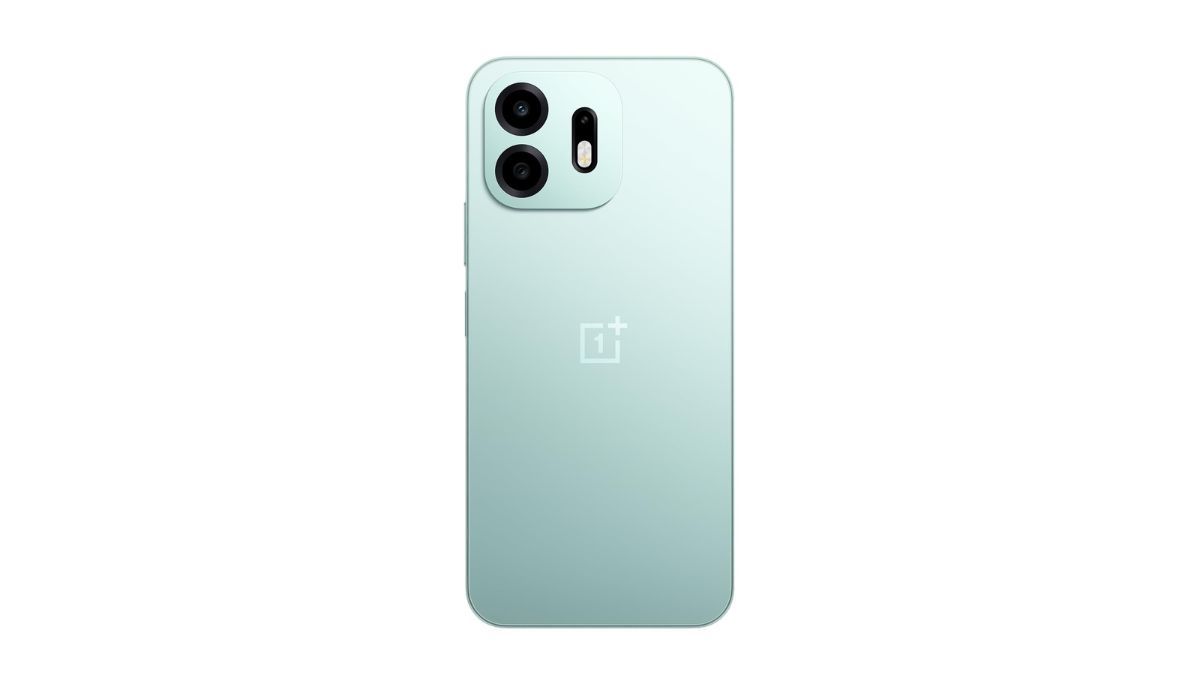
The N6 is priced within ₹1 of the Nord CE6 Lite that shares its brand, and the two could not be further apart in what they deliver.
Why We Didn’t Pick It
The OnePlus N6 has the battery capacity to look promising on paper, but its test results do little to support that impression. Its 8,000 mAh cell is joint-largest in this comparison, yet the PCMark battery test failed on this unit, leaving no verified runtime or efficiency figure. That makes the capacity a specification rather than a measured advantage.
The performance results are similarly weak. Its AnTuTu score of 588,702 is the second-lowest here, while its 3DMark Wild Life Extreme result of 360 is the lowest. Its PCMark Work 3.0 score of 7,685 and storage score of 10,253 are also the weakest in the group. The latter is particularly relevant to everyday use, as slow storage can show up in app launches and file handling even when it is difficult to isolate in a single benchmark. Geekbench AI adds another poor result, with a GPU Half Precision score of 573 and an NPU Quantised score of 139, the second-lowest figures in the comparison.
Thermal performance is one of the few positives. The N6 reached 32.9°C after the stress run, which is relatively cool, but the lack of a valid battery result means there is little evidence that this efficiency extends beyond sustained-load testing.
The display is another weakness. Its measured brightness of 820 nits is joint-lowest here, while Asphalt 9 produced a 5% low of just 12.3 fps. The Minecraft run was also affected by chunk-rendering failures at reduced draw distance, as noted in the test data, so it cannot be compared directly with the other phones.
The price makes the result particularly difficult to justify. At ₹24,998, the N6 costs just ₹1 less than the OnePlus Nord CE6 Lite, which records 70% more in AnTuTu, nearly three times the 3DMark score, a verified 24-hour PCMark battery result and a panel that is 240 nits brighter. At effectively the same price, the N6 has very little measurable advantage over its own-brand alternative.
OnePlus N6 Key Specifications
- Price: ₹24,998
- Processor: MediaTek Dimensity 6360 Apex (6nm)
- Display: 6.8-inch HD+ (720 × 1570) LCD, 120Hz refresh rate, 1,200 nits claimed peak brightness
- Dimensions & Weight: 166.5 × 78.2 × 8.9 mm, 224g
- RAM: 4GB / 6GB LPDDR4X
- Storage: 128GB UFS 2.2 (expandable via microSD)
- Battery: 8,000 mAh
- Charging: 45W SUPERVOOC (5W reverse wired and bypass charging supported)
- Rear Camera: 50MP primary (f/1.8)
- Front Camera: 8MP (f/2.0)
- IP Rating: IP65 (MIL-STD-810H certified)
OnePlus N6 XP Lab Test Data
- Battery Life (PCMark): Not recorded (test failed)
- Runtime per 1,000 mAh: Not available
- AnTuTu Overall Score: 588,702
- Geekbench 6: 753 (Single-Core) | 2,005 (Multi-Core)
- Geekbench GPU Score: 1,398
- Geekbench AI Half Precision Score (GPU): 573
- Geekbench AI Quantised Score (NPU): 139
- PCMark Work 3.0 Score: 7,685
- 3DMark Wild Life Extreme: 360
- 3DMark Stress Test Stability: 98.4%
- CPU Throttling Test Stability: 92%
- Temperature After Stress Test: 32.9°C
- Peak Brightness (measured, auto): 820 nits
- BGMI (Lowest Graphics): 59.1 Average FPS | 49.2 5% Low FPS
- Minecraft (Highest Graphics): 57.1 Average FPS | 32.0 5% Low FPS
- Genshin Impact (High + 60fps): 39.0 Average FPS | 22.9 5% Low FPS
- Asphalt 9 (Highest Graphics): 56.1 Average FPS | 12.3 5% Low FPS
Pros: An 8,000 mAh battery, cool operation under load, and expandable storage.
Cons: The lowest 3DMark, PCMark Work and storage scores in this guide, a joint-dimmest 820-nit panel, and no verified battery runtime.
Who Should Buy It: Buyers committed to this specific model for light, undemanding daily use.
Who Shouldn’t Buy It: Anyone who can spend ₹1 more on the Nord CE6 Lite, which is faster, brighter and has a measured battery result.
Expert Verdict: Priced ₹1 below a far better phone from the same brand. Its large cell never produced a verified runtime, and everything else here sits at or near the bottom of the table.
Frequently Asked Questions (FAQs)
Which is the best phone under ₹25,000 overall?
The OnePlus Nord CE6 Lite. It is the only phone here to clear a million points in AnTuTu, it has the brightest measured display at 1,060 nits, it lasted 24 hours on PCMark and it holds the best frame floors in BGMI and Asphalt 9. Running warm at 39.6°C is its one meaningful weakness.
Which phone under ₹25,000 is best for gaming?
The realme P4x 5G, at ₹21,999. It posted the highest GPU and 3DMark scores here and averaged 47.3fps in Genshin Impact with a 37.3fps 5% low, a frame floor 7.5fps clear of anything else in this comparison.
Which phone under ₹25,000 has the best battery life?
The vivo T5x recorded the longest single runtime at 29h 37min, with the iQOO Z11 Lite four minutes behind at 29h 33min. Those two are effectively tied, but the Z11 Lite reached that figure from a 6,500 mAh cell against the T5x’s 7,200 mAh, which makes it the more efficient phone by roughly 10%.
Does a bigger battery mean a longer-lasting phone at this price?
The opposite, in this group. The two 8,000 mAh phones here, the realme P4R and OnePlus N6, returned 22 hours and no verified result respectively, while the 6,500 mAh iQOO Z11 Lite ran for nearly 30. Chipset efficiency and software tuning decide runtime far more than capacity does.
Can you get an AMOLED display under ₹25,000?
Not among the eight phones tested for this guide, every one uses an LCD panel. The best screen here is the Nord CE6 Lite’s 144Hz FHD+ LCD at 1,060 measured nits, which is bright but will not match AMOLED contrast in dark scenes.
Is the ₹3,000 gap between the cheapest and priciest phones here worth paying?
Not automatically. The realme P4x at ₹21,999 beat the ₹24,999 phones on GPU, 3DMark and multi-core CPU. What the extra money buys is a brighter screen, longer battery life or a better front camera, depending on which phone you pick, not more processing power.
Why Trust XpertPick
No recommendation on this page comes from a press release or a manufacturer’s claimed figure. Everything here was measured.
Independent testing: All eight phones were benched in-house on retail units bought or supplied for review, running shipping software. No manufacturer-provided performance data entered the analysis.
Standardised conditions: Identical benchmark, stress, gaming and battery suites, run at 28°C ambient on the top variant of each device, so the comparison holds.
Layered methodology: Peak scores, twenty-loop sustained load, logged frame times across four games and full battery rundowns, because two phones with the same chipset routinely behave nothing alike once heat and time enter the picture.
Transparent about data: Every metric published here is drawn directly from our verified XP Lab test logs. We present the exact figures recorded during our evaluations without rounding up, altering unfavorable results, or relying on manufacturer-supplied estimates.