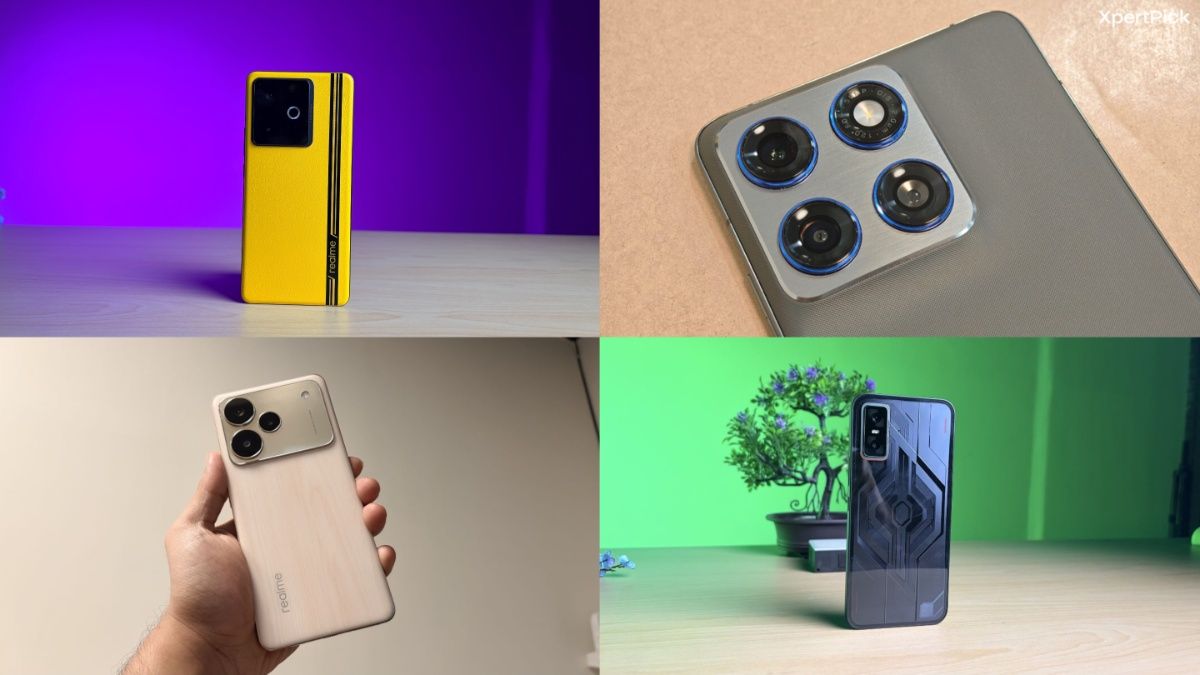
If battery anxiety is the one thing you refuse to live with, you’ve come to the right place. We’ve put the most competitive big-battery smartphones under ₹30,000 through a rigorous series of battery, thermal, charging, and real-world endurance tests to find out which ones truly go the distance.
Phones Tested
To find the best battery-focused smartphone under ₹30,000, we put eight devices through an extensive series of battery benchmarks, sustained performance tests, thermal measurements, and real-world gaming and streaming workloads. The comparison includes the Motorola Edge 70, Realme GT 7T, Infinix GT 30 5G, Realme P4 Pro, Redmi Note 15, OnePlus Nord CE6 Lite, Moto Edge 70 Fusion, and Nothing Phone (3a) Lite. Rather than relying on mAh figures alone, which, as our results show, can be deeply misleading, this roundup measures how long each phone actually lasts, how efficiently it uses its battery, and how well it holds up under sustained load.
Our Top Picks at a Glance
| Category | My Pick | Price | Why We Picked It |
| Best Overall Battery Life | OnePlus Nord CE6 Lite | ₹25,690 | Set a record-breaking 24h 00m PCMark runtime and unmatched efficiency of 3h 26m per 1,000 mAh while offering a 6-year battery health guarantee. |
| Best for Biggest Battery (mAh) | Realme P4 Pro | ₹26,999 | Masterclass in industrial packaging, cramming a colossal 7,000 mAh physical battery into an impossibly slim 7.68mm, 189g chassis. |
| Best Fast Charging | Realme GT 7T | ₹29,999 | Combines a massive 7,000 mAh dual-cell setup with blistering 120W SuperVOOC speeds that refill the entire battery in well under an hour. |
| Best Endurance for Gaming / Streaming | Moto Edge 70 Fusion | ₹30,999 | Drives a gorgeous, ultra-bright 5,200-nit 144Hz AMOLED display for 22h 00m flat while maintaining a rock-solid 99.3% stress stability. |
| Best Efficient Chipset for Backup | Nothing Phone (3a) Lite | ₹24,999 | Squeezes an elite 3h 37m of runtime per 1,000 mAh from its 5,000 mAh setup, maintaining the group’s coolest post-stress temperature at 32.4°C. |
| Best Value Battery Pick | Redmi Note 15 | ₹24,990 | Delivers a long-lasting, 1,600-cycle-rated 5,520 mAh cell with an impressive 17h 53m PCMark score at the group’s lowest entry price. |
Battery Benchmark Comparison: Test Results and Performance Analysis
| Test / Metric | OnePlus Nord CE6 Lite | Realme P4 Pro | Realme GT 7T | Moto Edge 70 Fusion | Nothing Phone (3a) Lite | Redmi Note 15 |
|---|---|---|---|---|---|---|
| Recommendation | Best overall battery life under ₹30k | Best for biggest battery (mAh) under ₹30k | Best fast charging under ₹30k | Best endurance for gaming / streaming under ₹30k | Best efficient chipset for backup under ₹30k | Best value battery pick under ₹30k |
| Price | ₹25,690 | ₹26,999 | ₹29,999 | ₹30,999 | ₹24,999 | ₹24,990 |
| Battery Capacity | 7,000 mAh 🏆 | 7,000 mAh 🏆 | 7,000 mAh 🏆 | 7,000 mAh (Si/C) 🏆 | 5,000 mAh | 5,520 mAh (Si/C) |
| Charging Speed | 45W | 80W | 120W 🏆 | 68W | 33W | 45W |
| Battery Life (PCMark) | 24h 0min 🏆 | 19h 14min | 18h 22min | 22h 0min | 18h 3min | 17h 53min |
| Runtime per 1,000 mAh | 3h 26min | 2h 45min | 2h 37min | 3h 9min | 3h 37min 🏆 | 3h 14min |
| AnTuTu Overall | 1,001,250 | 1,009,232 | 2,127,058 🏆 | 1,156,810 | 929,009 | 834,308 |
| Geekbench (Single / Multi) | 1,009 / 2,974 | 1,193 / 3,506 | 1,595 / 6,248 🏆 | 1,263 / 3,417 | 1,009 / 2,986 | 1,018 / 2,964 |
| 3DMark Wild Life Extreme | 1,017 | 1,813 | 4,094 🏆 | 1,182 | 857 | 861 |
| 3DMark Stress Stability | 99.4% | 99.3% | 73.3% | 99.3% | 99.6% 🏆 | 99.5% |
| CPU Throttling Stability | 86% | 87% | 68% | 88% | 94% 🏆 | 94% 🏆 |
| Temp After Stress Test | 39.6°C | 40.8°C | 42.8°C | 37.2°C | 32.4°C 🏆 | 36.6°C |
| BGMI (Avg / 5% Low FPS) | 59.5 / 55.0 | 73.0 / 61.2 | 96.5 / 81.2 🏆 | 89.0 / 59.9 | 93.1 / 56.5 | 58.2 / 50.2 |
| Minecraft (Avg / 5% Low FPS) | 34.7 / 16.7 | 43.5 / 23.9 | 58.1 / 39.7 🏆 | 31.6 / 19.7 | 33.1 / 20.3 | 37.0 / 19.7 |
This table highlights our six recommended battery smartphones, each selected for a specific category. While we tested eight smartphones in total, this comparison focuses on the devices that emerged as the top performers under the ₹30,000 price limit. Detailed benchmark results, full specifications, and a breakdown of each phone’s strengths and limitations are provided in the dedicated sections below.
How I Tested These Battery Smartphones
After years of testing smartphones, one thing has become clear to me: the mAh number on the box rarely tells the full story. A phone with a 7,000 mAh battery can post a shorter runtime than a well-optimised 5,000 mAh rival, and a chipset that throttles or runs hot will quietly eat through a charge no matter how big the cell is. Silicon-carbon battery tech has made huge capacities common under ₹30,000 — four of the eight phones in this comparison pack 7,000 mAh — which makes efficiency, not capacity, the real differentiator.
That is why I look at four key areas for every phone: measured battery runtime, runtime efficiency (how many hours each phone extracts per 1,000 mAh of capacity), thermal and sustained-performance behaviour, and real-world gaming and streaming endurance. In many cases, the results differ dramatically from what the spec sheet suggests.
Test Conditions: All testing is conducted on retail units running publicly available software in a controlled environment with an ambient temperature of 28°C. Wherever possible, I use the highest-specification variant available. No manufacturer-supplied performance data is included in my analysis.
Battery Testing: Battery life is measured using PCMark Work 3.0 at a fixed 50% screen brightness, run overnight. Unlike simple video playback tests, this benchmark simulates a realistic mix of productivity, browsing, and media workloads, offering a more accurate picture of day-to-day battery endurance. From this I also derive a runtime-per-1,000 mAh figure, which reveals how efficiently each chipset and software stack uses the battery it’s given.
Sustained Performance Testing: A battery phone is only as good as its efficiency under load. I run the 3DMark Wild Life Extreme Stress Test for 20 loops and a dedicated 15-minute CPU throttling test, and I record device temperature after the stress run. Cool, stable phones waste less energy as heat — and their batteries age slower.
Performance Benchmarks: To establish each device’s performance envelope, I use AnTuTu v10 and Geekbench 6. A battery phone still needs to be pleasant to use.
Gaming Tests: Gaming and streaming endurance is evaluated using BGMI and Minecraft, each run for extended sessions while logging frame-time data, since these sustained workloads are exactly what drains batteries fastest in the real world.
This testing methodology reflects the latest smartphone launches, software updates, benchmark results, and Indian market pricing available as of July 2026. Prices are subject to change over time.
OnePlus Nord CE6 Lite – Best Overall Battery Life Under ₹30k
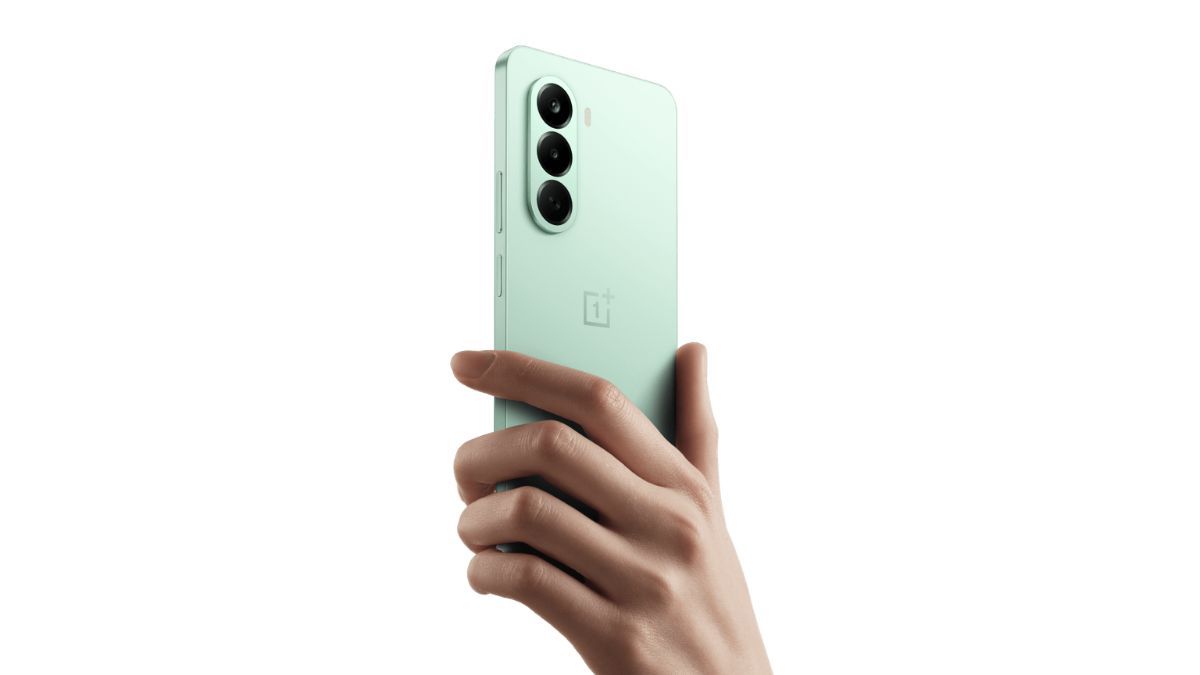
Battery life is where the OnePlus Nord CE6 Lite truly stands apart. Its 7,000 mAh battery delivered the longest runtime in our testing, making it our top battery recommendation under ₹30,000.
Why We Picked It
If a single number decided this comparison, the OnePlus Nord CE6 Lite would win it: 24 hours and 0 minutes in the PCMark Work 3.0 battery test, the longest runtime of any phone we tested, and a full 2 hours ahead of its nearest rival. Its 7,000 mAh single-cell battery, paired with the efficient 4nm MediaTek Dimensity 7400 Apex and a power-sipping LCD panel, simply refuses to die.
The endurance doesn’t come with fragility either. The Nord CE6 Lite held 99.4% stability in the 20-loop 3DMark stress test with 86% CPU throttling stability, staying at a reasonable 39.6°C, and OnePlus backs the cell with a 6-year battery health promise and bypass charging to reduce heat during long sessions. Performance is modest (1,001,250 on AnTuTu, ~60 FPS in BGMI), so this isn’t a phone for competitive high-frame-rate gaming, but for calls, streaming, navigation and two-to-three days of regular use per charge, nothing under ₹30,000 lasts longer. The main trade-off is the 45W charging, which is leisurely for a battery this size.
OnePlus Nord CE6 Lite Key Specifications
OnePlus Nord CE6 Lite XP Lab Data
OnePlus Nord CE6 Lite Pros & Cons
Pros: The longest measured battery life of any phone in this comparison (24h 0min in PCMark) from a 7,000 mAh cell, with a 6-year battery health promise, bypass charging, MIL-STD-810H durability and clean OxygenOS 16, all at ₹20,999.
Cons: The LCD panel can’t match its AMOLED rivals for contrast and outdoor punch, performance is strictly entry-level, and 45W charging means long top-up times for such a big battery.
Who Should Buy It
The OnePlus Nord CE6 Lite is ideal for buyers who value battery life above everything else. Its 7,000 mAh battery, clean OxygenOS experience, and durable design make it an excellent choice for commuters, frequent travellers, delivery professionals, and anyone who wants to go days between charges.
Who Shouldn’t Buy It
If gaming performance or fast charging is a priority, there are better options. The 45W charging speed is slower than many rivals, while the entry-level chipset and LCD display make it less appealing for demanding games and media enthusiasts.
Expert Verdict: The OnePlus Nord CE6 Lite delivers the best battery life in this comparison. While it makes compromises in display quality, charging speed, and performance, its exceptional endurance, dependable software, and long-term battery health make it the easiest recommendation for buyers who simply want a phone that lasts as long as possible on a single charge.
Realme P4 Pro – Best for Biggest Battery (mAh) Under ₹30k

The Realme P4 Pro strikes an excellent balance between battery capacity and portability. It combines a 7,000 mAh battery with a slim design and fast charging, making it one of the most practical phones under ₹30,000.
Why We Picked It
Four phones in this comparison pack a 7,000 mAh battery, but the Realme P4 Pro is the one that makes that enormous capacity feel effortless. At just 7.68mm thick and 189g, it is the slimmest, lightest way to carry 7,000 mAh under ₹30,000, you get the tank without the brick, and that Titan cell translated into a strong 19 hours and 14 minutes in our PCMark test, the second-best result among the 7,000 mAh phones here.
The rest of the package supports the battery story rather than fighting it. The Snapdragon 7 Gen 4 held 99.3% stability in the 3DMark stress test with 87% CPU throttling stability, its 80W Ultra Charge refills the huge cell quickly (with bypass charging to keep heat down while gaming), and the 6.8-inch 144Hz quad-curved AMOLED, rated up to 6,500 nits peak, is the nicest display of our six picks. Gaming sits in the comfortable middle (73 FPS average in BGMI). If your priority is the biggest possible battery in a phone that still looks and feels premium, this is the pick.
Realme P4 Pro Key Specifications
Realme P4 Pro XP Lab Data
Realme P4 Pro Pros & Cons
Pros: A full 7,000 mAh in the slimmest, lightest body of any big-battery phone here (7.68mm / 189g), 19h 14min of measured runtime, quick 80W charging, and the best display of our six picks.
Cons: LPDDR4X RAM and UFS 3.1 storage are cost-cutting choices, runtime efficiency per mAh trails the smaller-battery picks, and Realme’s software ships with bloatware that needs a cleanup.
Who Should Buy It
The Realme P4 Pro is ideal for buyers who want a large battery without compromising on design. Its slim chassis, 7,000 mAh battery, and vibrant 144 Hz curved AMOLED display make it a great choice for everyday users who want long battery life in a premium-looking smartphone.
Who Shouldn’t Buy It
If maximum efficiency or the fastest storage is your priority, there are better options. The use of LPDDR4X RAM and UFS 3.1 storage means it falls behind some rivals in overall responsiveness, while Realme’s pre-installed apps may not appeal to buyers who prefer a cleaner software experience.
Expert Verdict: The Realme P4 Pro successfully combines a large 7,000 mAh battery with a slim, lightweight design, something few phones in this segment manage. Strong battery life, stable gaming performance, and fast 80W charging make it one of the most well-rounded battery phones under ₹30,000, provided you can overlook the software and older memory standards.
Realme GT 7T – Best Fast Charging Under ₹30k
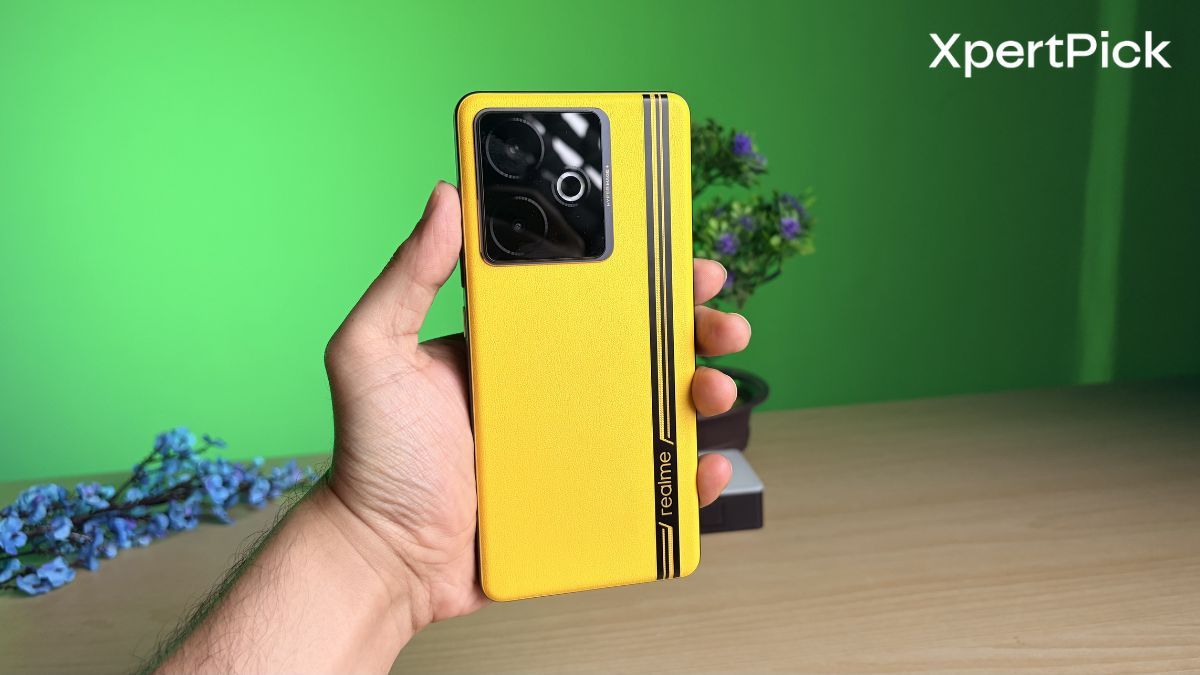
The Realme GT 7T stands out by pairing one of the fastest charging systems in its class with flagship-level performance. Its 7,000 mAh battery and 120W charging make it our top fast-charging recommendation under ₹30,000.
Why We Picked It
Nothing under ₹30,000 refills a battery like the Realme GT 7T. Its 120W SuperVOOC charging is nearly double the wattage of anything else in this comparison, taking the massive 7,000 mAh dual-cell battery from empty to full in well under an hour, a few minutes plugged in over breakfast genuinely buys you hours of use. That charging headroom pairs with a strong 18 hours and 22 minutes in our PCMark test, so you get both endurance and near-instant recovery.
It’s also, by a distance, the most powerful phone here. The Dimensity 8400 Max posted 2,127,058 on AnTuTu, more than double most of this group, and delivered the best gaming results of the comparison: 96.5 FPS average in BGMI with an 81.2 FPS 5% Low, plus a group-best 58.1 FPS in Minecraft. The trade-off is thermals: its 73.3% 3DMark stress stability and 68% CPU throttling stability are the weakest of our six picks, and it ran hottest at 42.8°C after the stress test. At around ₹29,999 (down from its ₹34,999 launch price), it just squeezes under the budget, a battery phone for people who also refuse to compromise on speed.
Realme GT 7T Key Specifications
- Price: ₹29,999 (current; launched at ₹34,999)
- Processor: MediaTek Dimensity 8400 Max
- Display: 6.8-inch AMOLED (120Hz) | up to 6,000 nits peak
- RAM: 8GB / 12GB LPDDR5X
- Storage: 256GB / 512GB UFS 4.0
- Battery: 7,000 mAh (dual-cell)
- Charging: 120W SuperVOOC with bypass charging
- Rear Camera: 50MP Main (OIS) + 8MP Ultra-Wide
- Front Camera: 32MP Selfie
Realme GT 7T XP Lab Data
Realme GT 7T Pros & Cons
Pros: Unmatched 120W charging on a 7,000 mAh battery, 18h 22min of measured runtime, and by far the strongest performance of the group (2.1M AnTuTu, 96.5 FPS in BGMI) — the only pick here that’s a genuine gaming phone too.
Cons: The weakest sustained stability of our picks (73.3% in the 3DMark stress test, 68% CPU throttling) and the hottest stress-test temperature (42.8°C); it’s also the heaviest (202g) and priciest phone in this list, sitting right at the budget ceiling.
Who Should Buy It
The Realme GT 7T is ideal for buyers who want both fast charging and flagship-level performance. Its 120W charging minimises time spent plugged in, while the powerful chipset and 7,000 mAh battery make it a great choice for gamers, power users, and anyone with demanding daily workloads.
Who Shouldn’t Buy It
If you prefer a phone that stays cool under sustained workloads or want a lighter device, there are better alternatives. The GT 7T runs noticeably warm during extended gaming sessions, and buyers focused on efficiency may be better served by options such as the OnePlus Nord CE6 Lite.
Expert Verdict: The Realme GT 7T successfully combines a large 7,000 mAh battery with exceptionally fast 120W charging, eliminating one of the biggest drawbacks of high-capacity phones. While it runs warmer than some rivals, its flagship-grade performance, excellent battery life, and rapid charging make it one of the strongest all-round choices under ₹30,000.
Moto Edge 70 Fusion – Best Endurance for Gaming / Streaming Under ₹30k
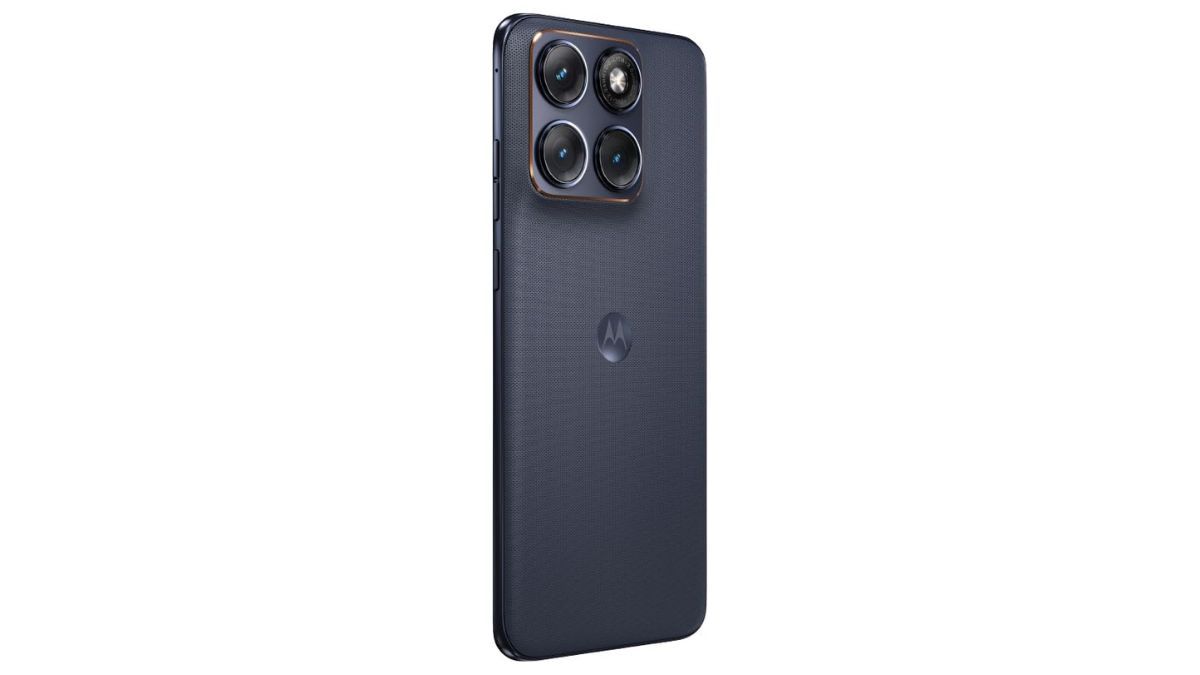
The Moto Edge 70 Fusion is built for buyers who spend hours gaming or streaming on their phones. Its long battery life, stable performance, and excellent AMOLED display earn it our recommendation for gaming and streaming endurance under ₹30,000.
Why We Picked It
Long battery life is easy when a phone is idling; the Moto Edge 70 Fusion is the pick that keeps going when you’re actually hammering it. It ran for 22 hours flat in our PCMark test, the second-longest result of all eight phones, while its Snapdragon 7s Gen 4 held a genuinely playable 89 FPS average in BGMI with 99.3% stability in the 20-loop 3DMark stress test and only 37.2°C on the back afterwards. That combination, big runtime, real frame rates, no thermal fade, is exactly what marathon gaming and binge-streaming sessions demand.
It’s just as well equipped for the streaming half of the brief. The 6.78-inch 1.5K quad-curved AMOLED refreshes at 144Hz and peaks at a searing 5,200 nits with HDR10+ support, and the 7,000 mAh silicon-carbon cell hides inside a 7.99mm, 193g body with IP68/IP69 protection. When you finally do run dry, the bundled 68W TurboPower charger gets you back to a day’s worth of juice in minutes. One honest caveat from our frame-time logs: while averages stay high, its 5% Lows in demanding titles (59.9 FPS in BGMI) show occasional dips that pure gaming phones avoid.
Moto Edge 70 Fusion Key Specifications
- Starting Price: ₹30,999
- Processor: Qualcomm Snapdragon 7s Gen 4
- Display: 6.78-inch 1.5K quad-curved AMOLED (144Hz) | 5,200 nits peak, HDR10+
- RAM: 8GB / 12GB LPDDR5X
- Storage: 128GB / 256GB UFS 3.1
- Battery: 7,000 mAh silicon-carbon
- Charging: 68W TurboPower (charger in box)
- Rear Camera: 50MP Sony LYTIA 710 (OIS) + 13MP Ultra-Wide
- Front Camera: 32MP Selfie
Moto Edge 70 Fusion XP Lab Data
Moto Edge 70 Fusion Pros & Cons
Pros: 22 hours of measured runtime paired with real 89 FPS BGMI gameplay and rock-solid 99.3% stress stability, on the brightest, most cinematic display of the group (144Hz, 5,200 nits, HDR10+), with 68W charging, IP69 durability and near-stock Android on top.
Cons: 5% Low frame rates dip under sustained gaming load, Minecraft performance at maximum settings is weak, and there’s no wireless charging or 3.5mm jack.
Who Should Buy It
The Moto Edge 70 Fusion is ideal for buyers who spend long hours gaming, streaming, or watching videos on their phones. Its excellent battery life, bright 144 Hz AMOLED display, and efficient thermal management make it a strong choice for extended entertainment and everyday use.
Who Shouldn’t Buy It
Competitive gamers looking for the highest and most consistent frame rates should consider other options. While gaming performance is generally strong, occasional frame drops under sustained load and modest performance in demanding titles mean dedicated gaming phones remain the better choice. Buyers who want wireless charging or a 3.5 mm headphone jack should also look elsewhere.
Expert Verdict: The Moto Edge 70 Fusion delivers one of the most balanced battery experiences under ₹30,000. It combines excellent endurance, a high-quality display, and cool operating temperatures in a slim design. It may not be the fastest gaming phone in its class, but it is an excellent all-round choice for buyers who prioritise long battery life and media consumption.
Nothing Phone (3a) Lite – Best Efficient Chipset for Backup Under ₹30k
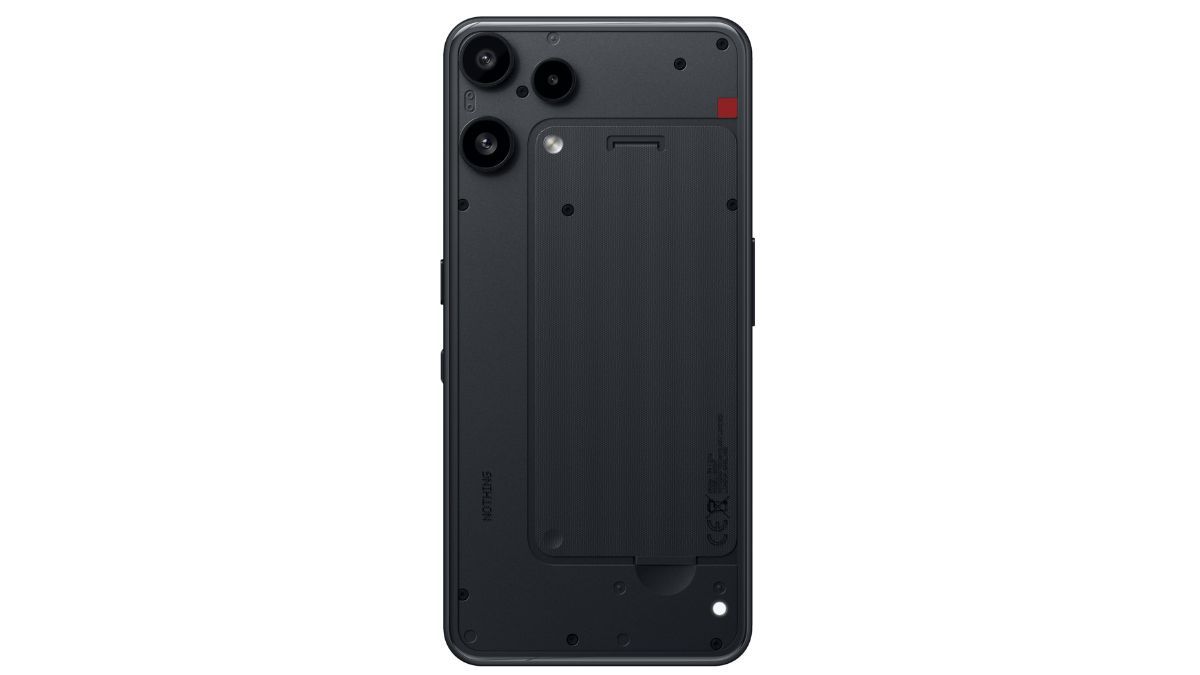
The Nothing Phone (3a) Lite stands out for its efficiency rather than battery size. Its highly optimised chipset, excellent thermal management, and dependable battery life make it our top backup phone under ₹30,000.
Why We Picked It
The Nothing Phone (3a) Lite is proof that efficiency beats brute capacity. Its battery is the smallest of our six picks at 5,000 mAh, yet it lasted 18 hours and 3 minutes in PCMark, extracting 3 hours 37 minutes per 1,000 mAh, the best runtime efficiency of all eight phones tested. The credit goes to the MediaTek Dimensity 7300 Pro, a frugal 4nm chip that our sustained tests show is exceptionally well managed: 94% CPU throttling stability, a group-best 99.6% in the 3DMark stress test, and a remarkably cool 32.4°C after the stress run, the lowest temperature we recorded, over 10°C cooler than the Realme GT 7T.
That cool, consistent, sip-don’t-gulp character is exactly what you want in a backup or secondary phone that must hold charge reliably on standby and never surprise you. It’s no slouch when called upon either, it held a surprising 93.1 FPS average in BGMI, and Nothing’s clean OS with 3 Android updates and 6 years of security patches makes it a phone you can park in a drawer for years. Two caveats: charging is a modest 33W, and Nothing doesn’t include a charger in the box.
Nothing Phone (3a) Lite Key Specifications
- Starting Price: ₹24,999
- Processor: MediaTek Dimensity 7300 Pro
- Display: 6.77-inch FHD+ AMOLED (120Hz) | 3,000 nits peak
- RAM: 8GB LPDDR4X
- Storage: 128GB / 256GB UFS 2.2 (expandable)
- Battery: 5,000 mAh
- Charging: 33W wired (no charger in box)
- Rear Camera: 50MP Main + 8MP Ultra-Wide + 2MP Macro
- Front Camera: 16MP Selfie
Nothing Phone (3a) Lite XP Lab Data
- Battery Life (PCMark): 18h 3min
- Runtime per 1,000 mAh: 3h 37min (best of all eight phones tested)
- AnTuTu Overall Score: 929,009
- Geekbench 6 Score: 1,009 (Single-Core) / 2,986 (Multi-Core)
- 3DMark Wild Life Extreme Score: 857
- 3DMark Stress Test Stability: 99.6%
- CPU Throttling Test Stability: 94%
- Temperature After Stress Test: 32.4°C (coolest of all eight phones tested)
- BGMI Performance (Lowest Graphics): 93.1 Average FPS / 56.5 5% Low FPS
- Minecraft Performance (Highest Graphics): 33.1 Average FPS / 20.3 5% Low FPS
Nothing Phone (3a) Lite Pros & Cons
Pros: The most efficient chipset of the comparison, best runtime per mAh (3h 37min/1,000 mAh), best CPU throttling stability (94%, tied), best stress stability (99.6%) and the coolest running temperature (32.4°C), wrapped in clean Nothing OS with 6 years of security updates.
Cons: Slow 33W charging with no charger in the box, the smallest battery capacity of our picks, and entry-level graphics performance for anything beyond light gaming.
Who Should Buy It
The Nothing Phone (3a) Lite is ideal for buyers who value efficiency, clean software, and long-term reliability over raw battery capacity. Its lightweight Nothing OS experience, excellent standby battery life, cool operating temperatures, and extended software support make it a strong choice as a primary phone for light users or a dependable secondary device.
Who Shouldn’t Buy It
If you need fast charging or regularly play demanding games, there are better options. Its 33W charging is among the slowest in this comparison, and the charger is not included in the box. Gaming performance is also better suited to casual titles than graphics-intensive workloads.
Expert Verdict: The Nothing Phone (3a) Lite proves that good battery life is not solely determined by battery capacity. Its efficient chipset, class-leading thermal management, and clean software deliver a dependable everyday experience. Although its charging speed and gaming performance lag behind its rivals, it remains an excellent choice for buyers who prioritise efficiency, software, and long-term usability.
Redmi Note 15 – Best Value Battery Pick Under ₹30k
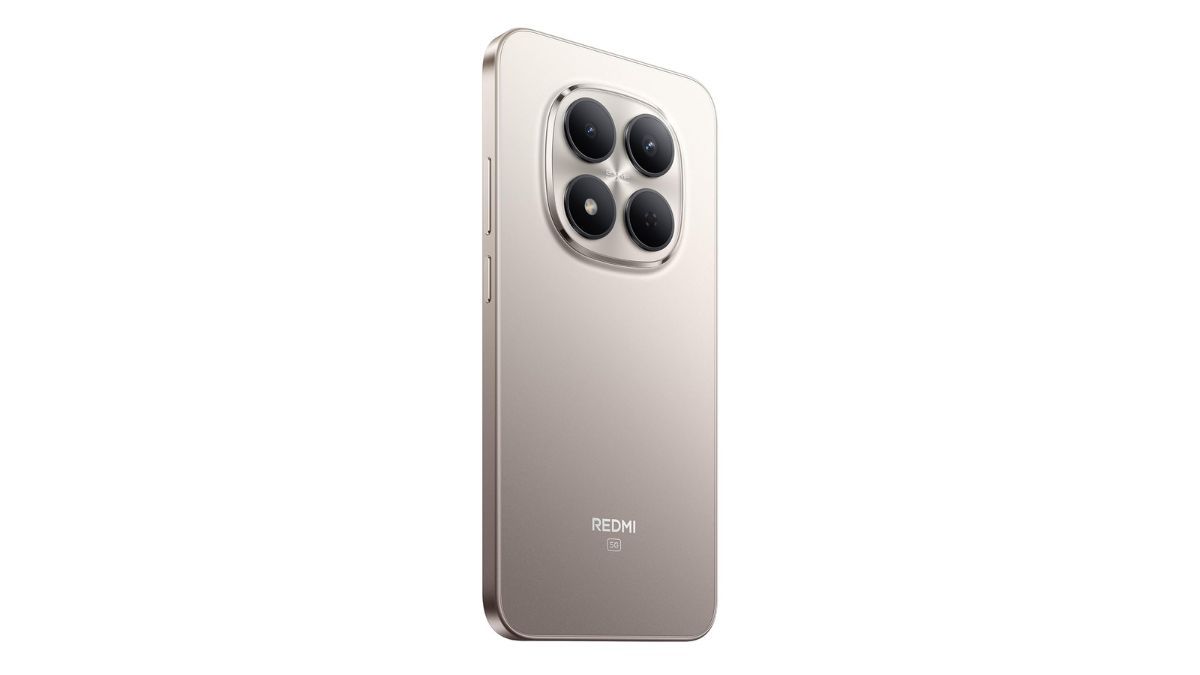
The Redmi Note 15 offers one of the strongest battery experiences for its price, earning my recommendation as the best value battery phone under ₹30,000. Its long battery life, efficient hardware, and competitive price make it an easy choice.
At ₹24,990, the Redmi Note 15 is the cheapest phone in this comparison, and it still delivered 17 hours and 53 minutes in our PCMark battery test, within touching distance of phones costing ₹7,000–₹10,000 more. Its 5,520 mAh silicon-carbon cell (rated for 1,600 charge cycles) is driven by the frugal Snapdragon 6 Gen 3, which tied for the best CPU throttling stability of the entire group at 94% and held 99.5% in the 3DMark stress test at a cool 36.6°C.
Beyond the battery maths, it’s a well-rounded budget package: a 6.77-inch 120Hz curved AMOLED, a 108MP main camera, 45W fast charging with 18W reverse charging, IP65/IP66 resistance and a slim 178g body. Performance is the humblest here, 834,308 on AnTuTu and ~58 FPS in BGMI, so gamers should look at the Edge 70 Fusion or GT 7T instead. But for buyers who want maximum verified battery endurance per rupee, nothing in this comparison comes close.
Redmi Note 15 Key Specifications
Redmi Note 15 XP Lab Data
Redmi Note 15 Pros & Cons
Pros: Nearly 18 hours of measured runtime at the lowest price in this comparison (₹19,999), with tied-best 94% CPU throttling stability, cool thermals, a 1,600-cycle-rated silicon-carbon battery, and a genuinely nice 120Hz AMOLED and 108MP camera for the money.
Cons: The weakest raw performance of our picks (834K AnTuTu, ~58 FPS BGMI), UFS 2.2 storage, and HyperOS ships with its usual helping of bloatware.
Who Should Buy It
The Redmi Note 15 is ideal for buyers who want excellent battery life without spending close to ₹30,000. Its efficient hardware, slim design, curved AMOLED display, and dependable thermal performance make it a great choice for students, everyday users, and anyone looking for a reliable daily driver.
Who Shouldn’t Buy It
If gaming or demanding workloads are your priority, there are better options. The Redmi Note 15 trails rivals in processing power and graphics performance, while its UFS 2.2 storage and HyperOS software may not appeal to performance-focused buyers.
Expert Verdict: The Redmi Note 15 delivers an excellent balance of battery life, efficiency, and value. Its durable silicon-carbon battery, cool operating temperatures, and bright AMOLED display make it one of the strongest all-round battery phones under ₹25,000. While gaming performance is modest, it remains an easy recommendation for buyers who prioritise endurance over speed.
Motorola Edge 70
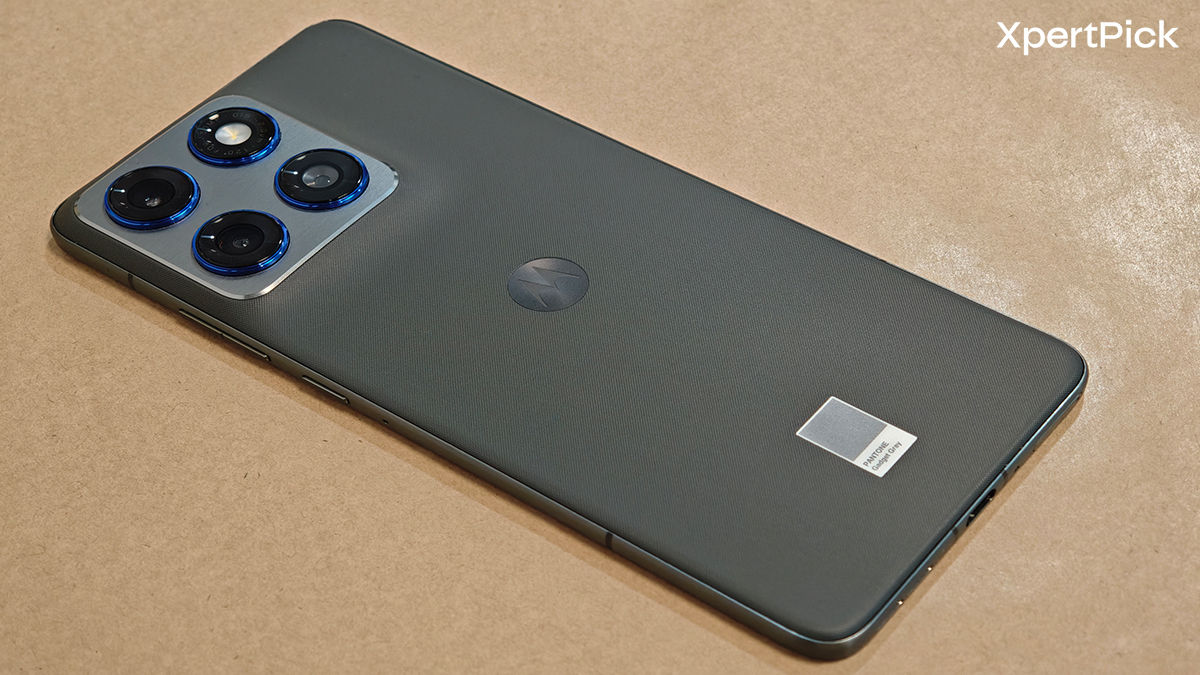
The Motorola Edge 70 is not one of our recommended battery phones under ₹30,000. While it offers a premium lightweight design and strong gaming performance, its battery life falls well behind the best endurance-focused options.
Why We Didn’t Pick It
The Motorola Edge 70 did not make my final recommendation list, and it comes down to a deliberate design trade: at under 6mm thick and just 159g, it is one of the slimmest phones you can buy, and that slimness costs it endurance. Its 5,000 mAh silicon-carbon cell managed only 12 hours and 33 minutes in our PCMark test, the second-shortest runtime of the eight phones tested and nearly half of what the Nord CE6 Lite delivers, with the group’s weakest runtime efficiency at roughly 2.5 hours per 1,000 mAh.
Ironically, it’s a lovely phone otherwise: the Snapdragon 7 Gen 4 held a strong 89% CPU throttling stability and pushed BGMI to 114.7 FPS average, the highest of this entire comparison, and it uniquely offers 15W wireless charging alongside 68W wired, plus IP68/IP69 durability. If a featherweight design is your priority, it’s genuinely special. But in a battery-focused roundup, 12.5 hours doesn’t clear the bar.
Motorola Edge 70 Key Specifications
Motorola Edge 70 XP Lab Data
- Battery Life (PCMark): 12h 33min
- Runtime per 1,000 mAh: 2h 31min
- AnTuTu Overall Score: 1,409,815
- Geekbench 6 Score: 1,330 (Single-Core) / 4,155 (Multi-Core)
- 3DMark Wild Life Extreme Score: 2,074
- 3DMark Stress Test Stability: 64.1%
- CPU Throttling Test Stability: 89%
- Temperature After Stress Test: 39.0°C
- BGMI Performance (Lowest Graphics): 114.7 Average FPS / 60.7 5% Low FPS
- Minecraft Performance (Highest Graphics): 35.7 Average FPS / 24.7 5% Low FPS
Motorola Edge 70 Pros & Cons
Pros: Stunning sub-6mm, 159g design with IP68/IP69 durability, the highest BGMI average of the comparison (114.7 FPS), strong 89% CPU throttling stability, and the only phone here with wireless charging.
Cons: The battery life simply isn’t there, 12h 33min is barely half our winner’s runtime, and its 64.1% GPU stress stability was the weakest of all eight phones.
Who Should Buy It
The Motorola Edge 70 is best suited to buyers who value design as much as performance. Its ultra-slim, lightweight chassis, vibrant display, wireless charging, and strong gaming performance make it an attractive choice for users who prioritise portability and everyday responsiveness over battery life.
Who Shouldn’t Buy It
If battery life is your main priority, this is not the right phone. Its runtime is among the shortest in this comparison, while sustained graphics performance drops noticeably under prolonged workloads. Buyers looking for dependable all-day endurance should consider other options.
Expert Verdict: The Motorola Edge 70 is an impressive showcase of engineering, combining a remarkably thin design with strong everyday and gaming performance. However, those design advantages come at the expense of battery life and sustained performance. It remains a compelling choice for buyers who prioritise style, but it is not one of our recommended battery phones under ₹30,000.
Infinix GT 30 5G
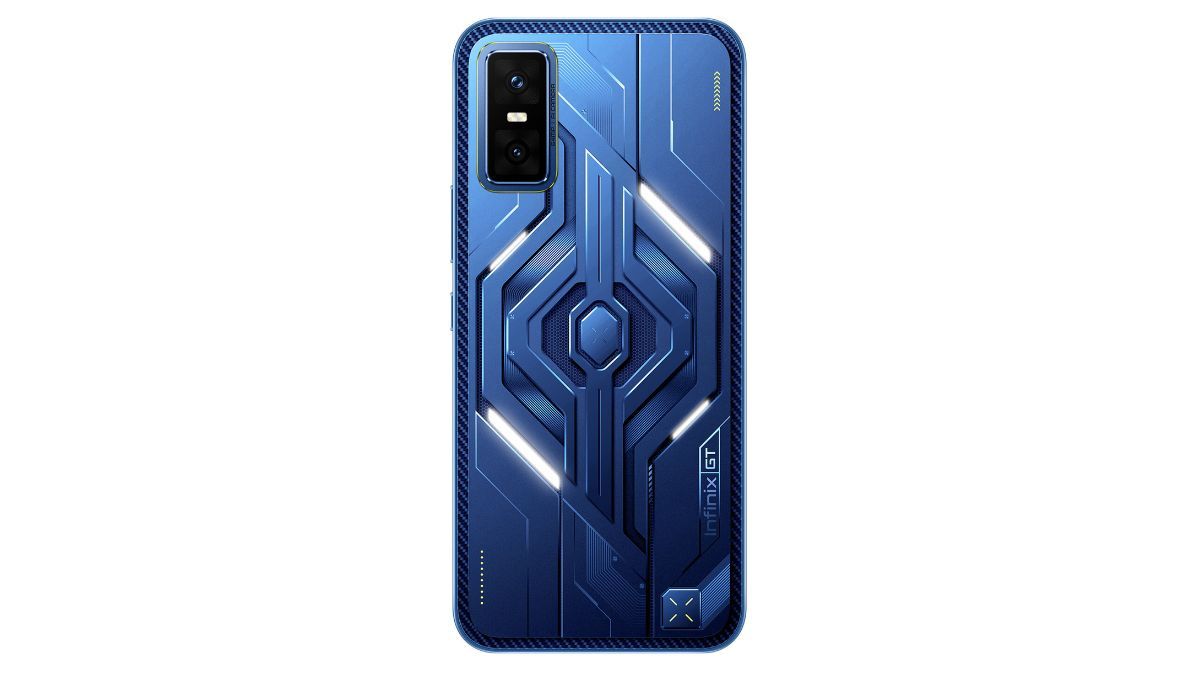
The Infinix GT 30 5G brings genuine gaming aesthetics and brilliant thermal stability to the budget segment, but its abysmal 12-hour 23-minute battery life and poor runtime efficiency completely disqualify it from our endurance recommendations.
Why We Didn’t Pick It
The Infinix GT 30 5G brings genuine gaming flair to the budget segment, shoulder triggers, customisable Mecha Lights, a 144Hz 1.5K AMOLED and 6-layer VC cooling for ₹19,999. Its thermals are excellent: 99.6% 3DMark stress stability, 88% CPU throttling stability, and the second-coolest stress-test temperature we recorded at 34.0°C.
The problem is the brief of this article: its 5,500 mAh battery lasted just 12 hours and 23 minutes in our PCMark test, the shortest runtime of all eight phones, and its efficiency of roughly 2.25 hours per 1,000 mAh is the worst of the group. Combined with slow UFS 2.2 storage and modest gaming output for a “GT” phone (82.4 FPS average in BGMI), it’s outclassed as a battery pick by the Redmi Note 15 at the same price, which lasts five and a half hours longer. A fun gaming-flavoured budget phone; not an endurance phone.
Infinix GT 30 5G Key Specifications
Infinix GT 30 5G XP Lab Data
- Battery Life (PCMark): 12h 23min
- Runtime per 1,000 mAh: 2h 15min
- AnTuTu Overall Score: 975,961
- Geekbench 6 Score: 1,069 (Single-Core) / 3,159 (Multi-Core)
- 3DMark Wild Life Extreme Score: 1,056
- 3DMark Stress Test Stability: 99.6%
- CPU Throttling Test Stability: 88%
- Temperature After Stress Test: 34.0°C
- BGMI Performance (Lowest Graphics): 82.4 Average FPS / 57.5 5% Low FPS
- Minecraft Performance (Highest Graphics): 27.5 Average FPS / 19.3 5% Low FPS
Infinix GT 30 5G Pros & Cons
Pros: Gaming-first extras (shoulder triggers, Mecha Lights, VC cooling) with excellent thermal stability and rare-at-this-price 10W wireless charging.
Cons: The shortest battery life (12h 23min) and worst runtime efficiency of all eight phones tested, the Redmi Note 15 lasts 5.5 hours longer at around same price.
Who Should Buy It
The Infinix GT 30 5G is best suited to casual gamers who want gaming-focused features without spending a premium. Shoulder triggers, customisable lighting, effective cooling, and wireless charging make it an appealing choice for buyers who play in shorter sessions and value extra hardware features.
Who Shouldn’t Buy It
If battery life is your priority, this is not the right phone. It delivers the shortest runtime in this comparison and falls well behind rivals in overall endurance. Buyers looking for multi-day battery life or stronger all-round performance will find much better options, including the Redmi Note 15.
Expert Verdict: The Infinix GT 30 5G offers a distinctive gaming experience with excellent cooling, stable performance, and features rarely found at this price. However, its poor battery life overshadows those strengths in a battery-focused comparison. Unless gaming features are your main priority, there are more balanced alternatives in this segment.
Frequently Asked Questions (FAQs)
Which Phone Has the Best Battery Life Under ₹30,000?
The OnePlus Nord CE6 Lite delivered the longest measured battery life in our testing, lasting a full 24 hours in the PCMark Work 3.0 benchmark on its 7,000 mAh battery. It lasted two hours longer than any other phone in the comparison and is priced at ₹25,690.
Which Phone Under ₹30,000 Has the Biggest Battery?
Four phones in this comparison feature 7,000 mAh batteries: the OnePlus Nord CE6 Lite, Realme P4 Pro, Realme GT 7T and Moto Edge 70 Fusion. Our pick in this category is the Realme P4 Pro (₹26,999), which fits that capacity into the slimmest and lightest body of the four at 7.68mm and 189g, while delivering 19h 14min of measured battery life.
Which Phone Under ₹30,000 Charges the Fastest?
The Realme GT 7T is the clear winner. Its 120W SuperVOOC charging refills the 7,000 mAh battery from empty in well under an hour. That is nearly double the charging speed of the next fastest options, namely the 80W Realme P4 Pro and the 68W Moto Edge 70 Fusion.
Which Battery Phone Is Best for Gaming and Streaming?
The Moto Edge 70 Fusion offers the best endurance under sustained load, delivering 22 hours of PCMark runtime alongside a genuine 89 FPS average in BGMI, 99.3% stress test stability and a 144Hz AMOLED display that reaches 5,200 nits for HDR streaming. However, at ₹30,999 it now sits above the ₹30,000 budget limit. If you want to stay within budget, the Realme GT 7T (₹29,999) is the stronger gaming choice, averaging 96.5 FPS in BGMI while offering slightly shorter battery life.
Does a Bigger mAh Number Always Mean Better Battery Life?
No. This comparison shows that battery capacity alone does not determine battery life. The 5,000 mAh Nothing Phone (3a) Lite lasted 18h 3min and was significantly more efficient than the 7,000 mAh Realme GT 7T on a per mAh basis, delivering 3h 37min per 1,000 mAh compared with 2h 37min for the GT 7T. Chipset efficiency, thermal management and software optimisation are just as important as battery capacity.
Which Is the Best Value Battery Phone Under ₹25,000?
The Redmi Note 15 at ₹24,990 is the standout value choice. It lasted 17h 53min in PCMark while matching the best CPU throttling stability in the comparison at 94%. It also features a 1,600-cycle silicon-carbon battery, a 120Hz AMOLED display and a 108MP camera. The similarly priced Nothing Phone (3a) Lite (₹24,999) is the better choice if efficiency is your priority, while the Infinix GT 30 5G lasts around 5.5 hours less and is difficult to recommend if battery life is your main concern.
Is the Motorola Edge 70 Good for Battery Life?
No. While it is a beautifully slim phone with the highest BGMI frame rate in this comparison at 114.7 FPS and the added convenience of wireless charging, its PCMark result of 12h 33min is almost half that of our overall winner. It is a great choice for design and gaming performance, but not for battery endurance.