Best Performance Phones Under ₹30,000 in India

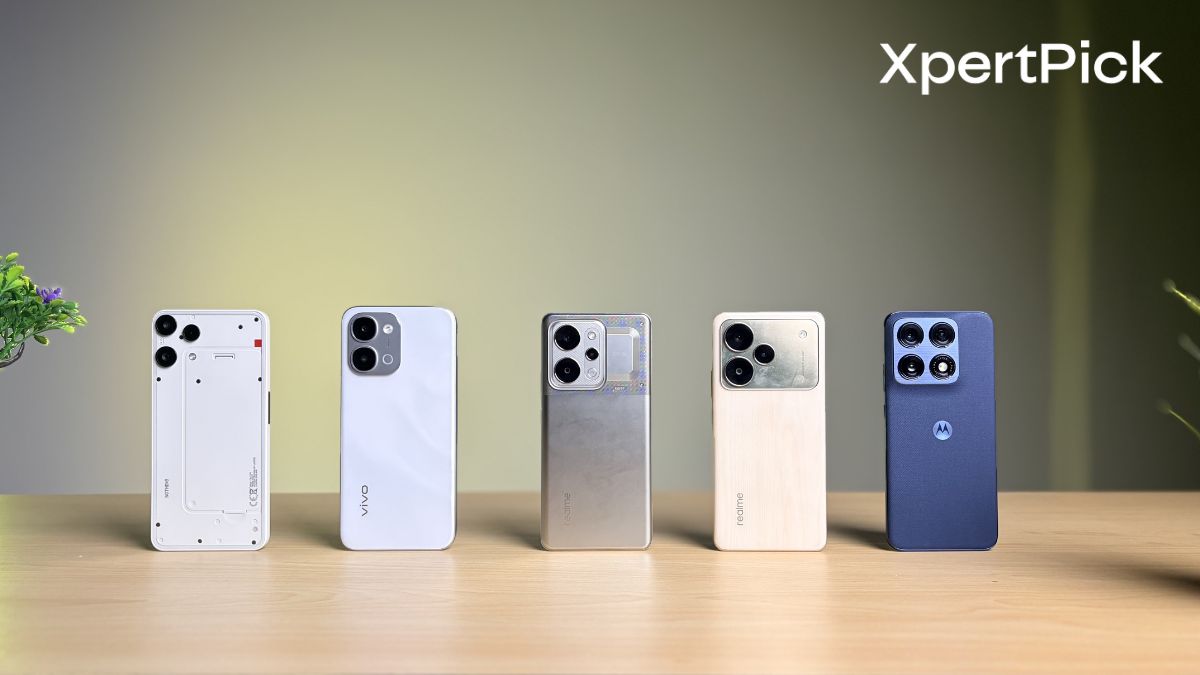
Five smartphones arranged side-by-side for a performance comparison. From left to right: Nothing Phone 3a Lite, Vivo T5x, Realme P4 Power, Realme P4 Pro, and Motorola Edge 70 Fusion.

Buying a performance smartphone under ₹30,000 should not be a daunting task, and that is exactly why this list exists. It is already difficult to keep up with the sheer number of smartphone launches happening at any given time, and on top of that, the multiple variations in which phones launch nowadays make it even harder to find and select the perfect model for yourself.

Performance Test Lineup

To find the best performance-focused smartphone under ₹30,000, ten devices were put through extensive productivity, thermal, AI, and gaming tests. The lineup included the Realme P4 Pro, Realme P4 Power, Moto Edge 70 Fusion, Nothing Phone 3a Lite, Vivo T5x, OnePlus Nord CE6 Lite, Redmi Note 15, Oppo K14, Realme 15 Pro, and one other strong contender from the segment. This comparison is designed for users who look beyond specifications and want to understand how these devices perform under demanding real-world workloads.

Performance Winners Across Categories

  • Realme P4 Pro (₹28,999): Best overall performance under ₹30k

  • Moto Edge 70 Fusion (₹26,999): Best chipset / benchmark under ₹30k

  • Realme P4 Power (₹29,999): Best for sustained gaming performance under ₹30k

  • Realme 15 Pro (₹29,999): Best for heavy multitasking (RAM) under ₹30k

  • Nothing Phone 3(a) Lite (₹27,900): Best thermals / cooling under ₹30k

  • Vivo T5x (₹22,999): Best value performance pick under ₹30k

Performance Benchmarks and Test Results

Specification / Metric Realme P4 Pro (₹28,999) Moto Edge 70 Fusion (₹26,999) Nothing Phone 3a Lite (₹27,900) Realme P4 Power (₹29,999) Vivo T5x (₹22,999) Realme 15 Pro (₹29,999)
Category Winner Best Graphical Burst Performance Best Everyday Speed & App Loading Best Thermals & Efficiency Best Gaming Stability & AI Best Budget Value Best Heavy Multitasking & Multi-Core
AnTuTu Overall 1,009,232 1,156,810 🏆 929,009 1,023,651 954,883 1,093,744
Geekbench (Single/Multi) 1,193 / 3,506 1,263 / 3,417 🏆 (Single) 1,009 / 2,986 1,062 / 2,989 1,060 / 2,715 1,207 / 3,556 🏆 (Multi)
PCMark (Performance) 14,647 🏆 14,236 11,813 13,208 11,927 13,912
CPU Throttling Stability 87% 88% 94% 🏆 91% 93% 90%
3DMark Stress Stability 99.3% 99.3% 99.6% 🏆 99.5% 99.5% 98.4%
Geekbench AI Score (NPU) 378 574 2,706 2,784 🏆 2,558 519
BGMI (Avg / 5% Low FPS) 73 / 61.2 89 / 59.9 93.1 / 56.5 (Avg) 84.1 / 63.2 59.2 / 51 87.1 / 68.2 🏆 (5% Low)
Minecraft (Avg / 5% Low) 43.5 / 23.9 31.6 / 19.7 33.1 / 20.3 50.8 / 31.7 🏆 28.7 / 16.9 38.5 / 25.5
PCMark Battery Life 19h 14min 22h 00min 18h 03min 33h 15min 🏆 29h 37min 22h 03min

To make the comparison easier to follow, the table below includes only the smartphones that earned a recommendation after testing. Although eight phones were tested across a range of productivity, gaming, thermal, AI, and battery benchmarks, these devices stood out from the rest and are the ones most buyers should focus on. The OnePlus Nord CE6 Lite and Redmi Note 15 were also part of the testing process, and their detailed results can be found in the individual analysis sections below.

How I Evaluated These Smartphones

Performance figures can often be misleading when viewed in isolation. A smartphone might post an impressive benchmark result, but that does not necessarily translate into a smooth experience once the device heats up or faces sustained workloads. For this comparison, the focus was on understanding how these phones behave during prolonged use, whether that involves gaming, multitasking, content creation, or everyday productivity.

Rather than relying on a single benchmark or manufacturer claims, I tested each device across a range of workloads designed to highlight both strengths and weaknesses. The objective was to identify not just the fastest phones on paper, but the ones that continue to deliver a reliable experience after extended periods of use.

Testing environment: Every phone was evaluated using retail hardware running publicly available software. Testing was conducted in a controlled environment with an ambient temperature of 28°C. The highest-specification variant available for each model was used.

Benchmark analysis: AnTuTu v10 and Geekbench 6 were used to assess processor, graphics, memory, and AI performance. These benchmarks provide a useful indication of each device’s maximum computational capability.

Storage evaluation: Internal storage speeds were measured to understand how quickly each phone can launch applications, load games, and handle large file transfers.

Long-duration performance testing: To assess performance consistency, each device underwent the 3DMark Wild Life Extreme Stress Test along with a dedicated CPU endurance workload. These tests highlight thermal behaviour and reveal how much performance is retained over time.

Gaming assessment: BGMI and Minecraft were chosen to represent two very different gaming workloads. I monitored average frame rates, frame consistency, and 5% low FPS values to determine how smooth gameplay remained during extended sessions.

Battery endurance testing: Battery life was measured using PCMark Work 3.0, a workload that simulates common day-to-day activities such as browsing, document editing, and media consumption rather than relying on video playback loops.

This guide reflects the latest testing data, device availability, and market pricing as of June 2026.

Realme P4 Pro (₹28,999): Best Overall Performance Under ₹30K
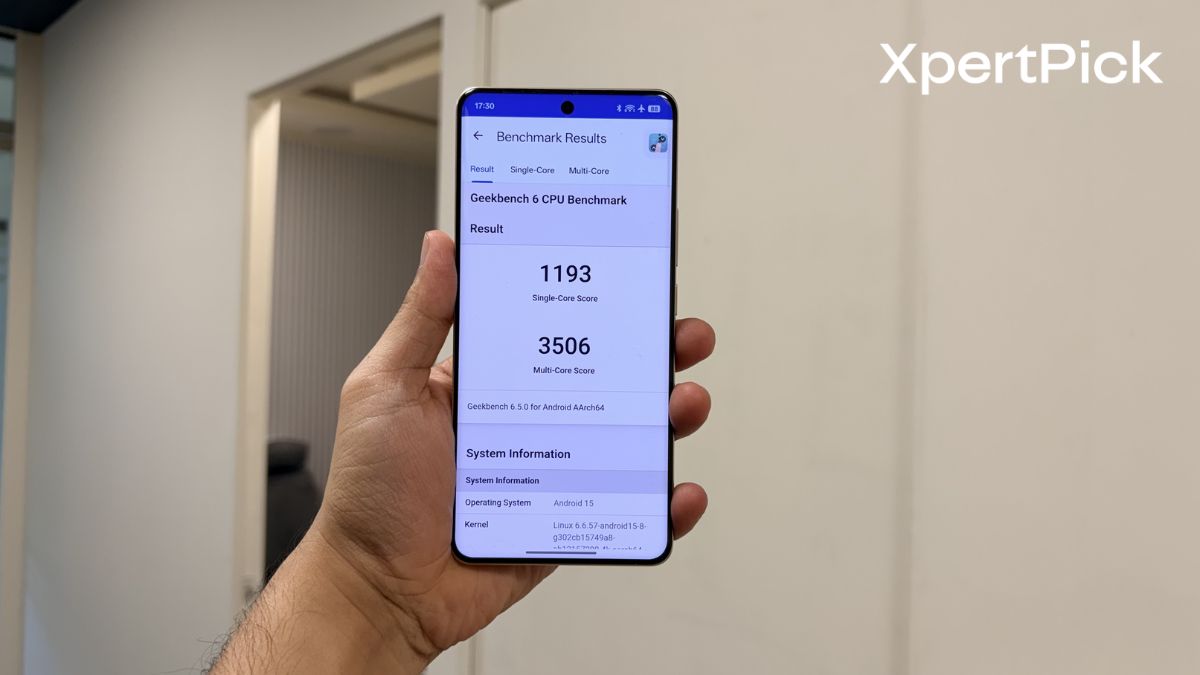
The Realme P4 Pro delivered one of the most balanced performances in this comparison, consistently ranking near the top in CPU, GPU, gaming, and thermal tests. It may not lead every individual benchmark, but it combines strong performance with excellent stability better than any other phone I tested. The Realme P4 Pro earns the top spot for overall performance because, in my testing, it consistently ranked among the best across almost every key metric. It delivered one of the strongest results in 3DMark Wild Life Extreme while maintaining excellent stability, and its CPU performance was equally impressive, achieving the second-highest single-core score and the highest multi-core score in Geekbench 6.

The phone also performed exceptionally well in gaming. During my Minecraft testing, it recorded the second-highest 5% low FPS result, while in BGMI it again delivered the second-highest 5% low FPS score. These results indicate strong frame-time consistency and stable performance during extended gaming sessions.

Beyond its processing and gaming capabilities, the Realme P4 Pro’s massive 7,000mAh battery delivered exceptional endurance, clearing 19 hours and 14 minutes in the PCMark Work 3.0 test. In real-world terms, this translates to a full day of mixed usage. By seamlessly combining top-tier CPU and GPU performance, reliable thermals, and monstrous battery life, it easily stands out as the best overall performance smartphone under ₹30,000.

Realme P4 Pro Key Specifications

Starting Price: ₹28,999
Processor: Qualcomm Snapdragon 7 Gen 4
Display: 6.8-inch AMOLED (144Hz)
RAM: 8GB / 12GB LPDDR4X
Storage: 128GB / 256GB / 512GB UFS 3.1
Battery: 7,000mAh
Charging: 80W SUPERVOOC Fast Charging and 10W reverse wired charging
Camera: Main: 50MP, Ultra Wide: 8MP, Selfie: 50MP
Durability: IP65 and IP66 dust and water resistance

Realme P4 Pro XP Lab Test Data

AnTuTu Overall Score: 1,009,232
Geekbench 6: 1,193 (Single-Core) | 3,506 (Multi-Core)
3DMark Stress Test Stability: 99.3%
CPU Throttling Test Stability: 87%
BGMI Performance: 73.0 Average FPS | 61.2 5% Low FPS
Minecraft Performance: 43.5 Average FPS | 23.9 5% Low FPS
Battery Life (PCMark Work 3.0): 19h 14min

Realme P4 Pro Pros & Cons

  • Pros: Delivers exceptional graphical burst performance with a 3DMark Wild Life Extreme score of 1,813, ensuring top-tier visual rendering in its class. Features an ultra-smooth 144Hz display with a sharp 453 PPI pixel density for fluid animations and navigation.

  • Cons: Experiences noticeable thermal build-up under heavy graphical stress, peaking at 40.8°C and forcing the CPU to throttle down to 87% of its maximum capability. Single-core processing speeds fall slightly behind day-to-day segment speed leaders.

Moto Edge 70 Fusion (₹26,999): Best Benchmark Performance Under ₹30K

Moto Edge 70 Fusion playing a video playback endurance test during smartphone performance evaluation

The Moto Edge 70 Fusion delivered the quickest day-to-day experience in my testing, combining strong single-core performance with some of the fastest storage speeds in this comparison. The result is a phone that feels consistently fast when opening apps, switching between tasks, and handling everyday workloads. The Moto Edge 70 Fusion stands out as the fastest phone for everyday use based on my testing. It achieved the highest AnTuTu score in this comparison and also delivered the best Geekbench 6 single-core result, both of which are strong indicators of how responsive a phone feels during daily tasks. It also recorded the fastest storage speeds among all the devices I tested, allowing apps, files, and games to load noticeably quicker.

Beyond the numbers, the phone feels exceptionally snappy in regular use. Tasks such as switching between apps, browsing large photo libraries, opening documents, and navigating the interface are handled with ease. Motorola’s Hello UI also contributes to the experience by offering a clean and lightweight Android interface with minimal distractions.

This responsive day-to-day performance is backed by a large 7,000mAh battery, which lasted 22 hours in the PCMark Work 3.0 battery life test. In practical terms, that translates to around two days of moderate use or comfortably more than a full day of heavy multitasking, gaming, and media consumption without needing to recharge. For users who prioritise fast app launches, smooth multitasking, and strong battery life over gaming-focused performance, the Moto Edge 70 Fusion is the smartphone I would recommend.

Moto Edge 70 Fusion Key Specifications

Starting Price: ₹26,999
Processor: Qualcomm Snapdragon 7s Gen 4
Display: 6.78-inch Extreme AMOLED (144Hz)
RAM/Storage: 8GB or 12GB LPDDR5X / 128GB or 256GB UFS 3.1
Battery: 7,000mAh
Charging: 68W TurboPower
Camera: Main: 50MP, Ultra Wide: 13MP, Selfie: 32MP
Durability: IP68 and IP69 dust and water resistance, MIL-STD-810H compliant

Moto Edge 70 Fusion XP Lab Test Data

AnTuTu Overall Score: 1,156,810
Geekbench 6: 1,263 (Single-Core) | 3,417 (Multi-Core)
3DMark Stress Test Stability: 99.3%
CPU Throttling Test Stability: 88%
BGMI Performance: 89.0 Average FPS | 59.9 5% Low FPS
Minecraft Performance: 31.6 Average FPS | 19.7 5% Low FPS
Battery Life (PCMark Work 3.0): 22h 00min

Moto Edge 70 Fusion Pros & Cons

  • Pros: Leads the segment with a massive AnTuTu score of 1,156,810 and the highest Geekbench Single-Core score (1,263), ensuring lightning-fast app launching and incredible day-to-day snappiness. Employs superior heat dissolution, keeping the device remarkably cool at 37.2°C even after intensive stress testing.

  • Cons: Struggles under heavy geometrical rendering simulations like Minecraft, averaging just 31.6 FPS and experiencing noticeable stutters. Falls behind in dedicated hardware NPU capabilities, scoring poorly on Geekbench AI benchmarks compared to category leaders.

Nothing Phone 3(a) Lite (₹27,900): Best Thermals and Cooling Under ₹30K

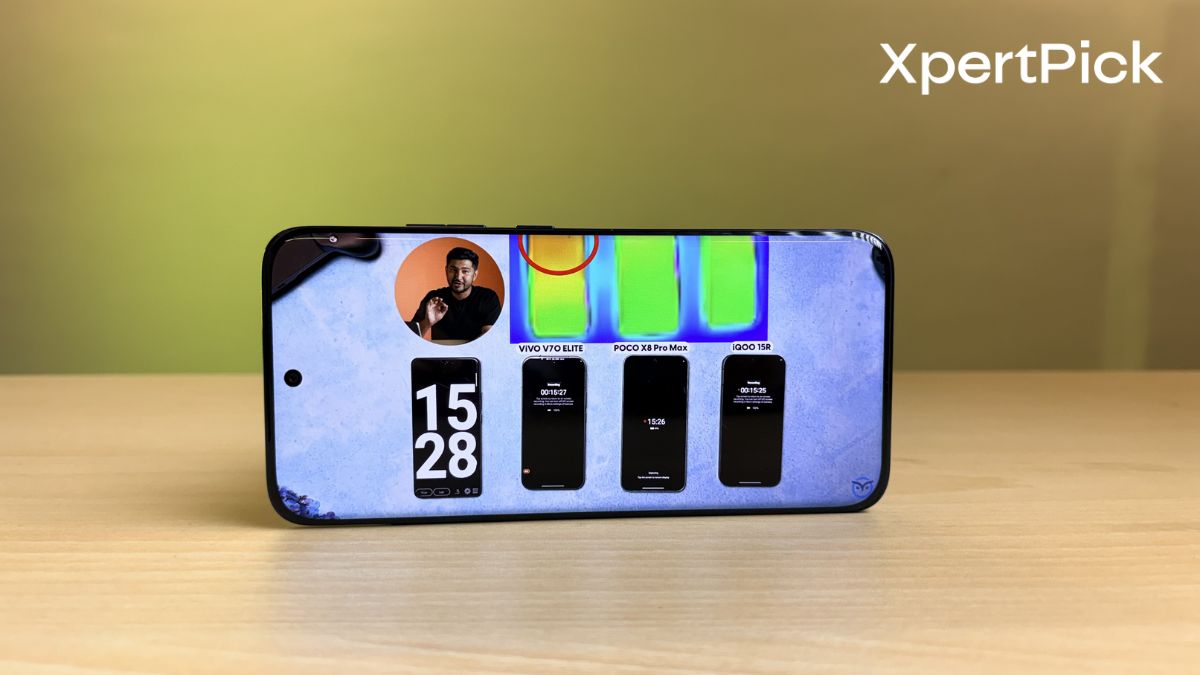
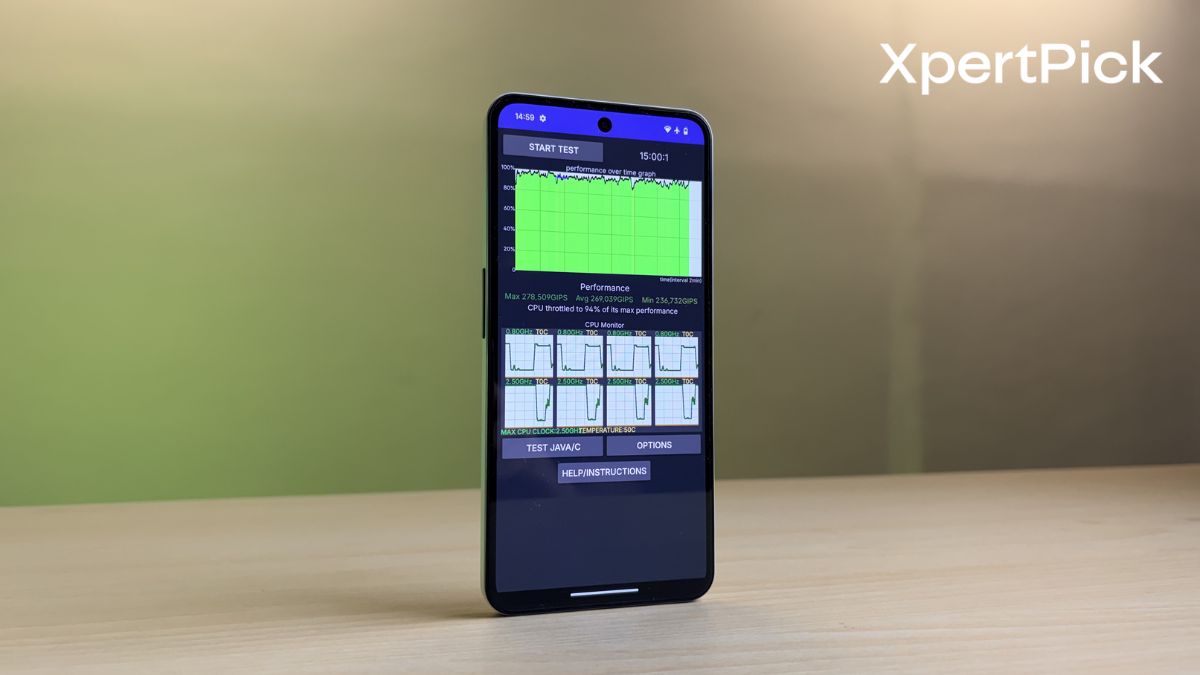
Nothing Phone 3a Lite displaying CPU throttling and thermal stability test results during performance benchmarking

If you want a phone that stays cool during gaming, maintains its performance over longer sessions, and avoids the slowdowns that can come with excessive heat, the Nothing Phone 3a Lite is the device I would recommend. The Nothing Phone 3a Lite is the standout choice for users who prioritise thermal performance and long-term stability. In my testing, it achieved the highest stability score in both the 3DMark Wild Life Extreme Stress Test and the CPU throttling test, showing an impressive ability to maintain performance under sustained workloads.

What makes this result particularly noteworthy is that the phone achieved it despite not having the most powerful GPU in the comparison. Thanks to strong optimisation, it delivered the highest peak average frame rate in BGMI while remaining remarkably cool during extended gaming sessions. Throughout testing, it consistently balanced performance and efficiency better than most of its rivals.

This strong thermal efficiency also contributes to decent battery life. Equipped with a 5,000mAh battery, the Nothing Phone 3a Lite lasted 18 hours and 3 minutes in the PCMark Work 3.0 battery test. In everyday use, that is enough to get through a full day of mixed usage, but you will likely need to reach for the charger at the end of the day.

Nothing Phone 3a Lite Key Specifications

• Starting Price: ₹27,900
• Processor:
MediaTek Dimensity 7300 Pro
• Display:
6.77-inch AMOLED (120Hz)
• RAM/Storage:
8GB LPDDR4X / 128GB or 256GB UFS 2.2
• Battery:
5,000mAh
• Charging:
33W Wired Charging
• Camera:
Main: 50MP, Ultra Wide: 8MP, Macro: 2MP, Selfie: 16MP
• Durability:
IP54 dust and splash resistance

Nothing Phone 3a Lite XP Lab Test Data

AnTuTu Overall Score: 929,009
Geekbench 6: 1,009 (Single-Core) | 2,986 (Multi-Core)
3DMark Stress Test Stability: 99.6%
CPU Throttling Test Stability: 94%
BGMI Performance: 93.1 Average FPS | 56.5 5% Low FPS
Minecraft Performance: 33.1 Average FPS | 20.3 5% Low FPS
Battery Life (PCMark Work 3.0): 18h 03min

Nothing Phone 3a Lite Pros & Cons

  • Pros: Exhibits exceptional thermal management, staying astonishingly cool under heavy load with a peak temperature of just 32.4°C and sustaining an incredible 94% of its CPU performance without thermal throttling. Highly optimised for mainstream e-sports gaming, managing to squeeze out excellent peak average frame rates (93.1 FPS) in BGMI.

  • Cons: Features the weakest raw graphics (GPU) power in this segment, reflected by a low 3DMark Wild Life Extreme score of 857, causing it to struggle with geometry-dense titles like Minecraft. Bottlenecked by UFS 2.2 storage hardware, resulting in noticeably longer game asset loading times and slower file indexing compared to its UFS 3.1 competitors.

Realme P4 Power (₹29,999): Best Sustained Gaming Performance Under ₹30K

Realme P4 Power running Minecraft during gaming performance and frame rate testing

If gaming is your main priority and you want a phone that can deliver high frame rates while also offering strong AI performance and fast everyday responsiveness, the Realme P4 Power is the device I would recommend. The Realme P4 Power is the phone I would recommend to users who place gaming performance at the top of their priority list. In my testing, it delivered some of the highest average frame rates in both BGMI and Minecraft, making it one of the strongest options for demanding mobile games in this price segment.

The phone also performed particularly well in AI-related workloads. Its strong Geekbench AI results suggest that both its GPU and NPU are well equipped to handle on-device AI features and future AI-powered applications. Beyond gaming and AI, it also recorded the second-fastest storage performance in the comparison, which helps reduce app launch times and speeds up file transfers.

This strong performance is complemented by a very large 10,000mAh battery. In the PCMark Work 3.0 battery life test, the Realme P4 Power lasted an impressive 33 hours and 15 minutes, making it one of the longest-lasting phones in this comparison. In practical use, that translates to two days of moderate usage or around two days of heavier gaming, media consumption, and multitasking before needing a recharge.

Realme P4 Power Key Specifications

Starting Price: ₹29,999
Processor: MediaTek Dimensity 7400 Ultra 5G
Display: 6.8-inch AMOLED (144Hz)
RAM/Storage: 8GB or 12GB LPDDR4X / 128GB or 256GB UFS 3.1
Battery: 10,000mAh
Charging: 80W Fast Charging
Camera: Main: 50MP, Ultra Wide: 8MP
Durability: IP66, IP68, and IP69 dust and water resistance

Realme P4 Power XP Lab Test Data

AnTuTu Overall Score: 1,023,651
Geekbench 6: 1,062 (Single-Core) | 2,989 (Multi-Core)
3DMark Stress Test Stability: 99.5%
CPU Throttling Test Stability: 91%
BGMI Performance: 84.1 Average FPS | 63.2 5% Low FPS
Minecraft Performance: 50.8 Average FPS | 31.7 5% Low FPS
Battery Life (PCMark Work 3.0): 33h 15min

Realme P4 Power Pros & Cons

  • Pros: Houses an absurdly large 10,000mAh battery, translating to 33 hours and 15 minutes of continuous PCMark endurance, making mid-day charging completely obsolete. Excellent sustained gaming performance across demanding titles, delivering top-tier average frames in Minecraft (50.8 FPS) alongside robust frame-pacing.

  • Cons: Single-core CPU speeds (1,062) fall slightly behind daily multitasking leaders like the Moto Edge 70 Fusion. Noticeable micro-stutters during ultra-heavy geometric load transitions in Genshin Impact (dropping to a 5.2 FPS 5% low).

Vivo T5x (₹22,999): Best Value Performance Pick Under ₹30K

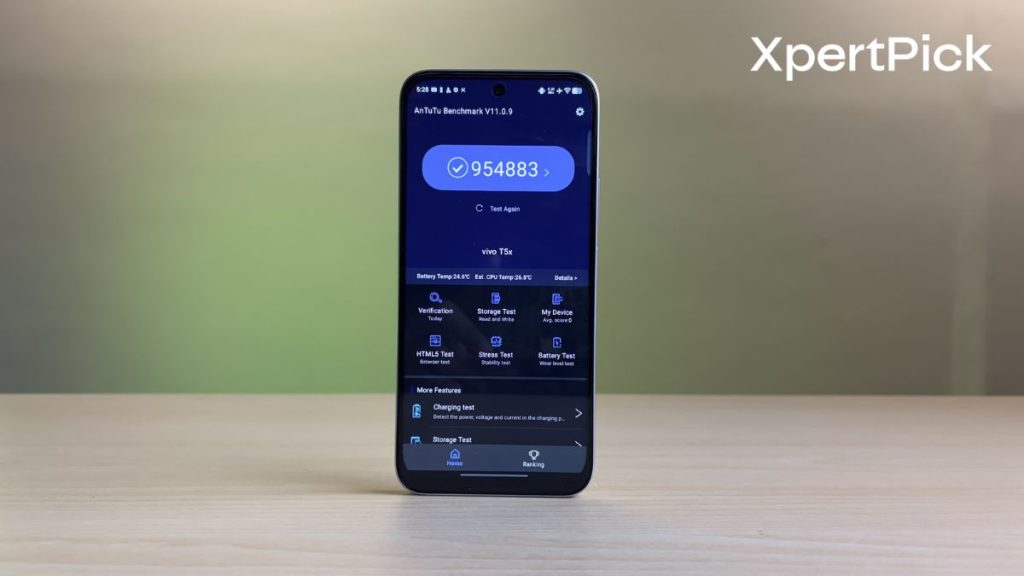
Vivo T5x displaying AnTuTu benchmark score during smartphone performance testing

The Vivo T5x offers a strong balance of performance and value. In my testing, it delivered respectable benchmark results, good sustained CPU performance, and surprisingly fast storage speeds, helping it provide a smooth everyday experience despite its lower price. The Vivo T5x is the budget recommendation in this comparison because, despite being the most affordable phone I tested, it delivers a surprisingly strong overall experience. Its benchmark results are respectable for the price, and it also maintained good CPU stability during sustained workloads, making it well suited to everyday use.

One area where the Vivo T5x particularly impressed me was storage performance. It recorded some of the fastest sequential and random read/write speeds in the group, which translates into quicker app launches, faster file transfers, and a generally responsive user experience. These are benefits users are likely to notice every day, regardless of whether they play games.

While the phone falls behind the more expensive models in demanding 3D games such as Minecraft, it remains more than capable for everyday tasks, social media, video streaming, and casual gaming. This practical performance is supported by excellent battery life. Equipped with a large 7,200mAh battery, the Vivo T5x lasted 29 hours and 37 minutes in the PCMark Work 3.0 battery life test. In everyday use, that translates to well over two days of moderate usage, including calls, streaming, messaging, and web browsing, before needing a recharge.

Vivo T5x Key Specifications

Starting Price: ₹22,999
Processor: MediaTek Dimensity 7400 Turbo
Display: 6.76-inch LCD (120Hz)
RAM/Storage: 6GB or 8GB / 128GB or 256GB UFS 3.1
Battery: 7,200mAh
Charging: 44W Flash Charging (with wired reverse charging)
Camera: Main: 50MP, Depth: 2MP, Selfie: 32MP
Durability: IP68 and IP69 dust and water resistance, SGS 5-star drop resistance

Vivo T5x XP Lab Test Data

AnTuTu Overall Score: 954,883
Geekbench 6: 1,060 (Single-Core) | 2,715 (Multi-Core)
3DMark Stress Test Stability: 99.5%
CPU Throttling Test Stability: 93%
BGMI Performance: 59.2 Average FPS | 51.0 5% Low FPS
Minecraft Performance: 28.7 Average FPS | 16.9 5% Low FPS
Battery Life (PCMark Work 3.0): 29h 37min

Vivo T5x Pros & Cons

  • Pros: Highly dependable sustained processing efficiency at an aggressive price point, retaining 93% of its CPU performance under prolonged workloads. Delivers an extraordinary battery life of nearly 30 hours, making it exceptionally reliable for everyday tasks and extended use without needing a recharge.

  • Cons: Struggles heavily with geometry-dense 3D titles like Minecraft, dropping to a low average of 28.7 FPS with frequent stutters. Registers the lowest Geekbench multi-core score on the list (2,715), rendering it less ideal for heavy content creation or complex multitasking under load.

Realme 15 Pro (₹29,999): Best for Heavy Multitasking Under ₹30K

The Realme 15 Pro is a great choice for users who need strong multitasking performance. Powered by the Snapdragon 7 Gen 4 processor and paired with up to 12GB of RAM, the phone topped the Geekbench 6 multi-core benchmark with a score of 3,556. This means it can handle demanding apps smoothly and keep multiple applications running in the background without frequent reloads.

The phone also performs very well in gaming. It maintained an impressive 98.4% stability in the 3DMark Wild Life Extreme stress test, showing that it can sustain performance during long gaming sessions. In our 45-minute BGMI test, the device delivered an average frame rate of 87.1 FPS and achieved the highest 5% low result in this comparison at 68.2 FPS, resulting in smooth and consistent gameplay.

Battery life is another major strength. Thanks to its large 7,000mAh battery, the Realme 15 Pro lasted an excellent 22 hours and 3 minutes in the PCMark Work 3.0 battery test. The main drawback is that the phone can get fairly warm under heavy workloads, reaching a peak temperature of 42°C during prolonged stress testing. Even so, users looking for excellent multitasking, strong gaming performance, and long battery life will find the Realme 15 Pro to be one of the best options in its segment.

Realme 15 Pro Key Specifications

Starting Price: ₹29,999
Processor: Snapdragon 7 Gen 4
Display: 6.8-inch AMOLED (144Hz)
RAM/Storage: 8GB or 12GB LPDDR4X / 128GB, 256GB, or 512GB UFS 3.1
Battery: 7,000mAh
Charging: 80W Fast Charging (supports bypass charging for gaming and 10W wired reverse charging)
Camera: Main: 50MP, Ultra Wide: 8MP, Selfie: 50MP
Durability: IP69 dust and water resistance, high-impact drop protection

Realme 15 Pro XP Lab Test Data

AnTuTu Overall Score: 1,093,744
Geekbench 6: 1,207 (Single-Core) | 3,556 (Multi-Core)
3DMark Stress Test Stability: 98.4%
CPU Throttling Test Stability: 90%
BGMI Performance: 87.1 Average FPS | 68.2 5% Low FPS
Minecraft Performance: 38.5 Average FPS | 25.5 5% Low FPS
Battery Life (PCMark Work 3.0): 22h 03min

Realme 15 Pro Pros & Cons

  • Pros: Dominated the Geekbench multi-core testing with a segment-leading score of 3,556, making it exceptionally swift at processing intensive parallel-compute workloads. Delivers highly dependable real-world gaming performance, maintaining consistent 68.2 FPS 5% lows in BGMI to ensure a fluid experience devoid of unexpected micro-stutters.

  • Cons: Reaches a noticeably warm peak temperature of 42°C under sustained 3D benchmark testing. The single-core processing architecture marks a step behind dedicated everyday speed leaders, slightly lengthening initial application loading windows.

Redmi Note 15

The Redmi Note 15 did not make the final recommendation list because, despite its excellent thermal performance and stable day-to-day experience, it could not match the processing power, graphics performance, and storage speeds offered by the recommended phones in this comparison. Powered by the Snapdragon 6 Gen 3, the phone scored 834,308 points in AnTuTu. While this is a respectable result for a mid-range device, it falls well behind the 1 million-plus scores achieved by leading devices in this comparison. The phone also uses older UFS 2.2 storage, with sequential read speeds of around 1,073MB/s. As a result, game loading times and large file transfers are noticeably slower than on rivals equipped with UFS 3.1 storage.

That said, the lower-powered chipset works in the Redmi Note 15’s favour when it comes to thermals. The device achieved a 94% score in the CPU Throttling Test and remained impressively cool, reaching a maximum surface temperature of just 36.6°C. It also handled optimised games such as BGMI without issue, averaging 58.2fps. However, the GPU struggled in more demanding workloads, with Minecraft averaging 37fps and showing occasional stutters during gameplay.

The Redmi Note 15 also delivers respectable battery life. Its 5,520mAh battery lasted 17 hours and 53 minutes in the PCMark Work 3.0 battery test, which is just enough to comfortably get through a full day of typical use on a single charge.

Redmi Note 15 Key Specifications

Starting Price: ₹22,999
Processor: Qualcomm Snapdragon 6 Gen 3
Display: 6.77-inch AMOLED (120Hz)
RAM: 8GB LPDDR4X
Storage: 128GB / 256GB UFS 2.2
Battery: 5,520mAh
Charging: 45W Turbo Charging
Camera: Main: 108MP, Ultra Wide: 8MP, Selfie: 20MP
Durability: IP65/IP66 dust and water resistance

Redmi Note 15 XP Lab Data

AnTuTu v10: 834,308
Geekbench 6: 1,018 (Single-Core) | 2,964 (Multi-Core)
3DMark Wild Life Extreme: 861 (99.5% Stability)
CPU Thermal Throttling: 94% Sustained Performance
BGMI Performance: 58.2 Average FPS | 50.2 5% Low FPS
Minecraft Performance: 37.0 Average FPS | 19.7 5% Low FPS
Battery Life (PCMark Work 3.0): 17h 53min

Redmi Note 15 Pros & Cons

Pros: Outstanding thermal efficiency, staying exceptionally cool under sustained workloads while maintaining stable performance in everyday tasks and popular e-sports titles.

Cons: Limited processing, storage, and graphics performance compared to leading rivals, resulting in slower app loading and weaker performance in demanding multitasking and 3D gaming workloads.

OnePlus Nord CE6 Lite

The OnePlus Nord CE6 Lite did not make the final recommendation list because its strengths are concentrated in battery life, AI performance, and everyday responsiveness rather than outright gaming and graphics performance. One of its biggest strengths is battery life. The phone lasted 24 hours in the PCMark battery test, making it one of the longest-lasting devices in this comparison. It also delivered excellent AI performance, scoring 5,535 points in Geekbench’s NPU Quantized test. Combined with fast storage speeds of nearly 1,977MB/s, the Nord CE6 Lite feels quick during everyday use, with fast app launches and smooth general performance.

However, its gaming performance is less impressive. The device scored 1,001,250 points in AnTuTu and 1,017 points in 3DMark Wild Life Extreme, placing it behind the leading performance-focused smartphones in this price range. While it handled BGMI well, averaging 59.5fps, it struggled in more demanding games such as Minecraft, where it averaged just 34.7fps and experienced noticeable frame drops. The phone also reached 39.6°C during stress testing and retained 86% of its peak performance, indicating a moderate level of thermal throttling under sustained workloads.

One of its biggest strengths is battery life. Equipped with a large 7,000mAh battery, the phone lasted an impressive 24 hours in the PCMark Work 3.0 battery life test, making it one of the longest-lasting devices in this comparison. In everyday use, that translates to around two days of moderate usage or comfortably more than a full day of heavier multitasking, gaming, and media consumption before needing a recharge.

OnePlus Nord CE6 Lite Key Specifications

Starting Price: ₹22,999
Processor: MediaTek Dimensity 7400 Apex
Display: 6.72-inch FHD+ LCD (144Hz)
RAM/Storage: 6GB or 8GB / 128GB or 256GB UFS 3.1
Battery: 7,000mAh
Charging: 45W SUPERVOOC (with 10W wired reverse charging)
Camera: Main: 50MP, Depth: 2MP, Selfie: 8MP
Durability: IP64 dust and water resistance, MIL-STD-810H compliant

OnePlus Nord CE6 Lite XP Lab Data

AnTuTu Overall Score: 1,001,250
Geekbench 6: 1,009 (Single-Core) | 2,974 (Multi-Core)
3DMark Stress Test Stability: 99.4%
CPU Throttling Test Stability: 86%
BGMI Performance: 59.5 Average FPS | 55.0 5% Low FPS
Minecraft Performance: 34.7 Average FPS | 16.7 5% Low FPS
Battery Life (PCMark Work 3.0): 24h 00min

OnePlus Nord CE6 Lite Pros & Cons

Pros: Excellent battery life, AI performance, and storage speeds, making the phone feel fast and responsive for everyday tasks while comfortably lasting through a full day of heavy use.

Cons: Graphics performance falls behind key rivals, resulting in weaker gaming performance, lower frame rates in demanding titles, and noticeable thermal throttling under sustained workloads.

Frequently Asked Questions (FAQs)

Which Smartphone Offers the Best Overall Performance Under ₹30,000?

Based on my testing, the Realme P4 Pro provides the most balanced performance in this segment. It performed well across CPU, GPU, thermal, and gaming tests, consistently delivering strong results in both synthetic benchmarks and real-world workloads.

Which Phone Feels the Fastest for Everyday Use?

The Moto Edge 70 Fusion is a great choice for users who prioritise day-to-day responsiveness. It achieved the highest AnTuTu score in this comparison and delivered very fast storage performance, which helps apps launch quickly and keeps multitasking smooth.

Which Smartphone Stays the Coolest During Gaming?

The Nothing Phone 3a Lite showed particularly strong thermal performance during testing. It maintained low temperatures under load and retained a high level of performance during extended stress tests, making it a good option for users who want consistent performance over longer sessions.

Which Phone Is Best Suited for Gaming?

The Realme P4 Power is well suited to gaming-focused users. It delivered strong frame rates in both BGMI and Minecraft while also offering good frame-time consistency, helping provide a smoother gaming experience during extended play sessions.

What Is a Good Performance-Focused Smartphone Under ₹25,000?

The Vivo T5x offers a strong balance of performance and value. Despite being one of the more affordable phones in this comparison, it delivered solid benchmark results, fast storage speeds, and reliable day-to-day performance.

Why Was the OnePlus Nord CE6 Lite Not Included Among the Recommendations?

The OnePlus Nord CE6 Lite performed well in areas such as battery life, AI processing, and storage performance. However, its graphics performance was weaker than several competing devices, which affected its results in more demanding games and performance-focused workloads.

No posts to display