The Ryzen AI 9 465, which AMD recently launched, feels quite similar to its predecessor, the Ryzen AI 9 365. In fact, it may be a little too similar. Both the Ryzen AI 9 365 and 465 feature the same 10-core configuration running between 2.0 GHz and 5.0 GHz, and both also include a 50 TOPS XDNA 2 NPU along with the same 12 CU RDNA 3.5 Radeon 880M integrated graphics.
The only specification-related difference is that the Ryzen AI 9 465 has LPDDR5x-8533 RAM support. Meanwhile, the Ryzen AI 365 only supports up to LPDDR5x-7500 RAM.
This similarity in architecture exists because the AMD Ryzen AI 9 465 is part of AMD’s latest series called Gorgon Point, which is essentially a refresh of the Strix Point mobile processors launched in 2024.
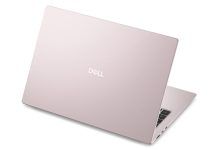
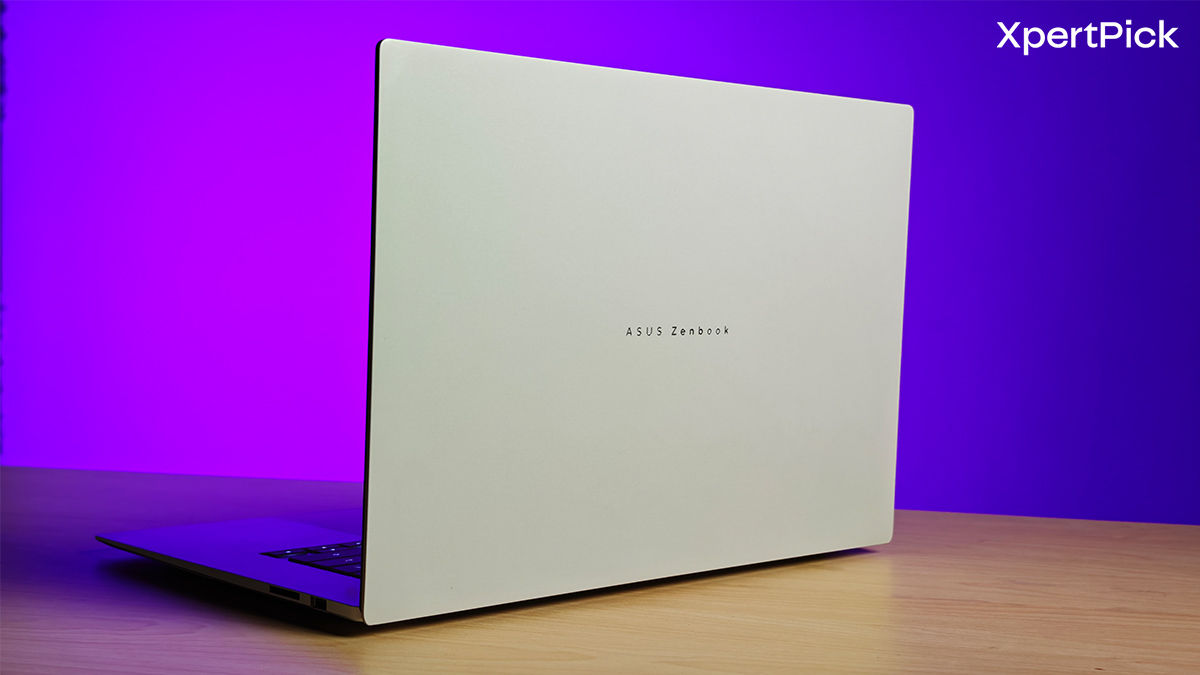
I have tested the Ryzen AI 9 465 in the Asus ZenBook S 16, a 16-inch thin-and-light laptop whose predecessor launched in mid-2024 featuring the AMD Strix Point flagship processor, the AMD Ryzen AI 9 HX 370, which is different from the Strix Halo platform I reviewed earlier.
This time, we have almost the same laptop again, but with a newer and slightly lower-tier AMD chip than before.
That raises a fairly simple question. What does the performance of the new AMD Ryzen AI 9 465 look like, and is this laptop a value-for-money purchase in 2026? Here’s my answer.
Asus Zenbook S 16 Review: Design, Build Quality, Keyboard and I/O
If, like me, you have used the Asus ZenBook S 16 (2024), you will find this year’s model quite similar, with a few changes. Firstly, the design on the top lid has changed compared to the previous model. However, the ZenBook S 16 continues to use Asus’s Ceraluminum coating on the lid, a ceramic-infused aluminium finish that gives the laptop its stone-like texture while also improving scratch resistance.
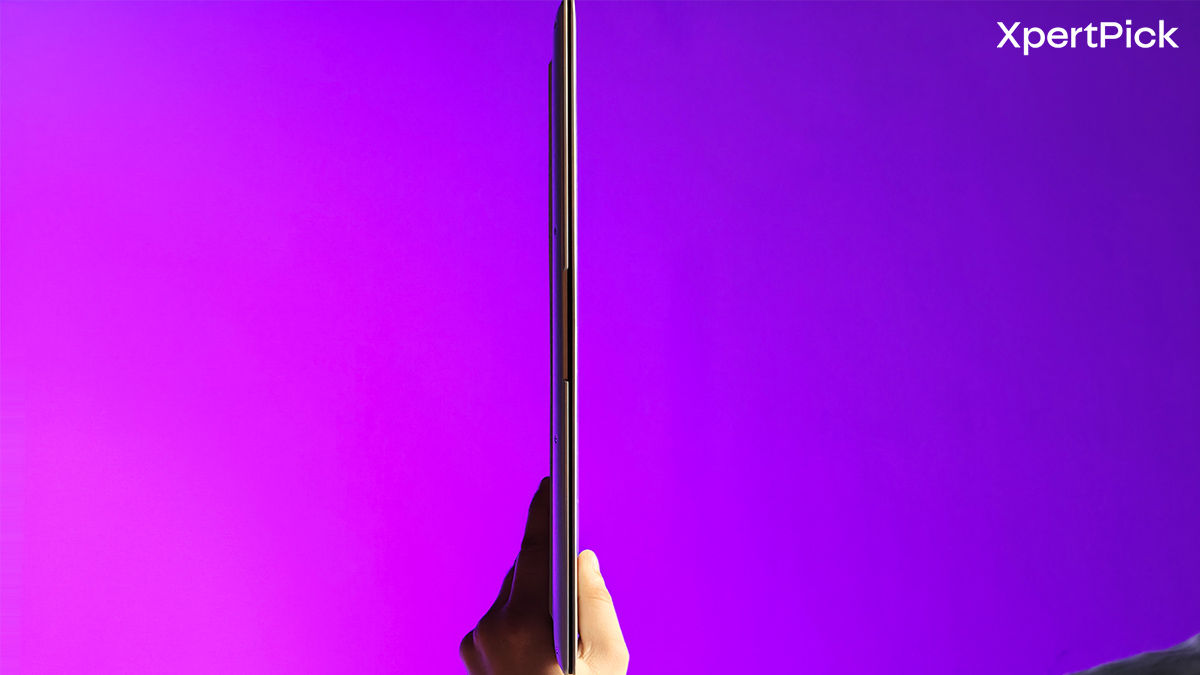
The rest of the chassis is made from aluminium, and just like its predecessor, despite being so thin, the chassis remains free of any major flex or structural issues. It becomes even more impressive when you realise that, at its thinnest point, the laptop is just about 1.2 cm thick. For reference, the fanless 15-inch MacBook Air is only slightly thinner at 1.15 cm.
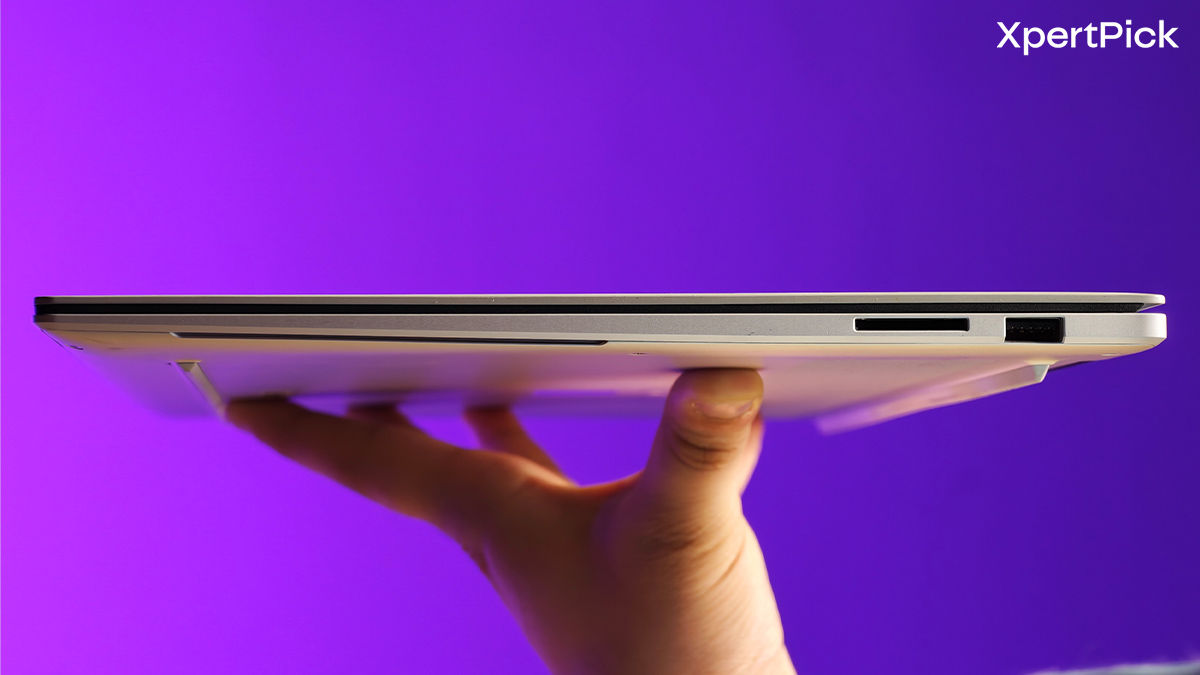
In terms of input and output ports, the laptop offers a fairly practical selection for a device this thin. You get one USB 3.2 Gen 2 Type-A port, two USB4 Type-C ports with support for display output and power delivery, a full-size HDMI 2.1 port, a 3.5 mm combo audio jack, and an SD 4.0 card reader.
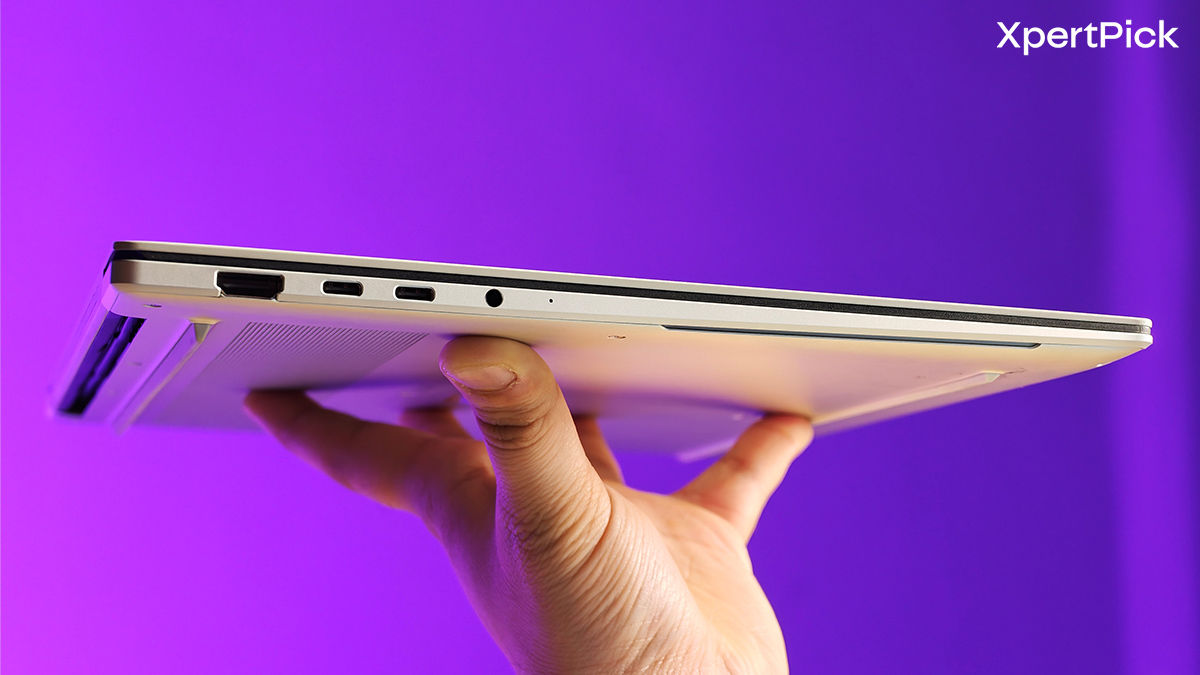
The inclusion of both USB-A and an SD card slot is particularly welcome, as many thin-and-light laptops have started removing these in favour of USB-C only setups. This means most everyday accessories such as USB drives, cameras, and external displays can be connected without relying heavily on dongles or adapters.
Also, the unique keyboard and air-vent design from the previous model carries over here as well. The key travel is shallow, 1.1 mm to be exact, but the typing experience remains good, mainly because the chassis is so stiff.
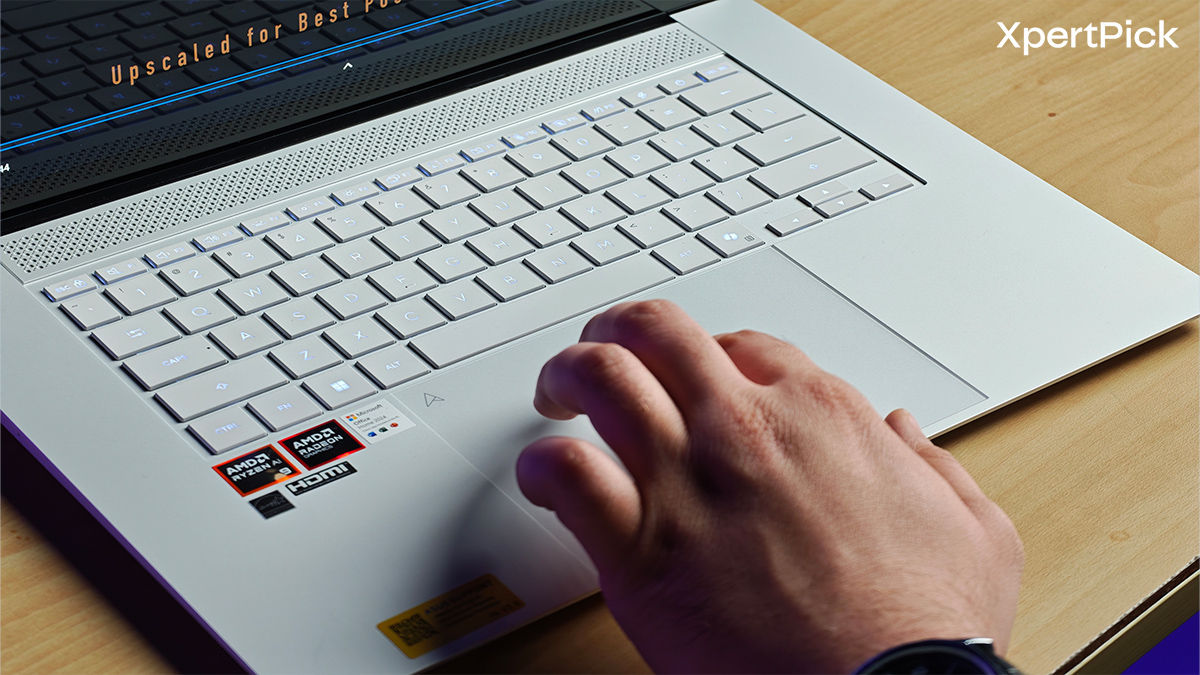
Meanwhile, the touchpad was already huge on the previous model and continues to be so here as well. It is even wider than my iPhone 17 and about 40% larger than ZenBook touchpads from before 2024. The trackpad is also responsive however it does not use a haptic mechanism, which I think should be standard especially at this price range.
Despite being a 16-inch laptop, the weight sits in a comfortable middle ground. It feels substantial enough to give you confidence in the build quality, but it is still light enough to carry around daily without becoming a burden in a backpack. The hinge mechanism also deserves a mention here. The display remains stable while typing and does not wobble excessively, which is something that cannot be taken for granted with thinner laptops.
Asus Zenbook S 16 Review: Chip performance, thermals and gaming
Right off the bat, the AMD Ryzen AI 9 465 appears to be roughly as powerful as the AMD Ryzen AI 9 HX 370. In Cinebench R23, the Ryzen AI 9 465 scored around 1,920 points in the single-core test and 17,401 in the multi-core test. For comparison, the Ryzen AI 9 HX 370 scored 1,933 in the single-core test and 18,309 in the multi-core test.
So the Ryzen AI 9 465 is more powerful than its predecessor, the Ryzen AI 9 365, which scored 1,900 in the single-core test and 17,110 in the multi-core test, and it is closer in performance to the flagship Ryzen AI 9 HX 370.
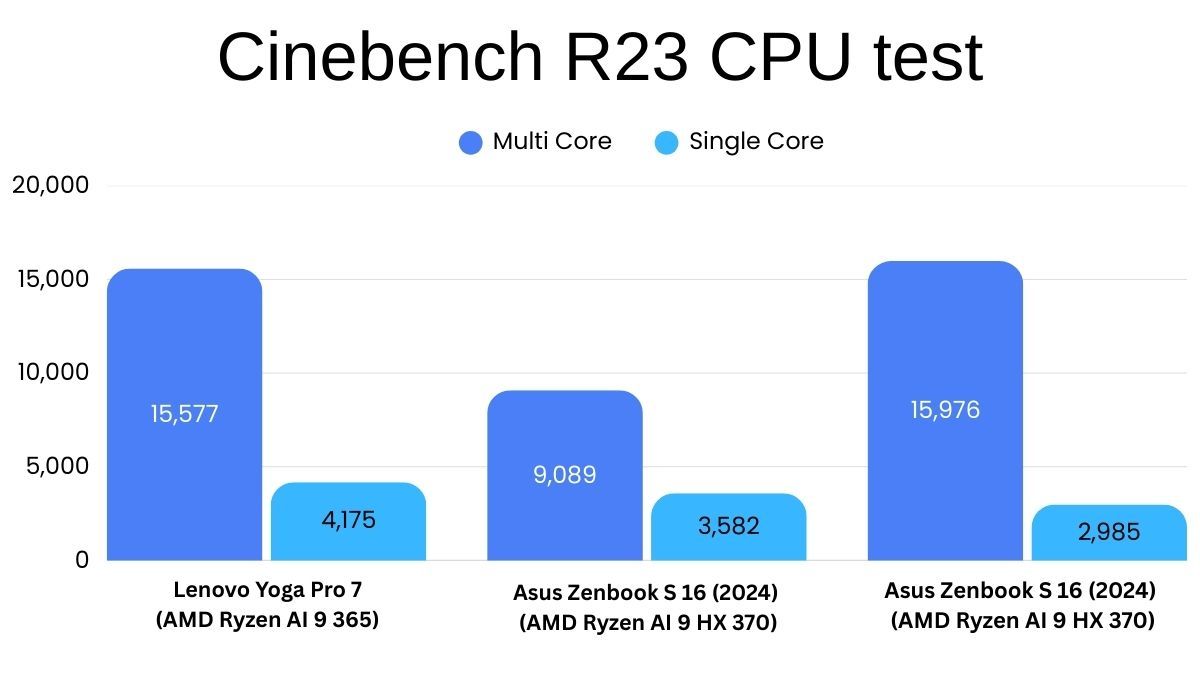
| Processor | Cinebench R23 Single-Core | Cinebench R23 Multi-Core |
| Lenovo Yoga Pro 7
(AMD Ryzen AI 9 365) |
15,577 | 4,175 |
| Asus Zenbook S 16 (2024) (AMD Ryzen AI 9 HX 370) | 9,089 | 3,582 |
| Asus Zenbook S 16 (2026) (AMD Ryzen AI 9 465) | 15,976 | 2,985 |
And the new chip continues to be power efficient, as during peak load it manages to consume only 35 W even under heavy workloads like gaming, video editing or rendering, and just around 10 W while browsing or streaming videos.
The laptop also manages to remain fairly cool even during stress tests, as the average core temperatures hover around 60°C. During normal workloads, it stays at a breezy level of just around 43°C, which are pretty decent temperatures for a machine in this class.
The Zenbook S 16 also keeps the thermal load under control, delivering around 86% stability in the 3DMark Wild Life Extreme stress test. While this is not exemplary by objective standards, it is still quite good for a thin and light laptop.
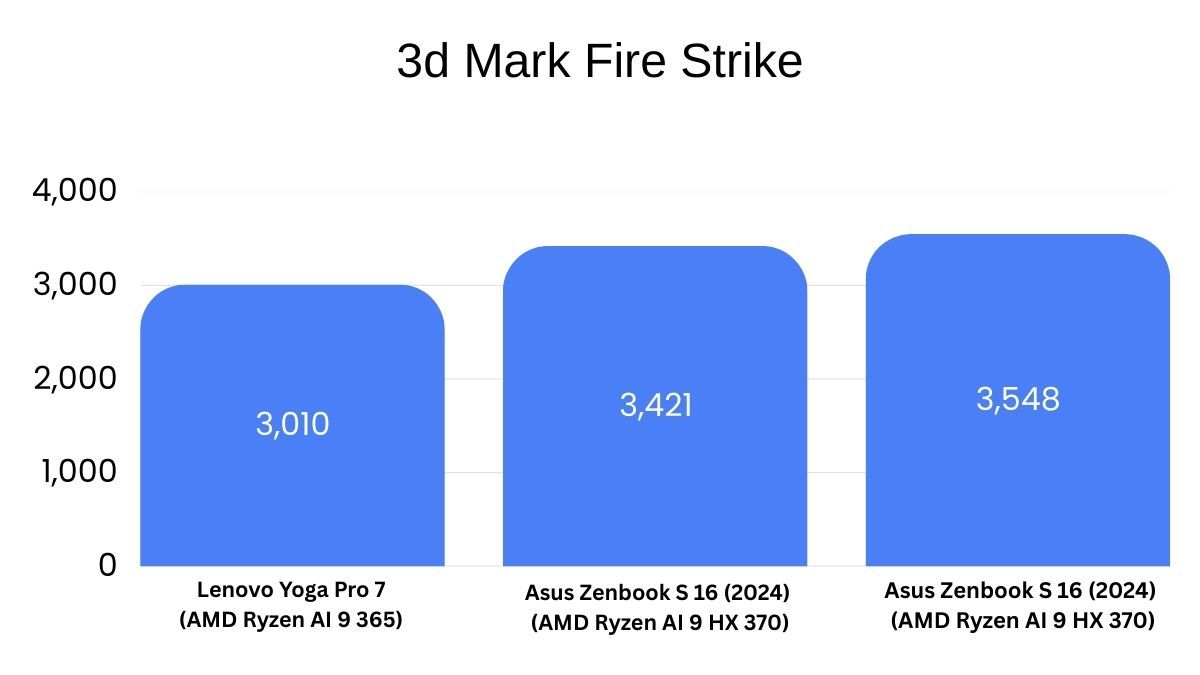
| Laptop & Processor | 3DMark Time Spy Score |
| Lenovo Yoga Pro 7 (AMD Ryzen AI 9 365) | 3,010 |
| Asus Zenbook S 16 (2024) (AMD Ryzen AI 9 HX 370) | 3,421 |
| Asus Zenbook S 16 (2026) (AMD Ryzen AI 9 465) | 3,548 |
But the graphics performance is where the story changes. The Ryzen AI 465 scored 3,548 and, thanks to faster memory, outperforms both the Ryzen AI 9 365, which scored 3,010, and the Ryzen AI 9 HX 370, which scored 3,421.
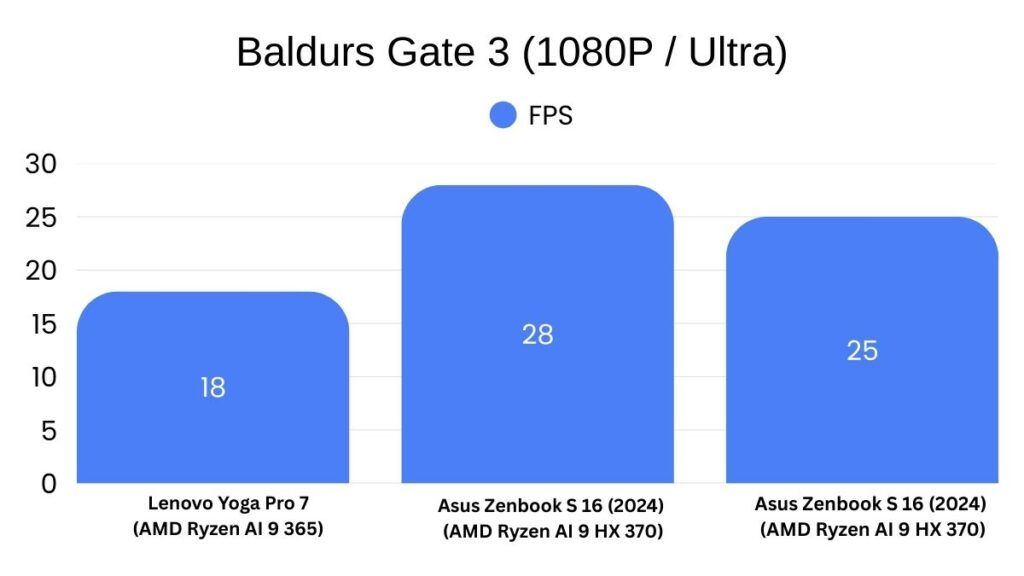
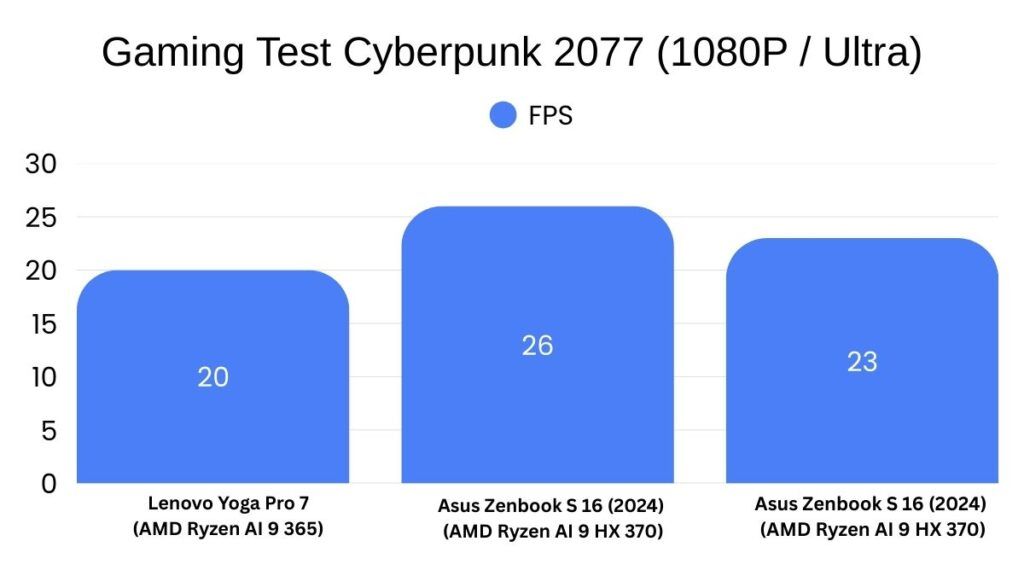
| Laptop & Processor | Baldur’s Gate 3 (1080p Ultra) | Cyberpunk 2077 (1080p Ultra) |
| Lenovo Yoga Pro 7 (AMD Ryzen AI 9 365) | 18 FPS | 20 FPS |
| Asus Zenbook S 16 (2024) (AMD Ryzen AI 9 HX 370) | 28 FPS | 26 FPS |
| Asus Zenbook S 16 (2026) (AMD Ryzen AI 9 465) | 25 FPS | 23 FPS |
Similarly, in real-world gaming performance, the results remain fairly competitive across the three systems. In Baldur’s Gate 3 at 1080p Ultra, the Ryzen AI 9 HX 370 delivers around 28 FPS, followed by the Ryzen AI 465 at 25 FPS, while the Ryzen AI 9 365 trails behind at 18 FPS. A similar pattern appears in Cyberpunk 2077 at 1080p Ultra, where the HX 370 again leads with 26 FPS, the Ryzen AI 465 follows with 23 FPS, and the AI 9 365 records 20 FPS.
Asus Zenbook S 16 Review: Battery Life
The laptop comes with a massive 83 Wh battery, with an exact capacity of 83002 mWh. In terms of heavy usage which involves opening closing multiple apps, running office suites, browsers, video calls and everything else. The laptop’s battery drain at 100% brightness for one hour of office productivity will drain around 13% battery life in performance mode.
And from a total discharge of the battery using the same workload will take around 7 hours and 45 minutes, within the same brightness and power conditions, which is fairly good.
Meanwhile, in gaming, the battery life will last 2 hours and 3 minutes, before the laptop finally switches off.
Asus Zenbook S 16 Review: Display and Speakers
The display delivers a peak brightness of 466.1 nits, which is strong enough for comfortable indoor use and reasonably bright environments. Colour coverage is also excellent, with 100% sRGB and 99.8% DCI-P3, making the panel well suited for media consumption as well as creative work that benefits from a wider colour gamut. Paired with the laptop’s surprisingly capable speakers for such a thin chassis, the overall multimedia experience feels quite enjoyable.
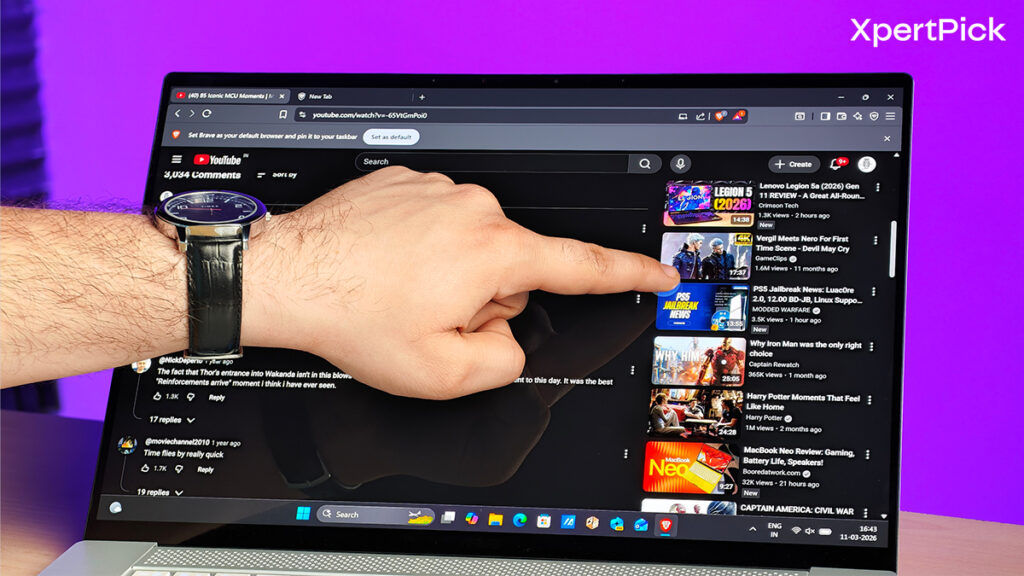
Colour accuracy is equally impressive, with an average Delta E of 1, indicating that the panel is very well calibrated and capable of producing highly accurate colours straight out of the box.
Asus Zenbook S 16 Review: Verdict
The AMD Ryzen AI 9 465 is a decent refresh of the Strix Point platform and manages to deliver flagship-level CPU performance and better-than-flagship integrated GPU performance within its segment.
Since the jump from the Ryzen AI 9 365 to the 465 is not a full platform upgrade like the transition from Intel Lunar Lake to Panther Lake, the resulting performance gains also remain fairly understated.
This puts the laptop it comes with in a somewhat unique position. It currently retails at ₹1.69 lakh with the AMD Ryzen AI 9 465, but you can also find its older model with the HX 370 for a slightly lower price.
Moreover, if you’re willing to sacrifice the 16-inch form factor, you can even find laptops powered by the AMD Ryzen AI 9 365 in the 14- or 15-inch category for around ₹1.20 lakh, of which the Lenovo Yoga Pro 7 is a good example.
And as we have already seen, the difference in actual performance between these laptops remains fairly marginal.
So in conclusion, while the latest AMD Ryzen AI 465 does not break new ground, it helps pave the way for a broader wave of Team Red chips entering the laptop market across multiple price tiers. This should make Ryzen AI laptops far more accessible to buyers looking to step into AMD’s AI-powered notebook ecosystem.