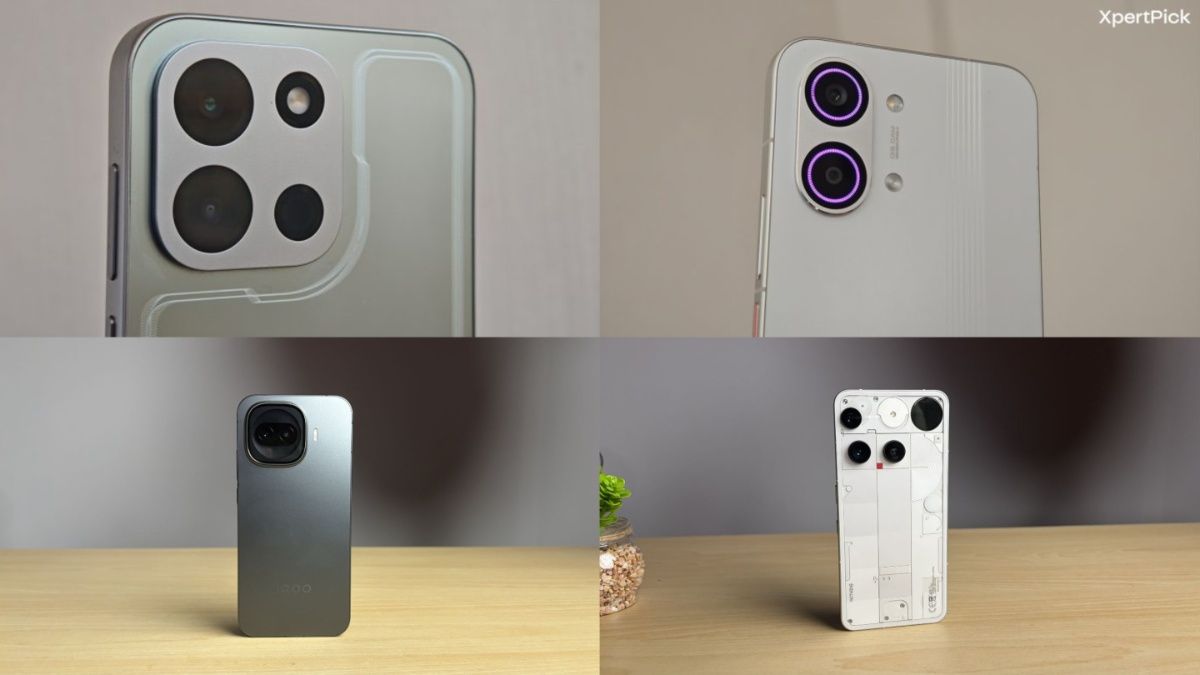
At ₹50,000, you should never have to think about your battery. This is the budget where big silicon-carbon cells, triple-digit charging wattages and flagship-grade efficiency all converge, yet our lab results show a gap of more than ten hours between the best and worst performers at this price. We’ve put nine of the segment’s most competitive smartphones through a rigorous series of battery, thermal, charging and real-world endurance tests to find out which ones truly go the distance.
Phones Considered
I tested nine popular phones priced around the ₹50,000 mark which are likely to be the prime options when you are looking for the best battery smartphone: the iQOO 15R, OnePlus Nord 6, Redmi Note 15 Pro+, POCO X8 Pro Max, Nothing Phone (4a) Pro, Nothing Phone (3), Motorola Edge 70 Pro+, and Google Pixel 10a.
Top Picks at a Glance
The following recommendations are based on comprehensive lab testing. Refer to the comparative results table for a side-by-side analysis of the six recommended models.
| Category | My Pick | Price | Why We Picked It |
|---|---|---|---|
| Best Overall Battery Life | iQOO 15R | ₹49,999 | The longest runtime of all nine phones at 26h 40min in PCMark, with the best efficiency of our picks at 3h 30min per 1,000 mAh |
| Best for Biggest Battery (mAh) | OnePlus Nord 6 | ₹47,999 | One of two 9,000 mAh cells here, the segment’s largest, and the one that converts it into a 26h 22min runtime |
| Best Fast Charging | Redmi Note 15 Pro+ | ₹44,999 | 100W HyperCharge on the smallest cell of the 100W trio delivers the quickest full refill in this comparison, plus 22.5W reverse charging |
| Best Endurance for Gaming / Streaming | POCO X8 Pro Max | ₹48,999 | A 9,000 mAh cell driving the group’s best sustained gaming (118.6 avg / 112.9 5% Low in BGMI) with a 22h 40min runtime and Dolby Vision panel |
| Best Efficient Chipset for Backup | Nothing Phone (4a) Pro | ₹46,980 | 99.3% stress stability, 84% throttling stability and a cool 35.2°C, extracting 3h 22min per 1,000 mAh from a modest 5,400 mAh cell |
| Best Value Battery Pick | Nothing Phone (3) | ₹43,999 | The cheapest phone in this comparison still delivers 17h 27min, near-flagship 117.5 FPS gaming and rare wireless charging |
Battery Benchmark Comparison: Test Results and Performance Analysis
The table below compares the six recommended phones side by side. A 🏆 marks the category winner.
| Test / Metric | iQOO 15R | OnePlus Nord 6 | Redmi Note 15 Pro+ | POCO X8 Pro Max | Nothing Phone (4a) Pro | Nothing Phone (3) |
|---|---|---|---|---|---|---|
| Recommendation | Best overall battery life under ₹50k | Best for biggest battery (mAh) under ₹50k | Best fast charging under ₹50k | Best endurance for gaming / streaming under ₹50k | Best efficient chipset for backup under ₹50k | Best value battery pick under ₹50k |
| Price | ₹49,999 | ₹47,999 | ₹44,999 | ₹48,999 | ₹46,980 | ₹43,999 |
| Battery Capacity | 7,600 mAh | 9,000 mAh 🏆 | 6,500 mAh (Si/C) | 9,000 mAh (Si/C) 🏆 | 5,400 mAh | 5,150 mAh |
| Charging Speed | 100W | 80W | 100W 🏆* | 100W | 50W | 65W (+15W wireless) |
| Battery Life (PCMark) | 26h 40min 🏆 | 26h 22min | 16h 33min | 22h 40min | 18h 10min | 17h 27min |
| Runtime per 1,000 mAh | 3h 30min 🏆 | 2h 56min | 2h 33min | 2h 31min | 3h 22min | 3h 23min |
| AnTuTu Overall | 2,355,785 | 2,400,978 | 1,057,966 | 2,801,896 🏆 | 1,435,113 | 2,372,487 |
| Geekbench (Single / Multi) | 2,803 / 8,943 🏆 | 2,114 / 6,765 | 1,270 / 3,248 | 2,650 / 8,458 | 1,378 / 4,313 | 2,090 / 6,769 |
| Geekbench GPU Score | 17,279 | 13,442 | 3,531 | 19,544 🏆 | 4,597 | 13,584 |
| 3DMark Wild Life Extreme | 3,369 | 4,562 | 1,109 | 6,168 🏆 | 2,093 | 4,469 |
| 3DMark Stress Stability | 85.5% | 52.5% | 99.6% 🏆 | 60.0% | 99.3% | 65.7% |
| CPU Throttling Stability | 81% | 82% | 94% 🏆 | 77% | 84% | 84% |
| Temp After Stress Test | 39°C | 47.3°C | 33.4°C 🏆 | 37.8°C | 35.2°C | 41.6°C |
| BGMI (Avg / 5% Low FPS) | 89.7 / 81.8 | 159.1 / 147.9 🏆 | 59.2 / 51.5 | 118.6 / 112.9 | 97.5 / 55.5 | 117.5 / 109.6 |
| Minecraft (Avg / 5% Low FPS) | 58.9 / 53.3 | 57.9 / 28.6 | 31.5 / 22.6 | 59.8 🏆 / 52.5 | 43.9 / 33.3 | 42.7 / 28.7 |
*Three phones charge at 100W; the trophy reflects the Redmi’s quickest full refill, as its 6,500 mAh cell fills fastest at that wattage. **The iQOO 15R’s CPU throttling entry is being re-verified after our lab records showed conflicting results (28% and 64%); the figure has been withheld until a re-test is complete.
This table compares only the six recommended phones. I tested nine phones in total, but kept the comparison table to the top picks for easier reading and side-by-side comparison. Full benchmark data for the Motorola Edge 70 Pro+, Google Pixel 10a and Vivo X200T can be found in their individual sections further below.
How I Tested These Battery Smartphones
A battery test that only reports a runtime number is telling you half a truth. Two phones in this very comparison carry identical 9,000 mAh cells and finish nearly four hours apart; another pair sit 2,500 mAh apart yet land within an hour of each other. The variable hiding behind every one of those results is the chipset, how frugally it sips at idle, how gracefully it behaves under load, and how much of its charge it wastes as heat. So while every phone here gets the same overnight endurance run, the numbers I trust most are the ones that expose the silicon, not just the cell.
Each device therefore goes through the same four-part gauntlet. First, raw endurance. Second, an efficiency calculation that levels the playing field between big and small batteries. Third, sustained-load and thermal testing, because heat is wasted charge. And fourth, extended gaming sessions with frame-time logging, the single most punishing thing a normal person does to a battery, and the fastest way to catch a chipset lying about its stamina.
Test Conditions: Every phone tested is a retail unit on publicly available software, measured in a controlled environment at a constant 28°C ambient. The highest-specification variant is used wherever one exists. Manufacturer-quoted endurance and charging figures play no part in the results.
Battery Testing: PCMark Work 3.0 runs at a locked 50% brightness until the phone shuts down, a benchmark chosen because it cycles through browsing, editing and media playback the way a real workday does, rather than looping a single video. Dividing the result by battery capacity gives each phone a runtime-per-1,000-mAh score, which is the cleanest single measure of whether endurance is earned by engineering or simply bought with a bigger cell.
Sustained Performance Testing: Twenty consecutive loops of the 3DMark Wild Life Extreme Stress Test, followed by a separate 15-minute CPU throttling run, with chassis temperature logged after each. Every degree above ambient is energy that came out of the battery and went nowhere useful, and the phones that stay cool here are the ones whose cells will age slowest.
Performance Benchmarks: AnTuTu v10 and Geekbench 6 set each phone’s performance baseline. Endurance is the headline in this roundup, but a chipset that has to strain through everyday tasks will quietly drain its cell doing so.
Gaming Tests: BGMI and Minecraft run in extended sessions with full frame-time capture, reporting average FPS alongside 5% Low FPS, the metric that reveals stutter an average hides. If a phone’s power and thermal management is going to crack, it cracks here first.
Updated for July 2026 with the latest launches, testing data and price changes. Prices reflect Indian market rates at the time of publication and are subject to change.
The Phones in Detail
1. iQOO 15R – Best Overall Battery Life Under ₹50k
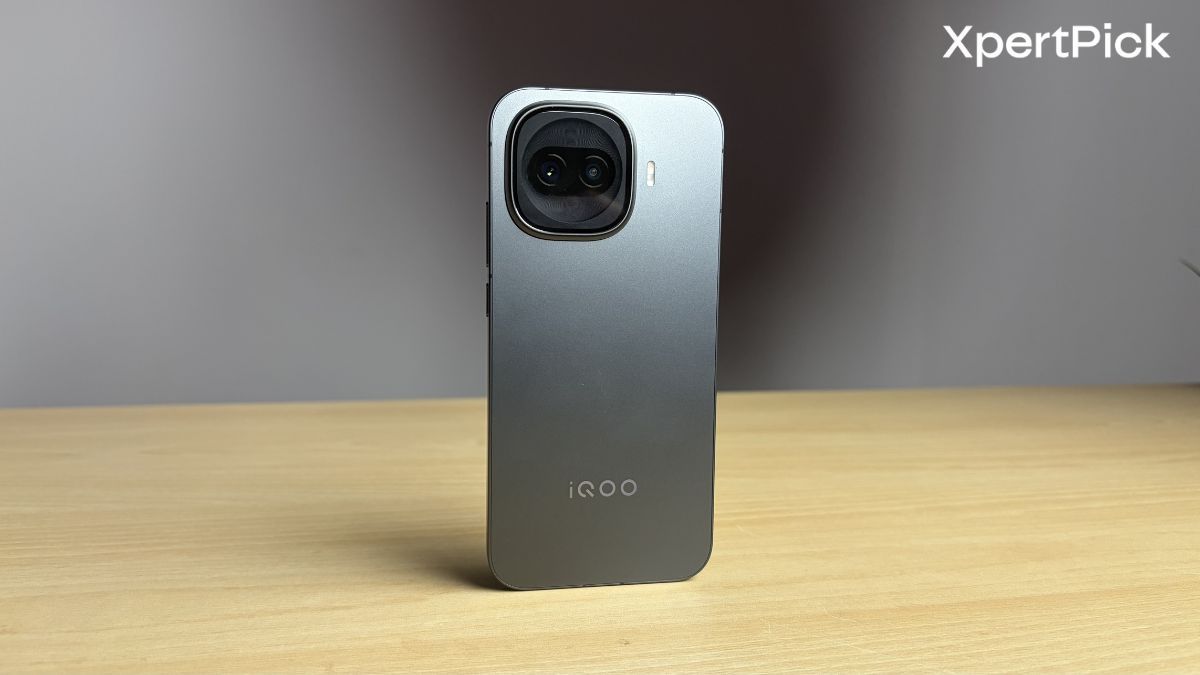
The iQOO 15R is my best overall battery pick at this price, delivering the longest runtime of all nine phones tested at 26 hours and 40 minutes in PCMark, the best efficiency of our picks at 3h 30min per 1,000 mAh, and 85.5% 3DMark stability, endurance that holds up under real load.
Why We Picked It
The iQOO 15R delivers the longest battery life of any phone in this comparison, making it our top recommendation for marathon gaming sessions under ₹50,000. Its 7,600 mAh battery lasted an outstanding 26 hours and 40 minutes in the PCMark Work 3.0 benchmark, comfortably outlasting every rival, including the OnePlus Nord 6 with its larger 9,000 mAh battery. That result highlights just how efficiently the Snapdragon 8 Gen 5 platform manages power, extracting an impressive 3 hours and 30 minutes of runtime per 1,000 mAh, the highest efficiency figure in this group.
The strong endurance is matched by equally dependable sustained performance. The iQOO 15R recorded the best 3DMark Wild Life Extreme Stress Test result in this comparison, maintaining 85.5% graphical stability across 20 loops. In gaming, it produced a consistent 89.7 FPS average in BGMI with an 81.8 FPS 5% Low, while also delivering the strongest Minecraft 5% Low result of the group at 53.3 FPS, ensuring fewer noticeable frame-time spikes during extended play. It may not chase the highest peak frame rates, but it delivers remarkably consistent performance over long sessions. Combined with 100 W fast charging, the iQOO 15R is the strongest choice for buyers who value endurance and sustained gaming performance above benchmark bragging rights.
iQOO 15R Key Specifications
- Price: ₹49,999
- Processor: Qualcomm Snapdragon 8 Gen 5
- Display: 6.78-inch AMOLED (144Hz)
- RAM: 8GB / 12GB
- Storage: 256GB / 512GB
- Battery: 7,600 mAh
- Charging: 100W
- Rear Camera: 50MP Main + 8MP Ultra-Wide
- Front Camera: 32MP Selfie
XP Lab Test Data
- Battery Life (PCMark): 26h 40min
- Runtime per 1,000 mAh: 3h 30min
- AnTuTu Overall Score: 2,355,785
- Geekbench 6: 2,803 (Single-Core) | 8,943 (Multi-Core)
- Geekbench GPU Score: 17,279
- 3DMark Wild Life Extreme: 3,369
- 3DMark Stress Test Stability: 85.5%
- CPU Throttling Test Stability: Under re-verification (conflicting entries in our lab records; a re-test is under way)
- BGMI Performance (Lowest Graphics): 89.7 Average FPS | 81.8 5% Low FPS
- Minecraft Performance (Highest Graphics): 58.9 Average FPS | 53.3 5% Low FPS
Who Should Buy It
Anyone whose single biggest requirement is a phone that simply refuses to die, heavy travellers, field workers, marathon streamers and long-session gamers who value consistency over peak frame rates. It pairs the group’s best endurance with its best sustained stability, which is a rare combination at any price.
Who Shouldn’t Buy It
Frame-rate chasers. If you want 120 FPS or higher in BGMI, the OnePlus Nord 6 and POCO X8 Pro Max both deliver dramatically higher ceilings, just with shorter runtimes and weaker sustained stability.
Expert Verdict: The most complete battery package under ₹50,000, to my mind. It wins the runtime chart outright, does it with the least capacity among the front-runners, and holds its performance under stress better than anything else here. If battery life is why you’re reading this article, this is the phone I’d buy.
2. OnePlus Nord 6 – Best for Biggest Battery (mAh) Under ₹50k
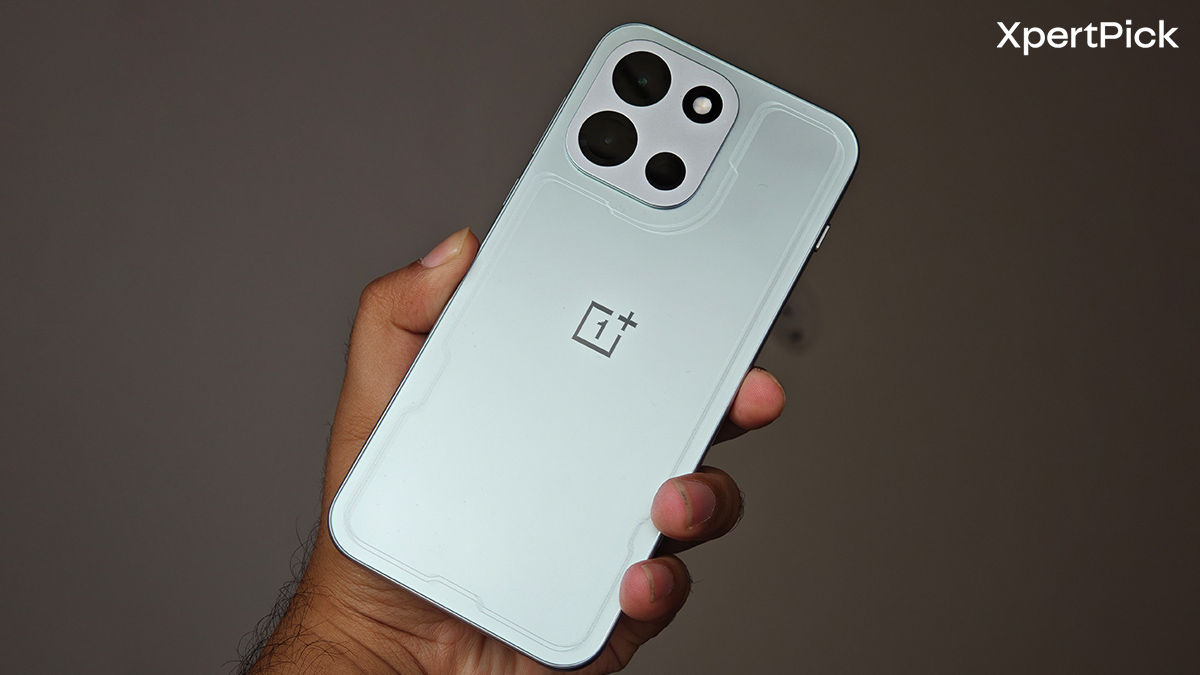
The OnePlus Nord 6 is my pick for the biggest battery under ₹50,000, packing a colossal 9,000 mAh cell, tied for the segment’s largest, and converting it into a 26h 22min PCMark runtime alongside the highest gaming frame rates we have ever logged in this bracket.
Why We Picked It
The OnePlus Nord 6 pairs one of the largest batteries in this comparison with the fastest gaming performance, making it our top recommendation for buyers who want long endurance without giving up competitive frame rates. Its 9,000 mAh battery lasted an impressive 26 hours and 22 minutes in the PCMark Work 3.0 benchmark, the second-best result in this comparison, while delivering a healthy 2 hours and 56 minutes of runtime per 1,000 mAh. OnePlus complements that endurance with 80W SUPERVOOC charging, 27W reverse charging, bypass charging for gaming, and a battery rated to retain 80% of its capacity after five years, making it one of the most future-proof devices in this segment.
Gaming performance is equally impressive. Powered by the Snapdragon 8s Gen 4 and a 165 Hz AMOLED display, the Nord 6 recorded an exceptional 159.1 FPS average in BGMI, alongside a 147.9 FPS 5% Low, comfortably the highest frame-rate result in this comparison. The trade-off comes under sustained stress. The phone managed 52.5% stability in the 3DMark Wild Life Extreme Stress Test, reached the highest surface temperature in the group at 47.3°C, and its Minecraft 5% Low dropped to 28.6 FPS at maximum settings. Despite these figures, frame pacing remained consistently smooth in BGMI during real-world gameplay. For buyers who want flagship-level gaming performance backed by exceptional battery life, the OnePlus Nord 6 is one of the strongest options under ₹50,000.
OnePlus Nord 6 Key Specifications
- Price: ₹47,999
- Processor: Qualcomm Snapdragon 8s Gen 4
- Display: 6.78-inch 1.5K AMOLED (165Hz) | 3,600 nits peak
- RAM: 8GB / 12GB
- Storage: 256GB
- Battery: 9,000 mAh
- Charging: 80W SUPERVOOC (charger in box) + 27W reverse
- Rear Camera: 50MP Sony Main (OIS) + 8MP Ultra-Wide
- Front Camera: 32MP Selfie
OnePlus Nord 6 XP Lab Test Data
- Battery Life (PCMark): 26h 22min
- Runtime per 1,000 mAh: 2h 56min
- AnTuTu Overall Score: 2,400,978
- Geekbench 6: 2,114 (Single-Core) | 6,765 (Multi-Core)
- Geekbench GPU Score: 13,442
- 3DMark Wild Life Extreme: 4,562
- 3DMark Stress Test Stability: 52.5%
- CPU Throttling Test Stability: 82%
- Temperature After Stress Test: 47.3°C
- BGMI Performance (Lowest Graphics): 159.1 Average FPS | 147.9 5% Low FPS
- Minecraft Performance (Highest Graphics): 57.9 Average FPS | 28.6 5% Low FPS
Pros
The joint-largest battery under ₹50,000 (9,000 mAh) with a 26h 22min runtime, the highest BGMI frame rates we have logged in this segment (159.1 average / 147.9 5% Low at 165Hz), an in-box 80W charger, 27W reverse charging and IP69K plus MIL-STD-810H durability.
Cons
The weakest 3DMark stress stability of our picks (52.5%) and the hottest post-stress temperature of all nine phones (47.3°C); Minecraft frame-time lows also sag at maximum settings.
Who Should Buy It
Buyers who want maximum capacity with genuine two-to-three-day stamina and, as a bonus, the fastest competitive-shooter experience in the segment. If your usage is BGMI plus a long working day away from sockets, this is a uniquely strong combination.
Who Shouldn’t Buy It
Anyone prioritising cool, sustained performance for hours-long graphically intense sessions, the 47.3°C stress-test temperature and 52.5% stability are real warnings. The iQOO 15R and Nothing Phone (4a) Pro hold themselves together far better under prolonged load.
Expert Verdict: The biggest battery here, used well. It gives away eighteen minutes of runtime to the iQOO 15R while offering 1,400 mAh more capacity and a frame-rate ceiling nothing else can touch. Watch the thermals in marathon sessions; otherwise, this is the segment’s endurance-and-excitement package.
3. Redmi Note 15 Pro+ – Best Fast Charging Under ₹50k
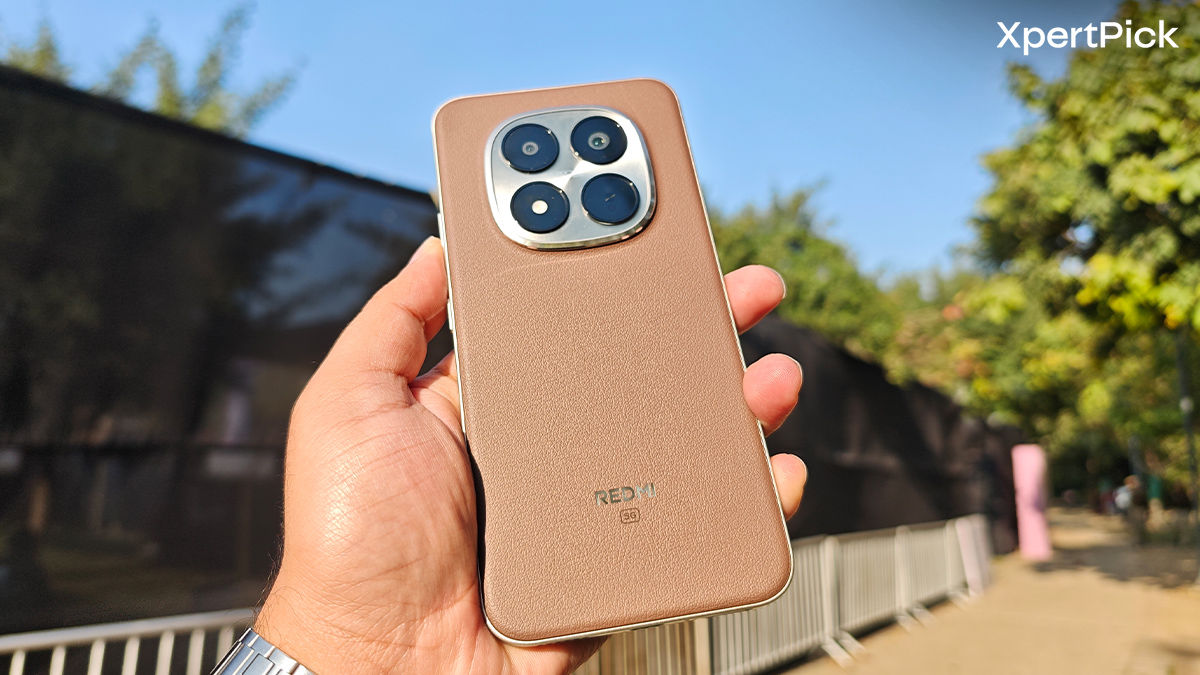
The Redmi Note 15 Pro+ is my fast-charging pick under ₹50,000: its 100W HyperCharge feeds the smallest cell of this comparison’s 100W trio, making it the quickest phone here to go from empty to full, with 22.5W reverse charging turning it into a power bank when needed.
Why We Picked It
The Redmi Note 15 Pro+ is our top recommendation for buyers who prioritise charging speed, pairing 100W HyperCharge with one of the quickest full recharge times in this comparison. While several rivals also support 100W charging, its comparatively smaller 6,500 mAh silicon-carbon battery allows it to recharge noticeably faster than devices with 7,600 mAh or 9,000 mAh cells. Xiaomi also includes 22.5W reverse charging, making it useful for topping up accessories or even another smartphone when needed.
Fast charging is only part of the story. The Redmi Note 15 Pro+ also delivers the strongest sustained stability figures in this comparison, recording 94% CPU throttling stability and an outstanding 99.6% graphics stability in the 3DMark Wild Life Extreme Stress Test, while remaining the coolest device on test at just 33.4°C. Those low operating temperatures should also benefit long-term battery health, which Xiaomi rates at 80% capacity after 1,600 charge cycles. Its 16-hour 33-minute PCMark runtime trails the endurance-focused phones in this comparison, and gaming is limited to around 60 FPS in most titles, but for buyers who value rapid charging, excellent thermal management, and long-term battery longevity, the Redmi Note 15 Pro+ is one of the most well-engineered options under ₹50,000.
Redmi Note 15 Pro+ Key Specifications
- Price: ₹44,999
- Processor: Qualcomm Snapdragon 7s Gen 4
- Display: 6.83-inch 1.5K CrystalRes AMOLED (120Hz) | 3,200 nits peak, Dolby Vision
- RAM: 8GB / 12GB LPDDR4X
- Storage: 256GB / 512GB UFS 2.2
- Battery: 6,500 mAh silicon-carbon (1,600-cycle rated)
- Charging: 100W HyperCharge + 22.5W reverse
- Rear Camera: 200MP Main (OIS) + 8MP Ultra-Wide
- Front Camera: 32MP Selfie
Redmi Note 15 Pro+ XP Lab Test Data
- Battery Life (PCMark): 16h 33min
- Runtime per 1,000 mAh: 2h 33min
- AnTuTu Overall Score: 1,057,966
- Geekbench 6: 1,270 (Single-Core) | 3,248 (Multi-Core)
- Geekbench GPU Score: 3,531
- 3DMark Wild Life Extreme: 1,109
- 3DMark Stress Test Stability: 99.6%
- CPU Throttling Test Stability: 94%
- Temperature After Stress Test: 33.4°C (coolest of all nine phones tested)
- BGMI Performance (Lowest Graphics): 59.2 Average FPS | 51.5 5% Low FPS
- Minecraft Performance (Highest Graphics): 31.5 Average FPS | 22.6 5% Low FPS
Pros
The quickest full refill in this comparison (100W on the smallest cell of the 100W trio) plus 22.5W reverse charging, the best throttling (94%) and stress stability (99.6%) of all nine phones, the coolest running temperature (33.4°C), a six-year-rated battery, a 200MP camera and the toughest build here.
Cons
The shortest runtime of our six picks (16h 33min), LPDDR4X RAM and UFS 2.2 storage at this money, and gaming capped around 60 FPS.
Who Should Buy It
Buyers who live in short charging windows, a few minutes here and there rather than overnight, and anyone who plans to keep their phone for years. The combination of the fastest refill, the coolest thermals and a 1,600-cycle battery makes it the best long-term battery custodian in this group.
Who Shouldn’t Buy It
Anyone ranking phones by raw runtime or gaming performance. The iQOO 15R lasts ten hours longer per charge, and every performance-class pick here more than doubles its frame rates.
Expert Verdict: The fastest way back to 100% under ₹50,000, wrapped around the healthiest battery engineering in this comparison. It won’t win a runtime or FPS chart, but as the phone that spends the least time on a charger and treats its cell the most gently, it earns this category cleanly.
4. POCO X8 Pro Max – Best Endurance for Gaming / Streaming Under ₹50k
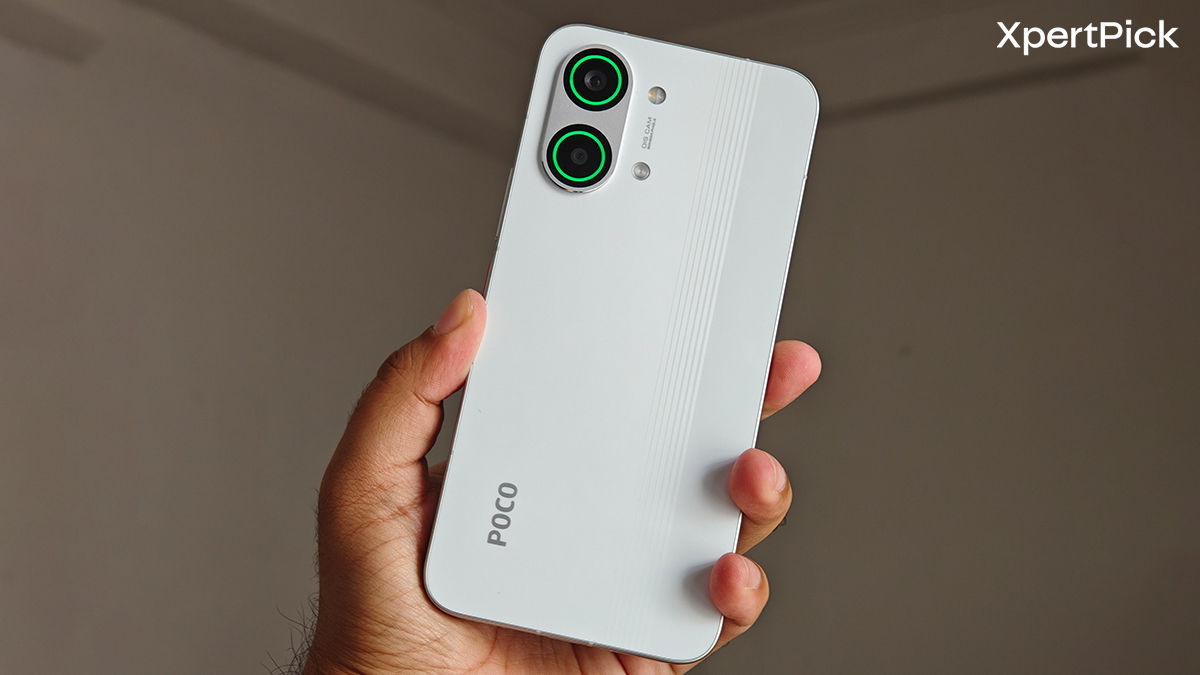
The POCO X8 Pro Max is my endurance pick for gaming and streaming under ₹50,000, pairing a 9,000 mAh silicon-carbon battery and a 22h 40min PCMark runtime with the group’s most consistent high-frame-rate gaming, 118.6 average and 112.9 5% Low FPS in BGMI.
Why We Picked It
The POCO X8 Pro Max is our top recommendation for marathon gaming, combining flagship-class performance with outstanding battery life to deliver one of the most complete gaming experiences under ₹50,000. Powered by the Dimensity 9500s, it topped our benchmark charts with the highest AnTuTu (2,801,896), Geekbench GPU (19,544) and 3DMark Wild Life Extreme (6,168) scores in this comparison. More importantly, those numbers translated into excellent real-world gaming, producing a smooth 118.6 FPS average in BGMI with an outstanding 112.9 FPS 5% Low, alongside the strongest Minecraft performance in the group at 59.8 FPS on maximum settings.
Backing that performance is a substantial 9,000 mAh silicon-carbon battery, which lasted 22 hours and 40 minutes in the PCMark Work 3.0 benchmark, making it one of the longest-lasting phones in this comparison. The battery supports 100W HyperCharge, reaching 50% in around 24 minutes, while 27W reverse charging adds useful flexibility for powering accessories. A 6.83-inch 1.5K AMOLED display with Dolby Vision, Dolby Atmos speakers, and an IP69-rated chassis round out an impressive multimedia package. The trade-offs are worth noting: graphics stability drops to 60% during prolonged synthetic stress testing, although temperatures remain well controlled at 37.8°C, there is no bypass charging, and at 218g the phone is noticeably heavier than most rivals. Even so, few devices in this price range balance gaming performance, endurance, and multimedia capabilities as effectively as the POCO X8 Pro Max.
POCO X8 Pro Max Key Specifications
- Price: ₹48,999
- Processor: MediaTek Dimensity 9500s
- Display: 6.83-inch 1.5K AMOLED (120Hz) | 3,500 nits peak, Dolby Vision
- RAM: 12GB LPDDR5X Ultra
- Storage: 256GB / 512GB UFS 4.1
- Battery: 9,000 mAh silicon-carbon (India variant; 1,600-cycle rated)
- Charging: 100W HyperCharge (50% in 24 minutes) + 27W reverse
- Rear Camera: 50MP Light Fusion 600 (OIS) + 8MP Ultra-Wide
- Front Camera: 20MP Selfie
XP Lab Test Data
- Battery Life (PCMark): 22h 40min
- Runtime per 1,000 mAh: 2h 31min
- AnTuTu Overall Score: 2,801,896
- Geekbench 6: 2,650 (Single-Core) | 8,458 (Multi-Core)
- Geekbench GPU Score: 19,544
- 3DMark Wild Life Extreme: 6,168
- 3DMark Stress Test Stability: 60.0%
- CPU Throttling Test Stability: 77%
- Temperature After Stress Test: 37.8°C
- BGMI Performance (Lowest Graphics): 118.6 Average FPS | 112.9 5% Low FPS
- Minecraft Performance (Highest Graphics): 59.8 Average FPS | 52.5 5% Low FPS
Pros
The best raw performance of the comparison (2.8M AnTuTu, group-best GPU scores) converted into the most consistent 120 FPS-class gaming here (112.9 5% Low in BGMI), fed by a joint-largest 9,000 mAh battery with a 22h 40min runtime, 100W charging and a Dolby Vision display in an IP69K build.
Cons
60% 3DMark stress stability shows performance tapering under prolonged synthetic load, per-mAh efficiency (2h 31min/1,000 mAh) is the lowest of our picks, there’s no bypass charging, and at 218g it’s heavy.
Who Should Buy It
Serious mobile gamers and binge streamers who refuse to ration either frames or battery. Nothing else under ₹50,000 pairs this level of gaming consistency with a cell this large, a three-hour BGMI session barely dents it.
Who Shouldn’t Buy It
Efficiency purists and camera-first buyers. Its runtime-per-mAh is the weakest of our picks, the ultra-wide camera is basic, and the always-cool, always-stable alternatives (Note 15 Pro+, Phone (4a) Pro) manage their cells far more gently.
Expert Verdict: The definition of this category. It carries the segment’s biggest battery, its fastest verified silicon and its steadiest frame delivery in one chassis, and while its synthetic stability number looks ordinary, our in-game logs show the frames simply don’t drop. For gaming endurance under ₹50,000, this is the one.
5. Nothing Phone (4a) Pro – Best Efficient Chipset for Backup Under ₹50k
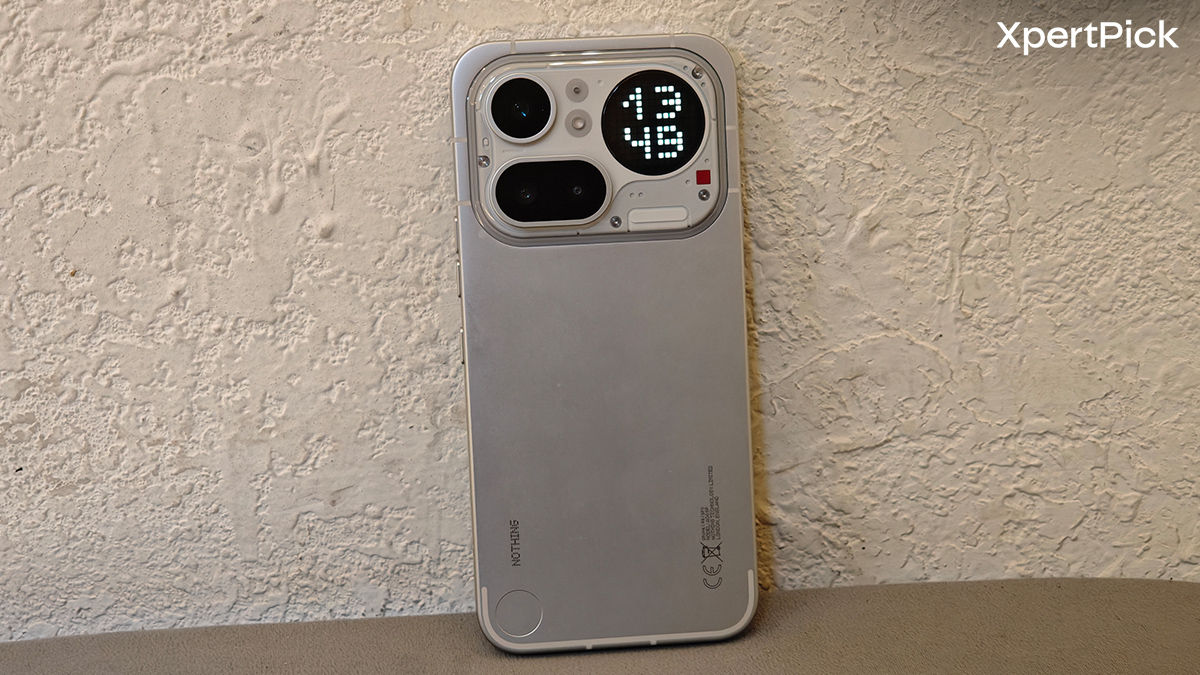
The Nothing Phone (4a) Pro is my efficient-chipset pick under ₹50,000, extracting 3h 22min per 1,000 mAh from a modest 5,400 mAh cell, an 18h 10min runtime, while holding 99.3% stress stability, 84% throttling stability and a cool 35.2°C under load.
Why We Picked It
The Nothing Phone (4a) Pro proves that battery life is about efficiency as much as capacity, making it our top recommendation for buyers who value dependable everyday endurance. Despite carrying one of the smaller batteries in this comparison, its Snapdragon 7 Gen 4 platform delivered an impressive 18-hour 10-minute PCMark Work 3.0 runtime, outlasting several rivals with significantly larger cells. Its efficiency of 3 hours and 22 minutes per 1,000 mAh ranks among the best in this group, highlighting how effectively Nothing has tuned the hardware for long-term usability rather than headline battery capacity.
That efficiency extends to sustained performance. The Phone (4a) Pro achieved an outstanding 99.3% graphics stability in the 20-loop 3DMark Wild Life Extreme Stress Test, maintained 84% CPU throttling stability, and finished testing with a remarkably cool chassis temperature of just 35.2°C. In BGMI, it averaged 97.5 FPS, although its 55.5 FPS 5% Low indicates occasional frame drops during heavier gameplay. Beyond performance, the phone offers a capable 50 MP periscope telephoto camera, a smooth 144 Hz 1.5K AMOLED display, and Nothing’s clean software experience with long-term update support. The trade-offs are modest: the 5,400 mAh battery is smaller than most rivals, charging is limited to 50W, and a charger is not included in the box. Even so, for buyers seeking a reliable everyday companion with excellent efficiency and consistently cool operation, the Nothing Phone (4a) Pro is one of the most well-rounded choices in this category.
Nothing Phone (4a) Pro Key Specifications
- Price: ₹46,980
- Processor: Qualcomm Snapdragon 7 Gen 4
- Display: 6.83-inch 1.5K AMOLED (144Hz)
- RAM: 8GB / 12GB
- Storage: 128GB / 256GB UFS 3.1
- Battery: 5,400 mAh
- Charging: 50W wired (no charger in box)
- Rear Camera: 50MP Sony LYT-700C Main (OIS) + 50MP 3.5x Periscope Telephoto + 8MP Ultra-Wide
- Front Camera: 32MP Selfie
Nothing Phone (4a) Pro XP Lab Test Data
- Battery Life (PCMark): 18h 10min
- Runtime per 1,000 mAh: 3h 22min
- AnTuTu Overall Score: 1,435,113
- Geekbench 6: 1,378 (Single-Core) | 4,313 (Multi-Core)
- Geekbench GPU Score: 4,597
- 3DMark Wild Life Extreme: 2,093
- 3DMark Stress Test Stability: 99.3%
- CPU Throttling Test Stability: 84%
- Temperature After Stress Test: 35.2°C
- BGMI Performance (Lowest Graphics): 97.5 Average FPS | 55.5 5% Low FPS
- Minecraft Performance (Highest Graphics): 43.9 Average FPS | 33.3 5% Low FPS
Pros
Outstanding chipset efficiency, 18h 10min from just 5,400 mAh (3h 22min per 1,000 mAh), with near-perfect 99.3% stress stability, cool 35.2°C thermals, a genuinely useful periscope camera and clean, long-supported software.
Cons
The smallest battery of our picks, slow 50W charging with no charger included, and BGMI 5% Lows (55.5 FPS) that betray stutter under sustained gaming pressure.
Who Should Buy It
Buyers shopping for a dependable second phone, a long-term keeper, or a primary device for moderate users who charge nightly, the efficiency, thermals and stability profile here is engineered for years of drama-free service, with a distinctive design and strong cameras as the reward.
Who Shouldn’t Buy It
Endurance maximalists and competitive gamers. The iQOO 15R lasts over eight hours longer per charge, and the X8 Pro Max holds its frame rates far more consistently under load.
Expert Verdict: The quiet achiever of this comparison. It can’t win a capacity or runtime headline, but per milliampere-hour it is one of the best-managed phones we’ve tested at this price, cool, stable and frugal. As the efficient-chipset backup pick, it fits the brief exactly.
6. Nothing Phone (3) – Best Value Battery Pick Under ₹50k
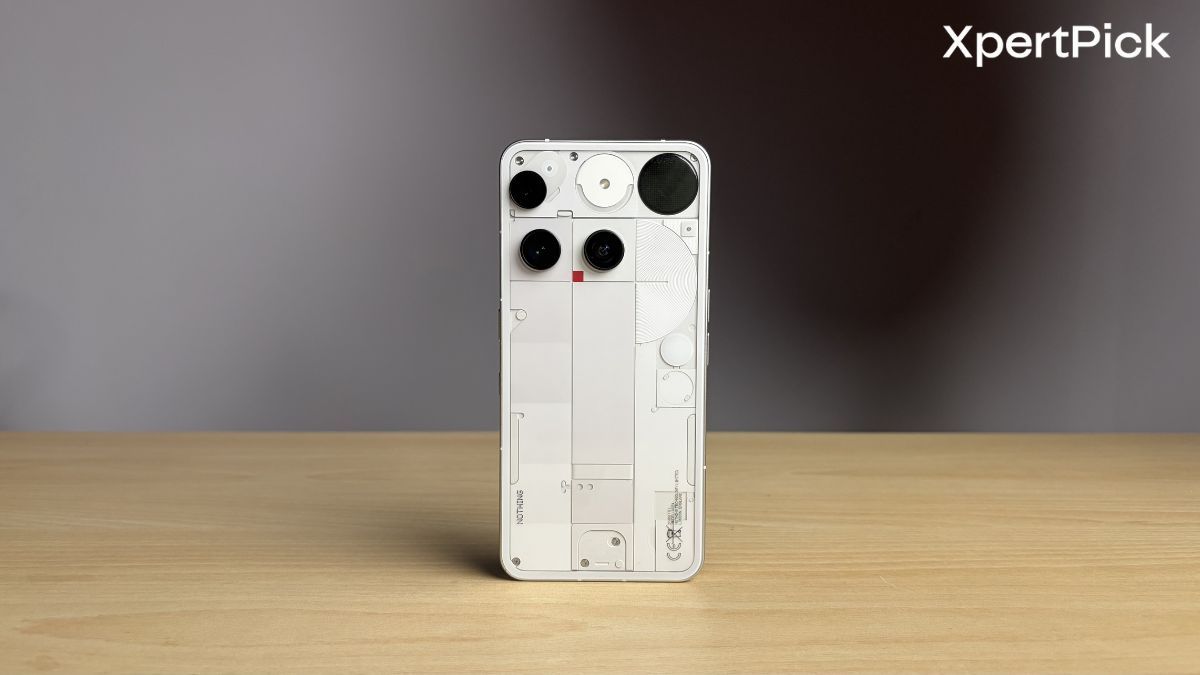
The Nothing Phone (3) is my value pick in this comparison: at ₹43,999, the lowest price of the nine, it still delivers a 17h 27min PCMark runtime, near-flagship 117.5 FPS BGMI gaming with 84% throttling stability, and the only wireless charging among our six picks.
Why We Picked It
The Nothing Phone (3) delivers one of the strongest value propositions in this comparison, combining excellent battery efficiency, flagship-grade gaming performance, and premium features at a price that undercuts many of its rivals. Despite packing the smallest battery in this group at 5,150 mAh, it achieved an impressive 17-hour 27-minute runtime in the PCMark Work 3.0 benchmark. Its efficiency of 3 hours and 23 minutes per 1,000 mAh ranks among the best in this comparison, proving that thoughtful optimisation can outweigh sheer battery capacity. It also stands out by offering both 65W wired and 15W wireless charging, with wireless charging remaining a rarity in this price segment.
Performance is equally compelling. Powered by the Snapdragon 8s Gen 4, the Phone (3) averaged 117.5 FPS in BGMI while maintaining an excellent 109.6 FPS 5% Low, backed by 84% CPU throttling stability to keep performance consistent during longer gaming sessions. The package is rounded out by a 4,500-nit flexible AMOLED display, a versatile quad 50 MP camera system, and Nothing’s clean software experience with long-term update support. There are compromises: 3DMark Wild Life Extreme Stress Test stability of 65.7% and a post-stress temperature of 41.6°C are respectable rather than class-leading, while demanding titles such as Minecraft expose the GPU’s limits with an average of 42.7 FPS at maximum settings. Even so, few smartphones in this price range deliver such a balanced mix of gaming performance, battery efficiency, premium hardware, and everyday usability.
Nothing Phone (3) Key Specifications
- Price: ₹43,999
- Processor: Qualcomm Snapdragon 8s Gen 4
- Display: 6.67-inch flexible AMOLED (120Hz) | 4,500 nits peak
- RAM: 12GB / 16GB LPDDR5X
- Storage: 256GB / 512GB UFS 4.0
- Battery: 5,150 mAh
- Charging: 65W wired + 15W wireless
- Rear Camera: 50MP Main + 50MP Ultra-Wide + 50MP Telephoto
- Front Camera: 50MP Selfie
Nothing Phone (3) XP Lab Test Data
- Battery Life (PCMark): 17h 27min
- Runtime per 1,000 mAh: 3h 23min
- AnTuTu Overall Score: 2,372,487
- Geekbench 6: 2,090 (Single-Core) | 6,769 (Multi-Core)
- Geekbench GPU Score: 13,584
- 3DMark Wild Life Extreme: 4,469
- 3DMark Stress Test Stability: 65.7%
- CPU Throttling Test Stability: 84%
- Temperature After Stress Test: 41.6°C
- BGMI Performance (Lowest Graphics): 117.5 Average FPS | 109.6 5% Low FPS
- Minecraft Performance (Highest Graphics): 42.7 Average FPS | 28.7 5% Low FPS
Pros
The lowest price in this comparison with the second-best efficiency of our picks (3h 23min per 1,000 mAh), near-flagship 117.5 FPS BGMI gaming held steady by 84% throttling stability, the only wireless charging among the six picks, and a quad-50MP camera system with clean software.
Cons
The smallest battery of the nine (5,150 mAh) keeps absolute runtime mid-table, stress stability (65.7%) and post-stress temperature (41.6°C) are unremarkable, and Minecraft performance at maximum settings trails the gaming picks.
Who Should Buy It
Value-focused buyers who want a genuine all-rounder, full-day endurance, wireless charging convenience and 120 FPS-class gaming, at the lowest price this comparison offers. For most people spending under ₹45,000, this is the most sensible ticket into the segment.
Who Shouldn’t Buy It
Multi-day endurance seekers. Its 5,150 mAh cell can’t play in the same league as the 7,600–9,000 mAh monsters here; the iQOO 15R and Nord 6 last nine hours longer per charge.
Expert Verdict: The smartest spend of the nine. It gives up the capacity arms race entirely and instead delivers efficiency, wireless charging, real gaming chops and clean software at a price nothing else here matches. As a value battery pick, it’s exactly the right kind of compromise.
7. Motorola Edge 70 Pro+
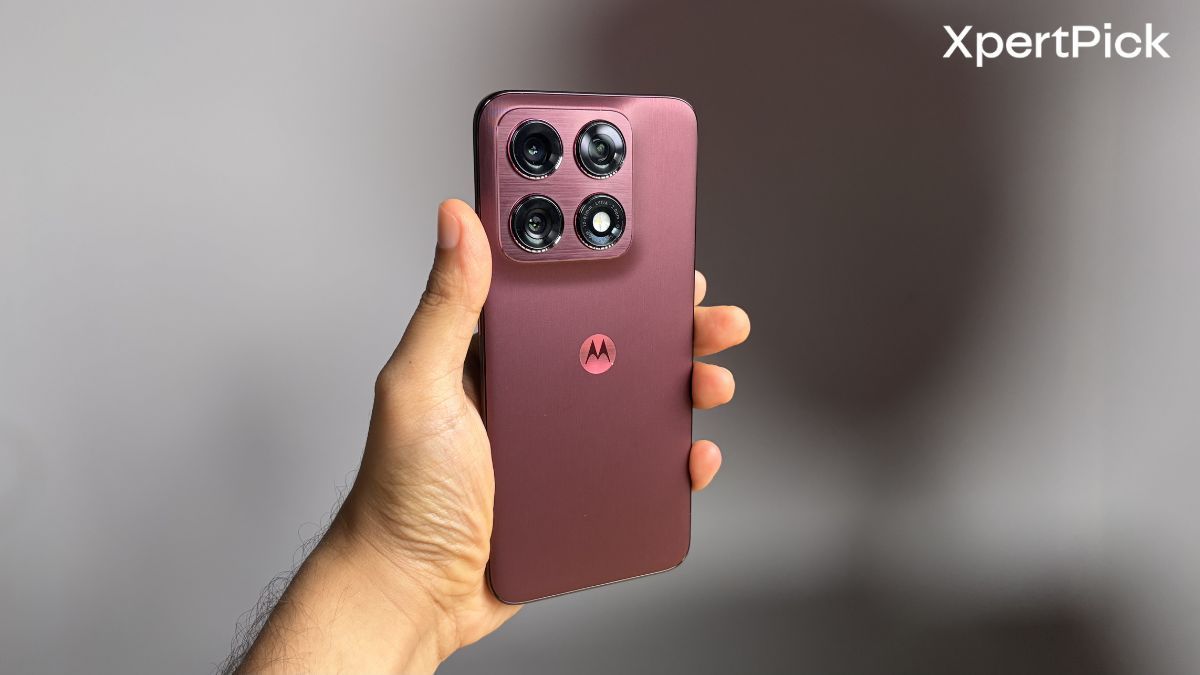
Despite its stunning design, periscope camera and rare 15W wireless charging, the Motorola Edge 70 Pro+ falls short as a battery-focused recommendation: the worst 3DMark stress stability of all nine phones (47.9%), the second-shortest runtime here (16h 23min), and the group’s weakest efficiency keep it off the list.
Why We Didn’t Pick It
The Motorola Edge 70 Pro+ delivers impressive peak performance, but its battery life and sustained gaming performance fall short of the best phones in this comparison. Powered by the Dimensity 8500 Extreme, it recorded a strong 2,202,060 AnTuTu score, averaged 116.2 FPS in BGMI with an excellent 96.1 FPS 5% Low, and produced one of the highest Minecraft results in the group at 64.8 FPS. However, its graphics performance proved difficult to sustain, retaining just 47.9% in the 3DMark Wild Life Extreme Stress Test, the lowest result among the phones tested, which points to aggressive throttling during prolonged gaming sessions.
Battery performance is equally underwhelming. Despite its 6,500 mAh silicon-carbon battery, the Edge 70 Pro+ lasted 16 hours and 23 minutes in the PCMark Work 3.0 benchmark, placing near the bottom of this comparison with an efficiency figure of just 2 hours and 31 minutes per 1,000 mAh. That said, it remains a compelling all-round flagship. A 6.78-inch 144 Hz AMOLED display, versatile triple 50 MP camera system with a 3.5x periscope telephoto lens, 90W wired charging that refills the battery in under 50 minutes, and 15W wireless charging make it an attractive choice for multimedia and photography enthusiasts. Buyers prioritising battery life and sustained gaming, however, will find considerably stronger alternatives in this comparison.
Motorola Edge 70 Pro+ Key Specifications
- Price: ₹47,999
- Processor: MediaTek Dimensity 8500 Extreme
- Display: 6.78-inch 1.5K AMOLED (144Hz)
- RAM: 12GB LPDDR5X
- Storage: 256GB
- Battery: 6,500 mAh silicon-carbon
- Charging: 90W TurboPower (full in under 50 minutes) + 15W wireless
- Rear Camera: 50MP Sony LYTIA 710 (OIS) + 50MP 3.5x Periscope Telephoto + 50MP Ultra-Wide
- Front Camera: 50MP Selfie
Motorola Edge 70 Pro+ XP Lab Test Data
- Battery Life (PCMark): 16h 23min
- Runtime per 1,000 mAh: 2h 31min
- AnTuTu Overall Score: 2,202,060
- Geekbench 6: 1,706 (Single-Core) | 6,786 (Multi-Core)
- Geekbench GPU Score: 12,375
- 3DMark Wild Life Extreme: 4,487
- 3DMark Stress Test Stability: 47.9%
- CPU Throttling Test Stability: 75%
- Temperature After Stress Test: 35.6°C
- BGMI Performance (Lowest Graphics): 116.2 Average FPS | 96.1 5% Low FPS
- Minecraft Performance (Highest Graphics): 64.8 Average FPS | 52.1 5% Low FPS
Pros
Premium design with a triple 50MP camera system including a 3.5x periscope, strong peak gaming (116.2 FPS BGMI), sub-50-minute full charges at 90W, and rare 15W wireless charging.
Cons
The worst sustained stability of all nine phones (47.9%), the second-shortest runtime (16h 23min), and tied-weakest efficiency per mAh, a peaks-over-endurance profile that is the opposite of what this list rewards.
Who Should Buy It
Camera- and design-led buyers who game in bursts rather than marathons, and who value the wireless charging and periscope zoom that most rivals at this price omit.
Who Shouldn’t Buy It
Anyone reading a battery roundup with intent. Runtime, efficiency and sustained stability all sit at or near the bottom of this group.
Expert Verdict: A lovely phone with the wrong priorities for this list. Its peaks are real and its charging package is genuinely excellent, but a battery pick has to last, and this one simply doesn’t, relative to the company it keeps here.
8. Google Pixel 10a
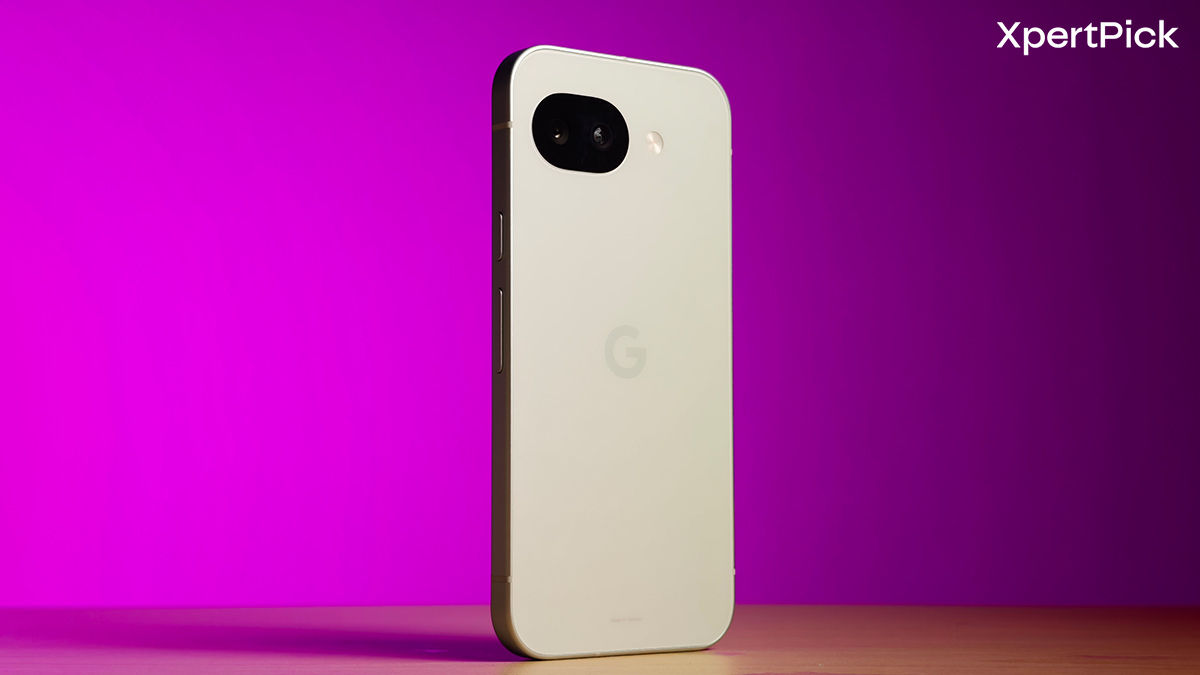
The Google Pixel 10a did not make my recommendation list: its 5,100 mAh battery is the smallest here, its 30W charging is the slowest by a distance, and its 16h 40min runtime sits third from bottom, though seven years of updates and Qi wireless charging give it a longevity story of a different kind.
Why We Didn’t Pick It
The Google Pixel 10a delivers a polished software experience and excellent cameras, but it falls well short of the battery-focused priorities of this comparison. Its 5,100 mAh battery is the smallest in the group and lasted 16 hours and 40 minutes in the PCMark Work 3.0 benchmark. While its efficiency of 3 hours and 16 minutes per 1,000 mAh is respectable, charging is comparatively slow at 30W, placing it well behind the 100W fast-charging phones in this segment. The addition of 10W Qi wireless charging is a welcome convenience, but it does little to offset the slower wired charging speeds.
The Tensor G4 also trails the competition in sustained performance, recording 75.3% graphics stability in the 3DMark Wild Life Extreme Stress Test and 70% CPU throttling stability, while gaming remains limited to around 60 FPS in BGMI. Where the Pixel 10a excels is outside the scope of this roundup. Its 48 MP OIS camera delivers some of the best computational photography in its class, Google’s clean Android experience remains a key strength, and the promise of seven years of software updates is unmatched in this comparison. For buyers who prioritise software, cameras, and long-term support, it remains an excellent smartphone. However, for anyone focused on battery life, charging speed, and sustained gaming performance, there are considerably stronger options available at this price.
Google Pixel 10a Key Specifications
- Price: ₹49,879
- Processor: Google Tensor G4
- Display: 6.3-inch FHD+ OLED (120Hz) | 3,000 nits peak
- RAM: 8GB
- Storage: 256GB
- Battery: 5,100 mAh
- Charging: 30W wired + 10W Qi wireless
- Rear Camera: 48MP Main (OIS) + 13MP Ultra-Wide
- Front Camera: 13MP Selfie
Google Pixel 10a XP Lab Test Data
- Battery Life (PCMark): 16h 40min
- Runtime per 1,000 mAh: 3h 16min
- AnTuTu Overall Score: 1,610,292
- Geekbench 6: 1,711 (Single-Core) | 4,400 (Multi-Core)
- Geekbench GPU Score: 8,680
- 3DMark Wild Life Extreme: 2,678
- 3DMark Stress Test Stability: 75.3%
- CPU Throttling Test Stability: 70%
- BGMI Performance (Lowest Graphics): 59.6 Average FPS | 57.7 5% Low FPS
- Minecraft Performance (Highest Graphics): 34.8 Average FPS | 27.2 5% Low FPS
Pros
Class-leading camera software, the cleanest Android experience here with seven years of updates, a compact IP68 build, and wireless charging.
Cons
The smallest battery, the slowest charging by a wide margin (30W), a below-average runtime, and ~60 FPS gaming, the weakest battery-first case among the nine on nearly every axis.
Who Should Buy It
Software- and camera-first buyers who want a compact phone they’ll keep for five-plus years, charge nightly, and never think about again.
Who Shouldn’t Buy It
Anyone whose priority is endurance or charging speed, which is everyone this article is written for.
Expert Verdict: A phone with a genuinely great longevity story that has nothing to do with its battery. In a camera or software roundup it would contend; in this one, the numbers close the case.
Frequently Asked Questions (FAQs)
Which Phone Has the Best Battery Life Under ₹50,000? The iQOO 15R (₹49,999) has the best battery life under ₹50,000, lasting 26 hours and 40 minutes in the PCMark Work 3.0 test, the longest runtime in our nine-phone comparison, from its 7,600 mAh battery. The OnePlus Nord 6 is second at 26h 22min, and the POCO X8 Pro Max third at 22h 40min.
Which Phone Under ₹50,000 Has the Biggest Battery? Two phones tie for the biggest battery under ₹50,000 at 9,000 mAh: the OnePlus Nord 6 and the POCO X8 Pro Max (India variant). Our category pick is the Nord 6, which converts that capacity into the better runtime of the pair, 26h 22min against the POCO’s 22h 40min.
Which Phone Under ₹50,000 Charges the Fastest? The Redmi Note 15 Pro+ delivers the quickest full refill: its 100W HyperCharge feeds the smallest cell of the three 100W phones here (6,500 mAh), so it reaches 100% before the iQOO 15R (7,600 mAh) and POCO X8 Pro Max (9,000 mAh) at the same wattage. The X8 Pro Max still hits 50% in a claimed 24 minutes, and the Motorola Edge 70 Pro+ pairs sub-50-minute 90W full charges with rare 15W wireless charging.
Which Battery Phone Is Best for Gaming and Streaming Under ₹50,000? The POCO X8 Pro Max. It combines the group’s most consistent high-frame-rate gaming, 118.6 FPS average and 112.9 FPS 5% Low in BGMI, with a group-best 59.8 FPS in Minecraft, with a 9,000 mAh battery, a 22h 40min runtime and a Dolby Vision AMOLED. If you want the absolute highest frame rates instead, the OnePlus Nord 6 hit 159.1 FPS in BGMI on its 165Hz display, though with weaker sustained stability.
Does a Bigger mAh Number Always Mean Better Battery Life? No, and this comparison is the proof. The 7,600 mAh iQOO 15R (26h 40min) outlasted both 9,000 mAh phones, and the 5,150 mAh Nothing Phone (3) outlasted the 6,500 mAh Motorola Edge 70 Pro+ by over an hour. Runtime per 1,000 mAh ranged from 2h 31min to 3h 38min across the nine phones, chipset efficiency, thermals and software tuning matter as much as raw capacity.
Which Is the Best Value Battery Phone Under ₹45,000? The Nothing Phone (3) at ₹43,999, the cheapest phone in this comparison, delivers a 17h 27min runtime with the second-best efficiency of our picks, near-flagship 117.5 FPS BGMI gaming, and the only wireless charging among our recommended six. The Redmi Note 15 Pro+ at ₹44,999 is the alternative for buyers who prioritise charging speed and long-term battery health over frame rates.
Is the Vivo X200T Worth It for Battery Life? On the data, absolutely, it posted the best efficiency of all nine phones (3h 38min per 1,000 mAh) and a 22h 32min runtime. But at its ₹59,999 list price it sits ₹10,000 above this article’s budget, which is why it isn’t recommended here. It has dipped to ₹49,999 during Flipkart sale events, at which point it becomes one of the strongest picks in this comparison.
Is the Google Pixel 10a Good for Battery Life? No. Its 5,100 mAh battery is the smallest of the nine phones tested, its 30W charging is the slowest by a wide margin, and its 16h 40min runtime sits near the bottom of the group. It remains an excellent camera-and-software phone with seven years of updates, but it is not a battery-first purchase.
Why Trust XpertPick
Every recommendation on this page comes from hands-on lab testing rather than manufacturer spec sheets or marketing claims. This comparison was built entirely on retail units running shipping software.
- Independent testing: I tested all nine phones in-house on retail units; no manufacturer-supplied battery, charging or performance data has been used.
- Standardised conditions: every device was tested at 28°C ambient, on the highest-specification variant available, using the same battery, stress and gaming suites run to completion.
- Efficiency-first methodology: I measure raw runtime, runtime per 1,000 mAh, thermal behaviour under sustained load, and real-world gaming endurance, because the mAh number on the box routinely contradicts how long a phone actually lasts.
- Continuously updated: at XpertPick, we keep updating the test process and this article as new devices launch and prices change, so the picks reflect the current market.