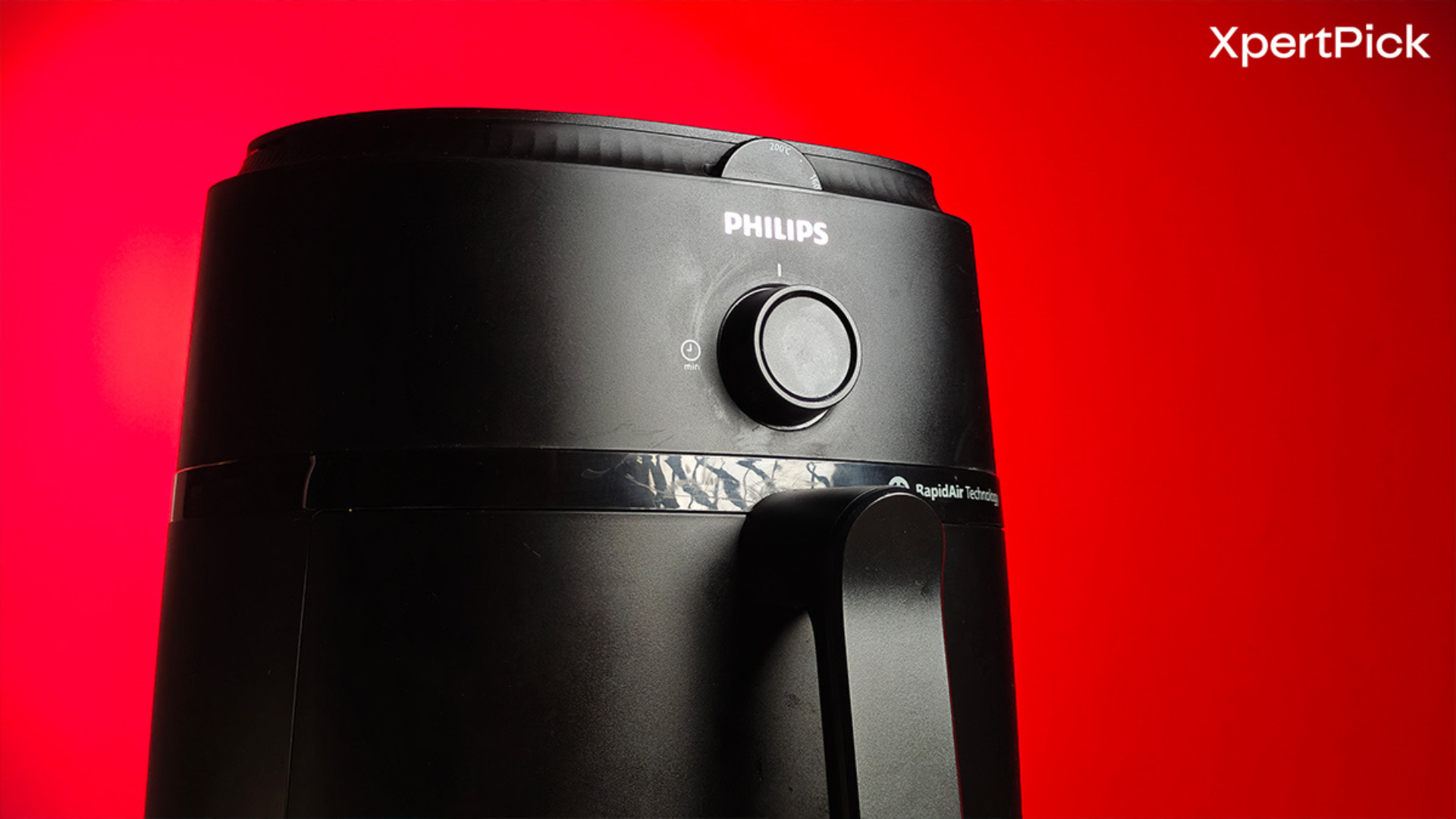
When I first got my hands on the Philips NA120/00, I didn’t overthink it. I skipped the presets, ignored anything fancy, and went straight for the most basic test. Two potatoes, cut at home, a bit of oil, and the air fryer. Because just like restaurants, air fryers should get French Fries right, that’s the basic test.
I kept the process simple, didn’t use frozen fries because they are already a little fried, I just cut two potatoes, washed off the excess starch, dried them properly, and added a light coating of oil along with some seasoning. No coating, no cornflour, nothing fancy. If you have also bought the Philips NA120/00 recently, this one’s for you.
It’s a Simple Air Fryer That Relies on You
The first thing that you notice when you start using the Philips NA120/00 is that it is a very hands-on appliance. There are no presets or cooking modes here, just temperature and time knobs. While that keeps the interface simple and unintimidating, it also means the appliance doesn’t intervene much in the cooking process. The result will also depend on how you set it up.
In my case, with the potatoes, I started at a lower temperature of 120°C for about 10 minutes to cook the inside, then increased it to 200°C to get the crispness. But midway through, when I was flipping the fries, I noticed that the edges had started to brown faster than expected. So to avoid burning my fries and ruining my mood, I reduced the temperature to 160°C.
With a manual air fryer, you have to keep in mind these kinds of adjustments. The air fryer responds well, but it doesn’t correct things for you.
The Results: Close, But Not Uniform
The fries did turn out crispy, but the result wasn’t even. Some pieces had a proper golden crust, while others were a bit softer. I will also blame my cutting skills here a bit since not all the pieces were uniform. Also, without any coating, the texture relied entirely on airflow and how evenly the oil was distributed across the surface. The results weren’t bad, and with a bit of practice, you will also nail the perfect crispness. That’s the effort a manual air fryer requires.
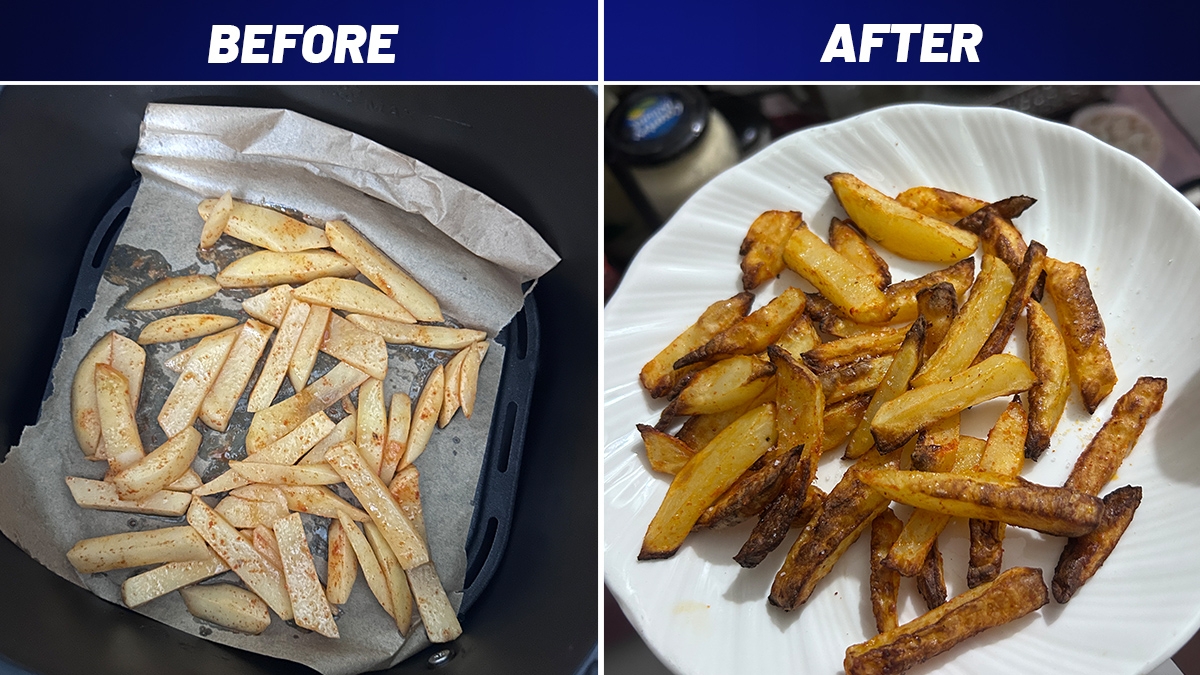
This is also where the limitations of a compact 4.2-litre basket begin to show. Even slight overcrowding or overlapping affects how hot air circulates, and that directly impacts consistency. Pieces that are more exposed crisp up better. So you need to keep that in mind as well, not only for this model but for any small air fryer.
What This Tells About Everyday Performance
What this test makes clear is that the Philips NA120/00 delivers on its core function but expects some involvement from the user. It heats up quickly, the controls are straightforward, and for small batches, it performs reliably. But it does not smooth out inconsistencies. Uneven cuts, insufficient oil, or a packed basket will all show up in the final result.
At the same time, once you start adjusting things, spacing the food better, shaking the basket midway, and managing temperature in stages, the output will definitely improve.
Where The Philips NA120/00 Fits & Where It Doesn’t
For someone buying their first air fryer, this model makes a lot of sense. It is simple, compact, and does not overwhelm you with multiple features that you may not even use. It is well-suited for small households or for quick, everyday cooking where portion sizes are limited. Plus, if you’re calorie-conscious, want to eat healthy, but want to treat yourself once in a while, this does the job.
But let me remind you, it does not replicate deep frying. It won’t deliver uniform results without effort, and it doesn’t automate the cooking process in the way higher-end or larger models sometimes attempt to. So, just keep your expectations in place, practice a little, start with a lower temperature and then you’ll crack how to use this air fryer.