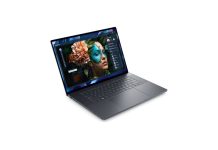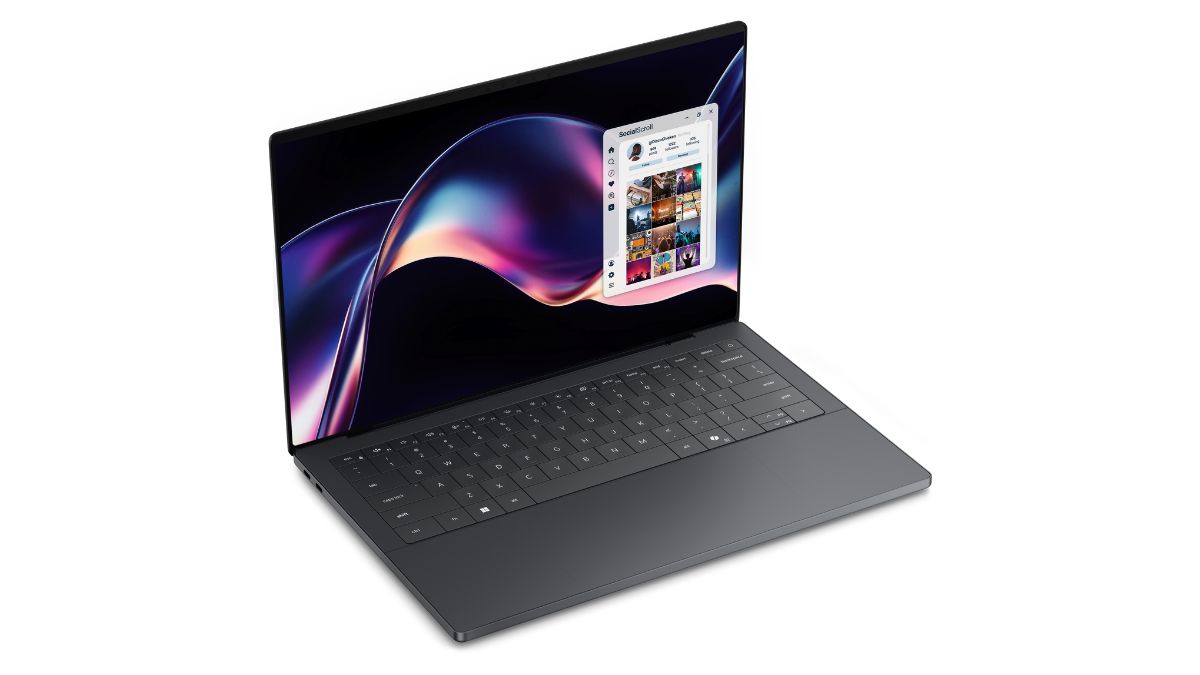
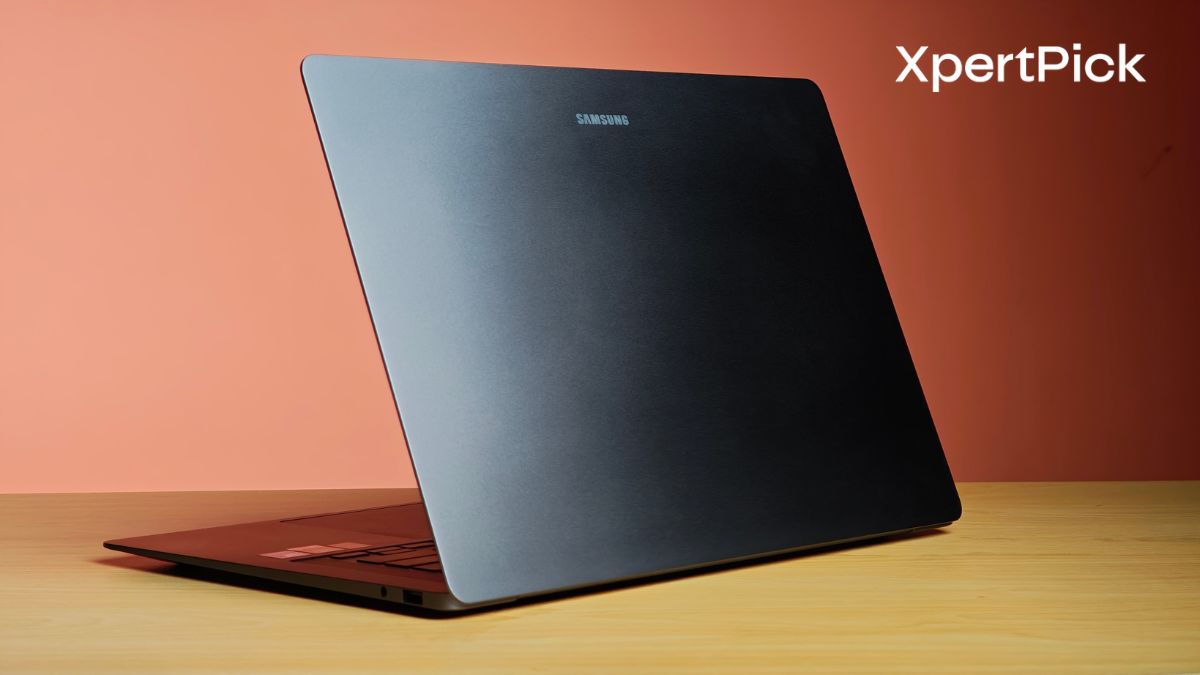
Which is the better laptop for content creation and productivity: the Samsung Galaxy Book6 Pro or the Dell XPS 14? It is a question worth asking, especially when both laptops sit in the ₹2 lakh to ₹2.5 lakh price bracket. The Galaxy Book6 Pro is a thin and light 16-inch laptop with a surprisingly slim profile, while the Dell XPS 14 is a more compact 14-inch machine that is slightly thicker in comparison, but still slim by premium laptop standards.
So, is size the only real difference between these two laptops, or do they actually offer different capabilities for different users? More importantly, which one is better suited for performance-heavy productivity and content creation workloads? Let’s find out.
Build Quality And Dimensions: The Galaxy Book6 Pro Is Thinner, But The XPS 14 Is Easier To Carry
| Dimension/Spec | Samsung Galaxy Book6 Pro (16-inch) | Dell XPS 14 (2026 Model – OLED) |
| Width | 356.9 mm | 309.5 mm |
| Depth | 248.0 mm | 209.7 mm |
| Height (Thickness) | 11.9 mm | 14.6 mm |
| Starting Weight | 1.59 kg | 1.36 kg |
The Samsung Galaxy Book6 Pro 16-inch and Dell XPS 14 OLED are aimed at slightly different users when it comes to size, portability, and overall build philosophy. The Galaxy Book6 Pro is clearly the larger laptop, measuring 356.9 mm in width and 248 mm in depth, compared to 309.5 mm and 209.7 mm on the Dell XPS 14. That makes the Samsung around 47.4 mm wider and 38.3 mm deeper, so it will take up noticeably more space on a desk, inside a backpack, or while using it in tighter spaces like a café table or flight tray.
That said, Samsung has done a great job of keeping the chassis impressively slim and light for a 16-inch machine. The Galaxy Book6 Pro uses a full aluminium build, which gives it a sturdy, premium feel without making it unnecessarily heavy. Despite its larger footprint, it is only 11.9 mm thick, while the Dell XPS 14 measures 14.6 mm. This gives the Samsung a sleeker side profile and makes it look almost impossibly thin for a 16-inch laptop. But in day-to-day portability, footprint matters more than thinness alone, and this is where the Dell XPS 14 feels easier to carry.
The Dell XPS 14 takes a slightly different route with its construction. Its exterior is made from CNC-machined aluminium, with Dell using 75% recycled aluminium for the top and bottom covers. The more distinctive bit, however, is on the inside, where Dell uses seamless Corning Gorilla Glass 3 across the palm rest and touchpad area. On the OLED variant, the display is also protected by Corning Gorilla Glass Victus. So while the Samsung feels like a clean, lightweight full-metal productivity machine, the Dell leans more into that dense, modern, glass-and-metal premium feel.
The Dell is also lighter, starting at 1.36 kg compared to 1.59 kg for the Galaxy Book6 Pro. A 230 g difference may not sound massive on paper, but combined with the smaller chassis, it makes the XPS 14 the more compact and travel-friendly option. The Galaxy Book6 Pro, on the other hand, makes more sense if you value a larger display for multitasking, writing, spreadsheets, or media work. So, the Samsung is impressively thin and light for a 16-inch laptop, but the Dell XPS 14 is clearly the more portable machine overall.
Performance Compared: Galaxy Book6 Pro Shows Stronger Sustained Power
| Benchmark | Samsung Galaxy Book6 Pro (16-inch) | Dell XPS 14 (2026 Model) |
| Geekbench 6 (Single-Core) | 2,890 | 2,704 |
| Geekbench 6 (Multi-Core) | 17,108 | 16,895 |
In Geekbench 6, the Samsung Galaxy Book6 Pro 16-inch holds a small but clear lead over the Dell XPS 14. In the single-core test, the Galaxy Book6 Pro scores 2,890 points, compared to 2,704 points on the Dell XPS 14. That makes the Samsung roughly 7% faster in single-core performance, which can help in everyday responsiveness, app launches, browser-heavy workflows, and lightly threaded productivity tasks.
The gap becomes much smaller in multi-core performance. The Galaxy Book6 Pro scores 17,108 points, while the Dell XPS 14 scores 16,895 points. That is only around a 1% difference, so in heavily threaded workloads, both laptops are essentially in the same performance class. For tasks like exporting files, running multiple productivity apps, handling large spreadsheets, or light content creation, the real-world difference should be fairly minor.
| Benchmark | Samsung Galaxy Book6 Pro (16-inch) | Dell XPS 14 (2026 Model) |
| Cinebench R23 (Single-Core) | 2,016 | 2,076 |
| Cinebench R23 (Multi-Core) | 15,517 | 12,772 |
In Cinebench R23, the Dell XPS 14 takes a slight lead in single-core performance, scoring 2,076 points compared to 2,016 points on the Samsung Galaxy Book6 Pro 16-inch. That gives Dell roughly a 3% advantage, which is not large enough to create a major difference in everyday use. For lighter tasks like web browsing, document work, app launches, and general UI responsiveness, both laptops should feel similarly quick.
The bigger difference appears in multi-core performance. The Samsung Galaxy Book6 Pro scores 15,517 points, while the Dell XPS 14 scores 12,772 points. That makes the Galaxy Book6 Pro roughly 21% faster in multi-core workloads, which is a meaningful gap. This matters more for sustained productivity and content creation tasks such as rendering, batch processing, code compilation, heavier multitasking, and CPU-based creative workloads.
So, while the Dell XPS 14 has a small edge in single-core performance, the Samsung Galaxy Book6 Pro is clearly stronger in multi-core performance. If your work is mostly light productivity, the difference will not feel dramatic. But if you regularly push the CPU with heavier workloads, the Galaxy Book6 Pro has the more capable performance profile here.
| Benchmark | Samsung Galaxy Book6 Pro (16-inch) | Dell XPS 14 (2026 Model) |
| 3DMark High Score (Highest Loop) | 11,536 | 11,302 |
| Frame Rate Stability | 90.4% | 77.0% |
In 3DMark, both laptops are very close in peak graphics performance. The Samsung Galaxy Book6 Pro scores 11,536 points in its highest loop, while the Dell XPS 14 scores 11,302 points, giving Samsung only a small lead of around 2%. On paper, that means both laptops sit in the same broad GPU performance class.
The real difference is stability. The Galaxy Book6 Pro maintains 90.4% frame rate stability, compared to 77.0% on the Dell XPS 14. That suggests the Samsung is better at holding its performance over repeated graphics-heavy runs, while the Dell drops off more under sustained load.
So, while both laptops may feel similar in short GPU bursts, the Samsung Galaxy Book6 Pro looks like the more consistent option for longer creative workloads, GPU-accelerated tasks, and casual gaming.
Video Editing Performance: Galaxy Book6 Pro Pulls Ahead In Heavier Creative Workloads
| Benchmark | Samsung Galaxy Book6 Pro (16-inch) | Dell XPS 14 (2026 Model) |
| Puget Bench (DaVinci/Adobe) | 39,374 | 31,282 |
The Samsung Galaxy Book6 Pro outperforms the Dell XPS 14 by roughly 26% in this creative workload benchmark. Puget Bench tests real-world performance in heavy applications like Adobe Premiere Pro, After Effects, and DaVinci Resolve. The higher score indicates that the Galaxy Book6 Pro will offer noticeably faster rendering times, smoother timeline playback, and better overall responsiveness for video editing and content creation tasks compared to the XPS 14.
| Benchmark (PCMark 10 Extended) | Samsung Galaxy Book6 Pro (16-inch) | Dell XPS 14 (2026 Model) |
| Photo Editing Score | 26,536 | 26,446 |
| Video Editing Score | 7,405 | 7,372 |
These scores are incredibly close, with the Samsung Galaxy Book6 Pro taking a negligible lead of less than 0.5% in both photo and video editing tasks within the PCMark 10 test suite. For everyday editing workflows measured by this benchmark, both laptops will perform essentially identically, offering excellent responsiveness. This contrasts with the PugetBench results earlier, suggesting that while basic editing tasks are comparable, the Samsung pulls ahead in heavier, professional-grade timelines like DaVinci Resolve or Premiere Pro.
Verdict: Samsung Galaxy Book6 Pro Wins On Performance, Dell XPS 14 Wins On Portability
When choosing between the Samsung Galaxy Book6 Pro (16-inch) and the Dell XPS 14 (2026 Model) at the ₹2 lakh to ₹2.5 lakh price point, the decision ultimately comes down to whether you prioritize sustained performance or ultimate portability.
If content creation and performance-heavy productivity are your main goals, the Samsung Galaxy Book6 Pro is the clear winner. Its larger 16-inch chassis not only gives you a bigger canvas for editing timelines and massive spreadsheets, but it also provides vastly superior thermal headroom. This is evident in its 21% lead in Cinebench multi-core performance, its 26% advantage in heavy Adobe/DaVinci workloads (PugetBench), and its impressive 90.4% frame rate stability. It manages to deliver serious, sustained power without thermal throttling, all while remaining astonishingly thin at just 11.9 mm.
On the other hand, the Dell XPS 14 is the better choice for users who prioritize mobility and premium aesthetics. It is a fantastic machine for everyday productivity, executive workflows, and light photo or video editing. Its CNC-machined aluminium body and edge-to-edge Gorilla Glass palm rest give it a uniquely dense, futuristic feel, and its smaller footprint makes it infinitely easier to travel with. However, as the benchmarks show, its compact size comes at the cost of thermal throttling under sustained heavy loads, making it less suited for intense, professional-grade rendering.
However, I would still need to put the XPS 14 through its paces in a full review to properly assess how well it performs across our complete test suite.