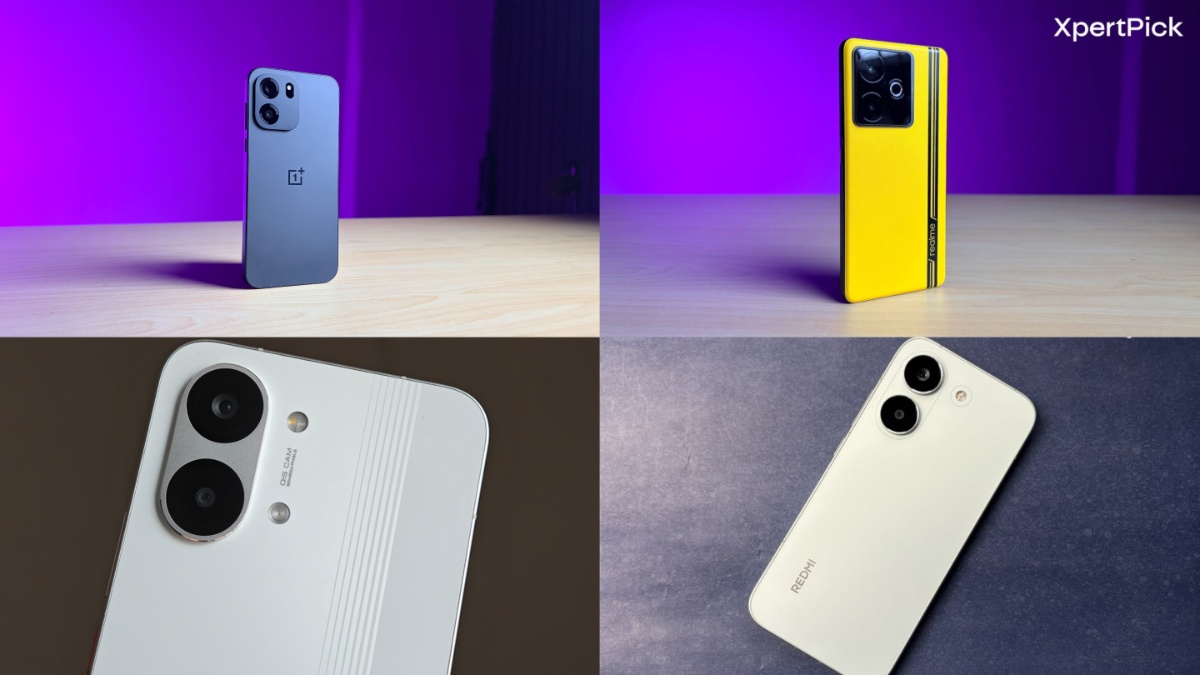
If battery anxiety is the one thing you refuse to live with, you’ve come to the right place. We’ve put the most competitive big-battery smartphones under ₹40,000 through a rigorous series of battery, thermal, charging and real-world endurance tests to find out which ones truly go the distance.
Phones Tested
To find the best battery-focused smartphone under ₹40,000, we put eight devices through an extensive series of battery benchmarks, sustained performance tests, thermal measurements and real-world gaming and streaming workloads. The comparison includes the Redmi Note 15 Pro+, Vivo V70 FE, POCO X8 Pro, Realme GT 7T, Moto Edge 70 Pro, Nothing Phone (4a), OnePlus Nord CE6 and Redmi Turbo 5. Rather than relying on mAh figures alone, which, as our results show, can be deeply misleading, this roundup measures how long each phone actually lasts, how efficiently it uses its battery, and how well it holds up under sustained load.
Our Top Picks at a Glance
| Category | My Pick | Price | Why We Picked It |
| Best Overall Battery Life | Vivo V70 FE | ₹37,999 | Logged a staggering 28h 13m PCMark score and unmatched efficiency of 4h 02m per 1,000 mAh while running ice-cool. |
| Best for Biggest Battery (mAh) | OnePlus Nord CE6 | ₹34,998 | Packs a colossal 8,000 mAh physical cell with a stable 24h 36m runtime and useful 27W reverse power bank charging. |
| Best Fast Charging | Realme GT 7T | ₹31,999 | Combines a huge 7,000 mAh battery with blistering 120W SuperVOOC speeds that refill the dual cells in well under an hour. |
| Best Endurance for Gaming / Streaming | Redmi Turbo 5 | ₹37,999 | Pairs a 7,540 mAh cell with heavy-duty Dimensity 8500 Ultra power and excellent 91.1% sustained GPU stability. |
| Best Efficient Chipset for Backup | Redmi Note 15 Pro+ | ₹39,999 | Features a 6,500 mAh battery with a 1,600-cycle (6-year) lifespan, protected by the group’s coolest running temperature of 33.4°C. |
| Best Value Battery Pick | POCO X8 Pro | ₹34,999 | Delivers a complete 6,500 mAh battery package with rapid 48-minute 100W HyperCharge times at a highly aggressive price. |
Battery Benchmark Comparison: Test Results and Performance Analysis
| Test / Metric | Vivo V70 FE | OnePlus Nord CE6 | Realme GT 7T | Redmi Turbo 5 | Redmi Note 15 Pro+ | POCO X8 Pro |
|---|---|---|---|---|---|---|
| Recommendation | Best overall battery life under ₹40k | Best for biggest battery (mAh) under ₹40k | Best fast charging under ₹40k | Best endurance for gaming / streaming under ₹40k | Best efficient chipset for backup under ₹40k | Best value battery pick under ₹40k |
| Price | ₹37,999 | ₹34,998 | ₹31,999 | ₹37,999 | ₹39,999 | ₹34,999 |
| Battery Capacity | 7,000 mAh (Si/C) | 8,000 mAh 🏆 | 7,000 mAh | 7,540 mAh (Si/C) | 6,500 mAh (Si/C) | 6,500 mAh |
| Charging Speed | 90W | 80W | 120W 🏆 | 100W | 100W | 100W |
| Battery Life (PCMark) | 28h 13min 🏆 | 24h 36min | 18h 22min | 18h 41min | 16h 33min | 16h 46min |
| Runtime per 1,000 mAh | 4h 02min 🏆 | 3h 05min | 2h 37min | 2h 29min | 2h 33min | 2h 35min |
| AnTuTu Overall | 986,300 | —* | 2,127,058 🏆 | 2,002,211 | 1,057,966 | 2,083,072 |
| Geekbench (Single / Multi) | 1,019 / 3,050 | 1,072 / 3,171 | 1,595 / 6,248 | 1,523 / 6,526 | 1,270 / 3,248 | 1,740 / 6,705 🏆 |
| 3DMark Wild Life Extreme | 869 | 1,113 | 4,094 | 3,616 | 1,109 | 4,232 🏆 |
| 3DMark Stress Stability | 99.4% | 99.2% | 73.3% | 91.1% | 99.6% 🏆 | 69.3% |
| CPU Throttling Stability | 93% | 89% | 68% | 70% | 94% 🏆 | 83% |
| Temp After Stress Test | 34.8°C | 37.5°C | 42.8°C | 42.5°C | 33.4°C 🏆 | 42.1°C |
| BGMI (Avg / 5% Low FPS) | 58.5 / 38.0 | 89.6 / 83.6 | 96.5 / 81.2 | 116.5 / 92.5 🏆 | 59.2 / 51.5 | 96.6 / 58.5 |
| Minecraft (Avg / 5% Low FPS) | 31.3 / 20.2 | 42.2 / 29.8 | 58.1 / 39.7 | 64.1 / 47.9 🏆 | 31.5 / 22.6 | 58.7 / 42.7 |
This table highlights our six recommended battery smartphones, each selected for a specific category. While we tested eight smartphones in total, this comparison focuses on the devices that emerged as the top performers under the ₹40,000 price limit. Detailed benchmark results, full specifications, and a breakdown of each phone’s strengths and limitations are provided in the dedicated sections below.
How I Tested These Battery Smartphones
Pick up any phone box in this segment and you’ll see a big mAh number front and centre. Brands know it sells. What they don’t tell you is that the number is only half the equation, the chipset driving that battery matters just as much as the cell itself. In this comparison, six of the eight phones carry 7,000 mAh or more, yet the gap between the shortest and longest measured runtimes is over ten hours. That is not a battery story. That is an efficiency story.
My testing framework reflects this. For every phone I put through this process, I track four things: the raw PCMark runtime, a runtime-per-1,000-mAh figure that strips out the capacity advantage and reveals how well each chipset actually manages its cell, sustained performance under real load, and gaming endurance, because a gaming session is exactly the kind of intensive, continuous workload that exposes a chipset’s thermal management in ways that benchmark scores never will.
Test Conditions: All devices are retail units running publicly available software. Testing takes place in a controlled environment held at 28°C ambient temperature. Where multiple storage or RAM configurations exist, I test the highest-specification variant. No data sourced from manufacturers or press materials is included.
Battery Testing: Runtime is measured with PCMark Work 3.0, fixed at 50% screen brightness, run overnight to completion. PCMark simulates a realistic daily workload, browsing, document editing, media consumption, rather than the artificially simple scenario of a looping video file. The runtime-per-1,000-mAh figure I derive from this is what tells you whether a phone’s endurance comes from a large cell or from a genuinely frugal chipset.
Sustained Performance Testing: I run the 3DMark Wild Life Extreme Stress Test over 20 consecutive loops, then a separate 15-minute CPU throttling test, recording device temperature after each. The reasoning is simple: a phone that runs hot burns charge turning silicon into heat instead of powering your screen. The phones that stay cool under load here are the ones that will still feel quick two years from now.
Performance Benchmarks: AnTuTu v10 and Geekbench 6 establish the performance floor. Battery life matters more in this roundup, but a phone that stutters through basic tasks will drain its cell chasing responsiveness regardless of how efficient its chipset is on paper.
Gaming Tests: BGMI and Minecraft are each run for extended sessions with frame-time data logged throughout. Average FPS is reported alongside 5% Low FPS, the figure that actually captures whether gameplay feels smooth or whether there are stutters hiding behind a healthy average. Sustained gaming is the harshest real-world load a battery faces, and the 5% Low is where a phone’s thermal and power management either holds or cracks.
Pricing, software versions and benchmark results in this article reflect market conditions as of July 2026 and are subject to change.
The Phones in Detail
Vivo V70 FE – Best Overall Battery Life Under ₹40k
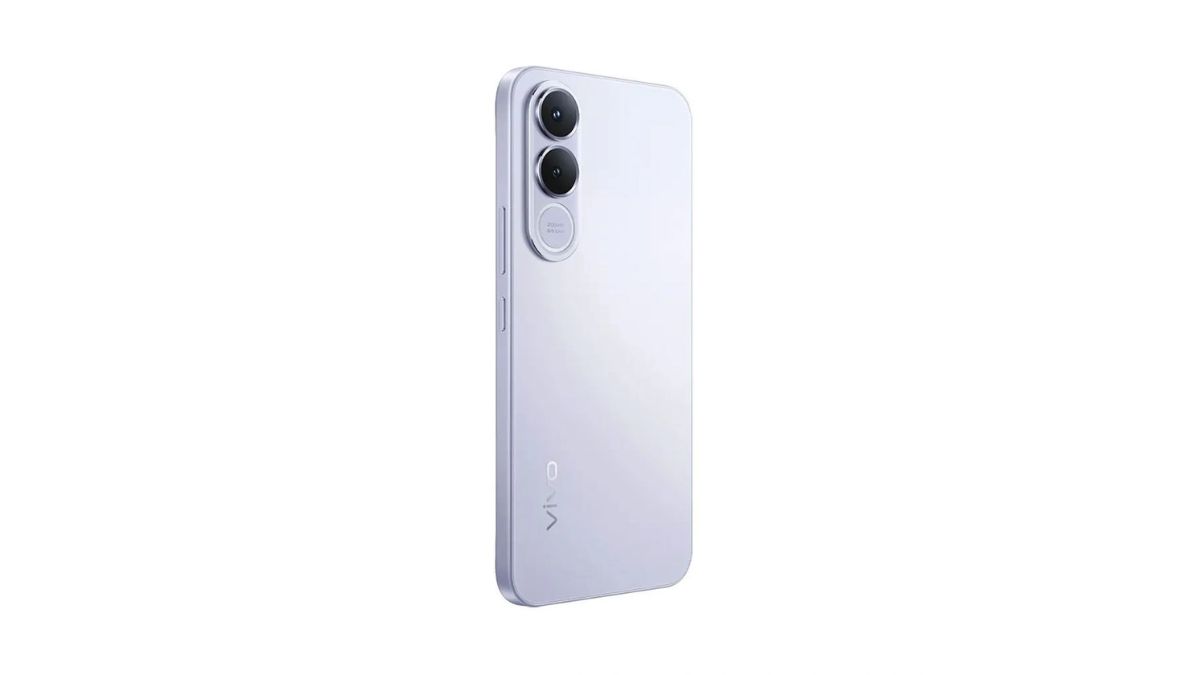
The Vivo V70 FE is my definitive battery endurance pick at this price, delivering a staggering 28 hours and 13 minutes in PCMark battery testing, a flawless 99.4% 3DMark stability rating, and a cool 34.8°C thermal ceiling, outlasting every other phone in this comparison by a country mile.
Why We Picked It
No phone we have ever tested in this segment lasts like the Vivo V70 FE. It ran for a staggering 28 hours and 13 minutes in the PCMark Work 3.0 battery test, nearly four hours clear of its nearest rival here and almost double what half this comparison manages. Its 7,000 mAh BlueVolt silicon-carbon cell is only part of the story; the frugal 4nm MediaTek Dimensity 7360 Turbo extracts 4 hours and 2 minutes per 1,000 mAh, comfortably the best efficiency of all eight phones, aided by a large vapour-chamber cooling system and multi-scenario bypass charging.
Consistency matches the endurance: 93% CPU throttling stability, 99.4% in the 20-loop 3DMark stress test, and a cool 34.8°C after the stress run. When the marathon finally ends, 90W FlashCharge refills the cell from 1 to 100% in roughly an hour. The compromises are what you’d expect from an efficiency-first tune, gaming tops out around 60 FPS in BGMI with soft 38.0 FPS 5% Lows, so competitive players should look elsewhere. But as a daily driver measured purely on time-between-charges, with a 200MP OIS camera, IP68/IP69 durability and a slim 7.6mm body thrown in, the V70 FE is untouchable under ₹40,000.
Vivo V70 FE Key Specifications
Vivo V70 FE XP Lab Data
Vivo V70 FE Pros & Cons
Pros: A monumental 28h 13min of measured runtime, the longest of any phone in this comparison by nearly four hours, with the best efficiency per mAh, cool and stable thermals, 90W charging, a 200MP OIS camera and IP68/IP69 durability in a slim 7.6mm body.
Cons: The Dimensity 7360 Turbo is the weakest chipset here for gaming (sub-60 FPS BGMI with soft frame-time lows), and at ₹37,999 you are paying camera-phone money for entry-level graphics performance.
Who Should Buy It
Power users, frequent travellers, and anyone who values exceptional battery life above all else should consider this phone. It is ideal if you want a premium, slim 7.6mm device that can realistically last into a second or even third day on a single charge, all while staying under ₹40,000. It also suits buyers looking for flagship-level durability with IP68/IP69 ratings and a high-resolution 200MP camera without the bulk or heat typically associated with performance-focused phones.
Who Shouldn’t Buy It
Competitive mobile gamers or hardware enthusiasts looking for high frame rate gaming should look elsewhere. If you expect 90 FPS or 120 FPS gameplay in titles such as BGMI, or want consistently smooth performance in demanding games like Minecraft, the graphics performance here will feel limiting. Devices such as the POCO X8 Pro Max or iQOO alternatives deliver significantly stronger gaming performance for similar money.
OnePlus Nord CE6 – Best for Biggest Battery (mAh) Under ₹40k
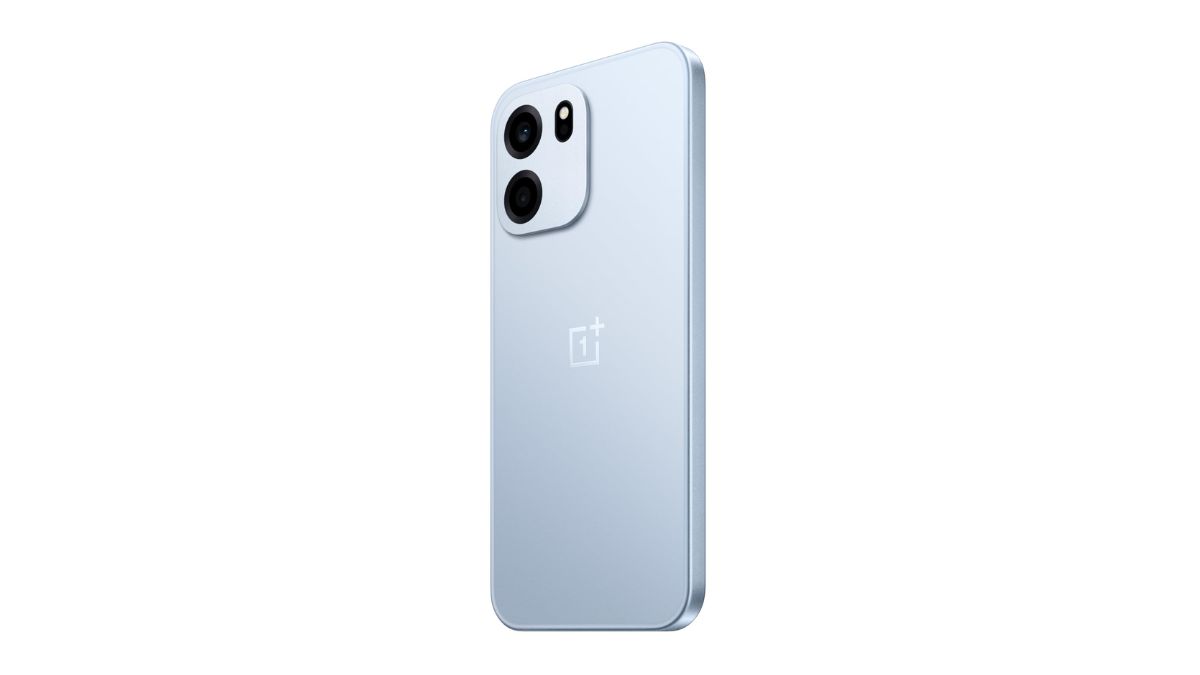
The OnePlus Nord CE6 is our definitive pick for pure hardware capacity under ₹40,000, packing a colossal 8,000 mAh battery that drives a spectacular 24-hour 36-minute PCMark runtime, paired with 80W fast charging and an innovative 27W reverse power bank feature.
Why We Picked It
No phone under ₹40,000 carries more battery than the OnePlus Nord CE6: a colossal 8,000 mAh cell, the largest in this entire comparison, and OnePlus has resisted turning the phone into a brick to accommodate it. That capacity translated into 24 hours and 36 minutes in our PCMark test, the second-longest runtime of the eight phones, with a healthy efficiency of 3 hours 5 minutes per 1,000 mAh.
The supporting act is genuinely well judged for a battery-first phone. The Snapdragon 7s Gen 4 held 89% CPU throttling stability and 99.2% in the 3DMark stress test at a moderate 37.5°C, and it converts its silicon sensibly in games too: 89.6 FPS average in BGMI with a remarkably tight 83.6 FPS 5% Low, the smallest average-to-low gap of the whole group, meaning gameplay feels impressively smooth. An 80W SUPERVOOC charger comes in the box, 27W reverse charging turns the phone into a power bank, and IP66/68/69/69K ratings with a 6-year battery health promise round out the endurance credentials. One housekeeping note: the AnTuTu figure from our lab records has been withheld as it appears to be a data-recording error and is being re-verified.
OnePlus Nord CE6 Key Specifications
OnePlus Nord CE6 XP Lab Data
OnePlus Nord CE6 Pros & Cons
Pros: The biggest battery under ₹40,000 (8,000 mAh) with 24h 36min of measured runtime, the smoothest frame delivery of the group in BGMI (89.6 average with an 83.6 5% Low), an in-box 80W charger, 27W reverse charging and top-tier IP69K durability.
Cons: The secondary 2MP rear camera is little more than decoration, raw performance sits well below the Dimensity 8000-series rivals at similar money, and its AnTuTu result needs re-verification.
Who Should Buy It
Power users, long-distance commuters, and outdoor workers who want the absolute maximum milliampere-hour (mAh) capacity available under ₹40,000. It is ideal for anyone who regularly spends multiple days away from mains sockets, needs a reliable power source to reverse-charge wireless earphones or secondary accessories, and demands rugged, top-tier environmental protection (IP69K) to match their phone’s physical longevity.
Who Shouldn’t Buy It
Hardcore mobile gamers or tech enthusiasts chasing raw benchmarking supremacy. While real-world gameplay delivery is remarkably smooth with minimal stutter, the processor’s peak graphical grunt cannot match the explosive frame rates of Dimensity 8000-series competitors. If you prefer bleeding-edge chip metrics or versatile secondary cameras over unyielding, cool-running battery endurance, look elsewhere.
Expert Verdict: The OnePlus Nord CE6 sets a new benchmark for battery life, fitting a huge 8,000 mAh battery into a phone that still feels comfortable to use. It combines exceptional endurance with stable performance, an 80W charger in the box, and useful 27W reverse charging. While it is not the fastest performer in its class, nothing under ₹40,000 matches its battery life.
Realme GT 7T – Best Fast Charging Under ₹40k
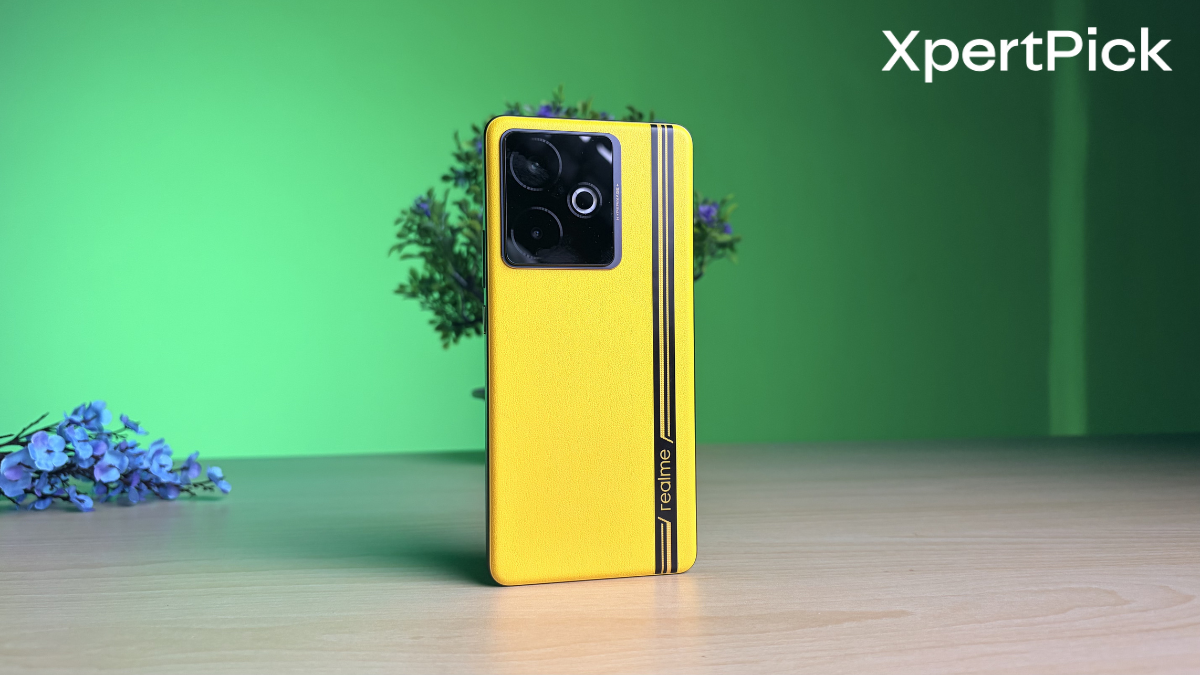
Unlike most phones with large batteries, the Realme GT 7T combines a huge 7,000 mAh cell with ultra-fast 120W SuperVOOC charging. Its dual-cell design enables a full charge in under an hour, while even a quick 10 to 15-minute top-up is enough to comfortably power the phone through the rest of the day.
Why We Picked It
Nothing under ₹40,000 refills a battery like the Realme GT 7T. Its 120W SuperVOOC charging is the highest wattage in this comparison, taking the 7,000 mAh dual-cell battery from empty to full in well under an hour, a few minutes plugged in over breakfast genuinely buys you hours of use. That charging headroom pairs with a strong 18 hours and 22 minutes in our PCMark test, so you get both endurance and near-instant recovery.
It also happens to be the cheapest phone in this comparison at ₹31,999, while posting the highest verified AnTuTu score of the group (2,127,058) and excellent gaming numbers: 96.5 FPS average in BGMI with an 81.2 FPS 5% Low. The trade-off is thermals: its 73.3% 3DMark stress stability and 68% CPU throttling stability are the weakest of our six picks, and it ran hottest at 42.8°C after the stress test, so expect some performance taper in genuinely marathon sessions. For everyone who measures a battery phone by how briefly it needs to be tethered to a wall, though, the GT 7T is the pick.
Realme GT 7T Key Specifications
Realme GT 7T XP Lab Data
Realme GT 7T Pros & Cons
Pros: Unmatched 120W charging on a 7,000 mAh battery, 18h 22min of measured runtime, the highest verified AnTuTu score of the group, all at ₹31,999, the lowest price in this comparison.
Cons: The weakest sustained stability of our picks (73.3% in the 3DMark stress test, 68% CPU throttling) and the hottest stress-test temperature (42.8°C); at 202g it’s also on the heavier side.
Who Should Buy It
This phone is ideal for buyers who want a huge 7,000 mAh battery without putting up with slow charging. If you need long battery life, only have short opportunities to charge, and also want excellent gaming performance for ₹31,999, it offers one of the best combinations of endurance and charging speed in its class.
Who Shouldn’t Buy It
Those looking for the highest runtime efficiency from a 7,000 mAh battery should consider alternatives such as the vivo V70 FE. The MediaTek Dimensity 8400 Max prioritises performance over efficiency, resulting in shorter runtime per mAh. It also runs noticeably warmer under heavy workloads, reaching 42.8°C during our testing.
Expert Verdict: The Realme GT 7T addresses one of the biggest drawbacks of large-battery phones: slow charging. Its combination of a 7,000 mAh dual-cell battery and 120W fast charging means you spend far less time plugged into the wall. While its performance-focused chipset consumes more power than efficiency-first rivals, the exceptionally fast charging more than compensates. At ₹31,999, it is one of the strongest battery-focused phones you can buy.
Redmi Turbo 5 – Best Endurance for Gaming / Streaming Under ₹40k
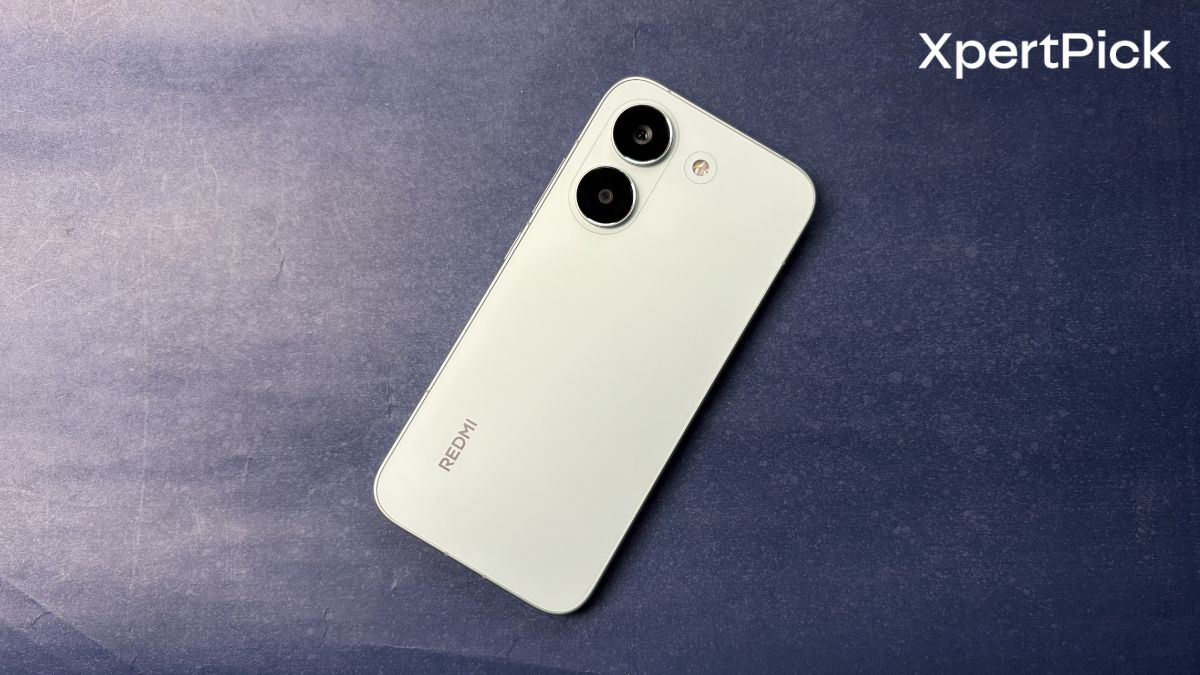
The Redmi Turbo 5 is our definitive endurance pick for power users, successfully pairing a colossal 7,540 mAh silicon-carbon battery and rapid 100W HyperCharge with class-leading gaming performance, delivering an unrelenting 18-hour 41-minute runtime without compromising on raw hardware speed.
Why We Picked It
Long battery life is easy when a phone is idling; the Redmi Turbo 5 is the pick that keeps going when you’re actually hammering it. Its 7,540 mAh silicon-carbon cell, the second-largest here, ran for 18 hours and 41 minutes in our PCMark test, and its Dimensity 8500 Ultra delivered the best gaming results of the entire comparison: a blistering 116.5 FPS average in BGMI with a superb 92.5 FPS 5% Low, plus a group-best 64.1 FPS in Minecraft at maximum settings. Crucially for endurance, its 5,300mm² vapour chamber held 91.1% stability in the 20-loop 3DMark stress test, by far the best sustained result among the performance-class phones here.
The streaming half of the brief is covered by a 6.59-inch 1.5K AMOLED with Dolby Vision and 3,500 nits peak brightness, backed by Dolby Atmos stereo speakers, and 100W HyperCharge refills the huge cell in about 70 minutes. One honest caveat from our logs: while its frame rates never buckled, the chassis reached 42.5°C after stress testing, and during our maximum-settings Minecraft run the phone became genuinely uncomfortable to hold, sustained performance is excellent, but sustained comfort in warm rooms is not.
Redmi Turbo 5 Key Specifications
Redmi Turbo 5 XP Lab Data
Redmi Turbo 5 Pros & Cons
Pros: The best gaming results of the comparison (116.5 FPS average and a 92.5 5% Low in BGMI) sustained by 91.1% GPU stress stability, an 18h 41min runtime from its 7,540 mAh cell, a Dolby Vision display and 100W charging with IP69K durability.
Cons: Chassis heat is real, 42.5°C after stress testing and uncomfortably warm during maximum-settings gaming, its 70% CPU throttling result trails the efficiency picks, and per-mAh efficiency (2h 29min/1,000 mAh) is the lowest of our six.
Who Should Buy It
Hardcore mobile gamers and heavy media streamers who want uncompromising frame rates and high-fidelity displays (Dolby Vision, 3,500 nits) without suffering from the “mid-day battery anxiety” typical of performance phones. If you demand flagship-tier gaming endurance from a single charge and want the reassurance of a 7,540 mAh safety net, this is the most capable hybrid battery phone in the sub-₹40,000 segment.
Who Shouldn’t Buy It
Users who prioritise cool, comfortable running temperatures and absolute per-mAh efficiency over graphical grunt. The phone’s chassis gets genuinely uncomfortable to hold during maximum-setting gaming sessions, reaching 42.5°C. Furthermore, its 70% CPU throttling result and lower per-mAh efficiency (2h 29min) mean that purely passive users will find better multi-day longevity in cooler, efficiency-first alternatives like the Vivo V70 FE.
Expert Verdict: The Redmi Turbo 5 stands out by combining a huge 7,540 mAh battery with the fastest gaming performance in this comparison. It runs hot under heavy workloads, but its excellent battery life and outstanding gaming performance make it a superb choice for mobile gamers at ₹37,999.
Redmi Note 15 Pro+ – Best Efficient Chipset for Backup Under ₹40k
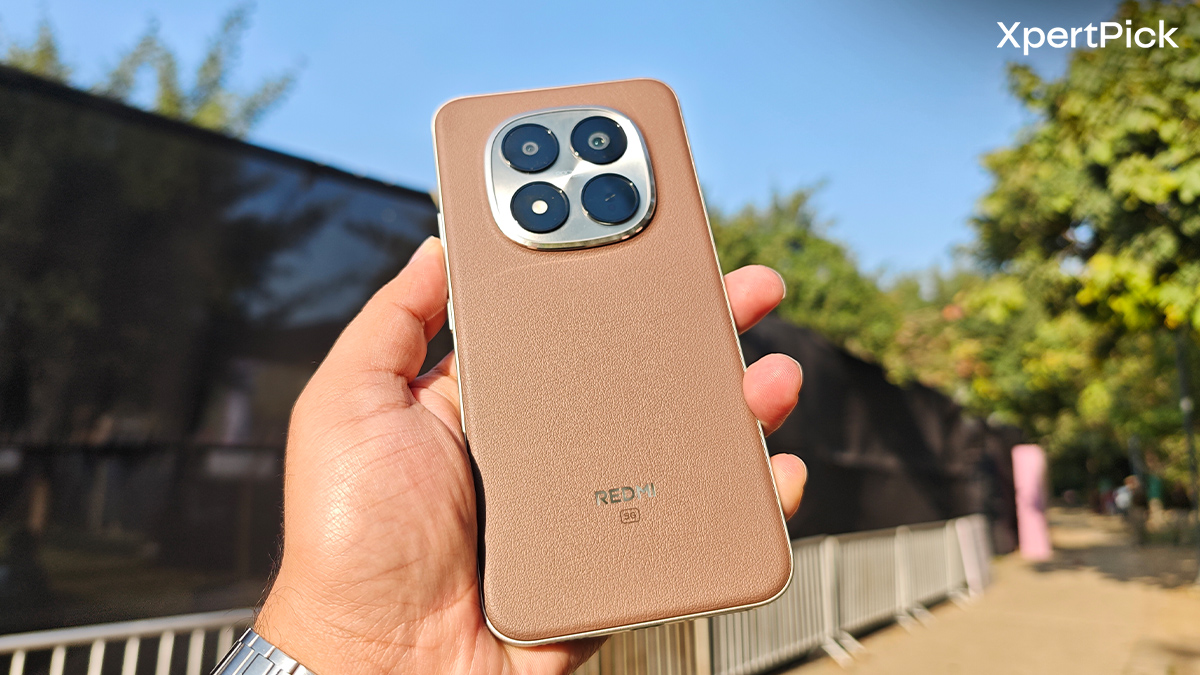
The Redmi Note 15 Pro+ earns our Best Efficient Chipset for Backup Under ₹40k award thanks to its excellent balance of power efficiency, cool thermals, and dependable battery life. Its Snapdragon 7s Gen 4 chipset, paired with a 6,500 mAh battery and 100W HyperCharge support, makes it a reliable choice for long-lasting everyday use.
Why We Picked It
The Redmi Note 15 Pro+ is the phone in this comparison you’d trust to just keep working, quietly, for years. Its Snapdragon 7s Gen 4 posted the best sustained-performance profile of all eight phones: 94% CPU throttling stability, a group-best 99.6% in the 20-loop 3DMark stress test, and the coolest post-stress temperature we recorded at just 33.4°C, credit to Xiaomi’s IceLoop vapour-chamber cooling. A chipset that never strains and never heats is a chipset that never wastes charge, which is precisely what a dependable backup or long-term daily phone needs.
The endurance package around it is equally reassurance-focused. The 6,500 mAh silicon-carbon cell (rated to retain 80% capacity after 1,600 cycles, roughly six years) delivered 16 hours and 33 minutes in PCMark, refills via 100W HyperCharge, and doubles as a power bank with 22.5W reverse charging. Wrap that in the toughest build here, Gorilla Glass Victus 2, a fibreglass back, IP66/68/69/69K ratings and TÜV SÜD-certified 2-metre water resistance, plus four years of OS updates, and you have a phone engineered to be reliable long after trendier rivals have faded. Gaming is modest (~60 FPS in BGMI), and at ₹39,999 you’re paying partly for the 200MP camera; but as a set-and-forget endurance machine, nothing here is better built for the job.
Redmi Note 15 Pro+ Key Specifications
Redmi Note 15 Pro+ XP Lab Data
Redmi Note 15 Pro+ Pros & Cons
Pros: The most efficient, most stable chipset behaviour of the comparison, best throttling stability (94%), best stress stability (99.6%) and the coolest running temperature (33.4°C), paired with a six-year-rated battery, 100W charging, 22.5W reverse charging, a 200MP camera and the toughest build here.
Cons: The priciest phone in this comparison at ₹39,999 with the shortest runtime of our six picks (16h 33min), LPDDR4X RAM and UFS 2.2 storage at this money, and strictly ~60 FPS gaming.
Who Should Buy It
The Redmi Note 15 Pro+ is best suited to buyers who want a reliable daily driver with an emphasis on long-term battery health and durability. If cool operating temperatures, 100W charging, reverse charging, and flagship-grade protection matter more than outright battery life or gaming performance, it is one of the strongest options under ₹40,000.
Who Shouldn’t Buy It
If your priority is the longest possible battery life on a single charge or high-refresh-rate gaming, there are better choices. Despite its ₹39,999 price, it delivers the shortest PCMark battery life in this comparison, while its LPDDR4X RAM, UFS 2.2 storage, and 60 FPS gaming limit make performance-focused rivals such as the Realme GT 7T and POCO X8 Pro Max better value.
Expert Verdict: The Redmi Note 15 Pro+ focuses on longevity rather than headline numbers. Its excellent thermal management, durable design, 100W charging, and reverse charging make it a dependable long-term companion. It may not top the battery life or performance charts, but it is one of the most reliable all-round choices for buyers planning to keep their phone for several years.
POCO X8 Pro – Best Value Battery Pick Under ₹40k
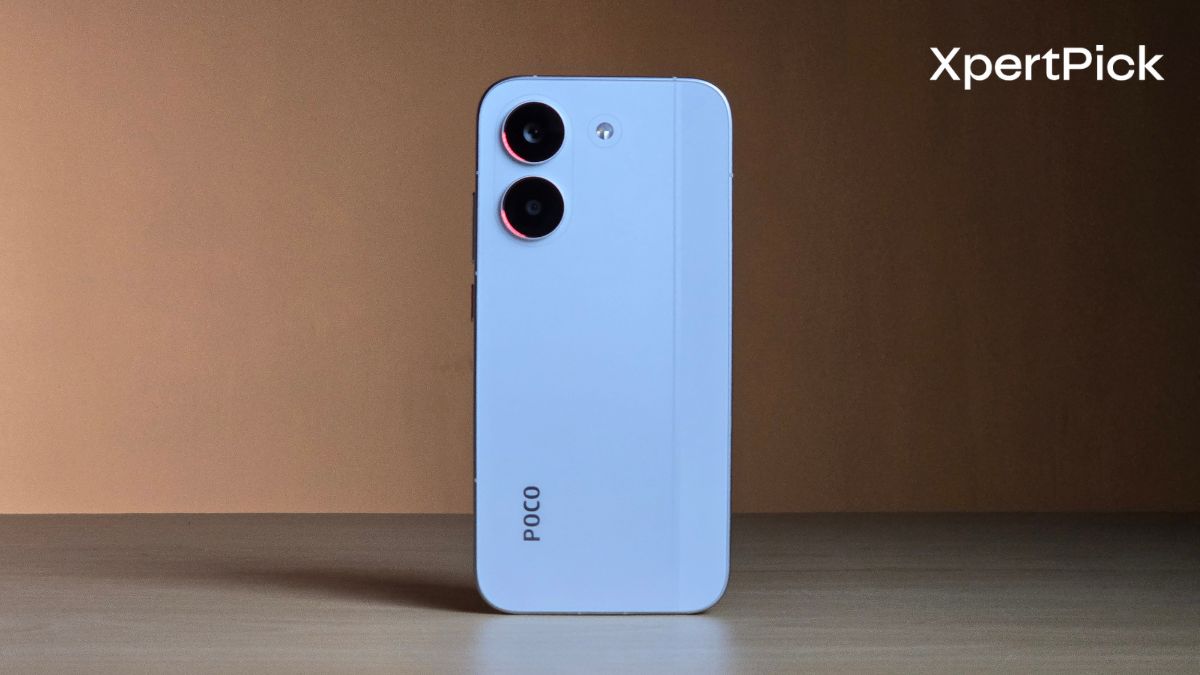
Delivering one of the strongest overall packages in its class, the POCO X8 Pro is our value-for-money battery pick under ₹40,000. It combines a 6,500 mAh battery with rapid 100W HyperCharge support, a full charge in just 48 minutes, and flagship-grade performance, all for ₹34,999.
Why We Picked It
The POCO X8 Pro gives you the most complete battery-plus-performance package per rupee in this comparison. At ₹34,999, ₹3,000 to ₹5,000 below the ₹37,999 crowd, you get a 6,500 mAh cell with 16 hours and 46 minutes of measured runtime, and the fastest full-charge time we can point to in this group: its 100W HyperCharge fills the battery from 0 to 100% in a claimed 48 minutes, quicker even than the higher-wattage GT 7T’s larger refill. Add 27W reverse charging and you have a phone that’s rarely far from full.
The performance side is where the value multiplies. The Dimensity 8500-Ultra posted the best Geekbench scores of the entire comparison (1,740 single / 6,705 multi) and the highest 3DMark Wild Life Extreme score (4,232), backed by an AnTuTu of 2,083,072, translating into a strong 96.6 FPS average in BGMI and 58.7 FPS in Minecraft. Its 3D IceLoop cooling can’t fully tame that silicon, 69.3% stress stability and 42.1°C after the stress run are the compromises, and its BGMI 5% Lows (58.5 FPS) dip under long load, but with an aluminium-and-glass IP69K build, UFS 4.1 storage and a 1.5K AMOLED, nothing else here offers this much phone for the money.
POCO X8 Pro Key Specifications
POCO X8 Pro XP Lab Data
- Battery Life (PCMark): 16h 46min
- Runtime per 1,000 mAh: 2h 35min
- AnTuTu Overall Score: 2,083,072
- Geekbench 6 Score: 1,740 (Single-Core) / 6,705 (Multi-Core)
- 3DMark Wild Life Extreme Score: 4,232
- 3DMark Stress Test Stability: 69.3%
- CPU Throttling Test Stability: 83%
- Temperature After Stress Test: 42.1°C
- BGMI Performance (Lowest Graphics): 96.6 Average FPS / 58.5 5% Low FPS
- Minecraft Performance (Highest Graphics): 58.7 Average FPS / 42.7 5% Low FPS
POCO X8 Pro Pros & Cons
Pros: Outstanding value at ₹34,999, the best CPU benchmark scores and highest 3DMark score of the whole comparison, the quickest claimed full charge here (48 minutes at 100W), a premium IP69K aluminium-and-glass build, and a solid 16h 46min of runtime.
Cons: GPU stress stability of 69.3% and a warm 42.1°C stress-test temperature betray the aggressive silicon, BGMI 5% Lows sag during long sessions, and per-mAh efficiency is merely mid-pack.
Who Should Buy It
The POCO X8 Pro is a strong choice for buyers who want the best balance of battery life, charging speed, and performance without spending more than ₹35,000. Its 6,500 mAh battery, 100W charging, and flagship-grade Dimensity chipset make it particularly appealing to power users and mobile gamers.
Who Shouldn’t Buy It
If low temperatures and consistent long-session gaming performance are your priorities, there are better options. The Dimensity chipset runs relatively hot under sustained workloads, and GPU performance drops over extended sessions. The Redmi Note 15 Pro+ and vivo V70 FE offer cooler operation and better long-term efficiency.
Expert Verdict: The POCO X8 Pro delivers outstanding value for money. It combines a large 6,500 mAh battery, rapid 100W charging, flagship-level performance, and premium build quality at a competitive price. While sustained thermals are not class-leading, it remains one of the easiest recommendations for buyers who want an all-round performer under ₹35,000.
Moto Edge 70 Pro
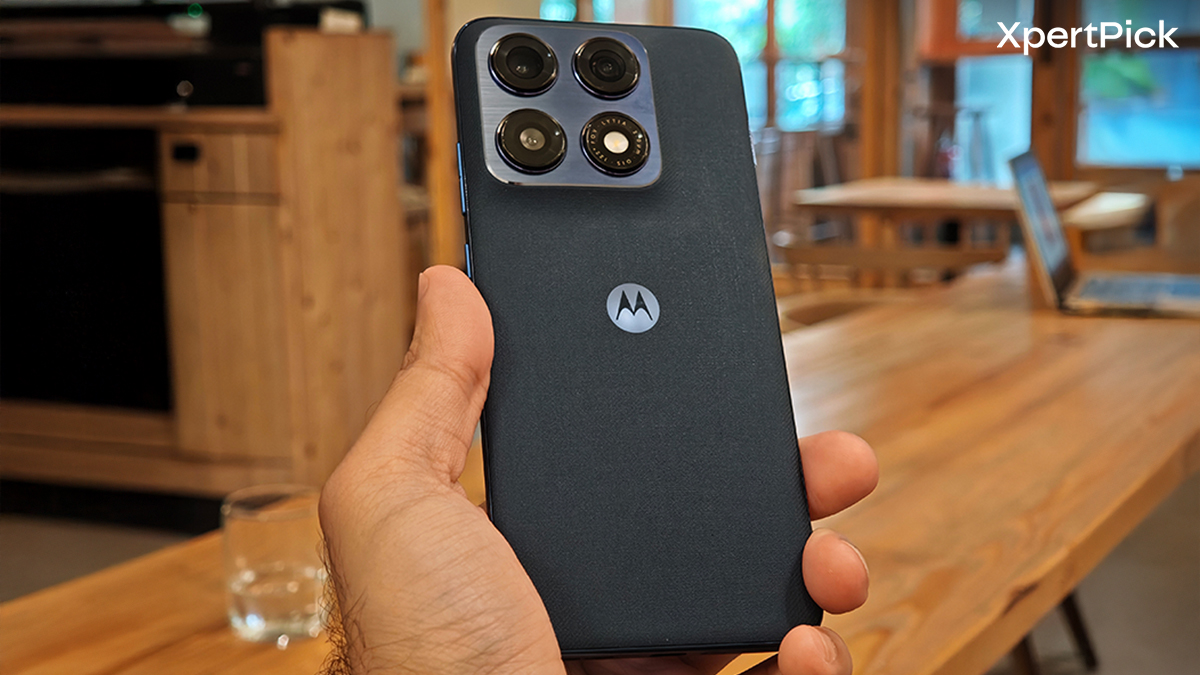
Despite its premium design and strong peak performance, the Moto Edge 70 Pro falls short as a battery-focused recommendation. Severe thermal throttling, inconsistent gaming performance, and one of the shortest battery runtimes in this comparison make it difficult to recommend for buyers prioritising endurance.
Why We Didn’t Pick It
The Moto Edge 70 Pro did not make my final recommendation list, and it’s a case of remarkable peaks undone by poor sustain. Its Dimensity 8500 Extreme posted the highest AnTuTu score of the entire comparison (2,163,322) and the group’s best average frame rates in Minecraft (62.9 FPS) and Genshin-class workloads, but its 3DMark stress stability of 47.6% was the worst of all eight phones, meaning it sheds more than half its graphics performance under sustained load. Our BGMI logs recorded a 111.4 FPS average against a startling 8.2 FPS 5% Low, an outlier so extreme it points to severe momentary stutters (and one we have flagged internally for a re-test), but either way not the behaviour of an endurance machine.
The battery story doesn’t rescue it: 16 hours and 17 minutes in PCMark from its 6,500 mAh silicon-carbon cell is the second-shortest runtime here, with the group’s second-worst efficiency at roughly 2.5 hours per 1,000 mAh. It remains a lovely object, a 6.99mm-slim body with a 5,200-nit 144Hz Extreme AMOLED, 90W charging and IP68/IP69, but the Indian variant also drops the global model’s wireless charging and telephoto camera. Buy it for the design and peak speed, not for battery-first duty.
Moto Edge 70 Pro Key Specifications
Moto Edge 70 Pro XP Lab Data
- Battery Life (PCMark): 16h 17min
- Runtime per 1,000 mAh: 2h 30min
- AnTuTu Overall Score: 2,163,322
- Geekbench 6 Score: 1,722 (Single-Core) / 6,688 (Multi-Core)
- 3DMark Wild Life Extreme Score: 4,387
- 3DMark Stress Test Stability: 47.6%
- CPU Throttling Test Stability: 73%
- Temperature After Stress Test: 39.8°C
- BGMI Performance (Lowest Graphics): 111.4 Average FPS / 8.2 5% Low FPS (extreme outlier; flagged for re-testing)
- Minecraft Performance (Highest Graphics): 62.9 Average FPS / 44.0 5% Low FPS
Moto Edge 70 Pro Pros & Cons
Pros: The highest AnTuTu score of the comparison, a gorgeous 6.99mm-slim design with the brightest display here (5,200 nits, 144Hz), 90W in-box charging and IP68/IP69 durability.
Cons: The worst sustained stability of all eight phones (47.6%), severe frame-time stutters in our BGMI logs, the second-shortest battery runtime (16h 17min), and an Indian variant stripped of wireless charging and the telephoto camera.
Nothing Phone (4a)
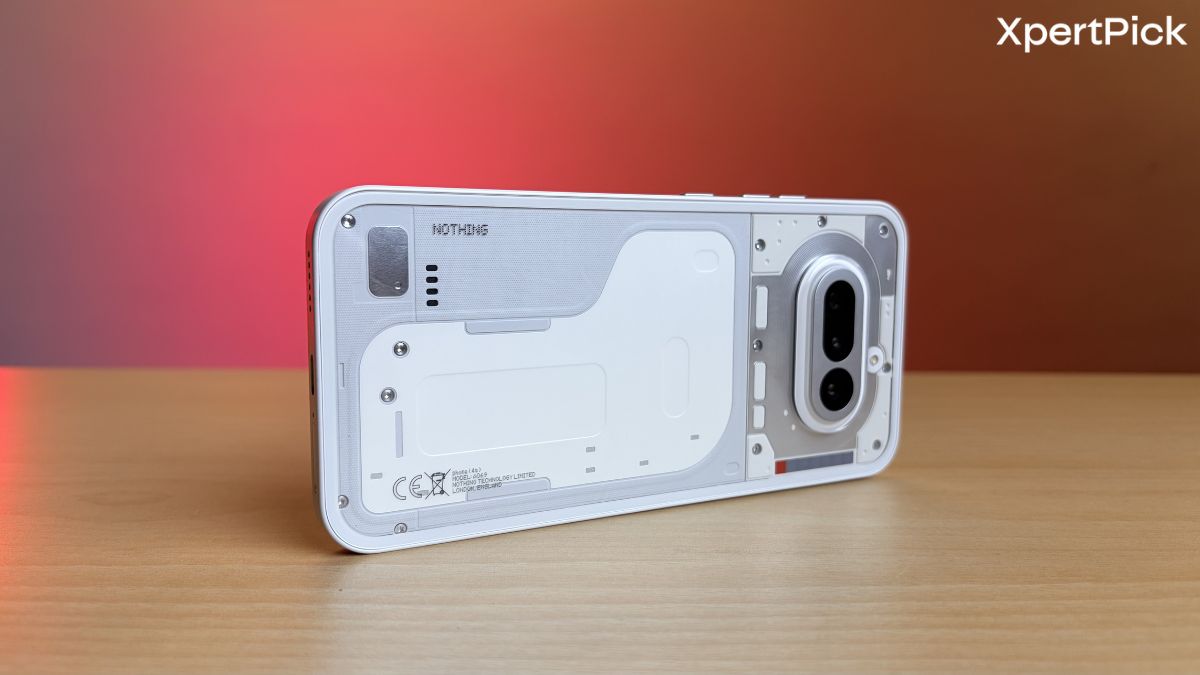
The Nothing Phone (4a) is not one of our recommended battery phones under ₹40,000. Although it offers good efficiency, stable thermals, and a polished software experience, its smaller battery, shorter runtime, and slower charging place it behind the stronger endurance-focused options in this comparison.
Why We Didn’t Pick It
The Nothing Phone (4a) is a genuinely likeable phone that simply isn’t a battery phone. Its 5,400 mAh cell, the smallest in this comparison by a full 1,100 mAh, lasted 16 hours and 10 minutes in our PCMark test, the shortest runtime of the eight, and its 50W charging (with no charger in the box) takes about 64 minutes for a full refill: fine in isolation, slow against the 100W-plus crowd here.
Judged on everything except endurance, it acquits itself well. The Snapdragon 7s Gen 4 is efficiently managed, 3 hours per 1,000 mAh, the second-best efficiency of the group, with 99.3% stress stability, 84% throttling stability and a cool 34.3°C, and it gamed far better than expected, holding 105.8 FPS in BGMI with an excellent 82.4 FPS 5% Low. Add the 63-LED Glyph Bar, a 50MP periscope camera and clean Nothing OS with long update support, and it’s an easy phone to recommend to a design-led buyer. In a battery roundup, though, the smallest cell, the shortest runtime and the slowest charging of the group settle the matter.
Nothing Phone (4a) Key Specifications
Nothing Phone (4a) XP Lab Data
Nothing Phone (4a) Pros & Cons
Pros: Efficient, cool and stable chipset behaviour (3h per 1,000 mAh, 99.3% stress stability), surprisingly strong 105.8 FPS BGMI gameplay with tight lows, a distinctive Glyph design, a periscope camera and clean long-supported software.
Cons: The smallest battery (5,400 mAh), the shortest measured runtime (16h 10min) and the slowest charging (50W, no charger included) of all eight phones, the weakest battery-first case in this comparison.
Who Should Buy It
The Nothing Phone (4a) is a good fit for buyers who value design, cameras, and software over outright battery life. Its clean software, distinctive Glyph interface, capable periscope camera, and excellent thermal management make it an appealing everyday phone for moderate users who are happy with single-day battery life.
Who Shouldn’t Buy It
If battery life is your main priority, this is not the right choice. Its smaller battery and slower charging mean it cannot match the endurance of rivals such as the vivo V70 FE or the OnePlus Nord CE6. Power users, frequent travellers, and heavy gamers will be better served by those alternatives.
Expert Verdict: The Nothing Phone (4a) is an excellent smartphone, but it is not one of our recommended battery phones under ₹40,000. While its efficient chipset and cool operating temperatures deserve praise, its smaller battery, shorter runtime, and slower charging make it difficult to recommend in a battery-focused comparison. It remains a strong lifestyle phone, but there are better options if battery life is your top priority.
Frequently Asked Questions (FAQs)
Which Phone Has the Best Battery Life Under ₹40,000? The Vivo V70 FE, by an enormous margin. It lasted 28 hours and 13 minutes in the PCMark Work 3.0 benchmark, nearly four hours longer than any other phone we tested, thanks to its 7,000 mAh silicon-carbon battery and the exceptionally efficient Dimensity 7360 Turbo chipset.
Which Phone Under ₹40,000 Has the Biggest Battery? The OnePlus Nord CE6, with a colossal 8,000 mAh cell, the largest in this comparison, followed by the Redmi Turbo 5 at 7,540 mAh. The Nord CE6 backs its capacity with the second-longest measured runtime here at 24h 36min.
Which Phone Under ₹40,000 Charges the Fastest? By wattage, the Realme GT 7T’s 120W SuperVOOC is the quickest, filling its 7,000 mAh battery in well under an hour. By claimed full-charge time, the POCO X8 Pro’s 100W HyperCharge is a match, taking its 6,500 mAh cell from 0 to 100% in about 48 minutes.
Which Battery Phone Is Best for Gaming and Streaming? The Redmi Turbo 5. It combines the best gaming results of the comparison, 116.5 FPS average and a 92.5 FPS 5% Low in BGMI, with 91.1% stress stability, with an 18h 41min runtime from its 7,540 mAh battery and a Dolby Vision AMOLED for streaming. Just note that the chassis runs warm during extended maximum-settings gaming.
Does a Bigger mAh Number Always Mean Better Battery Life? No, and this comparison proves it emphatically. The 7,000 mAh Vivo V70 FE (28h 13min) outlasted the larger 7,540 mAh Redmi Turbo 5 (18h 41min) by nearly ten hours, extracting 4h 2min per 1,000 mAh against the Turbo’s 2h 29min. Chipset efficiency, thermals and software tuning matter as much as raw capacity.
Which Is the Best Value Battery Phone Under ₹35,000? Two answers depending on priorities: the Realme GT 7T at ₹31,999 is the cheapest phone in this comparison and pairs a 7,000 mAh battery and 120W charging with flagship-class performance, while the POCO X8 Pro at ₹34,999 offers the group’s best CPU benchmarks, a 48-minute full charge and a premium IP69K build.
Is the Moto Edge 70 Pro Good for Battery Life? No. Despite the highest AnTuTu score of the comparison and a stunning slim design, it recorded the second-shortest runtime here (16h 17min), the worst sustained stability of all eight phones (47.6%), and severe frame-time stutters in our BGMI logs. Buy it for peak speed and looks, not endurance.