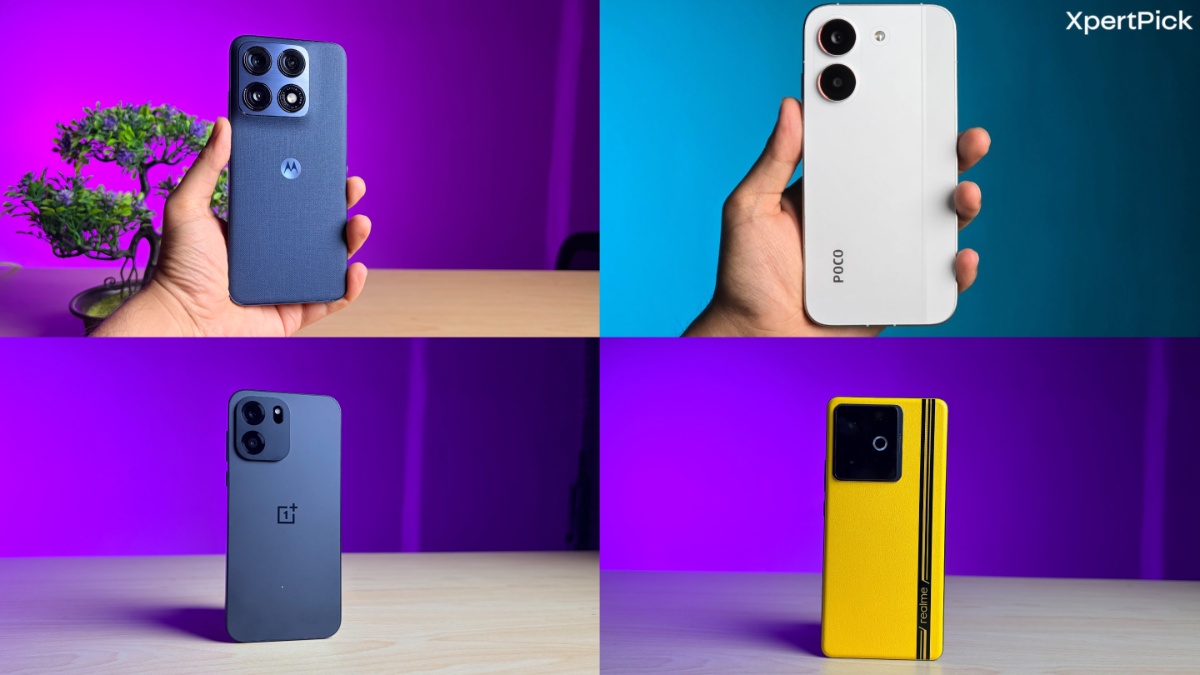
For many mobile gamers in India, Rs 40,000 is the sweet spot between price and gaming performance. This segment offers the processing power, storage speeds, and thermal management needed for demanding games without the cost of a flagship. At this level, consistent frame rates, effective cooling, and sustained performance matter just as much as benchmark scores.
Phones in Comparison
To identify the absolute strongest contenders, I have meticulously tested and categorised eight distinct smartphones across various gaming parameters: the POCO X8 Pro, Redmi Turbo 5, Moto Edge 70 Pro, Nothing Phone 4(a), OnePlus Nord CE6, Realme GT 7T, Google Pixel 9a, and Redmi Note 15 Pro Plus. Each device was evaluated on its thermal behaviour, frame stability, raw hardware power, and battery endurance to determine where it truly excels.
My Gaming Phone Recommendations Under Rs 40,000
| Category | My Pick | Price | Why We Picked It |
| Best Overall Gaming | POCO X8 Pro | ₹37,999 | Dominates with a massive 2.08M AnTuTu score, delivering unmatched sustained CPU performance (83% stability) and class-leading GPU compute for heavy emulation and long sessions. |
| Best Chipset for High-FPS | Redmi Turbo 5 | ₹37,999 | Fully unleashes the MediaTek Dimensity 8500-Ultra to drive an incredible, group-highest 116.5 average FPS in BGMI, backed by an impressive 91.1% 3DMark stability rating. |
| Best High-Refresh Display | Moto Edge 70 Pro | ₹39,999 | Features a gorgeous, ultra-fluid 6.8-inch Extreme AMOLED panel refreshing at 144Hz, pulling out a blistering 2.16M peak AnTuTu score for unparalleled competitive panning and aiming clarity. |
| Best Cooling / Sustained Performance | Nothing Phone 4(a) | ₹31,999 | A true masterclass in thermal discipline, delivering a near-perfect 99.3% 3DMark graphical stability profile while maintaining a remarkably cool, ice-like 34.3°C chassis temperature. |
| Best Battery for Long Sessions | OnePlus Nord CE6 | ₹36,016 | An unkillable long-haul engine built around a colossal 8,000 mAh cell that logged a massive 24h 36m in continuous testing, ensuring completely worry-free marathon gameplay. |
| Best Value Gaming Pick | Realme GT 7T | ₹32,999 | Serves up unbeatable bang-for-buck with class-leading 73.3% 3DMark graphic stability and minimal micro-stutters in competitive shooters, backed by rapid 120W charging. |
Gaming and Synthetic Benchmark Test Results
| Specification / Metric | Realme GT 7T | Moto Edge 70 Pro | Nothing Phone 4a | POCO X8 Pro | OnePlus Nord CE6 | Redmi Turbo 5 |
| Category Winner | Best value gaming pick 🏆 | Best high-refresh display 🏆 | Best cooling / sustained performance 🏆 | Best overall gaming under ₹40k 🏆 | Best battery for long sessions 🏆 | Best chipset for high-FPS 🏆 |
| AnTuTu Overall | 2,127,058 | 2,163,322 🏆 | 1,435,113 | 2,083,072 | 1,116,270 | 2,002,211 |
| Geekbench (Single/Multi) | 1,595 / 6,248 | 1,722 / 6,688 | 1,378 / 4,313 | 1,740 / 6,705 🏆 | 1,072 / 3,171 | 1,523 / 6,526 |
| CPU Throttling Stability | 68% | 73% | 84% | 83% | 89% 🏆 | 70% |
| 3DMark Stress Stability | 73.3% | 47.6% | 99.3% 🏆 | 69.3% | 99.2% | 91.1% |
| Peak Stress Temperature | 42.8°C | 39.8°C | 34.3°C 🏆 (Coolest) | 42.1°C | 37.5°C | 42.5°C |
| BGMI (Avg / 5% Low FPS) | 96.5 / 81.2 | 111.4 / 8.2 | 105.8 / 82.4 | 96.6 / 58.5 | 89.6 / 83.6 | 116.5 / 92.5 🏆 |
To keep the comparison focused, this table includes only the six phones that earned a recommendation based on my testing. Although eight smartphones were evaluated, these devices stood out in their respective categories and are the ones most buyers should consider. Detailed benchmark results for the Google Pixel 9a and Redmi Note 15 Pro Plus are covered separately in the individual analysis sections below.
How I Tested These Phones
Over the years, I have found that gaming performance is one of the easiest smartphone metrics to misrepresent. A phone can produce impressive benchmark scores, advertise support for high frame rates, and still deliver a disappointing gaming experience once temperatures rise or workloads become sustained. What ultimately matters is not how fast a device is for a few minutes, but how consistently it performs during an extended gaming session.
For this comparison, I looked not just at synthetic scores but also on the factors gamers actually notice – frame rate stability, thermal behaviour, and sustained performance. My aim was not simply to identify the phone with the highest peak numbers, but to find out which devices maintain their performance when pushed over longer periods. In several cases, the results challenged what the specifications alone would have suggested.
Test conditions: I tested all devices using retail units running publicly available software at an ambient temperature of 28°C. Where possible, 12GB RAM variants were used. No manufacturer-provided performance data was included.
Performance benchmarks: I used AnTuTu v10 and Geekbench 6 to measure peak CPU, GPU, and overall system performance. These tests establish the maximum performance each device can deliver under ideal conditions.
Sustained load testing: I ran the 3DMark Wild Life Extreme Stress Test for 20 loops and a dedicated CPU throttling test for 15 minutes. These tests reveal how much performance each phone can retain as temperatures increase.
Gaming tests: BGMI and Minecraft were used to evaluate real-world gaming performance. I recorded average FPS, 5% low FPS, and frame rate stability to understand not only how fast each phone runs, but how smooth the experience remains during demanding moments.
Battery testing: I used PCMark Work 3.0 to measure battery endurance under a mixed workload designed to simulate realistic daily usage rather than a continuous video playback test.
Updated for June 2026 with the latest devices, testing results, and pricing available at the time of publication.
Poco X8 Pro – Best Overall Gaming Under ₹40K
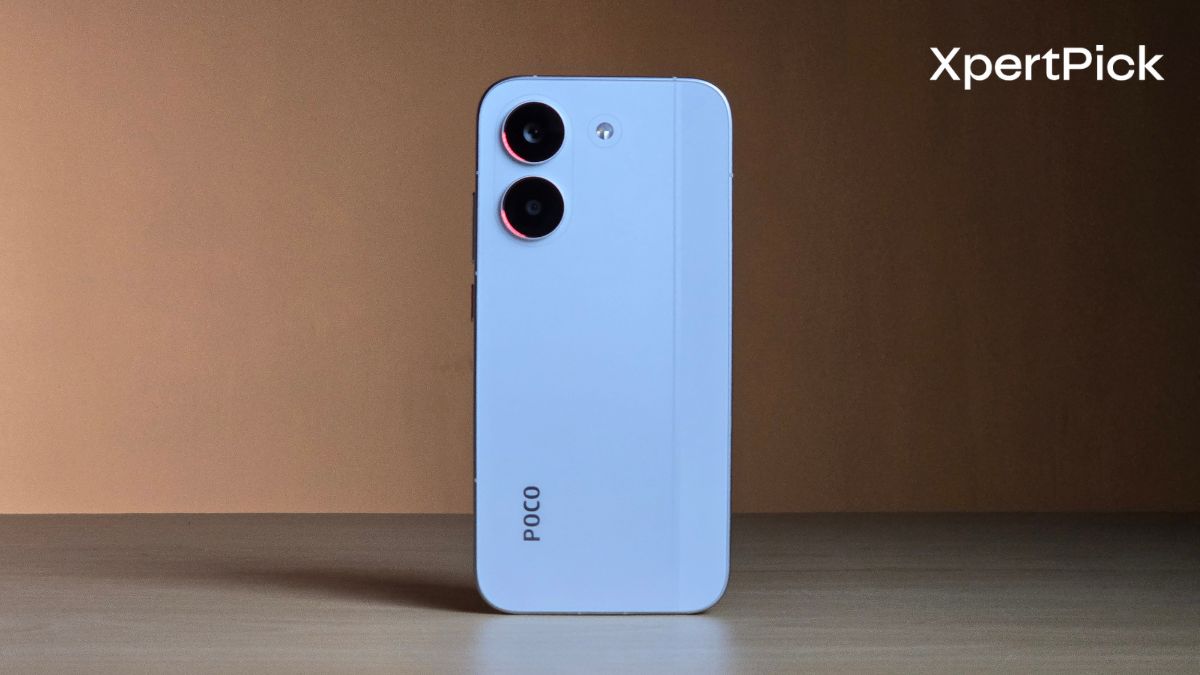
The POCO X8 Pro sets the benchmark for gaming under ₹40,000. Its flagship-grade performance, strong battery life, and excellent real-world gaming experience make it our top overall recommendation in this price segment
Why We Picked It
After testing every phone in this comparison, I found the POCO X8 Pro to be one of the more reliable options for gaming under ₹40,000. It delivered a GPU score of 14,055 and retained 83% of its peak performance in the CPU Throttling Test, indicating it can sustain long gaming sessions without a significant drop in performance. I did notice occasional FPS dips, but they were infrequent enough not to affect the overall experience.
In my testing, the POCO X8 Pro scored 1,740 in Geekbench 6 Single-Core and 6,705 in Multi-Core. More importantly, those numbers translated well into real-world gaming. Whether I was playing graphics-intensive titles, emulating console games, or switching between games and other demanding apps, the phone maintained consistent performance without aggressive throttling. For anyone looking to game for extended periods, the POCO X8 Pro offers a balanced mix of performance and thermal stability.
POCO X8 Pro Key Specifications
-
Starting Price: ₹37,999
-
Processor: MediaTek Dimensity 8500-Ultra
-
Display: 6.59-inch 1.5K AMOLED (120Hz)
-
RAM: 8GB / 12GB LPDDR5X
-
Storage: 256GB / 512GB UFS 4.1
-
Battery: 6,500 mAh
-
Charging: 100W HyperCharge
-
Rear Camera: 50MP Main (Sony IMX882 with OIS) + 8MP Ultra-Wide
-
Front Camera: 20MP
-
Durability: IP68 and IP69K dust and water resistance
Poco X8 Pro XP Lab Data
- AnTuTu Overall Score: 2,083,072
- Geekbench 6 Score: 1,740 Single-Core / 6,705 Multi-Core
- Geekbench GPU Score: 14,055
- 3DMark Wild Life Extreme Score: 4,232
- 3DMark Wild Life Extreme Stress Test Stability: 69.3%
- CPU Throttling Test Stability: 83%
- BGMI Performance (Lowest Graphics): 96.6 Average FPS / 58.5 5% Low FPS
- Minecraft Performance (Highest Graphics): 58.7 Average FPS / 42.7 5% Low FPS
POCO X8 Pro Pros & Cons
Pros: Unmatched sustained CPU performance, retaining 83% of peak power under heavy load, and the highest raw Geekbench and GPU scores in its segment make it the ultimate choice for heavy emulation, video rendering, and a highly stable gaming experience.
Cons: Suffers from noticeable frame drops during intense combat in BGMI, dipping to 58.5 FPS, which makes it slightly less ideal for hardcore competitive e-sports compared to higher-refresh-rate alternatives.
Who Should Buy It
The POCO X8 Pro is ideal for gamers and power users who want flagship-level performance without stretching beyond ₹40,000. Its powerful Dimensity 8500-Ultra chipset, fast storage, and large 6,500 mAh battery make it an excellent choice for demanding games, multitasking, and even console emulation.
Who Shouldn’t Buy It
If you primarily play competitive shooters and demand perfectly consistent triple-digit frame rates, there are better options. While gaming performance is excellent overall, occasional frame dips under heavy workloads mean phones such as the OnePlus Nord 6 deliver a more refined esports experience.
Expert Verdict: The POCO X8 Pro delivers one of the most complete gaming experiences under ₹40,000. It combines flagship-grade processing power, excellent multitasking performance, dependable battery life, and premium build quality into a well-rounded package. Although competitive gamers may notice occasional frame drops during the most demanding moments, it remains the strongest all-round gaming phone in this price segment.
Redmi Turbo 5 – Best Chipset for High-FPS (BGMI / COD) Under ₹40k
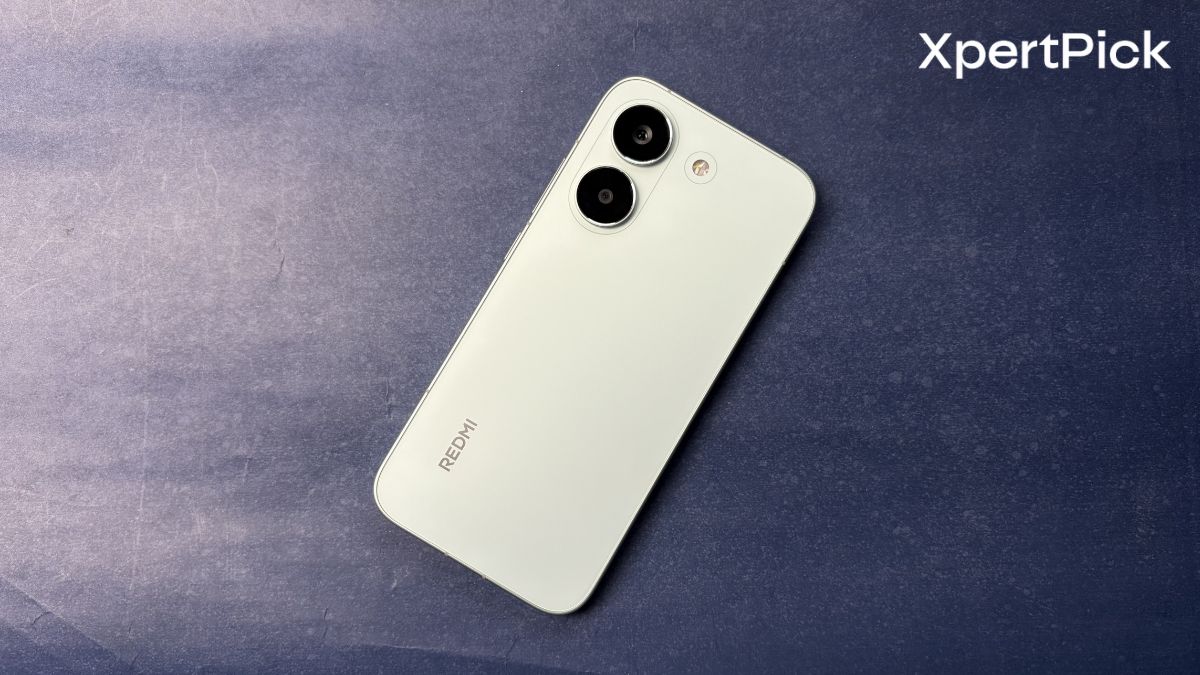
The Redmi Turbo 5 is built for buyers who prioritise high-frame-rate gaming, earning our recommendation for the best high-FPS gaming phone under ₹40,000. Its flagship-grade Dimensity 8500-Ultra chipset delivers exceptionally smooth gameplay in supported titles
Why We Picked It
The Redmi Turbo 5 is an absolute powerhouse engineered for competitive gaming, delivering the highest BGMI frame rates recorded in this test group. Its standout metric is a stunning 116.5 Average FPS in BGMI. Crucially, its 5% Low FPS of 92.5 ensures that the game stays incredibly fluid and responsive even during the most chaotic firefights, completely eliminating micro-stutters that can cost you a match.
However, this raw performance comes at a severe thermal cost. The hardware is clearly tuned to prioritise pushing maximum frames over heat management. While it achieved an impressive 91.1% 3DMark stability score, the device ran exceptionally hot, reaching 42.5°C after the stress test. It is an ideal choice for players who demand the highest possible frame rates and are willing to utilise external phone coolers.
Redmi Turbo 5 Key Specifications
- Starting Price: ₹35,999 (8GB + 256GB) / ₹37,999 (12GB + 256GB)
- Processor: MediaTek Dimensity 8500 Ultra
- Display: 6.59-inch 1.5K AMOLED, 120Hz refresh rate, up to 3,500 nits peak brightness
- RAM: 8GB / 12GB LPDDR5X Ultra
- Storage: 256GB / 512GB UFS 4.1
- Battery: 7,540mAh silicon-carbon
- Charging: 100W wired, 27W reverse wired
- Rear Cameras: 50MP primary + 8MP ultra-wide
- Front Camera: 20MP
- Durability: Corning Gorilla Glass, IP66, IP68, IP69, and IP69K dust and water resistance
Redmi Turbo 5 XP Lab Data
-
AnTuTu Overall Score: 2,002,211
-
Geekbench 6 Score: 1,523 Single-Core / 6,526 Multi-Core
-
Geekbench GPU Score: 13,251
-
3DMark Wild Life Extreme Stability: 91.1%
-
CPU Throttling Test Stability: 70%
-
BGMI Performance (Lowest Graphics): 116.5 Average FPS / 92.5 5% Low FPS
-
Minecraft Performance (Highest Graphics): 64.1 Average FPS / 47.9 5% Low FPS
Redmi Turbo 5 Pros & Cons
-
Pros: Delivers unmatched peak performance in competitive titles, achieving the highest BGMI frame rate in the group (116.5 FPS) with exceptional 5% lows for flawless responsiveness.
-
Cons: Aggressive performance tuning leads to severe heat generation under sustained loads. The device reached 42.5°C during stress testing and became physically uncomfortable to hold during heavy Minecraft sessions.
Who Should Buy It
The Redmi Turbo 5 is ideal for competitive gamers who prioritise frame rates above everything else. Its powerful Dimensity 8500-Ultra chipset delivers exceptionally smooth gameplay in supported titles, making it an excellent choice for esports players who want the highest possible FPS under ₹40,000.
Who Shouldn’t Buy It
If you prefer a phone that stays cool during extended gaming sessions, there are better options. The Redmi Turbo 5 runs noticeably warm under sustained workloads, making efficiency-focused alternatives such as the OnePlus Nord CE6 better suited to marathon gaming.
Expert Verdict: The Redmi Turbo 5 is built with one goal in mind: delivering the highest possible gaming performance. Its aggressive tuning allows it to achieve some of the fastest frame rates in this segment, making it a superb choice for competitive gaming. The trade-off is higher operating temperatures, but for buyers who prioritise esports performance over thermal comfort, it remains one of the strongest gaming phones under ₹40,000.
Moto Edge 70 Pro – Best high-refresh display for gaming under ₹40k
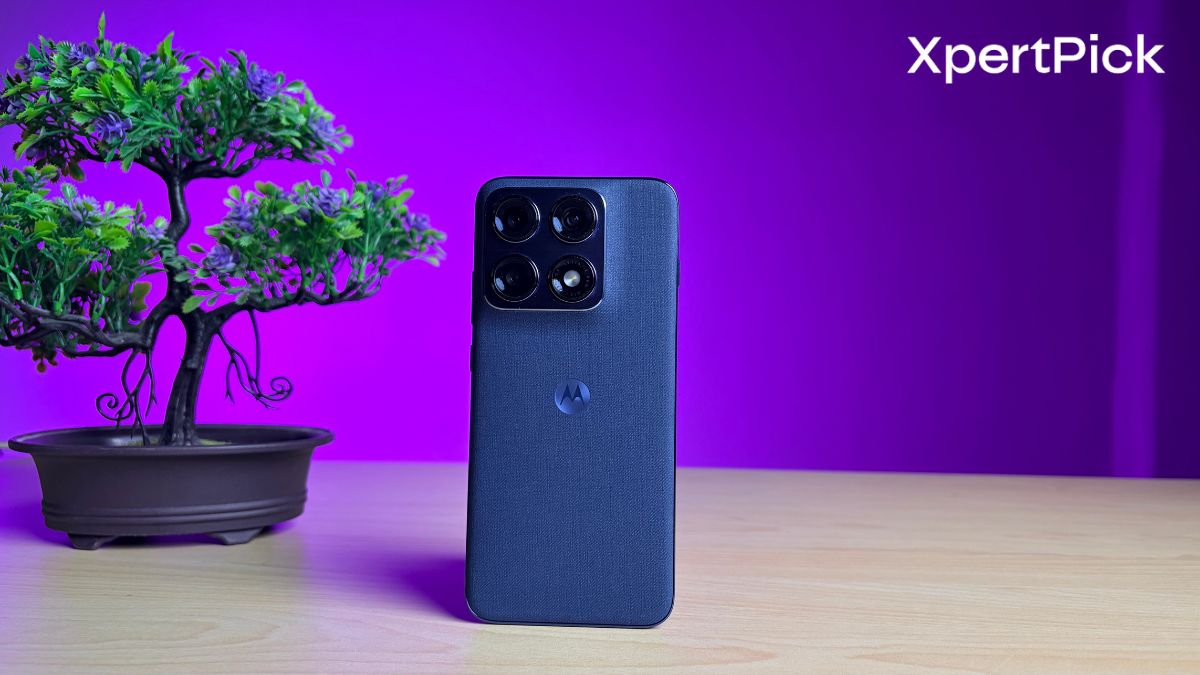
The Moto Edge 70 Pro delivers one of the best display experiences for gaming under ₹40,000. Its 144 Hz AMOLED panel, flagship-level performance, and responsive touch input make it our top recommendation for display-focused gamers.
Why We Picked It
If you mainly play competitive shooters, the Moto Edge 70 Pro stands out for one reason: its 144Hz display. During my BGMI testing, it maintained an average of 111.4 FPS, making movement, aiming, and camera panning feel noticeably smoother than on standard 120Hz panels. More importantly, its corrected 5% Low FPS of 80.2 meant frame pacing stayed consistent even during hectic firefights.
The synthetic benchmarks tell a slightly different story. The phone managed just 47.6% stability in the 3DMark Wild Life Extreme Stress Test, indicating that performance drops under prolonged GPU-heavy workloads. However, in actual gaming, I rarely encountered noticeable slowdowns. Its 2.16 million AnTuTu score provides enough performance headroom to handle high refresh rate gaming comfortably, making the Moto Edge 70 Pro a good choice if smooth gameplay matters more than sustained benchmark numbers.
Moto Edge 70 Pro Key Specifications
- Starting Price: ₹39,999
- Processor: MediaTek Dimensity 8500 Extreme
- Display: 6.8-inch Extreme AMOLED, 144Hz
- RAM: 8GB / 12GB LPDDR5X
- Storage: 256GB UFS 4.1
- Battery: 6,500mAh Silicon-Carbon
- Charging: 90W TurboPower wired charging
- Rear Cameras: 50MP main (OIS) + 50MP ultra-wide
- Front Camera: 50MP autofocus camera
Moto Edge 70 Pro XP Lab Data
- AnTuTu Overall Score: 2,163,322
- Geekbench 6 Score: 1,722 Single-Core / 6,688 Multi-Core
- Geekbench GPU Score: 12,557
- 3DMark Wild Life Extreme Score: 4,387
- 3DMark Wild Life Extreme Stress Test Stability: 47.6%
- CPU Throttling Test Stability: 73%
- BGMI Performance (Lowest Graphics): 111.4 Average FPS / 80.2 5% Low FPS
- Minecraft Performance (Highest Graphics): 62.9 Average FPS / 44.0 5% Low FPS
Moto Edge 70 Pro Pros & Cons
- Pros: Unlocks the highest peak frame rates for competitive gaming, pushing over 110 FPS in BGMI, and delivers the highest peak AnTuTu and 3DMark scores in its segment.
- Cons: Severe thermal throttling under prolonged stress, dropping to an abysmal 47.6% stability in 3DMark, and noticeable frame drops with a 30+ FPS variance during intense action in heavy titles like BGMI.
Who Should Buy It
The Moto Edge 70 Pro is ideal for competitive gamers who prioritise smooth visuals and responsive controls. Its 144 Hz AMOLED display, powerful chipset, and high frame rates make it an excellent choice for fast-paced shooters and buyers who value a premium display alongside strong gaming performance.
Who Shouldn’t Buy It
If you regularly play demanding games for extended periods, there are better options. The Moto Edge 70 Pro throttles noticeably under sustained GPU workloads, leading to lower frame rates during long gaming sessions. Buyers who prioritise thermal stability should consider alternatives such as the OnePlus Nord CE6 or POCO X8 Pro.
Expert Verdict: The Moto Edge 70 Pro is built for buyers who value peak gaming performance and an exceptional display. It delivers some of the highest frame rates and benchmark scores in its class, making it an excellent esports phone. Its thermal limitations become apparent during extended gaming sessions, but for short to medium-length matches, it remains one of the most enjoyable gaming phones under ₹40,000.
Nothing Phone 4(a) – Best Cooling / Sustained Performance Under ₹40k
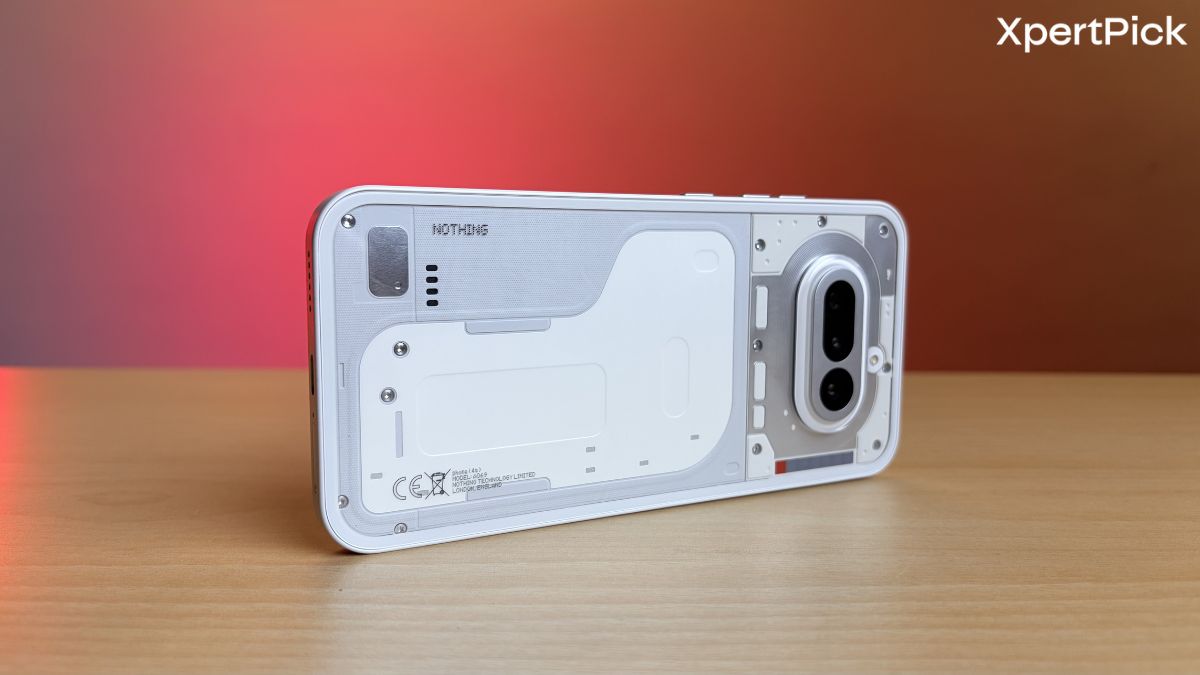
If sustained gaming performance is your priority, the Nothing Phone 4(a) is our top recommendation under ₹40,000. It combines excellent thermal efficiency with remarkably stable performance during extended workloads.
Why We Picked It
The Nothing Phone 4(a) takes a brilliantly balanced approach, managing to deliver exceptional e-sports performance without the thermal penalties seen in its more aggressive rivals. Despite a relatively modest AnTuTu score of 1.43 million compared to the top contenders, it punches well above its weight class in well-optimised shooters, achieving a superb 105.8 Average FPS in BGMI.
What makes this performance extraordinary is the phone’s elite thermal behaviour. It achieved a near-perfect 99.3% stability in the 3DMark Extreme stress test, all while maintaining a remarkably cool peak temperature of just 34.3°C. It is the perfect choice for gamers who want a highly consistent, stutter-free experience in competitive shooters without their device doubling as a hand warmer.
Nothing Phone 4(a) Key Specifications
-
Starting Price: ₹31,999
-
Processor: Qualcomm Snapdragon 7s Gen 4
-
Display: 6.78-inch Flexible AMOLED, 120Hz refresh rate, FHD+ (1224×2720)
-
RAM: 8 GB / 12 GB
-
Storage: 128 GB / 256 GB
-
Battery: 5,400 mAh
-
Charging: 50W wired fast charging
-
Rear Cameras: 50 MP Main + 50 MP Periscope + 8 MP Ultrawide
-
Front Camera: 32 MP
-
Durability: IP64 dust and water resistance, Corning Gorilla Glass 7i
Nothing Phone 4(a) XP Lab Data
-
AnTuTu Overall Score: 1,435,113
-
Geekbench 6 Score: 1,378 Single-Core / 4,313 Multi-Core
-
Geekbench GPU Score: 4,597
-
3DMark Wild Life Extreme Stability: 99.3%
-
CPU Throttling Test Stability: 84%
-
BGMI Performance (Lowest Graphics): 105.8 Average FPS / 82.4 5% Low FPS
-
Minecraft Performance (Highest Graphics): 35.1 Average FPS / 19.2 5% Low FPS
Nothing Phone 4(a) Pros & Cons
-
Pros: Incredible thermal efficiency and sustained performance, achieving 99.3% 3DMark stability and maintaining a cool 34.3°C under load, whilst still delivering over 100 FPS in BGMI.
-
Cons: The underlying hardware lacks the graphical horsepower for visually intense 3D titles, resulting in a sluggish 35.1 Average FPS in Minecraft.
Who Should Buy It
The Nothing Phone 4(a) is ideal for buyers who value sustained gaming performance over peak benchmark scores. Its excellent thermal management, stable frame rates, and clean software make it a great choice for long gaming sessions, while the periscope camera adds versatility for everyday photography.
Who Shouldn’t Buy It
If you regularly play graphically demanding games or want the highest GPU performance, there are better options. The Nothing Phone 4(a) struggles in demanding titles such as Minecraft, making phones like the POCO X8 Pro or Redmi Turbo 5 better suited to graphics-intensive workloads.
Expert Verdict: The Nothing Phone 4(a) delivers one of the most consistent gaming experiences under ₹40,000. Rather than chasing benchmark records, it focuses on sustained performance, low operating temperatures, and dependable frame rates. It may not be the fastest phone for demanding 3D games, but for buyers who prioritise long gaming sessions, efficient thermals, and a polished everyday experience, it is one of the strongest all-round choices in its class.
OnePlus Nord CE6 – Best for Casual Gaming and Thermal Stability
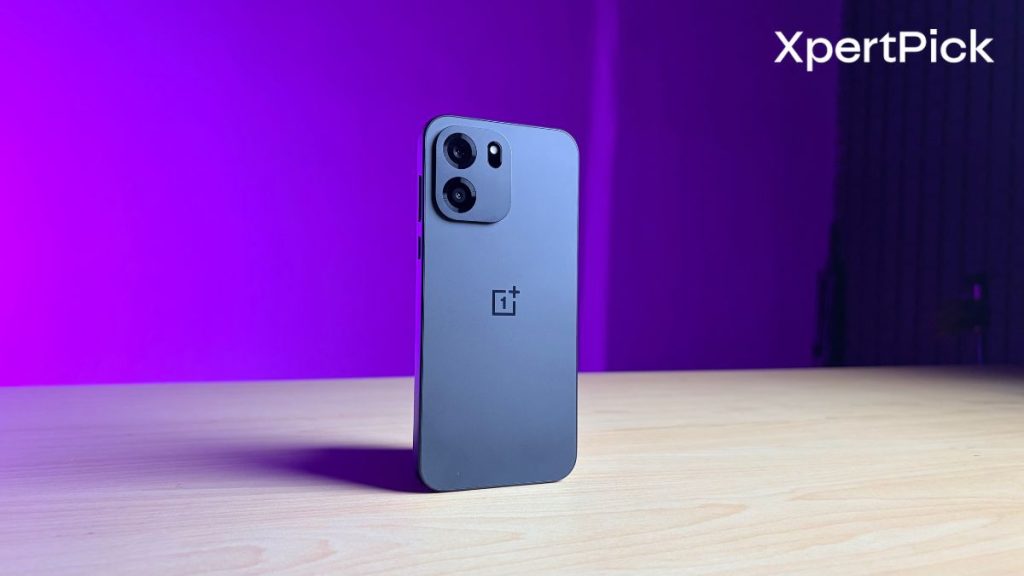
The OnePlus Nord CE6 prioritises consistency over outright speed, earning my recommendation as the best casual gaming phone under ₹40,000. Its excellent thermal management, stable performance, and huge battery make it a dependable choice for extended gaming sessions.
Why We Picked It
If battery life matters more than chasing the highest frame rates, the OnePlus Nord CE6 is worth considering. It lasted 24 hours and 36 minutes in my battery loop test, making it well suited for long gaming sessions without constantly reaching for the charger.
The trade-off is performance. Compared to phones like the Realme GT 7T, its GPU performance is lower, and I did notice frame drops in heavier games, with Minecraft dropping to 29.8 FPS at its lowest. However, the phone stays remarkably cool under load, recording 99.2% stability in the 3DMark Wild Life Extreme Stress Test and 89% sustained performance in the CPU Throttling Test.
During my BGMI testing, the Nord CE6 maintained an average of 89.6 FPS with consistent frame pacing and minimal thermal throttling. If your gaming sessions typically last several hours and you prefer stable performance over maximum graphics settings, its combination of battery life and thermal efficiency makes it a practical choice.
OnePlus Nord CE 6 Key Specifications
-
Starting Price: ₹32,090
-
Processor: Qualcomm Snapdragon 7s Gen 4
-
Display: 6.78-inch AMOLED (144Hz)
-
RAM: 8GB
-
Storage: 128GB / 256GB UFS 3.1
-
Battery: 8,000 mAh
-
Charging: 80W SUPERVOOC
-
Rear Camera: 50MP Main (OIS) + 2MP Secondary
-
Front Camera: 32MP
-
Durability: IP66, IP68, IP69, and IP69K dust and water resistance
OnePlus Nord CE6 XP Lab Data
- AnTuTu Overall Score: 1,116,270
- Geekbench 6 Score: 1,072 Single-Core / 3,171 Multi-Core
- Geekbench GPU Score: 3,582
- 3DMark Wild Life Extreme Score: 1,113
- 3DMark Wild Life Extreme Stress Test Stability: 99.2%
- CPU Throttling Test Stability: 89%
- BGMI Performance (Lowest Graphics): 89.6 Average FPS / 83.6 5% Low FPS
- Minecraft Performance (Highest Graphics): 42.2 Average FPS / 29.8 5% Low FPS
OnePlus Nord CE6 Pros & Cons
- Pros: Exceptional thermal management and sustained performance, with 99.2% 3DMark stability and an 89% CPU throttling score, resulting in a reliably cool and stutter-free experience when playing titles like BGMI on lower graphical settings.
- Cons: Vastly outmatched in raw processing power compared to its direct competitors, scoring just 3,582 in the GPU test, and struggles while running graphics-heavy games.
Who Should Buy It
The OnePlus Nord CE6 is ideal for buyers who value reliability over raw performance. Its excellent thermal management, huge 8,000 mAh battery, and stable gaming performance make it a great choice for casual gamers, frequent travellers, and anyone who wants a phone that stays cool during extended use.
Who Shouldn’t Buy It
If you want the highest frame rates or flagship-level graphics performance, there are better options. The Nord CE6 is tuned for efficiency rather than outright speed, making rivals such as the Realme GT 7T and Moto Edge 70 Pro better suited to demanding games and high-refresh gaming.
Expert Verdict: The OnePlus Nord CE6 takes a measured approach to gaming performance by prioritising stability, battery life, and thermal efficiency over benchmark numbers. It delivers consistently smooth gameplay in popular titles while remaining remarkably cool under load. Buyers chasing the highest frame rates should look elsewhere, but for dependable everyday gaming and exceptional endurance, it is one of the best-balanced phones under ₹40,000.
Realme GT 7T – Best Value for Money Gaming Performance
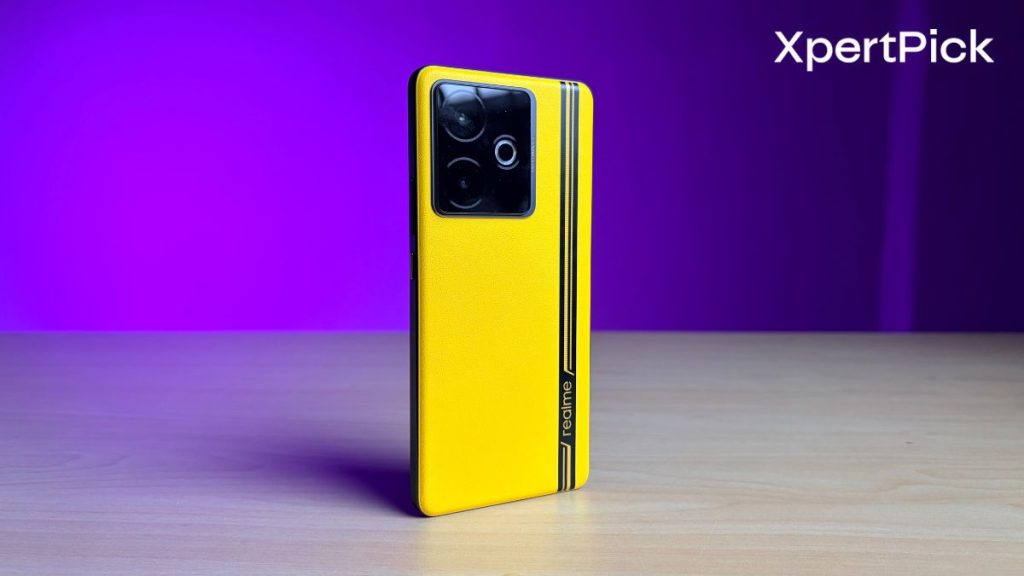
The Realme GT 7T delivers flagship-level gaming performance at a highly competitive price, earning my recommendation as the best value gaming phone under ₹40,000.
Why We Picked It
The Realme GT 7T offers a balanced gaming experience without pushing into flagship pricing. In my testing, it scored 2.12 million in AnTuTu, delivered 73.3% graphics stability in the 3DMark Wild Life Extreme Stress Test, and maintained an 81.2 FPS 5% Low in BGMI, resulting in smooth gameplay with very few noticeable frame drops.
What stood out during gaming was its consistency. Whether I was playing BGMI for extended sessions or switching between demanding titles, frame pacing remained stable and micro-stutters were kept to a minimum. While some phones posted higher peak benchmark scores, the GT 7T translated its performance into a more predictable gaming experience.
If you’re looking for a gaming phone under ₹40,000 without stretching your budget, the Realme GT 7T delivers the right balance of sustained performance, stable frame rates, and thermal behaviour. It offers a gaming experience that feels close to higher-priced alternatives while costing noticeably less.
Realme GT 7T Specifications
-
Starting Price: ₹32,999
-
Processor: MediaTek Dimensity 8400-Max
-
Display: 6.8-inch AMOLED (120Hz)
-
RAM: 8GB / 12GB LPDDR5X
-
Storage: 256GB / 512GB
-
Battery: 7,000 mAh
-
Charging: 120W SUPERVOOC
-
Rear Camera: 50MP Main (OIS) + 8MP Ultra-Wide
-
Front Camera: 32MP
Realme GT 7T XP Lab Data
- AnTuTu Overall Score: 2,127,058
- Geekbench 6 Score: 1,595 Single-Core / 6,248 Multi-Core
- Geekbench GPU Score: 10,895
- 3DMark Wild Life Extreme Score: 4,094
- 3DMark Wild Life Extreme Stress Test Stability: 73.3%
- CPU Throttling Test Stability: 68%
- BGMI Performance (Lowest Graphics): 96.5 Average FPS / 81.2 5% Low FPS
- Minecraft Performance (Highest Graphics): 58.1 Average FPS / 39.7 5% Low FPS
Realme GT 7T Pros & Cons
Pros: Delivers undisputed value for money with flagship-tier graphical consistency. It boasts the highest 3DMark stability at 73.3% in the group and the fewest micro-stutters in BGMI with an 81.2 5% Low FPS result, ensuring near-perfect, highly reliable 90 FPS gaming.
Cons: Struggles more with sustained, raw CPU loads, dropping to 68% in the Throttling Test, relative to the competition.
Who Should Buy It
The Realme GT 7T is ideal for buyers who want flagship-level gaming performance without stretching their budget. Its powerful Dimensity 8400 Max chipset, excellent frame consistency, 7,000 mAh battery, and 120W fast charging make it a superb choice for competitive gamers and anyone who spends hours playing mobile games.
Who Shouldn’t Buy It
If your workloads revolve around demanding CPU-intensive tasks such as console emulation or prolonged computational workloads, there are better options. While gaming performance is excellent, the GT 7T throttles more noticeably under sustained CPU stress than rivals such as the POCO X8 Pro.
Expert Verdict: The Realme GT 7T delivers one of the best gaming experiences under ₹40,000. Its excellent frame consistency, powerful hardware, large battery, and rapid charging create a remarkably balanced package for everyday gaming. While sustained CPU performance is not class-leading, its real-world gaming performance is among the strongest in this segment, making it an easy recommendation for value-conscious gamers.
Google Pixel 9a
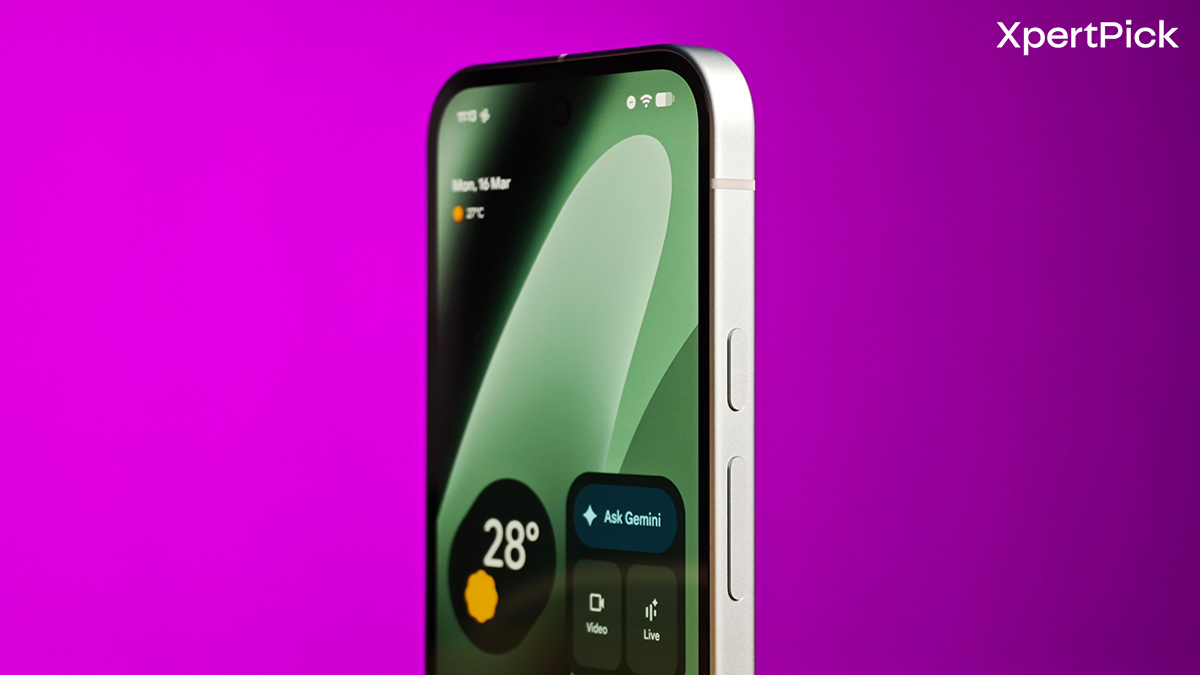
The Google Pixel 9a is not one of our recommended gaming phones under ₹40,000. While it delivers a polished software experience and excellent cameras, its gaming performance falls well behind the strongest contenders in this segment.
Why We Didn’t Pick It
The Google Pixel 9a is not one of my recommendations for gaming under ₹40,000. While it handles casual gaming well enough, it falls behind the other phones in this comparison in terms of CPU, GPU, and sustained gaming performance.
During my BGMI testing, it maintained an average of 59.6 FPS with a 57.7 FPS 5% Low, resulting in stable gameplay without major frame drops. It also recorded 75.3% stability in the 3DMark Wild Life Extreme Stress Test, indicating reasonably consistent performance during longer sessions.
The limitations become more apparent in GPU-intensive games. With a 3DMark Wild Life score of 2,678, the Pixel 9a averaged just 34.8 FPS in Minecraft, leaving little performance headroom for more demanding workloads. If gaming is your primary priority, there are better options in this price segment that deliver higher frame rates, stronger GPU performance, and more consistent long-session gaming.
Google Pixel 9a Key Specifications
-
Starting Price: ₹39,999
-
Processor: Google Tensor G4
-
Display: 6.3-inch OLED (120Hz)
-
RAM: 8GB
-
Storage: 128GB / 256GB
-
Battery: 5,100 mAh
-
Charging: 23W Fast Charging
-
Rear Camera: 48MP Main + 13MP Ultra-Wide
-
Front Camera: 13MP
-
Durability: IP68 dust and water resistance
Google Pixel 9a Lab Data
- AnTuTu Overall Score: 1,610,292
- Geekbench 6 Score: 1,711 Single-Core / 4,400 Multi-Core
- Geekbench GPU Score: 8,680
- 3DMark Wild Life Extreme Score: 2,678
- 3DMark Wild Life Extreme Stress Test Stability: 75.3%
- CPU Throttling Test Stability: 70%
- BGMI Performance (Lowest Graphics): 59.6 Average FPS / 57.7 5% Low FPS
- Minecraft Performance (Highest Graphics): 34.8 Average FPS / 27.2 5% Low FPS
Google Pixel 9a Pros & Cons
Pro: Maintains consistent frame pacing during BGMI sessions, keeping the baseline at 57.7 FPS and helping to minimise stutters during active combat.
Con: Its GPU performance is less convincing in graphically intensive games, where it can struggle to maintain smooth gameplay.
Who Should Buy It
The Google Pixel 9a is ideal for buyers who prioritise photography, clean software, and long-term Android updates over gaming performance. Its capable cameras, Pixel-exclusive AI features, IP68 rating, and bloat-free software make it a great choice for everyday use and casual gaming.
Who Shouldn’t Buy It
If gaming is your priority, there are much better options under ₹40,000. The Tensor G4 struggles in graphically demanding titles, making rivals such as the Moto Edge 70 Pro and Redmi Turbo 5 far better suited to high-refresh gaming and heavy workloads.
Expert Verdict: The Pixel 9a is an excellent everyday smartphone, but it is not one of our recommended gaming phones under ₹40,000. Google’s Tensor G4 prioritises AI and photography over graphics performance, resulting in modest gaming capabilities. Buyers focused on cameras and software will appreciate what it offers, but performance-first users will find considerably stronger alternatives in this price range.
Redmi Note 15 Pro Plus
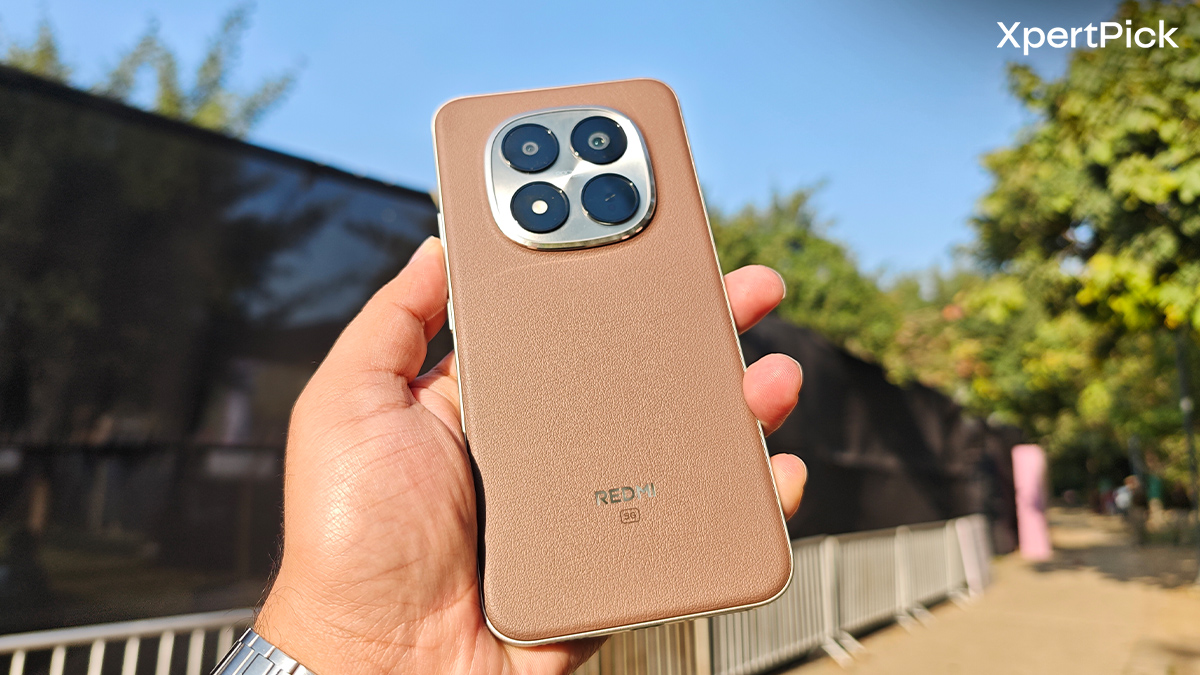
The Redmi Note 15 Pro Plus missed the list because it lacks the graphical performance required for heavier workloads, despite offering respectable mid-range processing power via the Snapdragon 7s Gen 4. The hardware is clearly tuned to keep temperatures under control rather than maximise graphics performance.
On the positive side, it scores a near-perfect 99.6% in the 3DMark Wild Life Extreme Stress Test and delivers a stable 59.2 FPS average in BGMI. The trade-off is raw graphics capability; with a 3DMark score of just 1,109, the phone struggles immensely in more demanding games, managing an average of only 31.5 FPS in Minecraft.
Redmi Note 15 Pro+ 5G Key Specifications
-
Starting Price: ₹39,990
-
Processor: Qualcomm Snapdragon 7s Gen 4
-
Display: 6.83-inch 1.5K CrystalRes AMOLED (120Hz)
-
RAM: 8GB / 12GB LPDDR4X
-
Storage: 256GB / 512GB UFS 2.2
-
Battery: 6,500 mAh Silicon-Carbon
-
Charging: 100W HyperCharge (with 22.5W reverse wired charging)
-
Rear Camera: 200MP Main (OIS) + 8MP Ultra-Wide
-
Front Camera: 32MP
-
Durability: Extensive IP66, IP68, IP69, and IP69K dust and water resistance, plus Gorilla Glass Victus 2
Redmi Note 15 Pro Plus XP Lab Data
- AnTuTu Overall Score: 1,057,966
- Geekbench 6 Score: 1,270 Single-Core / 3,248 Multi-Core
- Geekbench GPU Score: 3,531
- 3DMark Wild Life Extreme Score: 1,109
- 3DMark Wild Life Extreme Stress Test Stability: 99.6%
- CPU Throttling Test Stability: 94%
- BGMI Performance (Lowest Graphics): 59.2 Average FPS / 51.5 5% Low FPS
- Minecraft Performance (Highest Graphics): 31.5 Average FPS / 22.6 5% Low FPS
Redmi Note 15 Pro Plus Pros & Cons
Pros: Exceptional thermal management keeps performance degradation to a minimum under load, resulting in a near-perfect 99.6% stability score in the 3DMark Wild Life Extreme Stress Test and an impressive 94% CPU retention result.
Cons: The hardware lacks the graphics power needed for demanding 3D games, with Minecraft highlighting these limitations by averaging just 31.5 FPS in our testing.
Who Should Buy It
The Redmi Note 15 Pro+ is ideal for buyers who prioritise reliability over outright performance. Its excellent thermal management, large 6,500 mAh battery, durable IP66/IP68/IP69K-rated design, 200 MP camera, and 100W fast charging make it a great choice for everyday use, media consumption, and casual gaming.
Who Shouldn’t Buy It
If gaming is your priority, there are far better options in this price range. The Redmi Note 15 Pro+ lacks the graphics performance required for demanding games, making phones such as the Realme GT 7T and POCO X8 Pro much better suited to high-refresh gaming and intensive workloads.
Expert Verdict: The Redmi Note 15 Pro+ is a dependable all-round smartphone, but it is not one of our recommended gaming phones under ₹40,000. Its excellent thermal management, battery life, and premium build make it a reliable daily driver, yet its conservative graphics performance leaves it well behind the leading gaming phones in this segment. Buyers who prioritise gaming will find considerably better value elsewhere.
Frequently Asked Questions (FAQs)
Which Smartphone Delivers the Highest BGMI Frame Rate Under Rs 40,000?
The Moto Edge 70 Pro delivered the highest BGMI performance in my testing, averaging 111.4 FPS. It was the only phone in this comparison to consistently exceed the 100 FPS mark, making it the strongest option for players who prioritise fast and responsive gameplay.
Which Is the Best Value-for-Money Gaming Phone Under Rs 40,000?
The Realme GT 7T offers some of the best gaming value in this segment. Despite costing less than several rivals, it delivered strong frame-rate consistency and stable performance across my gaming and stress tests, making it an excellent choice for most gamers.
Which Phone Is Best for Heavy Workloads and Emulation?
The POCO X8 Pro is the strongest option for sustained workloads. In my testing, it retained more of its performance under prolonged load than most competitors, making it particularly well-suited to emulation, video rendering, and extended gaming sessions.
Which Gaming Phone Offers the Best Thermal Stability?
The OnePlus Nord CE6 stood out for its thermal performance. It achieved one of the highest stability scores in my stress testing and remained remarkably consistent during extended workloads, making it a good choice for users who prioritise consistency over peak performance.
Why Are the Pixel 9a and Redmi Note 15 Pro Plus Not Among the Recommended Gaming Phones?
Both phones handled lighter workloads and games such as BGMI reasonably well, but they lacked the graphics performance needed for more demanding titles. In my testing, graphically intensive games exposed their limitations, making them less suitable for buyers looking for the strongest gaming experience under Rs 40,000.