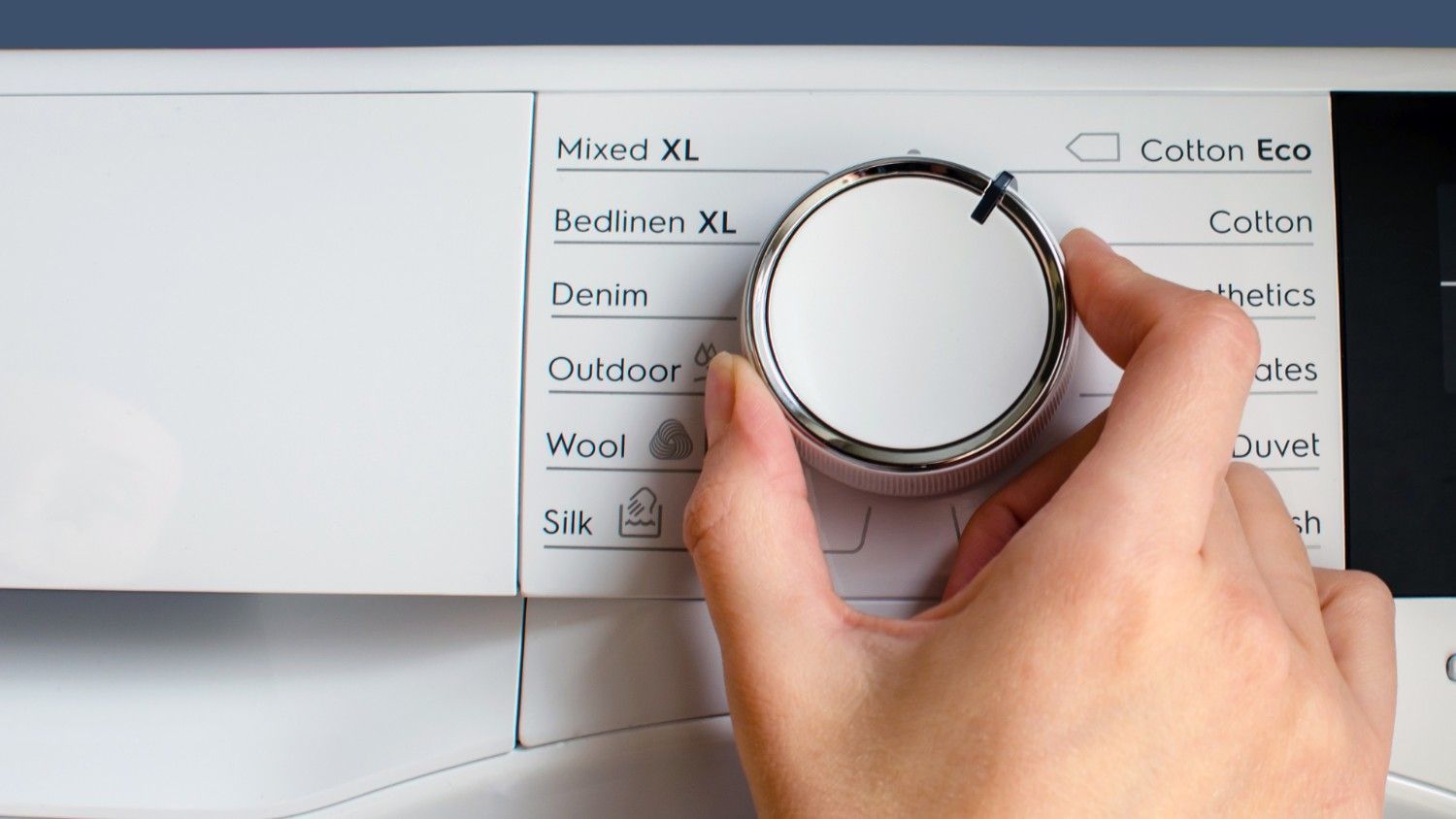
If you carefully look at all the controls on your washing machines, there is a long list of options to choose from. From “heavy duty” and “delicates” to “hand wash,” “wool” and even a dedicated “jeans” setting, you will find it all. But tell me honestly, how many of these modes do you actually use? While these modes are meant to help users tailor washes for different fabrics and soil levels, they often leave people confused about which one to choose.
But maybe these modes are overcomplicating something pretty simple to begin with. According to laundry expert Patric Richardson, widely known as “The Laundry Evangelist”, most people don’t really have to worry about changing cycles at all. He says that for everyday laundry, a single setting, which is the express cycle, is more than enough.
Speaking on HuffPost’s Am I Doing It Wrong? In a podcast, Richardson explained that he almost always relies on the express cycle for washing clothes. “I only use the express cycle. It’s long enough to get your clothes clean but short enough not to cause any damage,” he said.
Modern washing machines are also far more efficient than older models. Many front-load and top-load machines now use sensors to detect load weight, water levels, and detergent concentration. Because of this, even shorter cycles are able to clean effectively in many situations. Many newer washing machines also optimise drum rotation and water flow during shorter cycles, which is why manufacturers are increasingly highlighting quick wash modes as a daily-use setting.
The express cycle might be labelled as “quick wash” or “30-minute wash” on your washing machine, depending on the brand. This setting is customised to clean clothes in a shorter amount of time compared to other specialised cycles. Research further suggests that even heavily soiled clothes can be effectively cleaned and sanitised using the express cycle option.
If you use longer cycles, that can increase the wear and tear on fabrics. Extended wash times mean that your clothes have to bear with agitation and friction for longer, which can gradually weaken the fabric. Over time, this may shorten the lifespan of garments, towels and bedding. Longer cycles also consume more water and electricity, making them less efficient from both an environmental and practical standpoint.
In our experience reviewing washing machines across brands and price segments, the quick or express cycle is designed primarily for lightly soiled clothes and smaller loads. While it can handle everyday laundry efficiently, heavier fabrics such as towels or bedsheets often benefit from longer wash programs that allow better soaking and agitation. However, most of the time, it’s our go-to setting as well, especially for mixed loads.
Why Washing Machines Still Have So Many Settings
The next obvious question is if it’s not required, then why do washing machines still have so many settings? This mostly comes from the history of laundry technology. See, in earlier decades, fabrics, detergents and washing machines were less advanced, making specialised cycles necessary. Settings like “bulk load”, “sanitary”, “whites”, etc served as an important function when machines needed extra time or different agitation patterns to clean properly.
But today, there have been improvements in detergent formulations, fabric durability and machine engineering. This means that many of those distinctions are less important for everyday laundry now. But manufacturers still include them because people have grown accustomed to seeing those settings, and they are comfortable with them.
And at the same time, laundry care experts suggest that quick cycles may work well for most daily loads, specialised settings can still be useful in certain situations. Delicate fabrics such as silk or wool, heavily stained garments, or large items like duvets may benefit from gentler or longer cycles. Along with this, understanding the fabric care labels and using the right detergent remains an important step as well.
In other words, you probably don’t need to scroll through every wash mode on your machine for everyday laundry. The quick or express cycle can handle most daily loads efficiently. But specialised cycles still exist for a reason, and knowing when to use them can help extend the life of both your clothes and your washing machine.