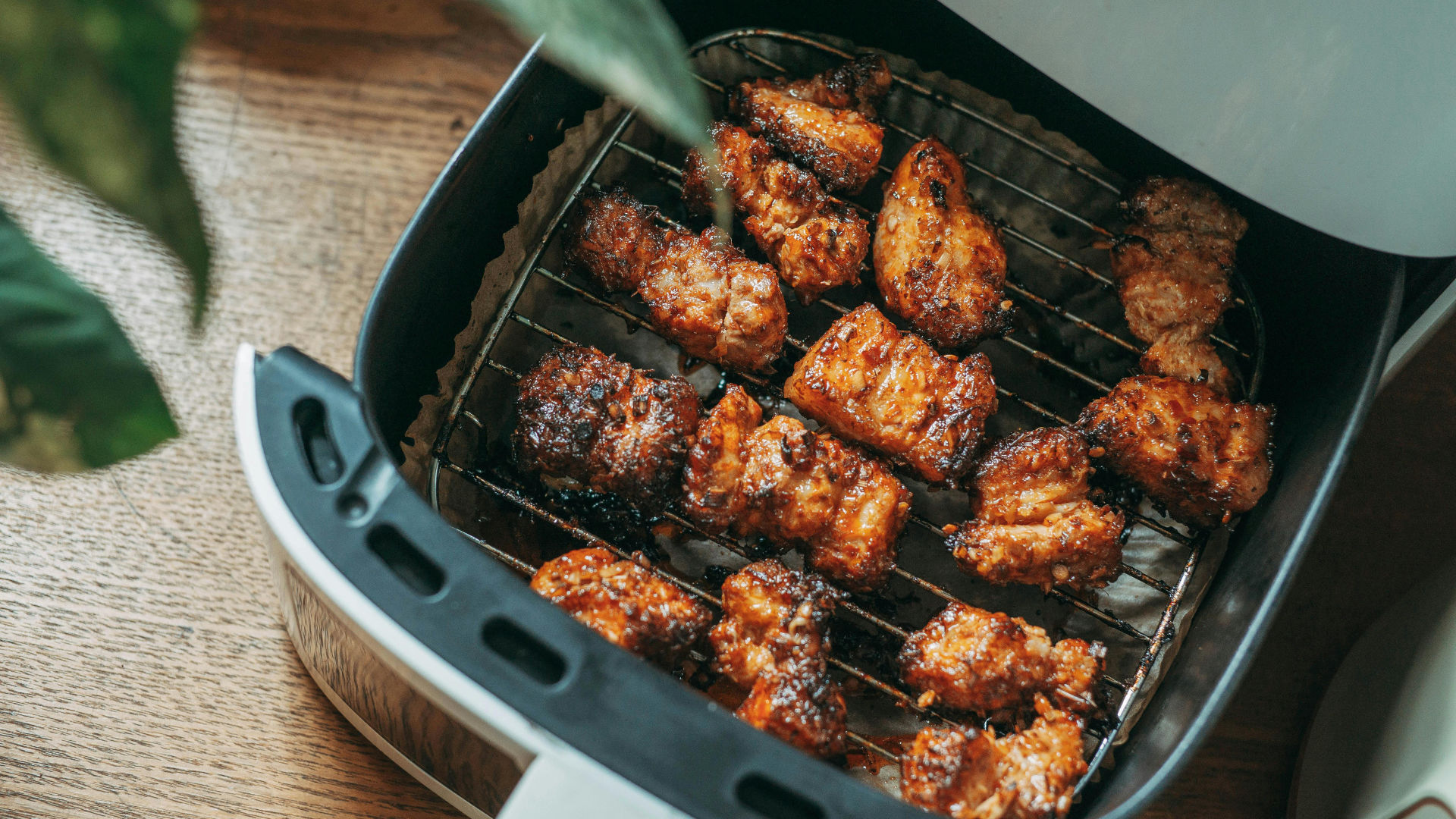
When I initially started testing out air fryers, I was pretty happy that I would get to cook tandoori meals easily at home, without the guilt of too much added butter, which the restaurants usually add. But my initial few attempts did not turn out as expected. The chicken got too dry, and the paneer became rubbery. I bet this happened with you as well if you have tried to cook tandoori items in an air fryer.
But after a few more failed attempts, I figured that my recipe wasn’t wrong. It was more to do with the technique. And now, I am going to help you figure out how to cook juicy chicken and paneer in an air fryer.
Why Tandoori Items Get Dry in an Air Fryer
See, a traditional tandoor operates at extremely high temperatures. This often goes above 400°C. That intense heat crisps up the exterior of your food and chars it before the moisture inside has any time to escape. And the marinade, which is typically made from yogurt further helps lock in that moisture and retain the juiciness.
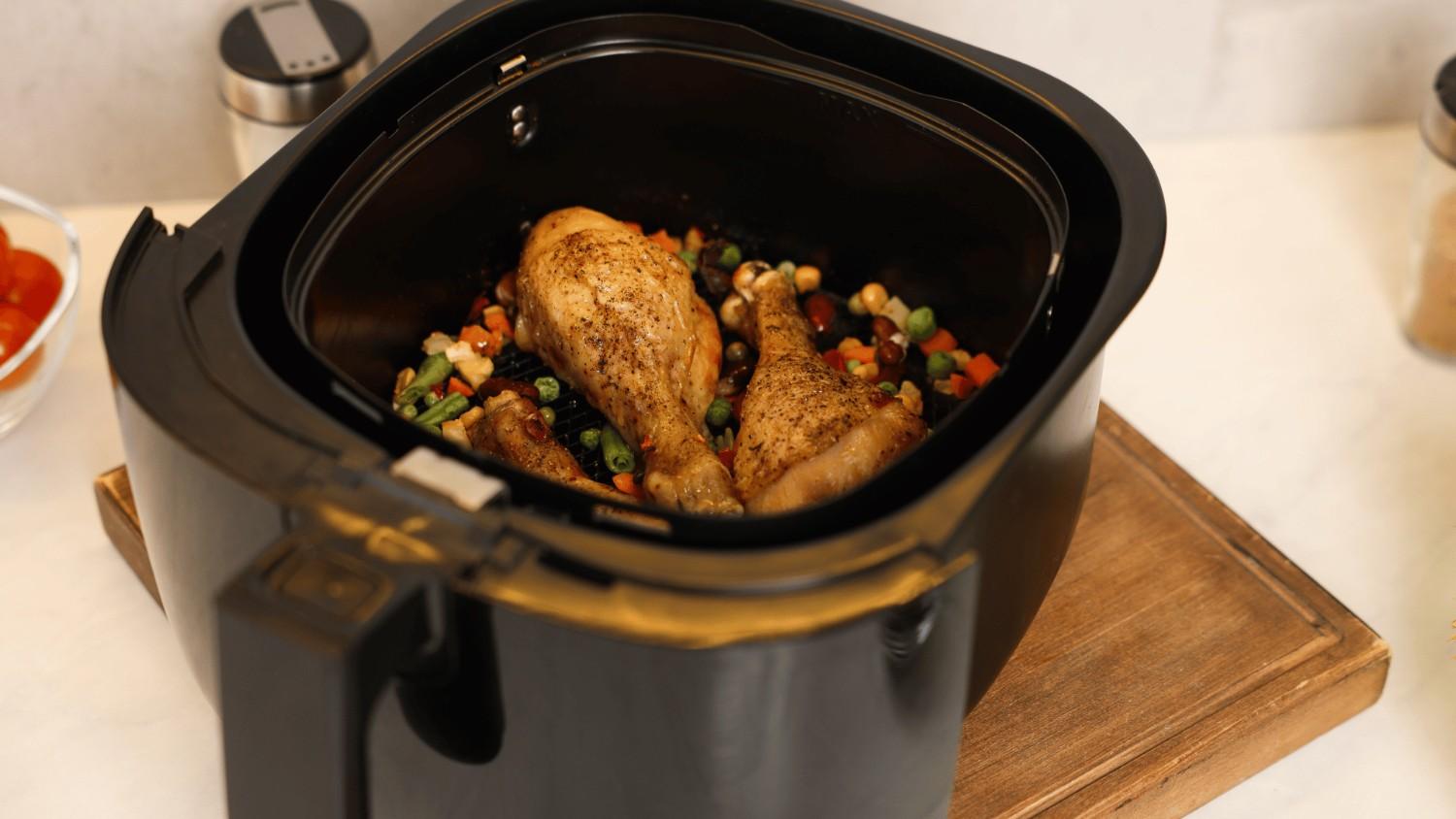
An air fryer, on the other hand, cooks food at temperatures lower than a traditional tandoor but uses aggressive air circulation. That fan-driven heat constantly moves around the food and accelerates evaporation. Simply put, the air fryer is designed to remove the surface moisture efficiently. That’s why your potatoes crisp up quickly, but the protein becomes dry.
When chicken or paneer dries out in an air fryer, it is usually because the balance between heat, fat, acid, and cooking time was misjudged.
Marinating is Important
If you’re cooking tandoori stuff, marinating is an important step and is not just to add taste.
In case you’re cooking chicken, yoghurt acts both as a tenderiser and an insulator. It is mildly acidic in nature. That helps in breaking down the protein fibres over time. And the thickness of a yoghurt marinade slows down moisture loss during cooking. Ginger-garlic paste, spices, and salt penetrate the surface, but it is the fat, either in the yoghurt or added oil, that prevents the exterior from drying too quickly.
If you don’t use a sufficient quantity of marinade, then there are chances that your protein will turn out dry. You should marinade your chicken for a minimum of 2 hours (if you are not in a hurry) or overnight for better results. If you skip this step, it simply means that the chicken enters a high-heat environment without protection.
Paneer, on the other hand, behaves a little differently. It does not require tenderising so much, but moisture retention is important. It is a dairy product, and too much acid can tighten its texture, and we don’t want that. You can still use a yoghurt marinade with paneer, but be careful with the amount of lemon used. Also, it is better to use full-fat paneer as low-fat versions lose moisture more rapidly in the air fryer.
Temperature & Timing are Very Important
The main reason why your tandoori stuff turns out dry in an air fryer is that you end up overcooking it while chasing colour. Look, unlike a traditional tandoor, an air fryer cooks at lower temperatures but circulates hot air aggressively. This means that the line between perfectly cooked and overcooked is very thin.
If you are cooking chicken, then 180–190°C works well. This depends on the size of the pieces. And 10-14 minutes of cooking time is usually sufficient. Halfway through the cooking time, flip the pieces to ensure even browning. If you’re a fancy home cook and have a thermometer, aim for an internal temperature of around 74°C. Cooking beyond that just because you want a deeper char often leads to dryness.
Paneer requires even less time to cook in an air fryer. At 180°C, 8–10 minutes is usually enough. Remember, paneer is already cooked; you are simply heating it through and charring the exterior. If you overcook it, then it will lose the moisture and tighten, and give you that rubbery texture.
And another common mistake that we make is overcrowding the air fryer basket. When pieces are packed too closely, they steam instead of roasting. Steaming slows down browning, which tempts you to cook longer, and that extended cooking time dries out the food. So, leave space between pieces or cook in batches for better results.
Some Tips for Better Results
A few small tweaks can dramatically improve the texture of your tandoori foods.
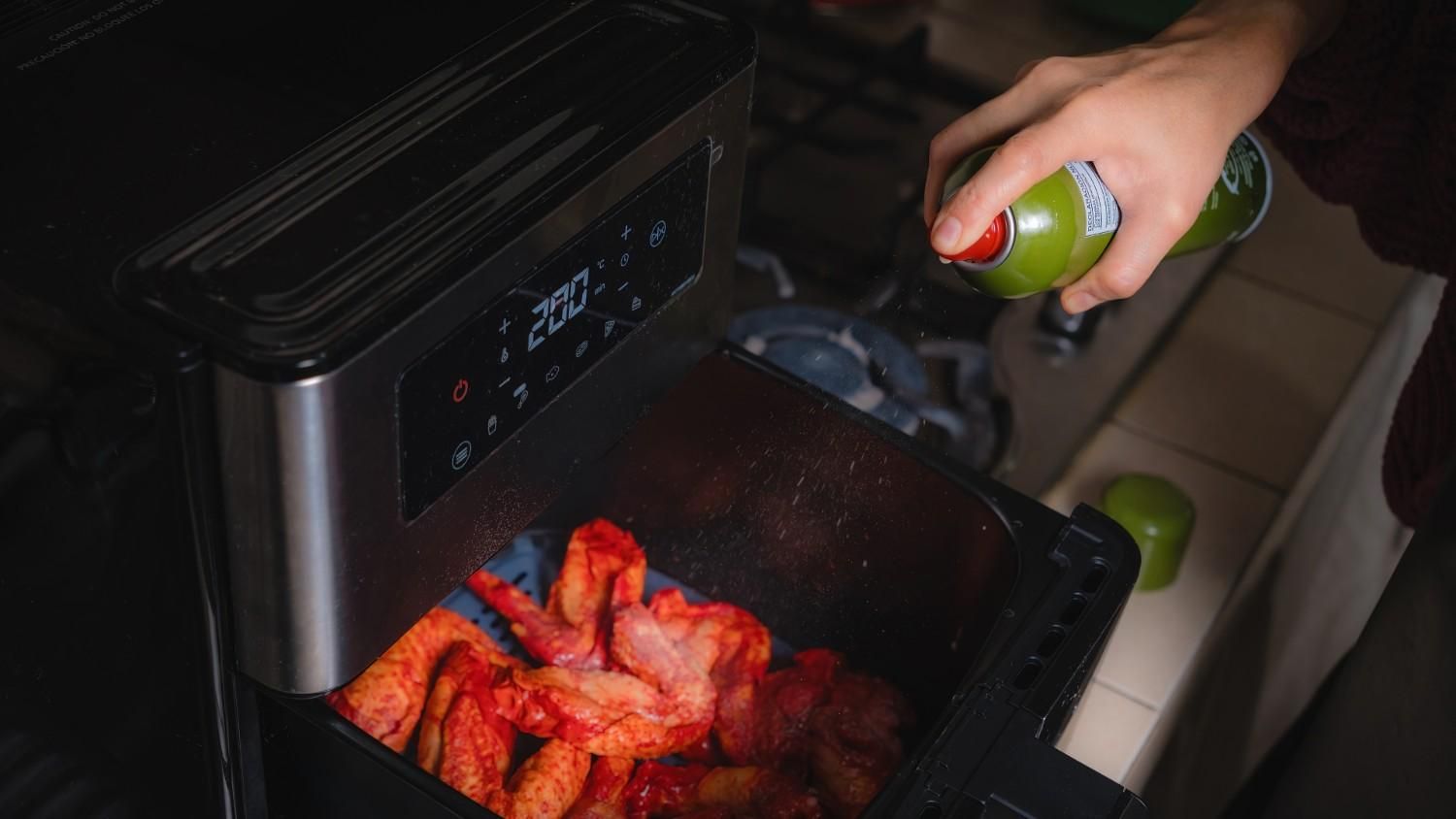
- Lightly brush the marinated pieces with oil before cooking. It helps reduce surface dehydration.
- Let the chicken rest for 3-5 minutes after cooking. It allows juices to redistribute instead of spilling out immediately when cut.
- For paneer, cutting larger cubes instead of small thin pieces helps retain moisture.
- You can even brush a little melted butter for extra richness after the paneer is cooked. Works for chicken, too.
So to sum it all up, an air fryer requires a little bit of precision for good tandoori food. Since it has high airflow, it can easily lead to moisture loss. So, the balance of marinade, fat, temperature, spacing and timing becomes important. And once you crack that, you will get soft and juicy tikkas every time.