Apple has refreshed both of its Macs in one announcement, putting the M6 and M5 Pro in the Mac mini and the M5 Max and M5 Ultra in the Mac Studio. Two of those chips are new, as the M6 and the M5 Ultra both make their debut here, while the M5 Pro and M5 Max carry over from the MacBook Pro that Apple introduced in March.
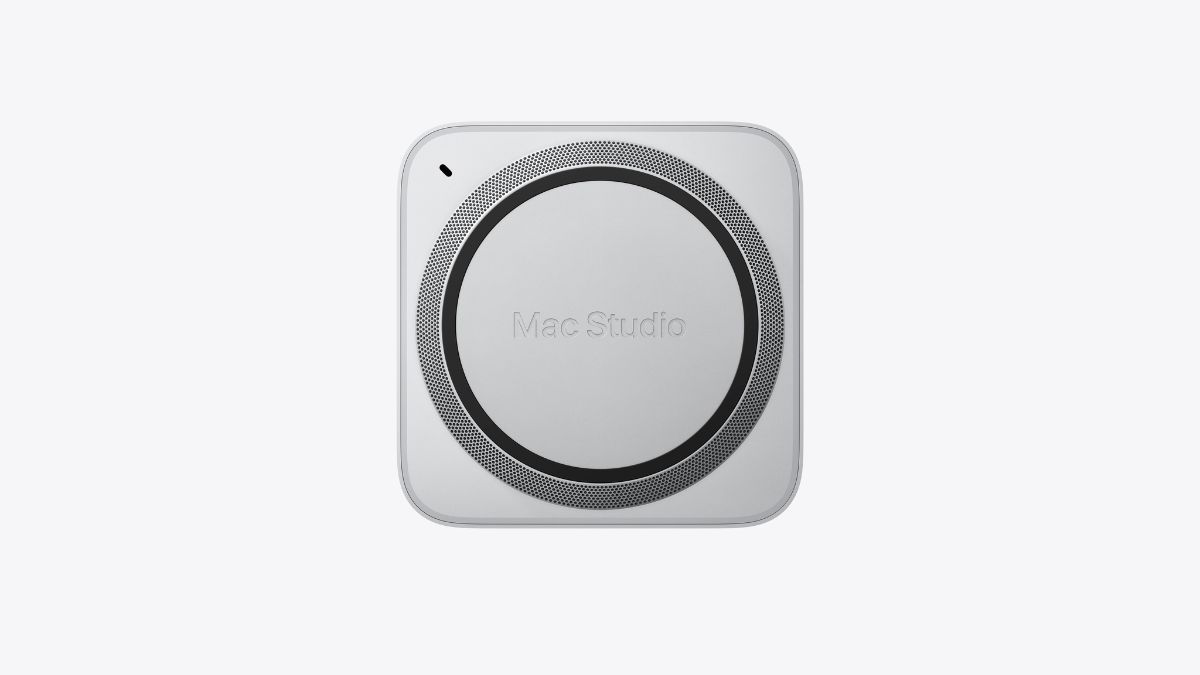
The two machines now span a range from Rs 99,900 to Rs 21,65,900 in India, and the main pitch this time around is on-device AI, with Neural Accelerators built into every GPU core on all four chips, along with Wi-Fi 7 and Bluetooth 6 arrive across both models.
Mac Mini with M6 Claims Up to 4x Faster AI Performance
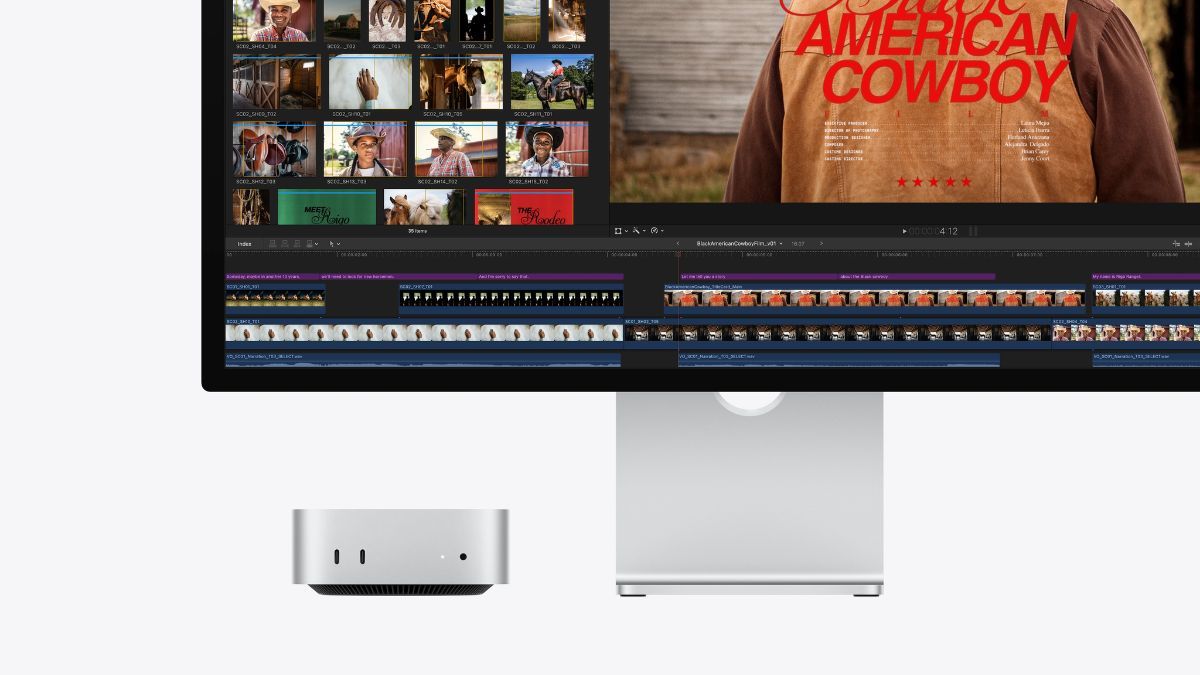
The M6 Mac mini is the standard model and replaces the M4. Apple says it delivers up to 40% faster CPU performance, 2x faster graphics and storage, and up to 4x faster AI performance. The hardware changes help explain those gains.
The M6 has a 12-core CPU with two super cores, four performance cores and six efficiency cores. It also has a 12-core GPU, with a Neural Accelerator built into each core. By comparison, the M4 has a 10-core CPU with four performance and six efficiency cores, plus a 10-core GPU without Neural Accelerators. In other words, the M6 adds two CPU cores, two GPU cores and dedicated AI hardware.
The Neural Engine has also been upgraded from a single 16-core design to a dual 16-core design, which Apple says can deliver up to twice the peak compute performance. Memory bandwidth has increased from 120GB/s to 170GB/s, giving the M6 more bandwidth to work with demanding workloads.
Unified memory is one of the few areas left unchanged, at 16GB as standard and 32GB at most, and both generations keep three Thunderbolt 4 ports. Networking accounts for much of the rest, with Wi-Fi 7 replacing Wi-Fi 6E, Bluetooth 6 replacing Bluetooth 5.3 and 2.5Gb Ethernet replacing the gigabit port as standard, though the 10Gb option carries over. The comparison that does not favour the new machine is price, as the M4 Mac mini launched in India at ₹59,900 with 16GB of memory and 256GB of storage while the M6 model asks ₹99,900 for the same configuration.
| Specification | Mac mini with M6 | Mac mini with M4 |
|---|---|---|
| Standard unified memory | 16GB | 16GB |
| Maximum unified memory | 32GB | 32GB |
| Thunderbolt | 3 × Thunderbolt 4 | 3 × Thunderbolt 4 |
| Wi-Fi | Wi-Fi 7 | Wi-Fi 6E |
| Bluetooth | Bluetooth 6 | Bluetooth 5.3 |
| Ethernet | 2.5Gb Ethernet standard, 10Gb option | 1Gb Ethernet standard, 10Gb option |
The AI figures are the ones Apple leans on hardest. The company says the M6 processes LLM prompts in LM Studio up to 4.8 times faster than an M4 system and up to 13.5 times faster than an M1, while ray-traced gaming in Cyberpunk 2077: Ultimate Edition runs up to twice as fast as on the M4. Spreadsheet work in Microsoft Excel is quoted at up to 1.5 times the M4’s pace.
Mac mini with M5 Pro moves to Thunderbolt 5 and 64GB of memory
Buyers who need more headroom can specify the Mac mini with M5 Pro, which offers up to an 18-core CPU and 20-core GPU, up to 64GB of unified memory and 307GB/s of bandwidth. Apple aims it at video production, 3D design, game development, scientific simulation and local AI inference, and quotes up to 4x faster LLM prompt processing, up to 1.4x faster ray-traced rendering in Blender and up to 1.5x faster image processing in Affinity than the M4 Pro model.
Ports separate the two configurations. The M6 machine carries three Thunderbolt 4 ports at the rear while the M5 Pro version moves to three Thunderbolt 5 ports, and both add two front-facing USB-C ports with USB 3 speeds, HDMI, a headphone jack with high-impedance support and Ethernet. 2.5Gb Ethernet is standard on both, with a 10Gb option.
M5 Ultra Is Apple’s First Quad-Die Chip With 512GB of Unified Memory
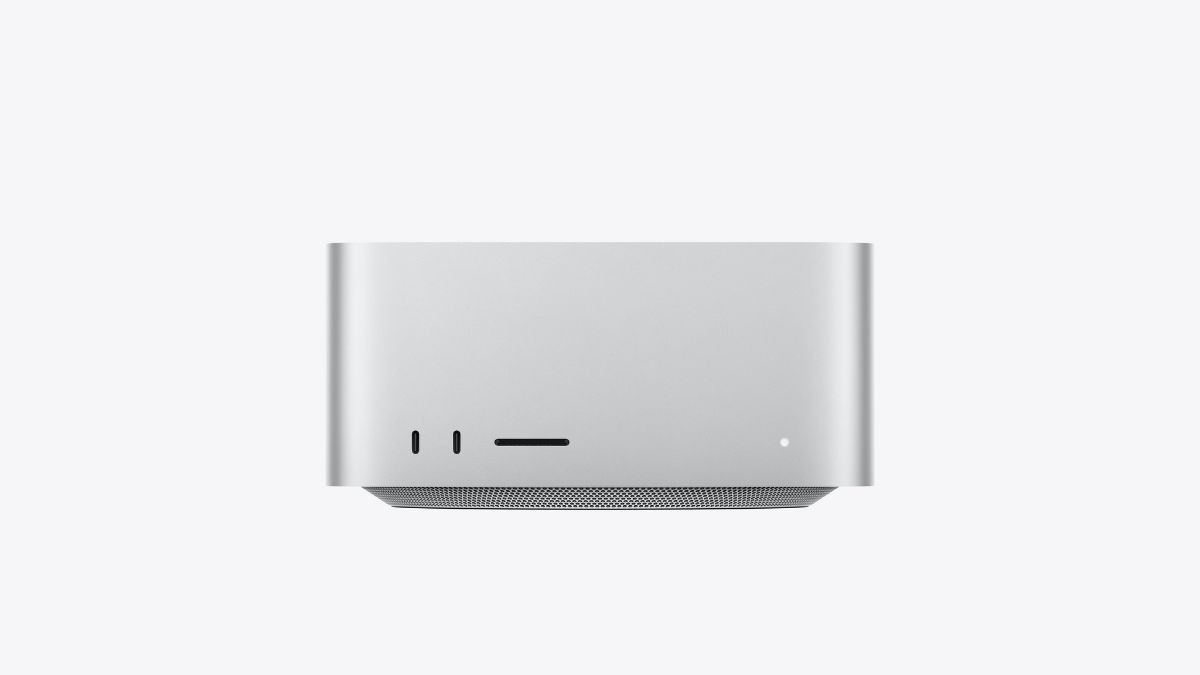
The M5 Ultra is the bigger upgrade. Apple builds it by connecting two M5 Max chips using its UltraFusion technology, creating a quad-die design that it says is a first for Apple silicon.
The chip can be configured with a 36-core CPU, including 12 super cores and 24 performance cores, an 80-core GPU, and up to 512GB of unified memory. It also offers 1.2TB/s of memory bandwidth, which is 50% higher than the M3 Ultra.
The M5 Ultra also brings Neural Accelerators to the Ultra series for the first time. Apple claims up to 4.5x higher peak GPU AI compute and up to 4.3x higher peak AI compute than the M3 Ultra. It also claims up to 4x faster LLM prompt processing, 1.8x faster graphics, 1.3x faster multithreaded CPU performance and 1.7x faster scene rendering in Maxon Redshift.
The biggest advantage, however, is the 512GB memory capacity. It allows users to run much larger AI models entirely in local memory, which is why Apple is targeting the Mac Studio at AI researchers, developers and data scientists as well as video and 3D professionals.
Apple also says four Mac Studio systems can be clustered together to deliver up to three times faster AI inference than a single system. The M5 Ultra effectively replaces the M3 Ultra, as Apple never released an M4 Ultra.
Mac Studio With M5 Max Targets Video, 3D and Inference Work
The M5 Max is the more affordable option and still targets demanding workloads. It starts at ₹2,79,900 in India against ₹6,29,900 for the M5 Ultra, and comes with an 18-core CPU, up to a 40-core GPU, up to 128GB of unified memory and 614GB/s of memory bandwidth. Apple claims up to 3.9x faster AI performance and up to 3x faster Magic Mask processing in DaVinci Resolve Studio compared with the M4 Max. It also claims up to 1.9x faster DNA sequencing basecalling. Neither configuration has escaped the price rises seen elsewhere in the range, as the M4 Max Mac Studio launched in India at ₹2,14,900 in March last year and the M3 Ultra version at ₹4,29,900, leaving the new models ₹65,000 and ₹2,00,000 dearer respectively.
Both Mac Studio models now use PCIe Gen 6 SSDs, which Apple says can deliver up to twice the previous storage speed. They also offer up to six Thunderbolt 5 ports with speeds of up to 120Gb/s, along with Wi-Fi 7 and Bluetooth 6 through Apple’s N1 wireless chip.
For professional workflows, both models can support up to eight displays and handle up to 33 streams of 8K ProRes 422 video at 30fps.
Mac Mini and Mac Studio Prices and Availability
At ₹99,900, the M6 Mac mini is the most expensive Mac mini Apple has launched in India. It is also ₹24,000 more expensive than the previous record-holder, the 2018 Intel Mac mini, which launched at ₹75,900.
The price of the Mac mini has changed quite a bit over the years. Intel models started at ₹44,900 in 2010 and eventually reached ₹75,900 in 2018. Apple then switched to its own silicon, with the M1 starting at ₹64,900 in 2020. The M2 and M4 were both priced at ₹59,900 when they launched.
That makes the M6 ₹40,000 more expensive than the M4, or roughly 67% higher in less than two years.
There is some context behind the increase. Apple removed the 256GB storage option from the M4 Mac mini in May, making 512GB the entry-level configuration. Apple has also pointed to rising memory costs as AI data centres consume more supply. The M6 brings the 256GB option back, so comparing the two models with 16GB RAM and 256GB storage gives the clearest picture of the price increase.
The effect is to change what the Mac mini is for. It has always been the cheap way into the Mac ecosystem, the machine buyers picked when they already owned a monitor and a keyboard. At ₹99,900 it now sits close to MacBook Air money rather than well below it, and anyone weighing the two will have to decide whether the M6’s extra cores and Neural Accelerators are worth giving up a screen and a battery for.
Taken together, the two launches show where Apple is directing its silicon effort, and what buyers here are being asked to pay for it. The Mac mini brings dedicated AI acceleration to a desktop that is no longer especially cheap, while the Mac Studio pushes memory capacity and bandwidth to a level intended for models that would otherwise have to run in the cloud. Both moves point the same way, and so does the memory shortage driving the prices up.