The tablet space has been dominated by Apple’s iPad for years now. On the Android side, Samsung and Lenovo have usually been the more obvious names, but in India, OnePlus has managed to carve out its own space in just a few generations.
Unlike brands that span every price band, OnePlus has kept its tablet portfolio focused on the upper mid-range and premium segments. The OnePlus Pad 4 sits firmly in that space, bringing the best tablet hardware the company currently has to offer.
This is easily one of the fastest Android laptops you can buy right now. But that also comes with a bigger question. At Rs 59,999, the OnePlus Pad 4 is no longer just competing with Android tablets. It is getting dangerously close to iPad Air territory, and that changes the expectations completely.
Design: A Big Tablet that Still Feels Premium
Design is one of the easier places for companies to cut corners, especially when they’re trying to undercut the iPad. However, the OnePlus Pad 4 doesn’t feel like a compromise in hand.
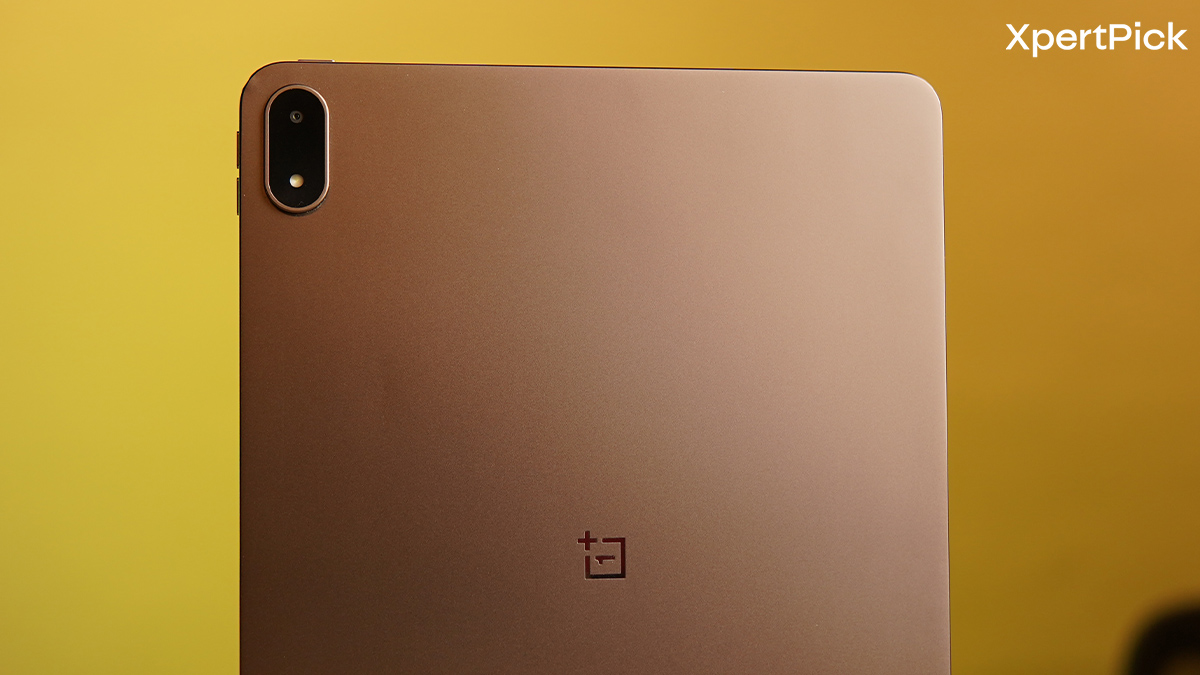
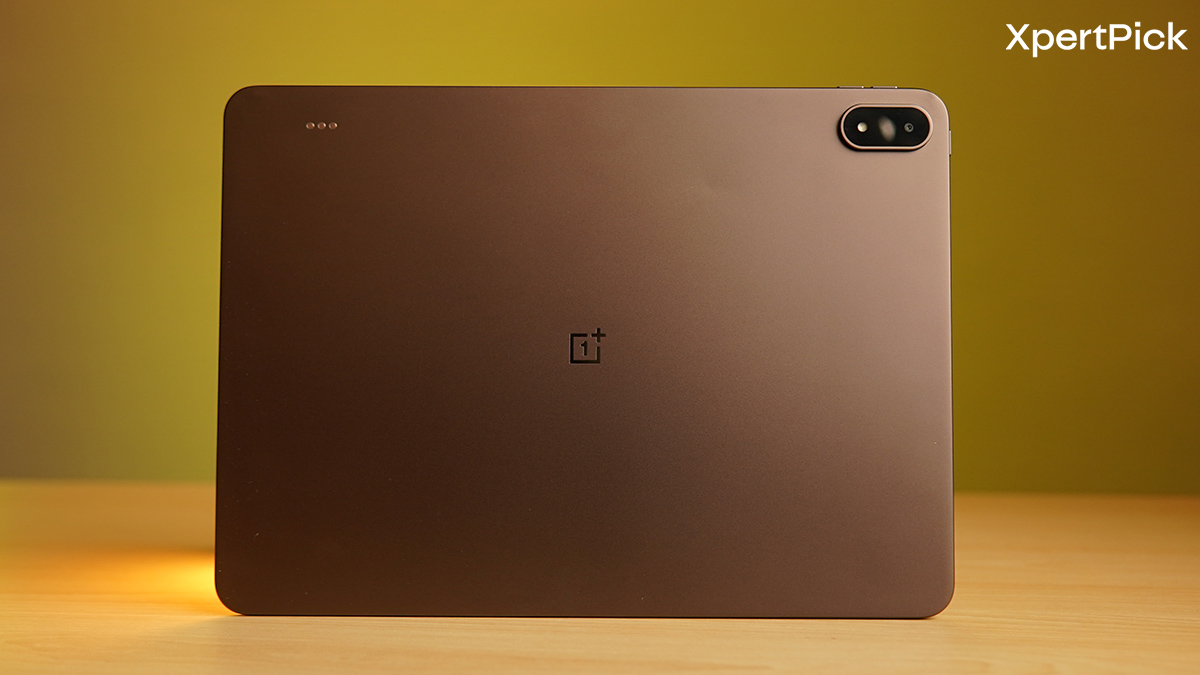
The full aluminium body gives it a proper premium feel, and the Dune Glow finish adds a very elegant touch. It’s not screaming for attention, but it still looks distinct enough to feel like a OnePlus product.
At 5.9mm, the Pad 4 is sleek for a device this large. It isn’t quite as thin or light as the iPad Air, or even the more compact Xiaomi Pad 8, but that comparison needs some context. The OnePlus Pad 4 is a much larger tablet with a 13.2-inch display, so it naturally feels closer to a laptop replacement than a casual handheld tablet.
The size does make it a little less comfortable for long handheld sessions. You can use it on a couch or in bed, sure, but this tablet really feels like it wants a desk, a stand, or a keyboard case. I didn’t get the Smart Keyboard with my review unit, which is unfortunate because that accessory would’ve rounded off the whole productivity pitch much better. But even without it, the Pad 4 feels sturdy, expensive, and thoughtfully made.
Display: A Giant Screen that Wants to be More Than a Tablet
The display is the part you interact with the most, and OnePlus understands this. Since its early smartphone days, the brand has placed a big emphasis on sharp screens, and the Pad 4 continues that approach. The 13.2-inch panel is massive. It sits closer to a laptop display than what most people imagine when they think of Android tablets.
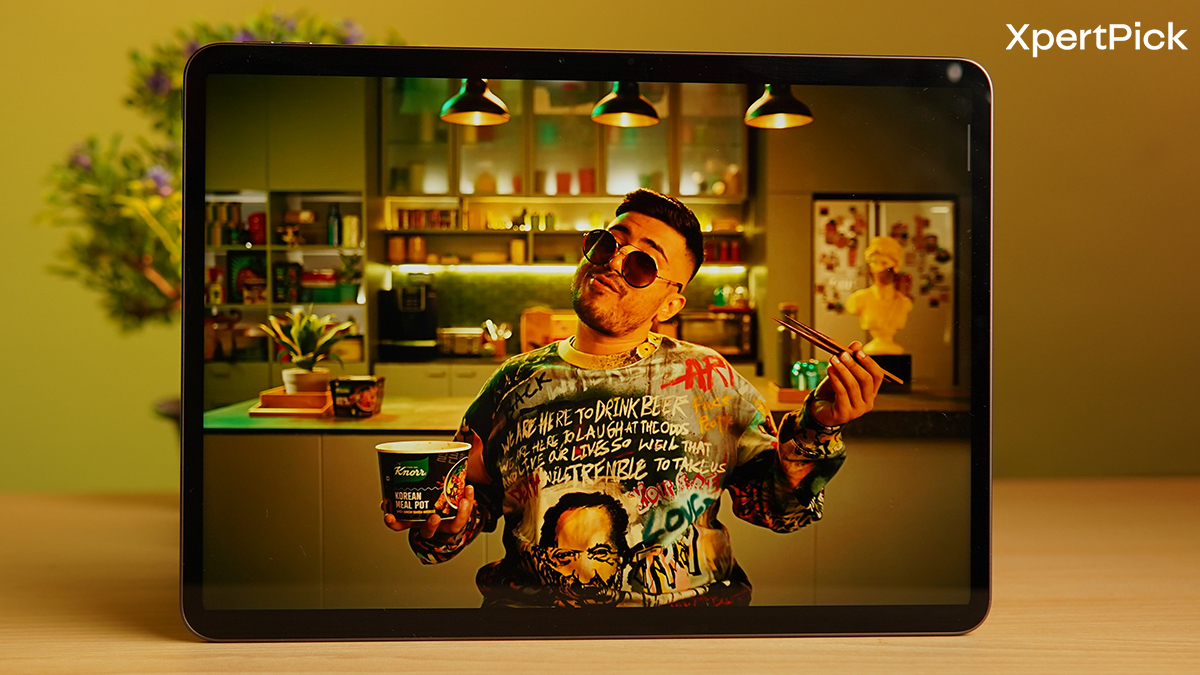
This size immediately changes how you use it. Movies feel more immersive, web pages breathe better, and multitasking feels less cramped. The 3.4K resolution makes everything look sharp, whether you’re reading, watching movies, editing documents, or just jumping between apps.
Colours are vibrant, and Dolby Vision support helps HDR content look properly punchy. I still wish this was an OLED panel, because true blacks and stronger contrast would’ve elevated the whole experience. But as far as LCD panels go, this is one of the better ones.
The 144Hz refresh rate also helps keep things smooth, though the tablet mostly runs at 120Hz outside select games and apps. It is still more than enough for everyday use. Scrolling feels fluid, while animations are clean, and gaming gets that extra sense of responsiveness.
Gaming is where the display really starts to make sense. In games like BGMI, where the UI can take up a big chunk of the screen, the extra space becomes a real advantage. Now, the map is easier to read, you’re not claustrophobic with the touch controls, and enemies aren’t a tiny pixel on the screen. Apple’s iPads have been popular in mobile esports for a reason, and the OnePlus Pad 4 feels like a proper Android answer to that.
The eight-speaker setup deserves its own praise too. Tablets naturally have more room than phones for better audio hardware, but the Pad 4 still surprised me. The speakers are powerful and balanced, so I didn’t feel the need to connect a Bluetooth speaker. It genuinely sounds better than some laptops I’ve reviewed, which is not something I say lightly.
Performance: Android Tablet Power with Room to Breathe
Every phone has to fight heat and power limits, but tablets get a little more breathing room. So what happens when you put a flagship chip inside a large chassis and let it stretch its legs? You get one of the strongest Android performance experiences around.
Synthetic benchmarks
- AnTuTu – 4,090,614
- AnTuTu (CPU) – 655,282
- AnTuTu (GPU) – 650,506
- Geekbench – 3,377 (single) / 10,185 (multi)
- CPU Throttling – 70%
- PCMark (10-15 mins) – 14,743
The OnePlus Pad 4 is a proper flagship tablet that is equipped with the Qualcomm Snapdragon 8 Elite Gen 5. Pair the chipset with 12GB LPDDR5X RAM and 512GB UFS 4.1 storage, and you get a device that feels built to last.
In daily use, the tablet flies. App launches are instant, multitasking feels effortless, and even running near-4K resolution doesn’t seem to slow it down. The performance gets even more impressive once you start gaming.
BGMI on low settings easily managed a stable 120fps, and even after 45 minutes of gameplay, the tablet didn’t seem bothered. Minecraft and Genshin Impact both hovered around the 60fps mark, which is exactly what you want from a premium Android tablet. Asphalt 9 showed the biggest dips, but even there, the average experience remained smooth.
Comparing it to the Xiaomi Pad 8, the OnePlus Pad 4 dominates in performance. Xiaomi’s tablet is much more affordable and still offers strong performance with the Snapdragon 8s Gen 4. But the OnePlus Pad 4 is clearly a tier above in raw horsepower.
My only nitpick would be with the thermals. After longer gaming sessions, the tablet does get warm, though I didn’t notice any major throttling in actual use. The other learning curve is simply the size. Gaming on a screen this large feels amazing once you adjust, but it does take some getting used to.
Battery life: Big Numbers with Decent Endurance
On paper, the OnePlus Pad 4’s battery sounds ridiculous. A 13,380mAh cell is larger than some chunky power banks. But a number like that sounds more insane on a phone (like the Realme P4 Power) than it does on a flagship-grade tablet with a large high-resolution display.
In my usage, the OnePlus Pad 4 delivered around 7 hours of screen-on time. That included watching a few episodes, gaming for about an hour, browsing, and reading manga for an embarrassingly long stretch. In the PCMark battery test, the tablet lasted 14 hours and 19 minutes, which is solid.
The good thing is that charging doesn’t take forever. With 67W fast charging, a full charge takes around 1.5 hours. For a battery this large, that’s perfectly acceptable.
Cameras: Good Enough for Work, and Nothing Much Else
Tablet cameras are rarely exciting, and the OnePlus Pad 4 doesn’t change that. The rear camera offers the same quality as a budget OnePlus phone. It’s not a big deal as the sensor is good enough for scanning documents, clicking quick reference shots, and the occasional emergency photo.
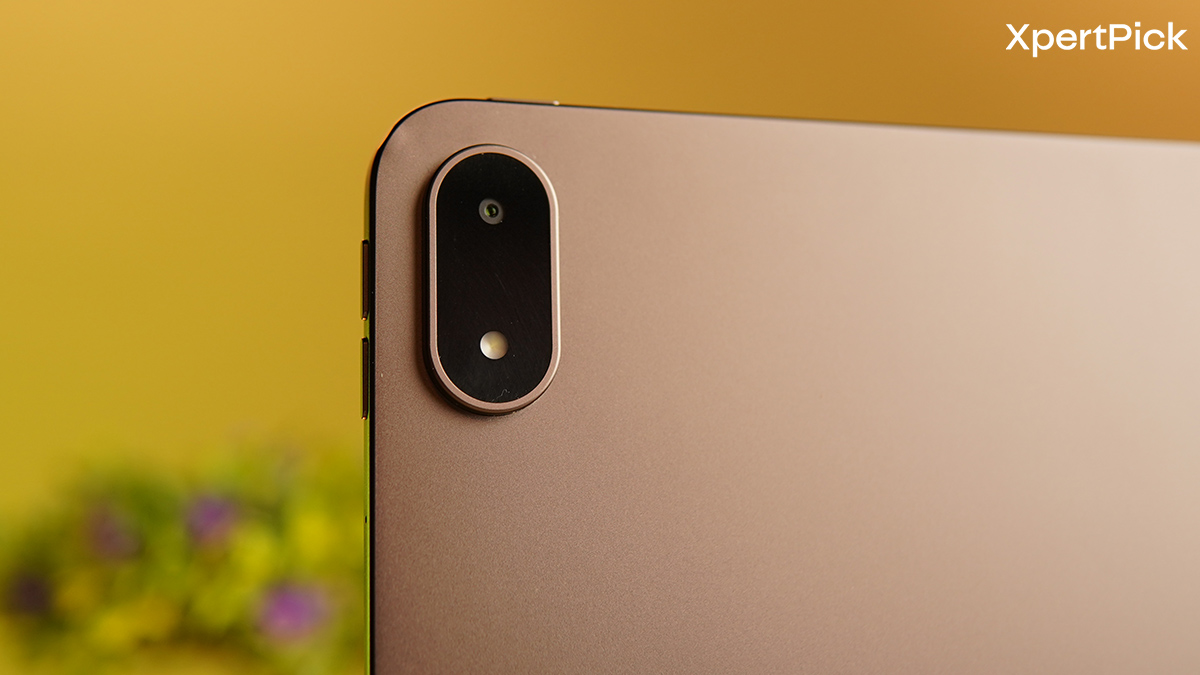
The front camera is the one that matters more, because this tablet is much more likely to be used for video calls, meetings, and online classes. The image quality overall is average; even then, it is sharp enough for any of these use cases. This is not a criticism unique to OnePlus. The Xiaomi Pad 8 was similar in this regard, with tablet cameras mostly serving document scanning and video calls rather than actual photography.

Software and Stylus: OxygenOS Feels Made for the Big Screen
OxygenOS is one of the best parts of the OnePlus Pad 4. Over the years, OnePlus has polished its Android skin into something that feels clean, coherent, and premium. On the Pad 4, that same experience scales surprisingly well to a bigger screen.
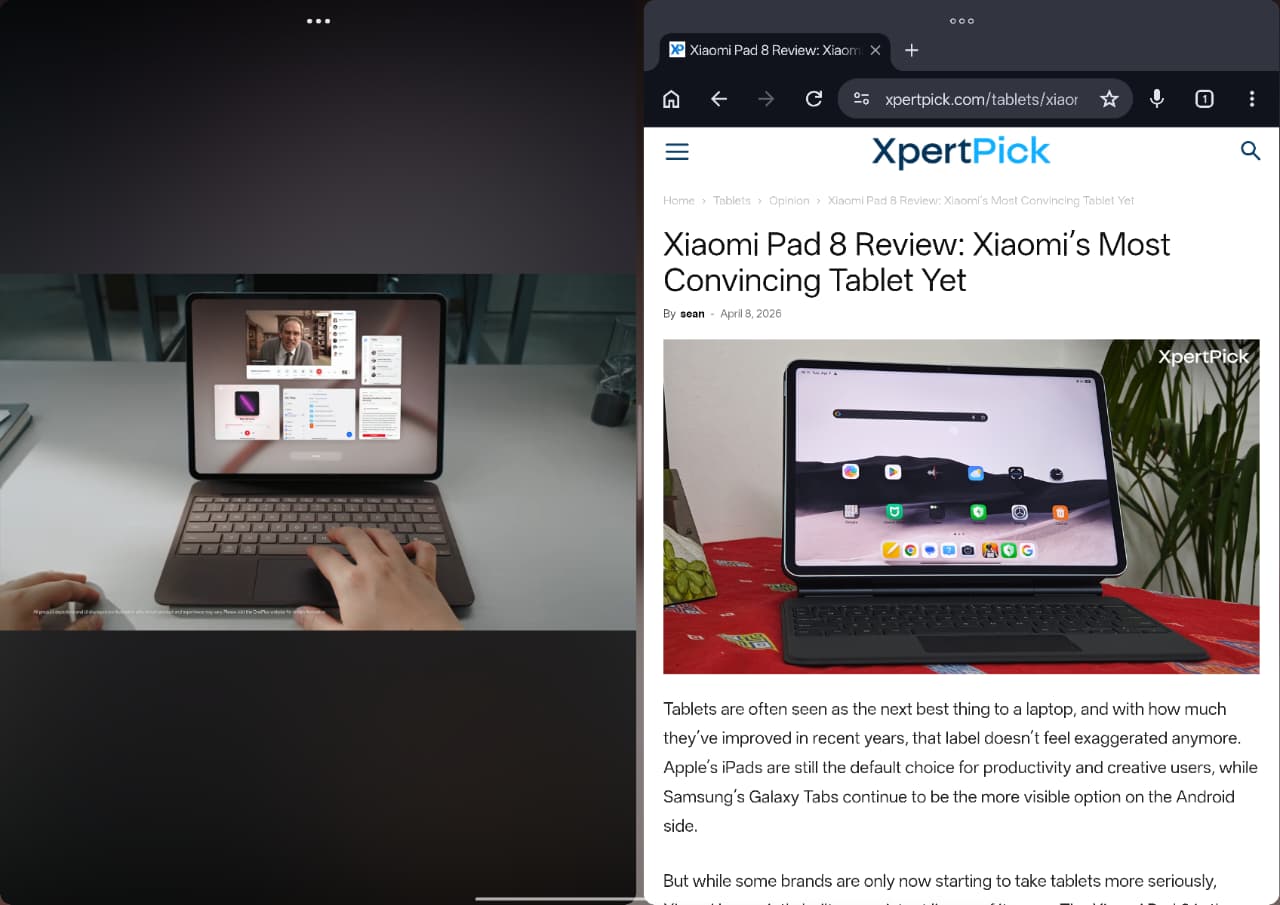
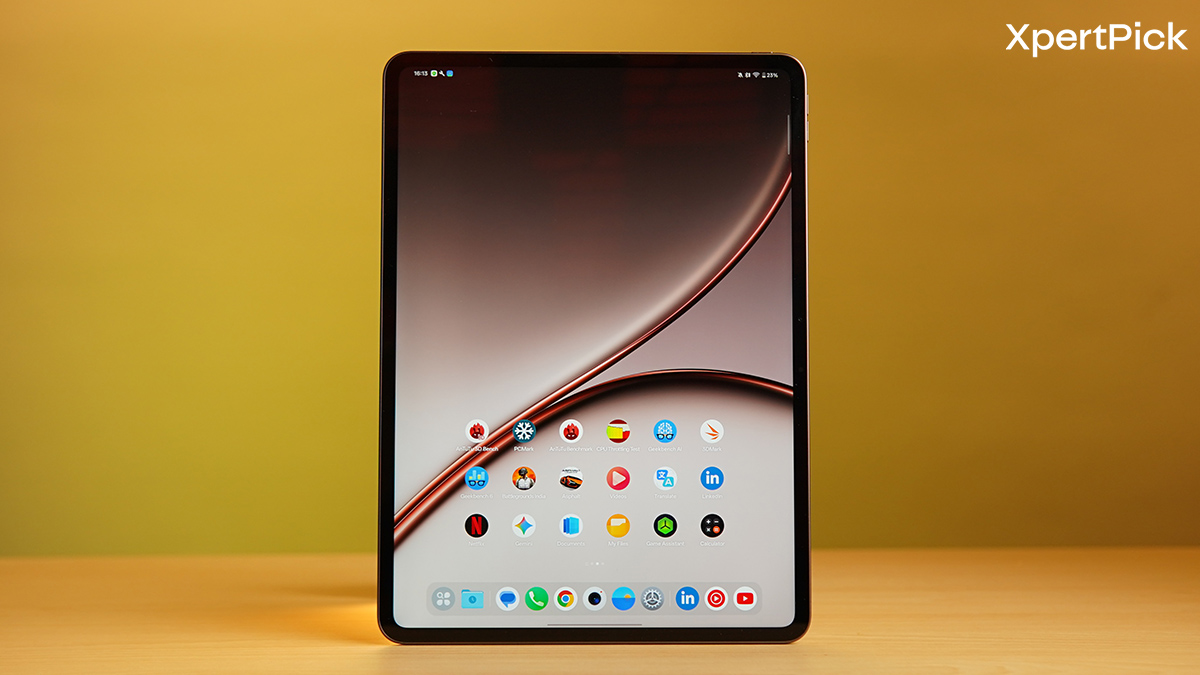
The tablet-focused touches make the difference. The dock at the bottom feels very iPadOS-like, showing recent and active apps for quick switching. Multitasking is also handled well, with split-screen and floating windows making the system feel closer to a PC than a stretched-out phone UI.
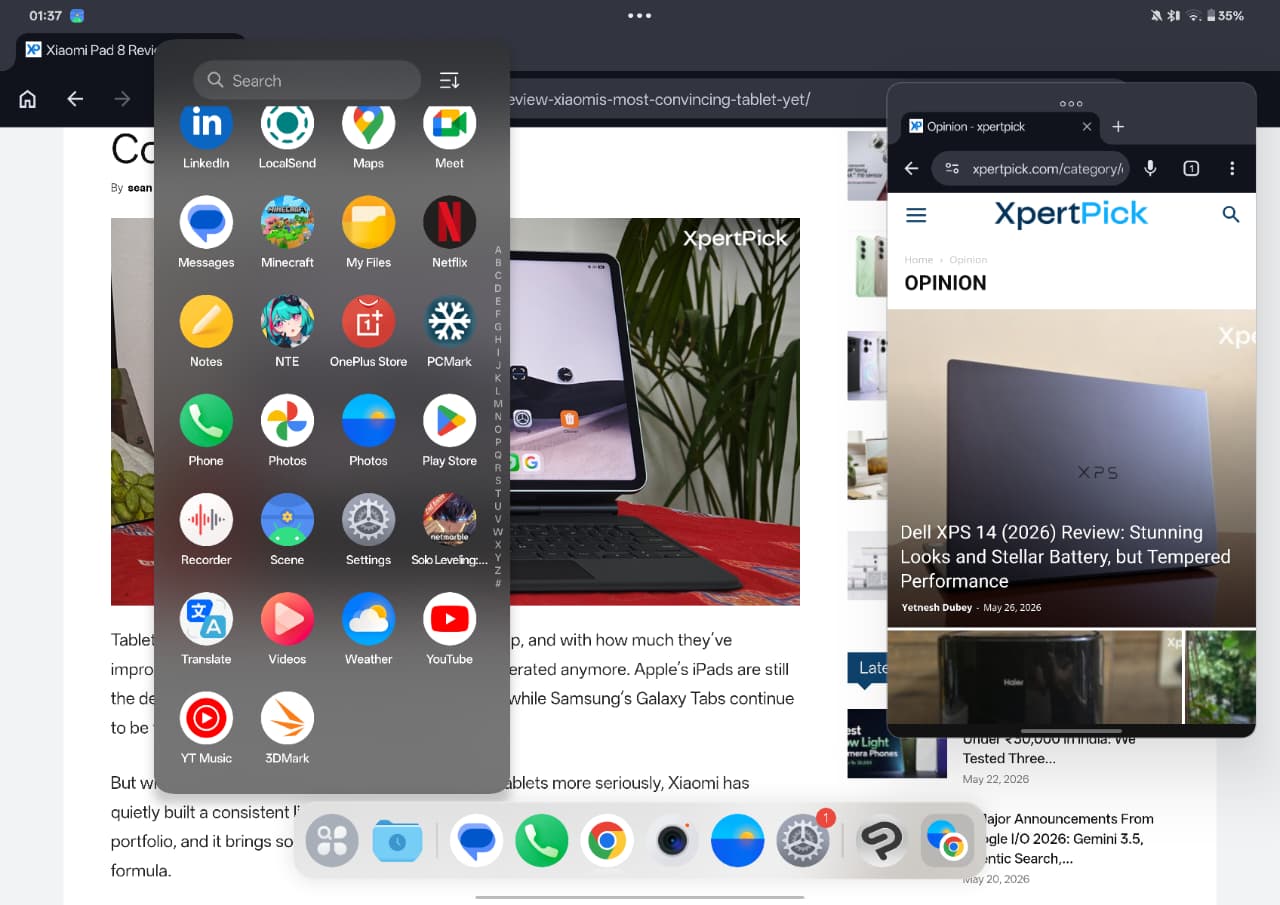
This is where OnePlus gets the basics right. The tablet can feel like a laptop even without a dedicated keyboard attached, which is not easy to pull off. The touch interface is refined enough that you don’t constantly feel like something is missing. Of course, I still wish I had the Smart Keyboard with my unit, because that would’ve made the laptop-replacement angle much easier to judge.
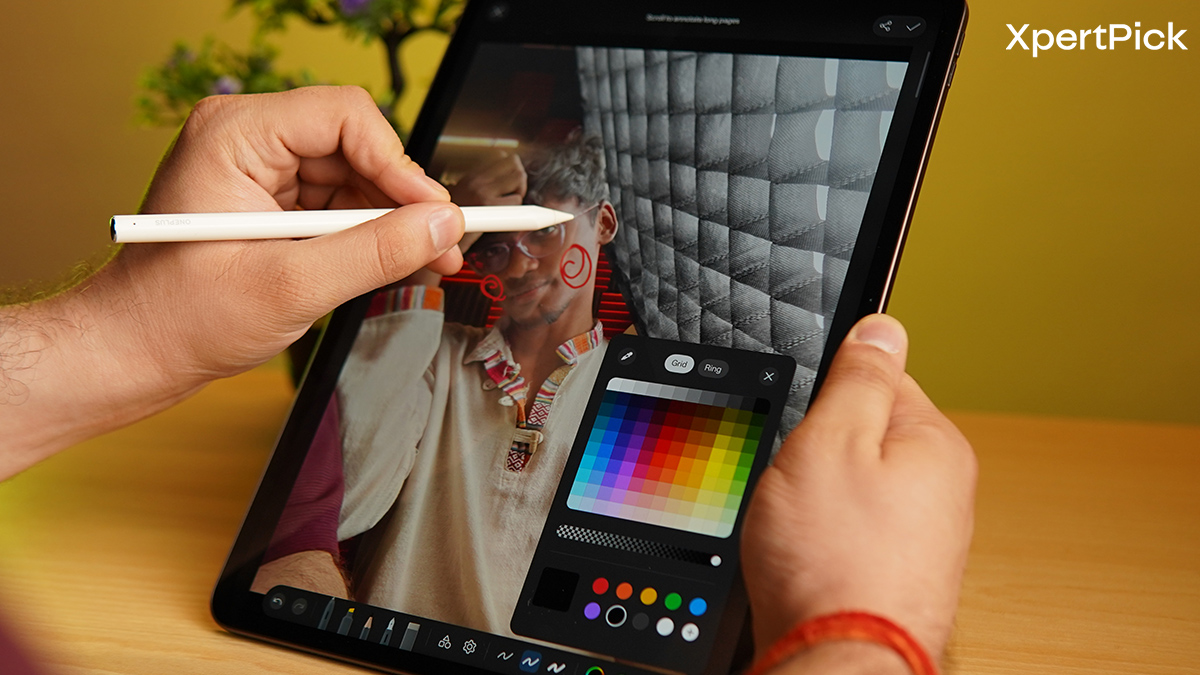
I did get the Stylus Pro, though, and it genuinely adds value. It magnetically attaches to the tablet, works seamlessly, and supports 16,000 levels of pressure sensitivity along with a haptic motor. Using it for notes, quick sketches, and general navigation felt fun and practical.
To test it better, I had my more artistic brother try some basic illustrations, since he has experience with drawing tablets. The tilt and pressure detection were surprisingly good, and most inputs registered properly. The only real frustration was palm detection. If there is palm rejection, it didn’t feel strong enough during drawing. The tablet often picked up accidental palm inputs, which interrupted the creative flow.
Verdict
The OnePlus Pad 4 is an excellent Android tablet, but the price makes it a more serious commitment than before. At Rs 59,999, it sits very close to the 11-inch iPad Air, which starts at Rs 64,900 officially in India. So OnePlus can’t just win by being cheaper anymore. It has to convince buyers that they want a powerful Android tablet with a huge display, excellent speakers, and strong gaming performance, packaged with a flexible multitasking experience.
It mostly succeeds on these terms, as the Pad 4 is one of the fastest and most capable Android tablets around. The device even feels properly premium while doing it. However, when you look at the Xiaomi Pad 8 with its much lower Rs 33,999 price tag, things become a little complicated. Xiaomi’s tablet also offers a sharp 3.2K 144Hz display, solid Snapdragon 8s Gen 4 performance, and a more than capable productivity setup.
The OnePlus Pad 4 is clearly faster and more premium-leaning. However, it also costs nearly twice as much. So the Xiaomi Pad 8 might be the smartest value Android tablet. However, if you want a bigger screen, flagship-grade performance, stronger speakers, and something that gets much closer to replacing a laptop, the OnePlus Pad 4 is just a step below iPads.
Pros
- Huge and sharp 13.2-inch display
- Excellent flagship-level performance
- Great for gaming and multitasking
- Loud and powerful eight-speaker setup
- Premium aluminium build
- OxygenOS works well on a larger screen
- Stylus Pro is genuinely useful
Cons
- Expensive, especially close to iPad Air pricing
- LCD panel still can’t match OLED contrast
- Battery life is good, not exceptional
- Palm rejection needs work