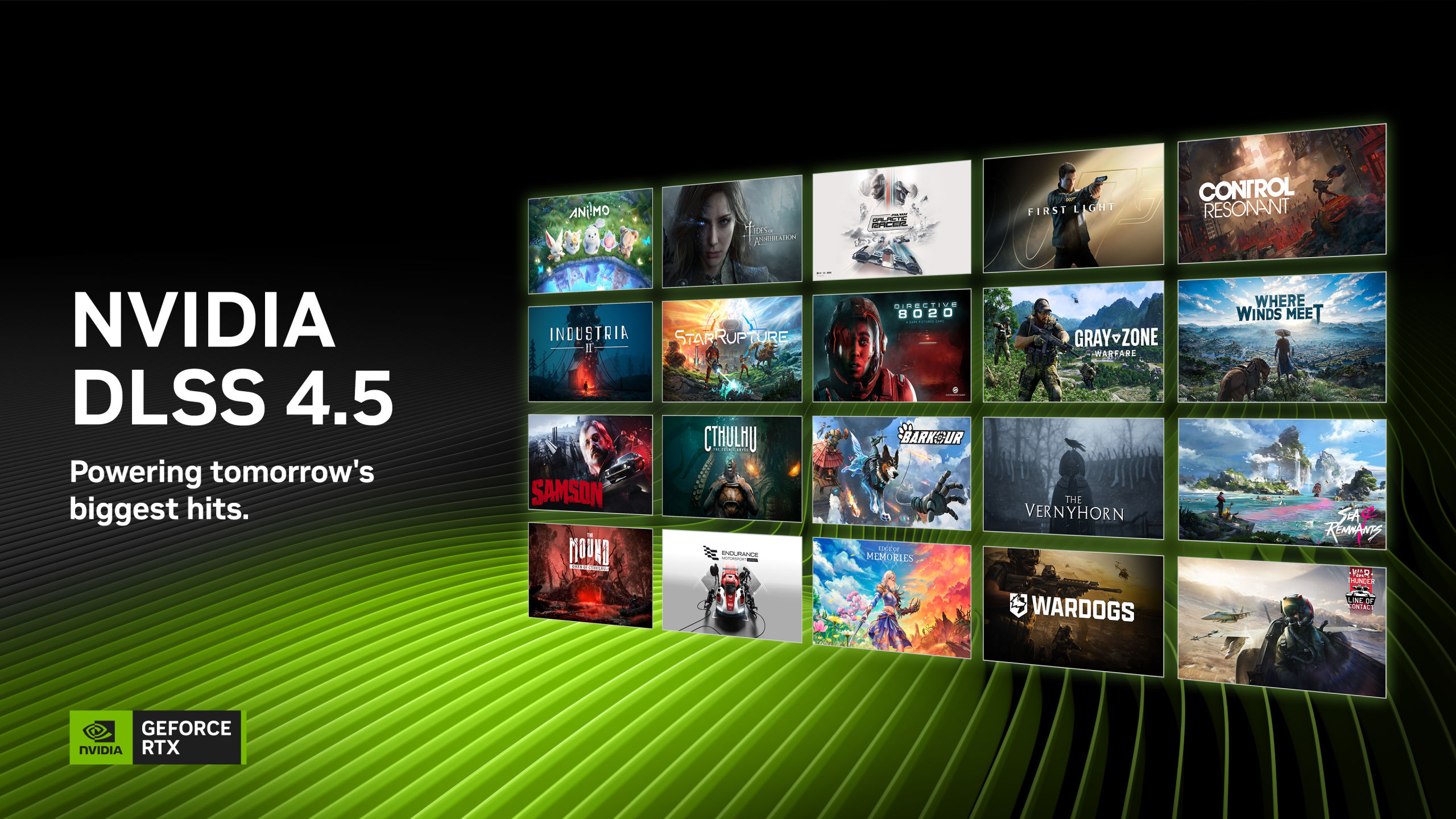
Nvidia has used its Gamescom 2026 briefing to finish off the DLSS 4.5 suite, releasing Ray Reconstruction for every GeForce RTX graphics card and lining up a run of game integrations that stretches to the end of the year. The feature arrives through an Nvidia app update rather than a per-game patch, and it covers 30 titles at launch via the app’s override, among them Alan Wake 2, Call of Duty: Black Ops 7, Crimson Desert, Cyberpunk 2077, DOOM: The Dark Ages, Half-Life 2 RTX, Hogwarts Legacy, Indiana Jones and the Great Circle, Marvel’s Spider-Man 2 and PRAGMATA. Nvidia lists Game Ready driver 580.88 WHQL as the minimum requirement, and the override currently sits in the app’s Early Access channel ahead of a full release in September. Several developers are also folding the model into their games through official updates.
DLSS 4.5 Ray Reconstruction moves to a second-generation transformer model
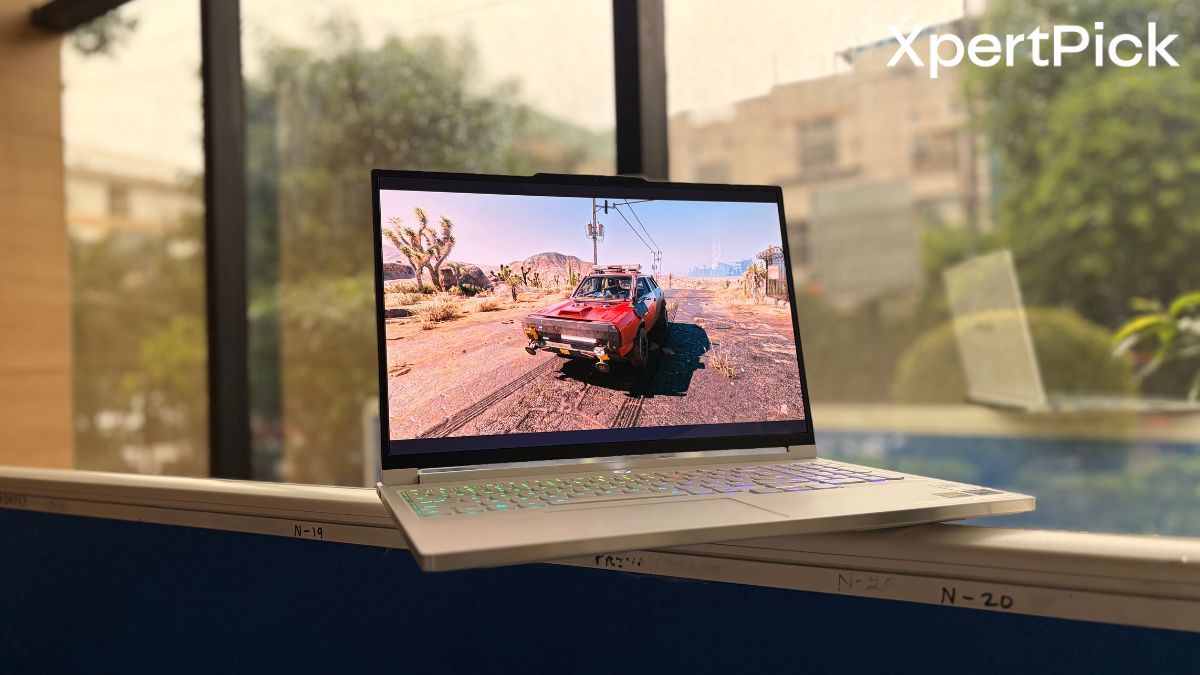
Ray Reconstruction swaps the hand-tuned denoisers used in ray-traced and path-traced rendering for a supercomputer-trained network that fills in the noisy parts of a frame where rays were never sampled, and it unifies denoising and Super Resolution in a single model that reads temporal and spatial engine data. The version released today is built on a second-generation transformer model that Nvidia says carries 35% more compute capability and processes 20% more parameters than the one it replaces, while holding roughly the same performance cost. The company also cites a more efficient denoiser, a wider training dataset and finer-grained developer controls.
Gears of War: E-Day debuts RTX Mega Geometry and ray-traced Nanite
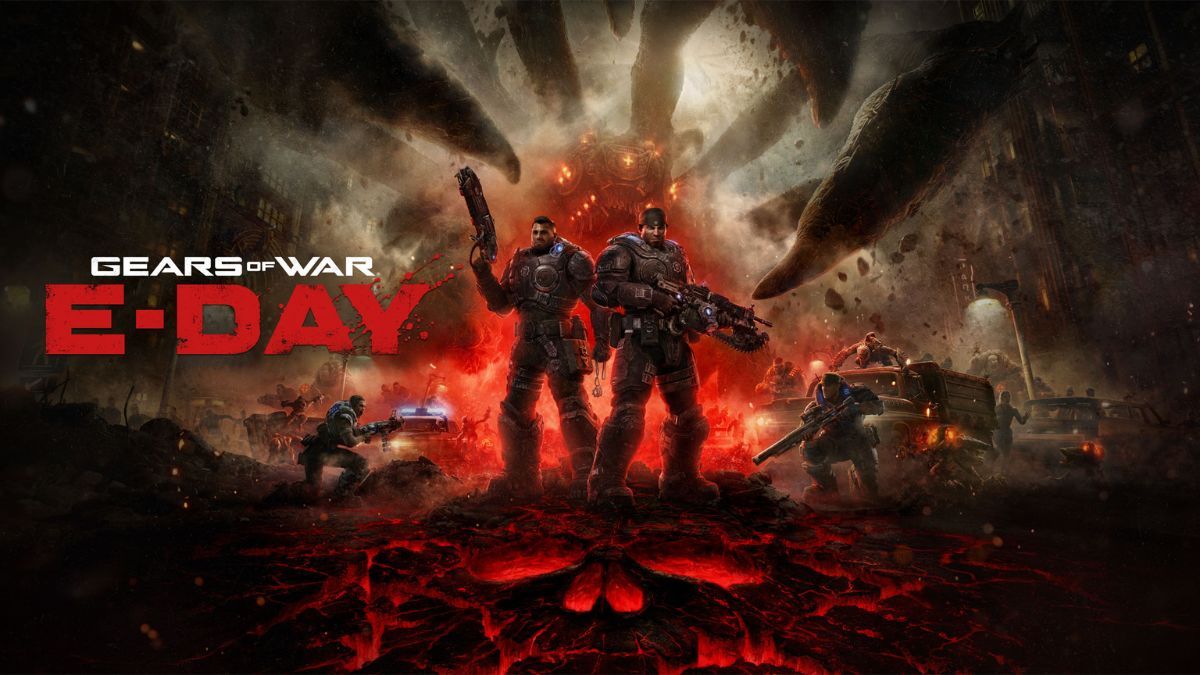
The headline integration is Gears of War: E-Day, which ships on 6 October with DLSS 4.5, ray tracing, Reflex and the debut of RTX Mega Geometry. The technology addresses a long-standing gap in Unreal Engine 5, where Nanite builds highly detailed geometry for rasterisation but ray tracing falls back to a single low-detail mesh, producing shadows and reflections that do not match what is on screen. Nvidia says six years of research went into representing full-detail Nanite geometry in the ray-tracing pipeline, and that Microsoft will fold the approach into the DirectX Raytracing 2.0 standard so that ray-traced Nanite becomes available across UE5 titles rather than remaining a vendor feature.
CONTROL Resonant and 007 First Light add path tracing
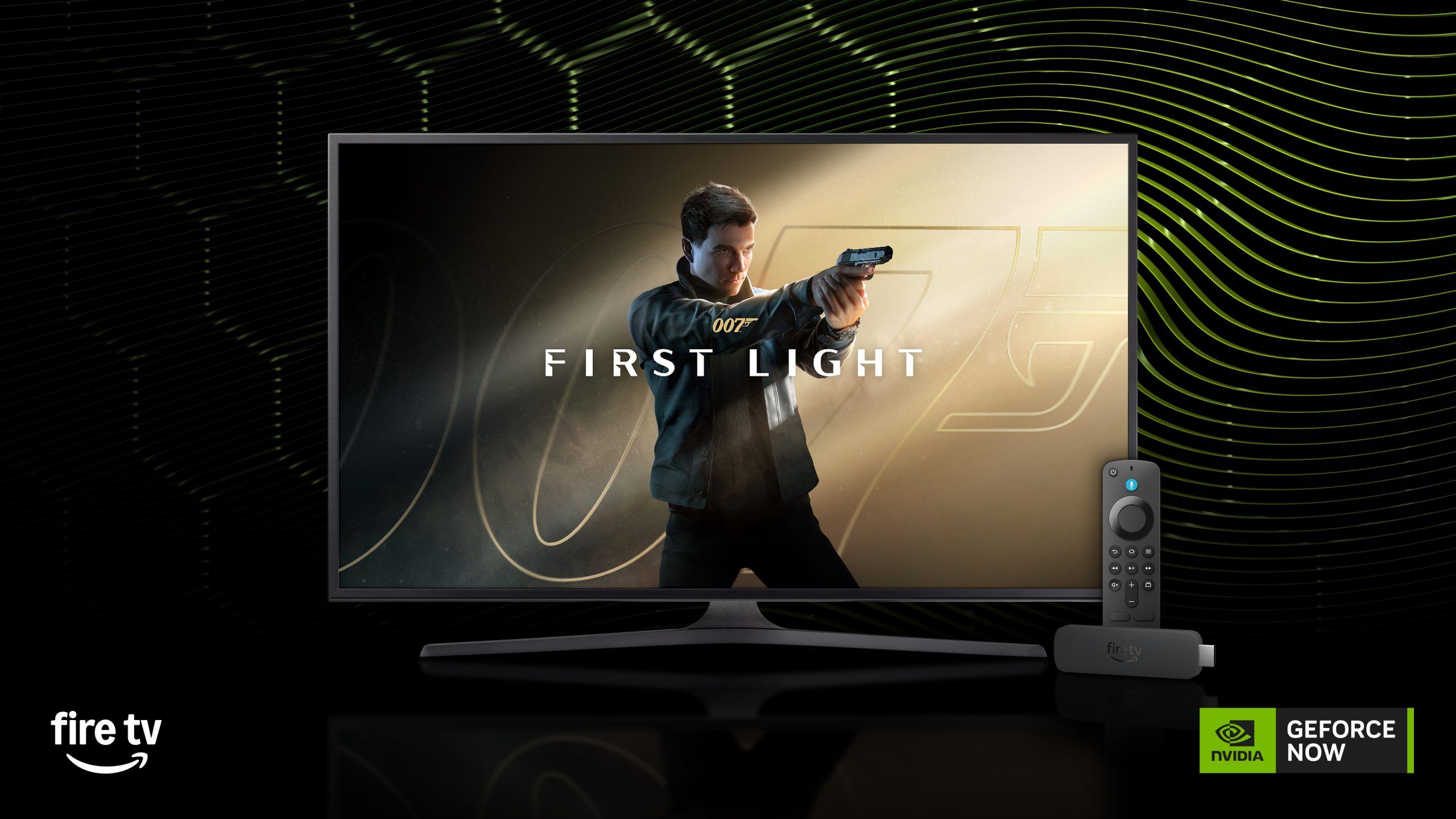
Remedy’s CONTROL Resonant follows on 24 September with the complete DLSS 4.5 suite, including Ray Reconstruction and Dynamic Multi Frame Generation, alongside path-traced effects that build on the original game’s ray tracing. The game casts players as Dylan Faden, brother of Federal Bureau of Control director Jesse Faden, and Nvidia is bundling a copy with qualifying GeForce RTX 50 series products. IO Interactive’s 007 First Light, which already ships with DLSS 4.5 Super Resolution and Dynamic Multi Frame Generation, gets a path-tracing and Ray Reconstruction update on 15 September.
Eight more games join the DLSS 4.5 line-up
AION 2 launches in the West on 30 September with DLSS 4.5, while ANANTA, Black State and CINDER CITY are being upgraded to DLSS 4.5 with ray tracing. Aniimo, Beautiful Light, Fragmentary Order and Silver Palace all launch with the technology, and Aniimo will add Nvidia ACE in early 2027 so that players can hold natural-language conversations with creatures through a locally hosted Nemotron small language model.
RTX Spark picks up EA, Ubisoft and Embark Studios games
Away from the desktop, Nvidia named Electronic Arts, Embark Studios and Ubisoft as the latest publishers backing RTX Spark, the Arm-based Grace and Blackwell platform for Windows PCs due this autumn. EA SPORTS F1 25, Apex Legends, Anno 117: Pax Romana, ARC Raiders and THE FINALS join titles already committed by KRAFTON, NetEase, Riot Games and Xbox at Computex in May. Anti-cheat remains the sticking point for Windows on Arm gaming, and Nvidia says it has worked with EA to bring native EA Javelin Anticheat support to the platform.
RTX Remix gains Ray Reconstruction as Painkiller RTX and Morrowind RTX arrive
RTX Remix also picks up DLSS 4.5 Ray Reconstruction and Multi Frame Generation, which modders can now apply to their own path-traced conversions. Merry Pencil Studios has remastered the first 15 levels of Painkiller with new textures and materials, multi-bounce indirect lighting through a neural radiance cache, path-traced volumetrics, reworked particle effects and the game’s Demon Morph mode rebuilt with Remix Logic, with RTX IO compression cutting the install from 57 GB to 45 GB. Nvidia also revealed The Elder Scrolls III: Morrowind RTX, a work in progress from modder Gokuwashere that currently covers Seyda Neen and Balmora with replacement assets, new foliage and terrain, volumetric clouds and reworked water reflections.
GeForce NOW adds DLSS 4.5 settings and Steam Machine support
GeForce NOW gains DLSS 4.5 controls for Super Resolution, Dynamic Frame Generation and Ray Reconstruction, letting members choose how supported games balance image quality against frame rate. Steam Machine and Steam Controller support is due later this year, GOG single sign-on is live, and Firefox is now officially supported. Amazon Fire TV coverage expands to more sticks including the Fire TV Stick 4K Select, with memberships purchasable through Amazon accounts. CONTROL Resonant, Gears of War: E-Day, Onimusha: Way of the Sword, The Blood of Dawnwalker and STAR WARS Zero Company will all stream from day one, with the service supporting up to 360 FPS in faster titles.
AGON by AOC launches the first 5K G-SYNC Pulsar gaming monitor
AGON by AOC showed the AGP327KG, a 31.5-inch 5120×2880 panel running at 144 Hz and the first 5K monitor to use G-SYNC Pulsar, Nvidia’s variable frequency backlight pulsing technique for motion clarity. It also carries a light sensor that adjusts colour temperature and brightness to suit room lighting. Pulsar controls have moved into the Nvidia app for the first time through the Early Access beta, with a full release due in September. Asus added three ROG OLED displays led by the ROG Swift OLED PG259QWS Ace, a 1080p tandem WOLED panel running at 700 Hz, joined by the QD-OLED ROG Strix OLED XG259QDPG Ace at 540 Hz and the XG259QDNS Ace at 360 Hz. LG’s 25G590B-B is the more unusual entry, a 24.5-inch 1080p IPS panel with a native 1000 Hz refresh rate that can be pushed to 1100 Hz over DisplayPort 2.1. It costs $999 and ships in the US in early September.