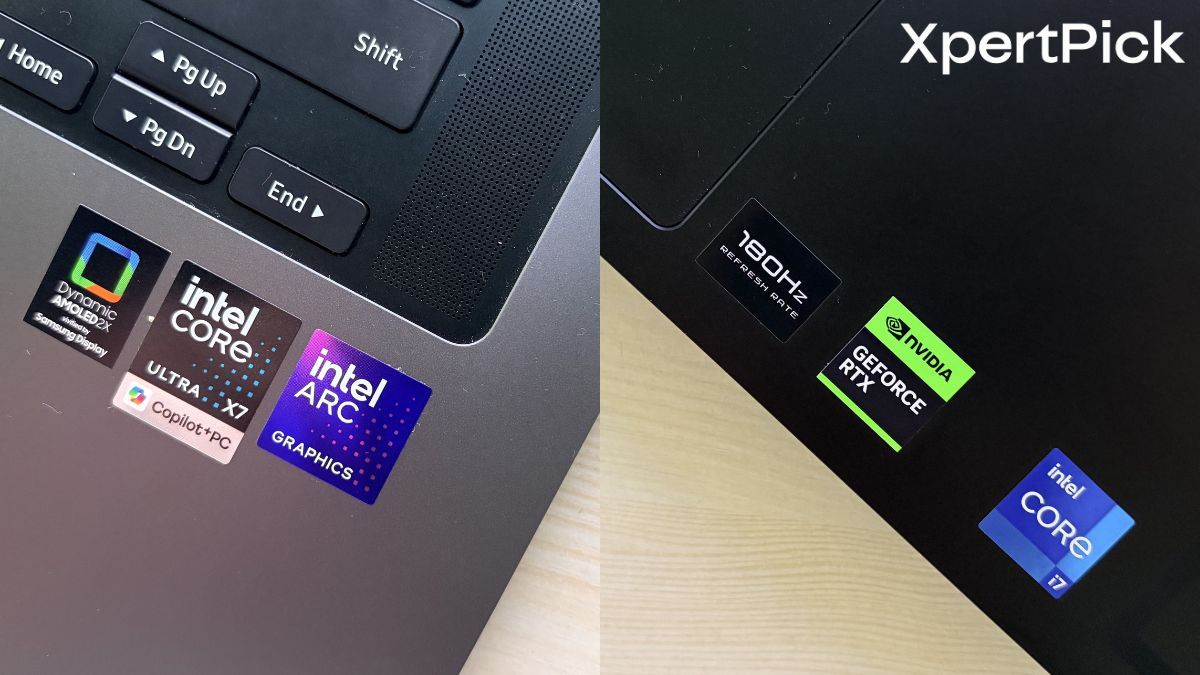
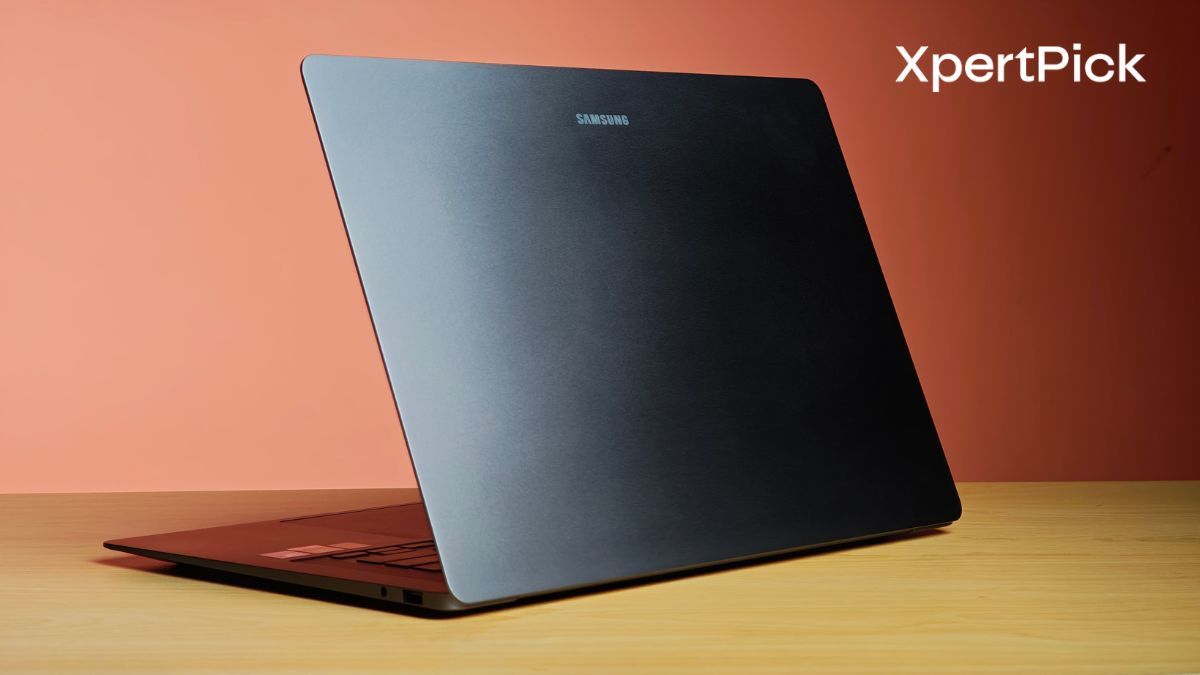
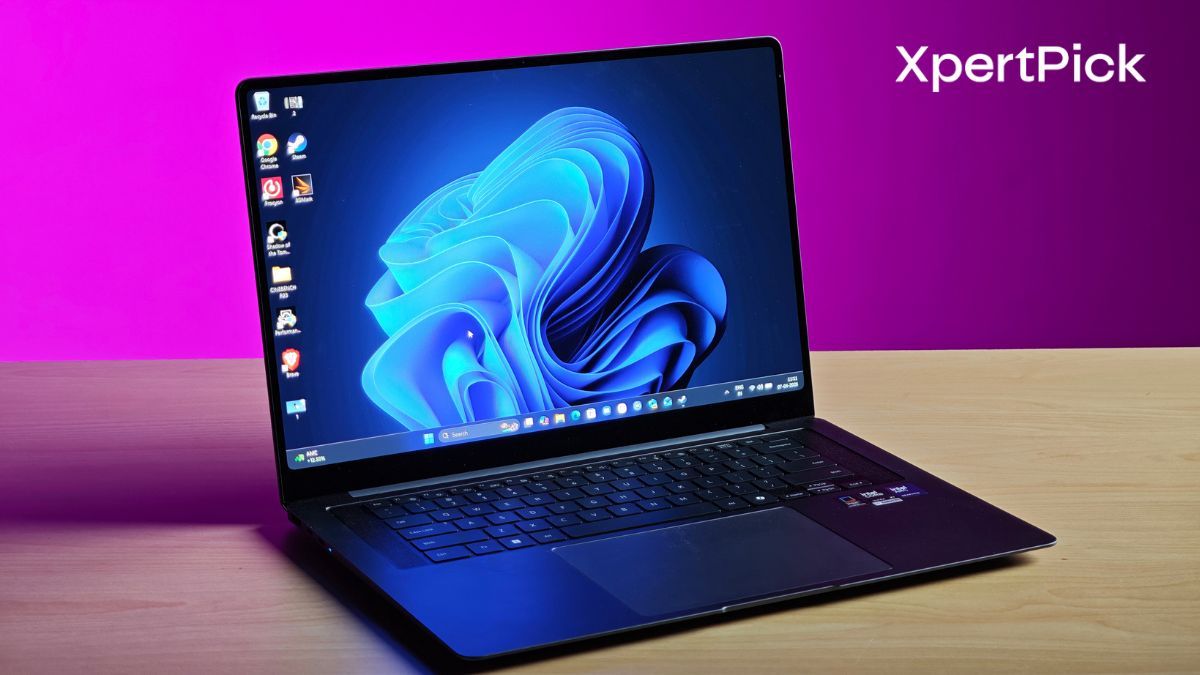
For years, the golden rule of laptop buying was simple: if you want to play demanding AAA games, you have to tolerate a thick, heavy chassis with a dedicated graphics card. But the lines are finally starting to blur. In this deep-dive comparison, we pit the featherweight Samsung Galaxy Book6 Pro, armed with Intel’s new Core Ultra X7 processor and Battlemage-based Arc B390 integrated graphics, against a traditional gaming heavyweight, the HyperX Omen 15, sporting an Intel Core i7-14650HX and a dedicated Nvidia GeForce RTX 5050.
Can an ultra-slim, 11.9mm productivity machine really trade blows with a high-wattage gaming tank? We ran both laptops through a rigorous gauntlet of synthetic benchmarks, thermal stress tests, and real-world gameplay to find out. The results reveal a fascinating shift in the mobile landscape: while Nvidia’s dedicated silicon predictably defends its crown in sustained gaming performance, Intel’s latest iGPU pulls off shocking upsets in raw CPU speed and proves that hitting 60 FPS in titles like Cyberpunk 2077 no longer requires a bulky laptop.
Synthetic Benchmarks: Galaxy Book6 Pro Wins CPU Bursts, HyperX Omen 15 Dominates Sustained GPU Loads
| Metric | Samsung Galaxy Book6 Pro | HyperX Omen 15 |
| Material Quality | Premium Aluminium | Polycarbonate (Plastic) |
| Thickness | 11.9 mm | 22.5 mm |
| Device Weight | 1.59 kg | 2.42 kg |
| Travel Weight (with charger) | 1.79 kg | 3.77 kg |
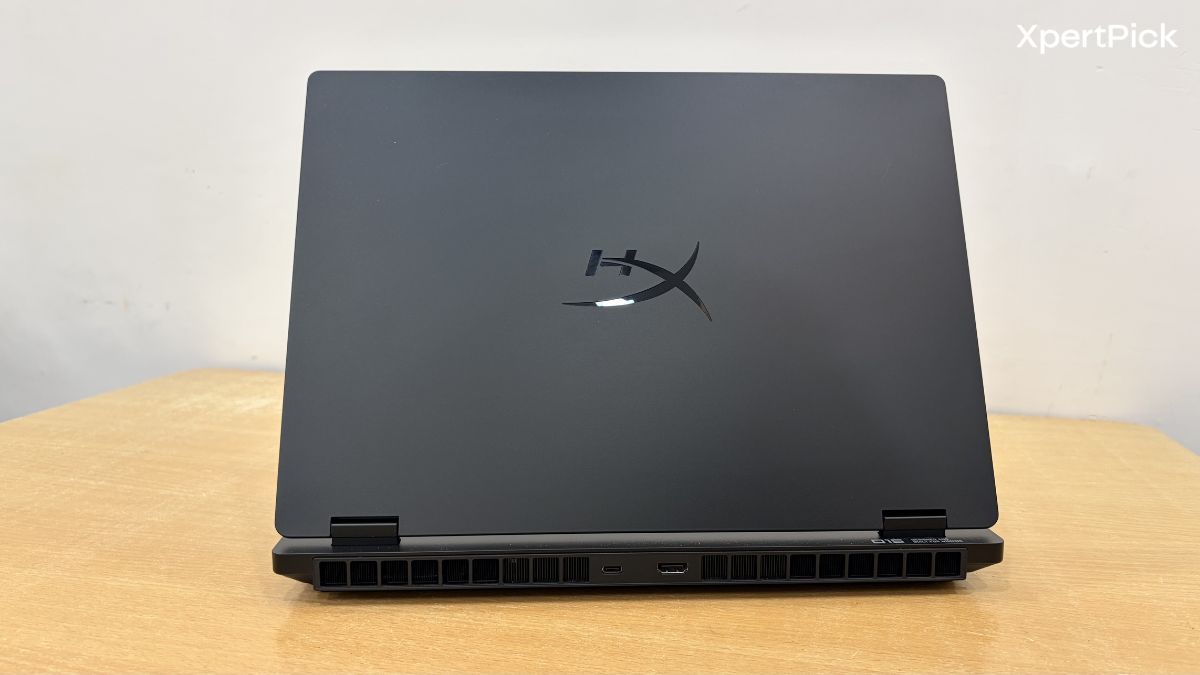
The 3DMark loop table shows a clear performance gap. The HyperX Omen 15 reaches a highest loop score of 18,260, while the Samsung Galaxy Book6 Pro reaches 11,536. That makes the Omen roughly 58% faster at peak. More importantly, the Omen’s lowest loop score is 18,117, which is still far ahead of the Galaxy Book6 Pro’s highest score. So even after sustained load, the gaming laptop remains well above the Samsung’s best-case graphics performance.
But the stability figure is where the chassis context matters. The HyperX Omen 15 drops from 18,260 to 18,117, which is a very small decline. That explains its 99.2% frame rate stability. In practical terms, it is able to hold almost all of its GPU performance across repeated benchmark loops. This matches its physical design: at 22.5 mm thick and 2.42 kg, the Omen has more room for cooling hardware, airflow, and sustained power delivery.
| Metric | Samsung Galaxy Book6 Pro | HyperX Omen 15 |
| Dimensions (W x D x H) | 356.9 x 248.0 x 11.9 mm | 343 x 253 x 22.5 mm |
| System Weight | 1.59 kg | 2.42 kg |
The Samsung Galaxy Book6 Pro behaves differently. It starts at a respectable 11,536, but drops to 10,431, resulting in 90.4% stability. That is still decent, especially for an integrated GPU-based thin laptop, but the drop is much more visible than on the Omen. The reason becomes obvious when you look at the dimensions. The Galaxy Book6 Pro is only 11.9 mm thick and weighs 1.59 kg, so it is working within a much tighter thermal envelope. It is designed to be slim, light, and efficient rather than to sustain gaming-class loads for long periods.
So the fair conclusion is this: the HyperX Omen 15 wins the performance test because it has both a stronger GPU setup and the chassis to support it. Its thicker and heavier body directly translates into better sustained graphics performance. The Samsung Galaxy Book6 Pro, meanwhile, is impressive in a different way. For a laptop that is almost half as thick and 0.83 kg lighter, its 3DMark score is strong, but its lower stability shows the limits of pushing integrated graphics inside an ultra-slim productivity chassis.
| Metric | Samsung Galaxy Book6 Pro (Core Ultra X7) | HyperX Omen 15 (Core i7-14650HX) |
| Peak CPU Power Consumption | 45 W | 90 W |
| Max CPU Temperature (Stress Test) | 89°C | 72°C |
The CPU stress test highlights the practical advantage of a gaming laptop chassis. The HyperX Omen 15 allows the Core i7-14650HX to draw up to 90W, twice the 45W seen on the Samsung Galaxy Book6 Pro’s Core Ultra X7, yet it still runs much cooler at 72°C versus 89°C. That difference becomes even more meaningful when you factor in the Omen’s dedicated Nvidia GeForce RTX 5050 Laptop GPU, which has a separate power budget of up to 115W. This GPU draw is not included in the CPU power figure, but it still has to be managed by the same chassis and cooling system.
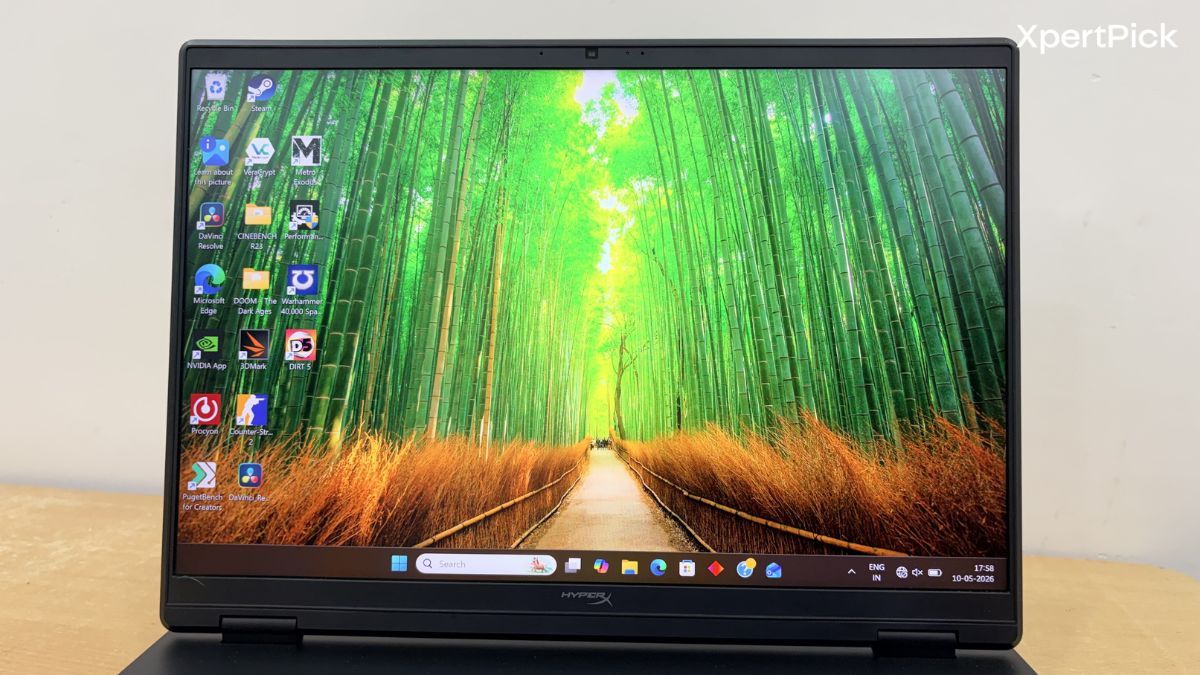
So the Omen 15 is not simply cooling a hotter CPU better. It is operating within a much larger total thermal envelope, with both a high-power HX-series processor and a dedicated RTX GPU. The Galaxy Book6 Pro remains impressive for its thin-and-light form factor, but its 89°C CPU temperature at just 45W shows the limits of an ultra-slim chassis under sustained stress. The Omen’s thicker and heavier body directly translates into more thermal confidence, allowing higher CPU power, dedicated GPU headroom, and lower CPU temperatures under load.
| Benchmark | Samsung Galaxy Book6 Pro (Core Ultra X7) | HyperX Omen 15 (Core i7-14650HX) |
| Geekbench 6 (Single-Core) | 2,890 | 2,684 |
| Geekbench 6 (Multi-Core) | 17,108 | 12,983 |
The Geekbench 6 results flip the expected narrative. Despite being a much thinner machine, the Samsung Galaxy Book6 Pro outperforms the HyperX Omen 15 in both single-core and multi-core CPU tests. Its Core Ultra X7 scores 2,890 in single-core and 17,108 in multi-core, compared to 2,684 and 12,983 on the Core i7-14650HX-powered Omen 15. That gives Samsung a clear lead in burst CPU performance, especially in multi-core workloads.
However, this does not mean the Galaxy Book6 Pro is the more powerful laptop overall. Geekbench favours short-duration CPU bursts, and the Core Ultra X7 seems to deliver excellent performance-per-watt in that scenario. The Omen 15 is still the stronger machine for gaming and sustained GPU-heavy workloads, thanks to its dedicated RTX 5050, larger cooling system, and far better 3DMark loop stability. In simple terms, the Galaxy Book6 Pro wins the quick CPU benchmark; the HyperX Omen 15 wins the sustained performance and gaming story.
Gaming Benchmarks: Arc B390 Impresses, But RTX 5050 Wins Comfortably
| Game Title (Average FPS) | Samsung Galaxy Book6 Pro (Arc B390) | HyperX Omen 15 (RTX 5050) |
| Cyberpunk 2077 | 69 | 99 |
| Borderlands 3 | 57 | 102 |
| Shadow of the Tomb Raider | 74 | 125 |
| Metro Exodus | 58 | 108 |
Across all four titles, the HyperX Omen 15 is comfortably ahead. In Cyberpunk 2077, it averages 99 FPS compared to 69 FPS on the Samsung Galaxy Book6 Pro. That is around 43% faster, which is a major practical gap. The Galaxy Book6 Pro is still surprisingly playable here, but the Omen has enough headroom to push higher settings, maintain smoother frame pacing, or stay closer to high-refresh-rate gameplay.
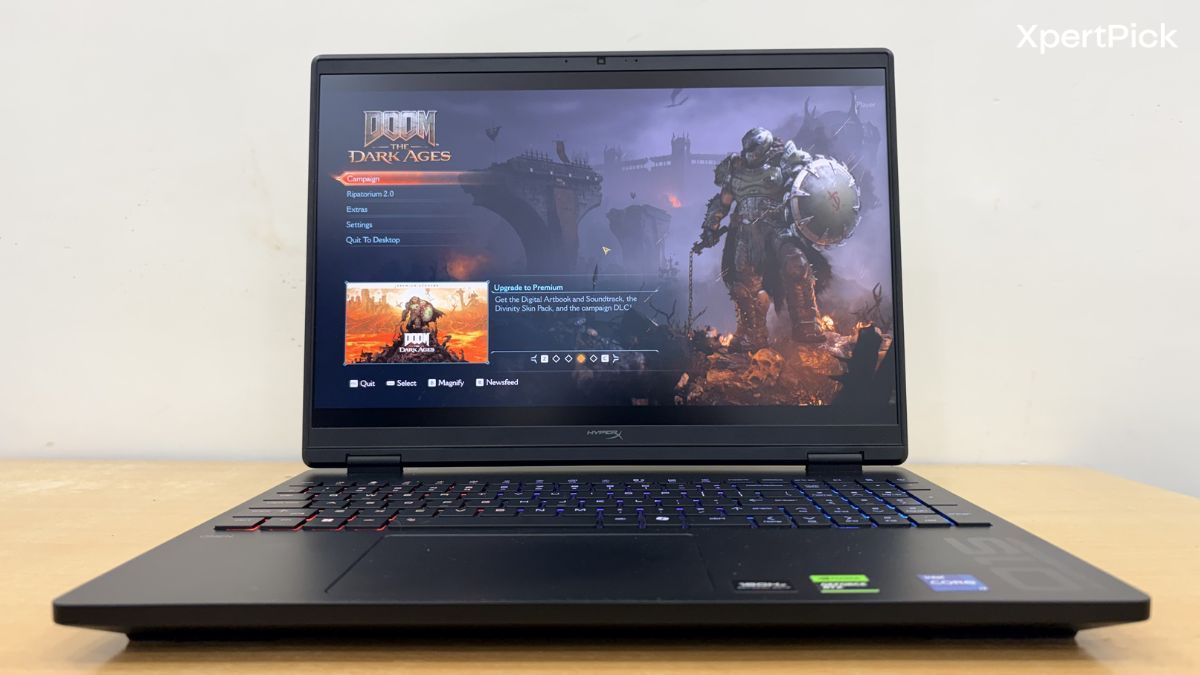
The gap widens in Borderlands 3, where the HyperX Omen 15 reaches 102 FPS, while the Galaxy Book6 Pro averages 57 FPS. That makes the Omen roughly 79% faster. This is one of the clearest examples of why a dedicated GPU still matters. The Galaxy Book6 Pro is near the 60 FPS mark, but the Omen moves into a properly smooth gaming-laptop territory.
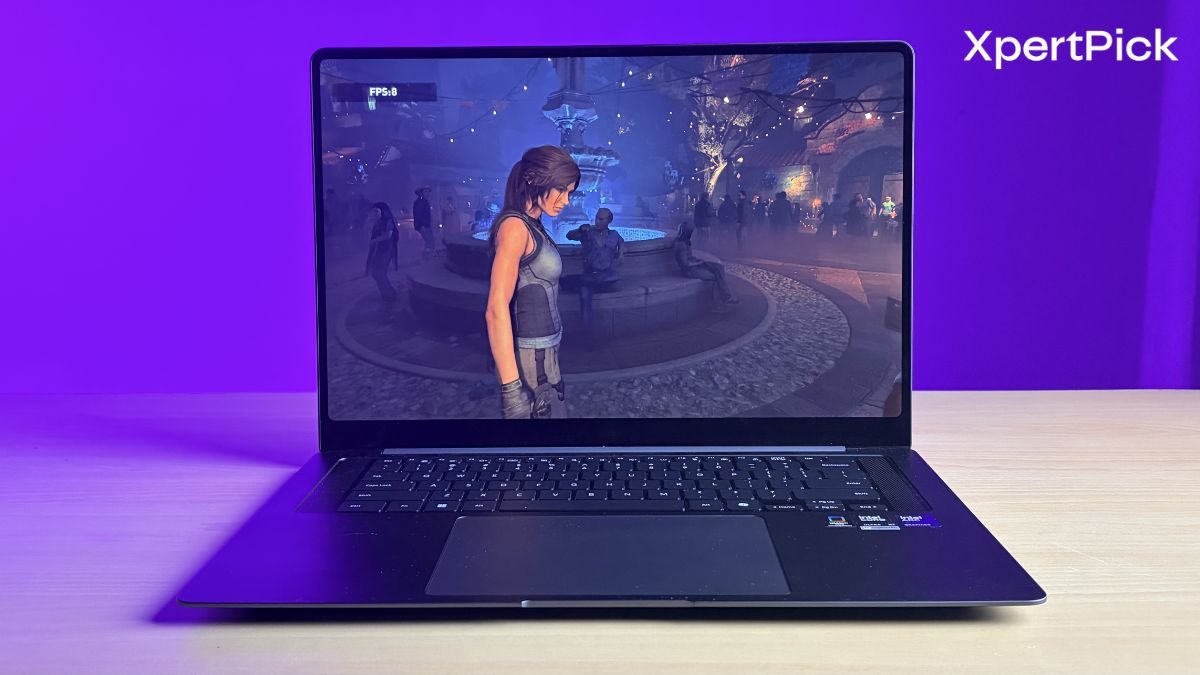
In Shadow of the Tomb Raider, the Samsung Galaxy Book6 Pro performs quite well with 74 FPS, which is genuinely strong for integrated Arc B390 graphics. However, the HyperX Omen 15 still pushes much further ahead at 125 FPS, making it around 69% faster. This is where the Omen’s advantage is not just about playability, but about making better use of a high-refresh-rate display.
Metro Exodus is another demanding test where the difference is clear. The Galaxy Book6 Pro averages 58 FPS, just under the ideal 60 FPS line, while the Omen 15 reaches 108 FPS. That is around 86% faster, making it the biggest gap in this comparison. The Samsung can still run the game reasonably well, but the Omen gives you far more breathing room when scenes get heavier.
The overall average across these four games is also telling. That means the Omen 15 is roughly 68% faster on average across this game sample.